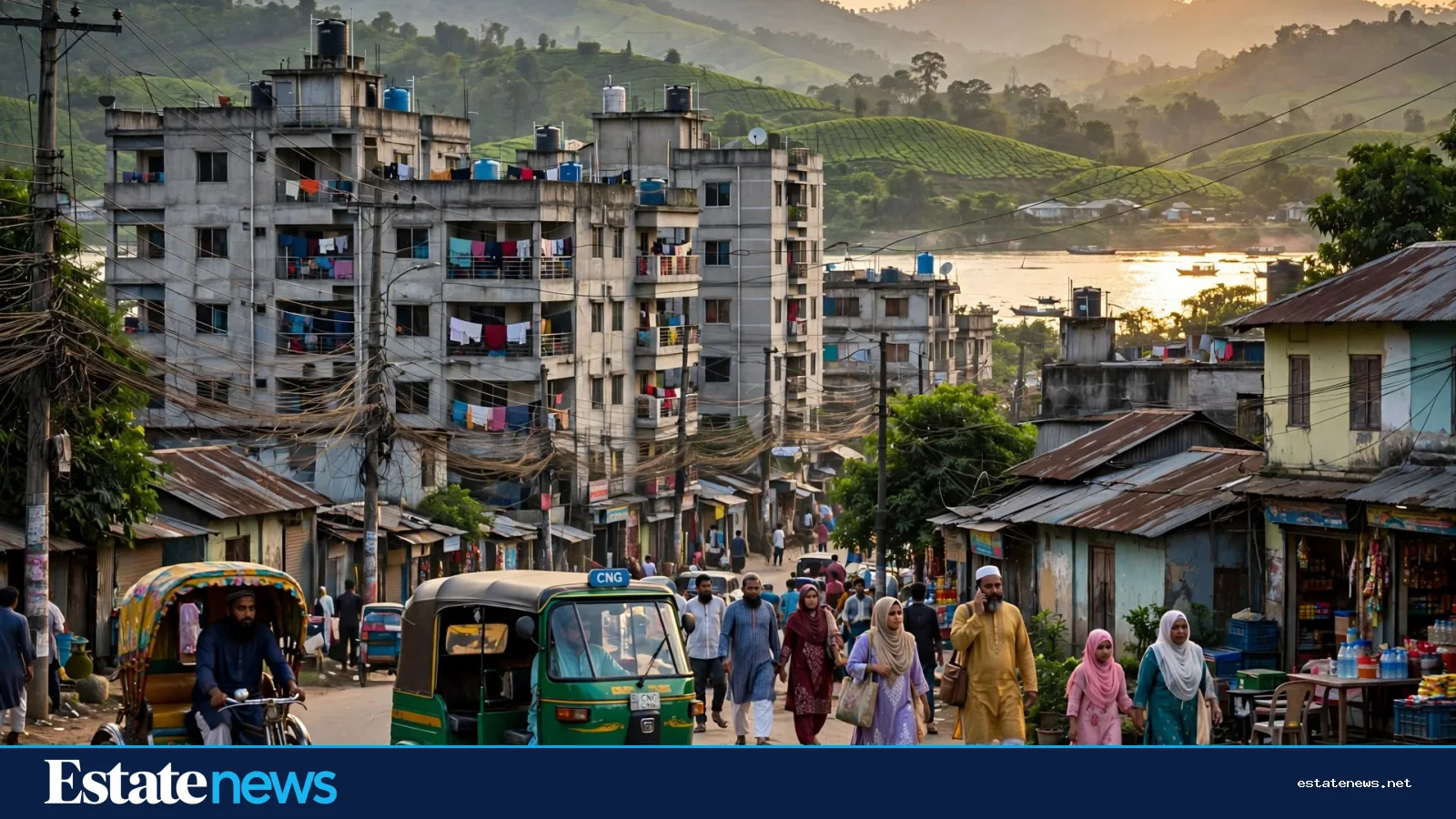
Mist sits on the tea bushes at the edge of town just after dawn, and by eight the road into Sylhet is already busy. A rickshaw turns off Airport Road toward the Dargah. A bus from Dhaka unloads passengers near Zindabazar. On the hills above the Surma, the new apartment blocks catch the first sun, their balconies facing the same green slopes that have ringed this city for as long as anyone can remember.
Sylhet is the one big Bangladeshi city that is growing upward without losing its green edge. The hills decide where building can go. The shrine decides where the city gathers. The airport decides how fast the outside world arrives. Put those three facts together and you get a housing market unlike Dhaka's or Chattogram's: smaller, greener, and shaped by people who live far away as much as by people who live here.
The tea gardens set the shape

Tea came to Sylhet before the city had a skyline worth naming. Malnicherra, the garden at the city's edge, dates from 1854 and is regarded as the first commercial tea garden in what is now Bangladesh, according to the Bangladesh Tea Board. Tea industry guides put around 135 of the country's 160-plus gardens in the Sylhet region. The gardens start where the town stops. Drive out on almost any road and the houses thin out within minutes, replaced by rows of bushes climbing the slopes.
That green ring is the city's oldest fact and its hardest planning problem. Hills do not flatten for a housing estate. A developer in Sylhet works with slopes, not grids, and the plots that sell best are the ones with a view of the gardens or the river. The same hills that limit sprawl give the city its identity. Nobody in Sylhet needs to be told where the tea ends and the town begins. They can see it from their balcony.
The shrine still sets the rhythm
Sylhet grew up around the Dargah of Hazrat Shah Jalal, the 14th-century saint whose shrine stands in the north of the city. Pilgrims come from across the country, and the streets around the shrine fill with them on holy days. The pond at the shrine, where visitors feed the large catfish the place is known for, is one of the city's oldest sights. Local belief holds the fish sacred, and feeding them is a small ritual most visitors observe.
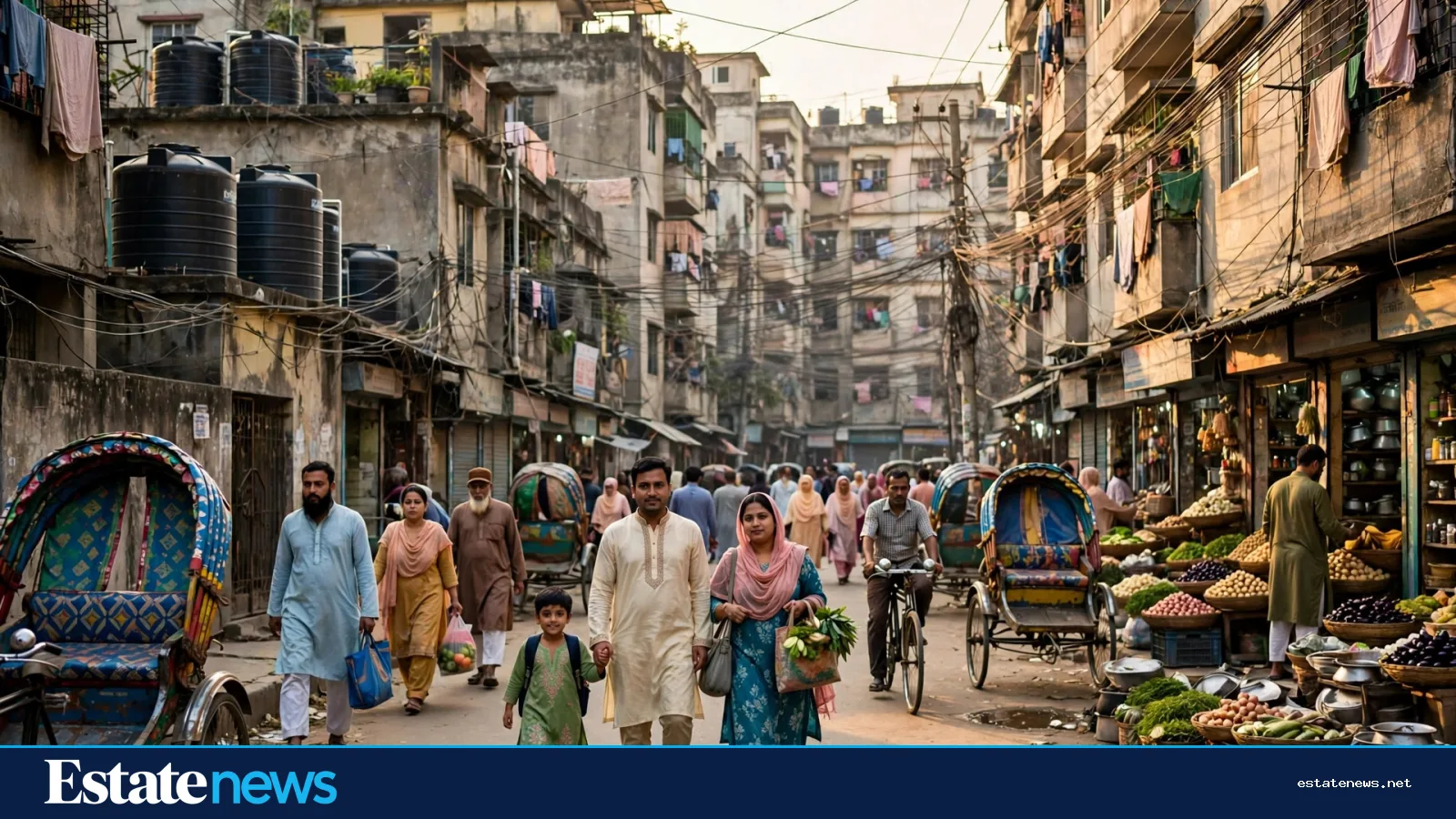
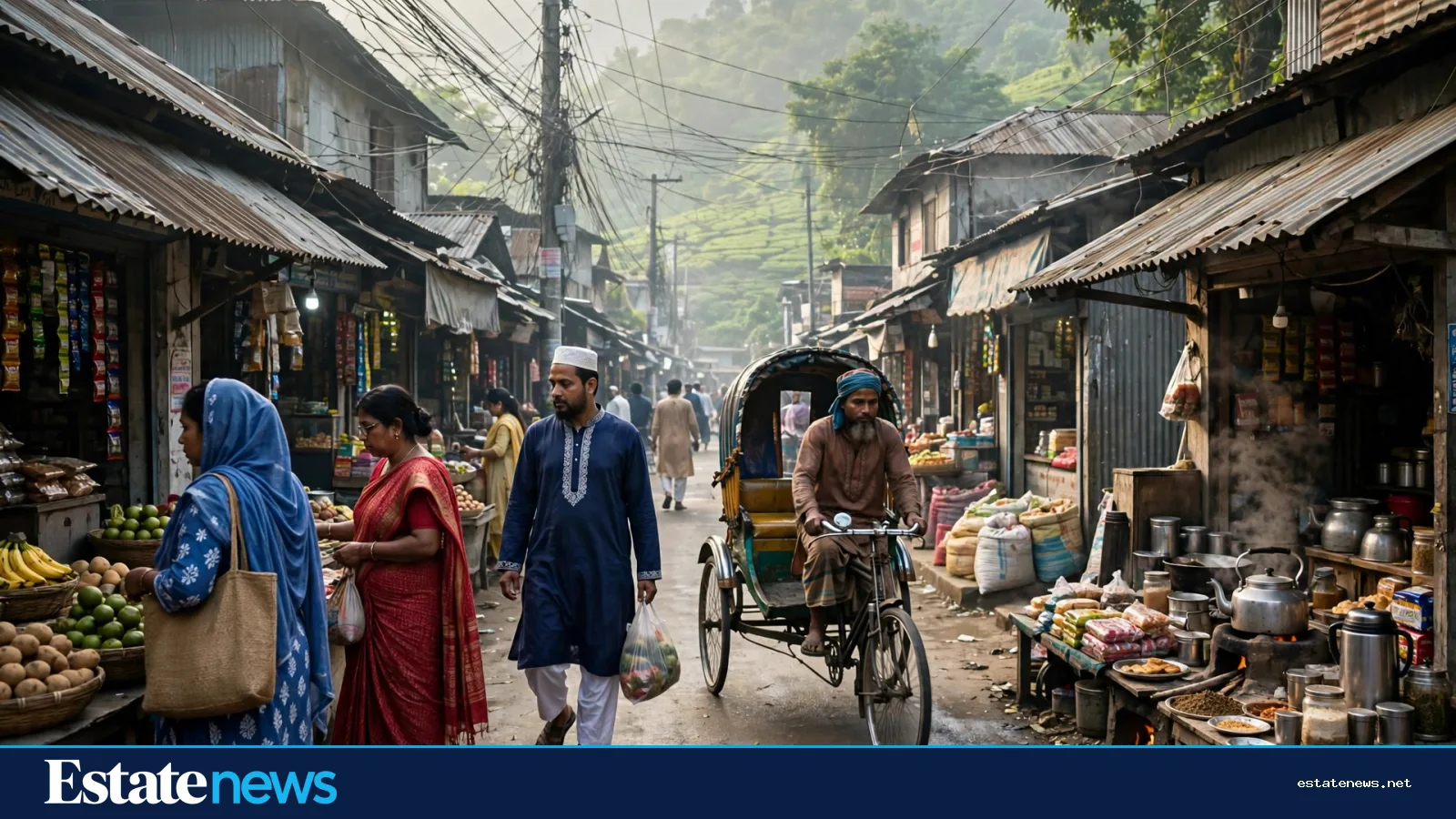
The shrine matters to housing in a way a visitor might miss. The neighbourhoods nearest the Dargah are among the city's oldest and densest, a mix of family homes, small hotels and shops that serve pilgrims. Newer building has pushed outward, toward the airport road and the southern suburbs, but the centre of gravity has not moved. A flat near the shrine still carries a different meaning from a flat on the edge of town, and Sylhetis know the difference without being told.
The airport changed the map
Osmani International Airport sits about 6.4 kilometres from the city centre, close enough that a flight lands and a family is home within the hour. Biman Bangladesh Airlines flies nonstop from London Heathrow four times a week and from Manchester twice a week. Those two routes carry the city's most important economic fact: a large share of the British Bangladeshi community traces its roots to Sylhet, and the money those families send and spend has shaped the city's modern face.


Travel writing about Sylhet keeps returning to the same observation, that the city is in the middle of a construction boom, with new hotels, malls and housing estates changing streets that looked settled a decade ago. The airport is part of the reason. A buyer who lives in London can land on a Thursday, look at a flat on Friday, and fly back on Sunday. That is not how Dhaka's housing market works. In Sylhet, the distance between a buyer and a building is often a single flight.
Money from abroad is one thread in the story, not the whole cloth. Sylhet's own economy runs on tea, trade, hotels and the business of a divisional capital. The flats going up on the hills are bought by local families too, by government officers, by traders, by people who grew up in the city and want to stay in it. A city that only built for absent buyers would be hollow. Sylhet's new buildings fill with people who live in them, and that is what makes the growth real rather than speculative.
Flats climb the hills
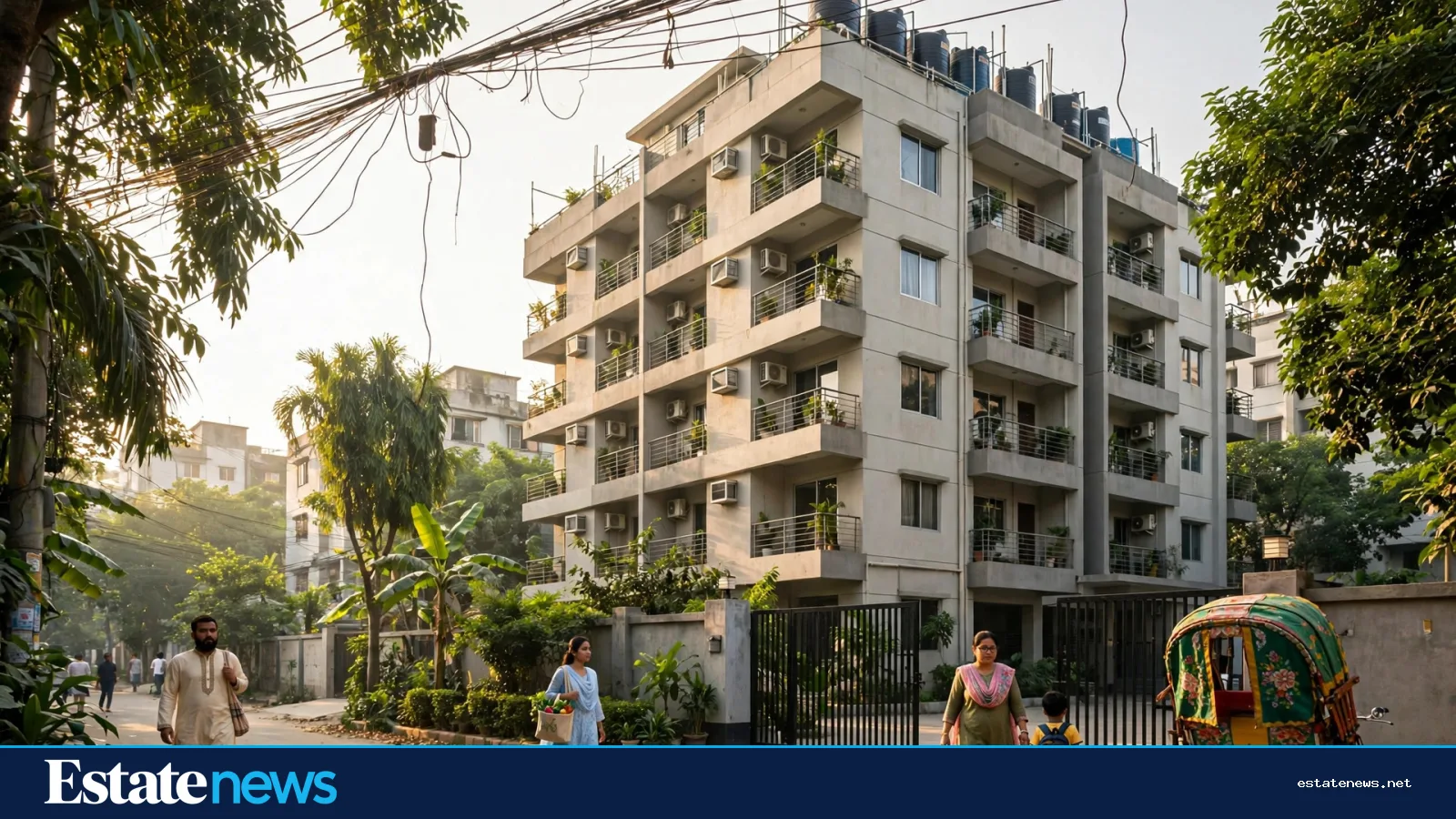
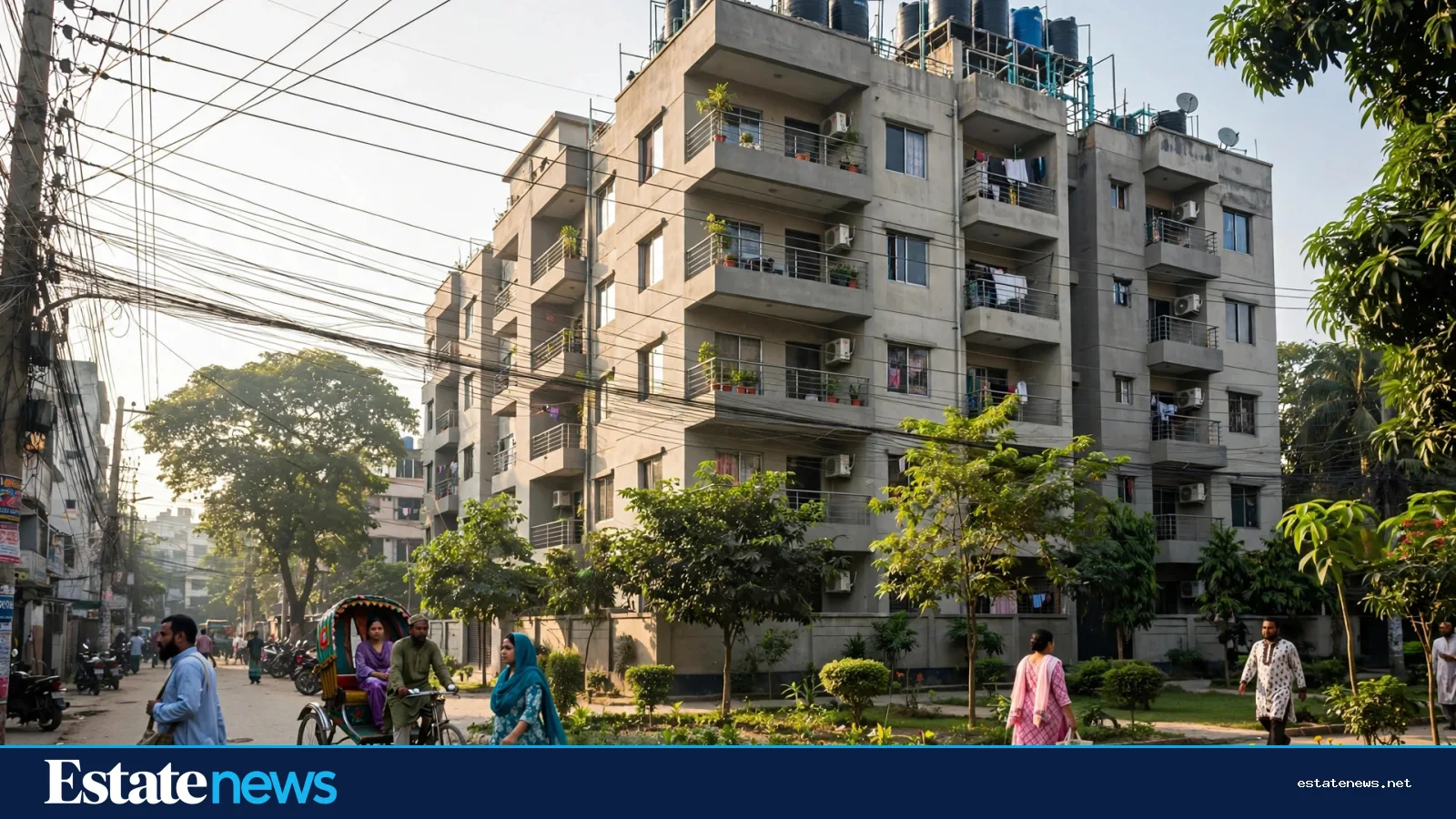
Walk the newer residential streets and the pattern is easy to read. Mid-rise blocks, five to ten storeys, with balconies, rooftop water tanks and a small garden at the gate. Ground floors hold a shop or two. The buildings are not towers. Sylhet's hills and its quieter pace never asked for towers, and the market has not produced them. What it has produced is a steady supply of family flats, built for people who want a view of green from the window and a road that works in the rain.
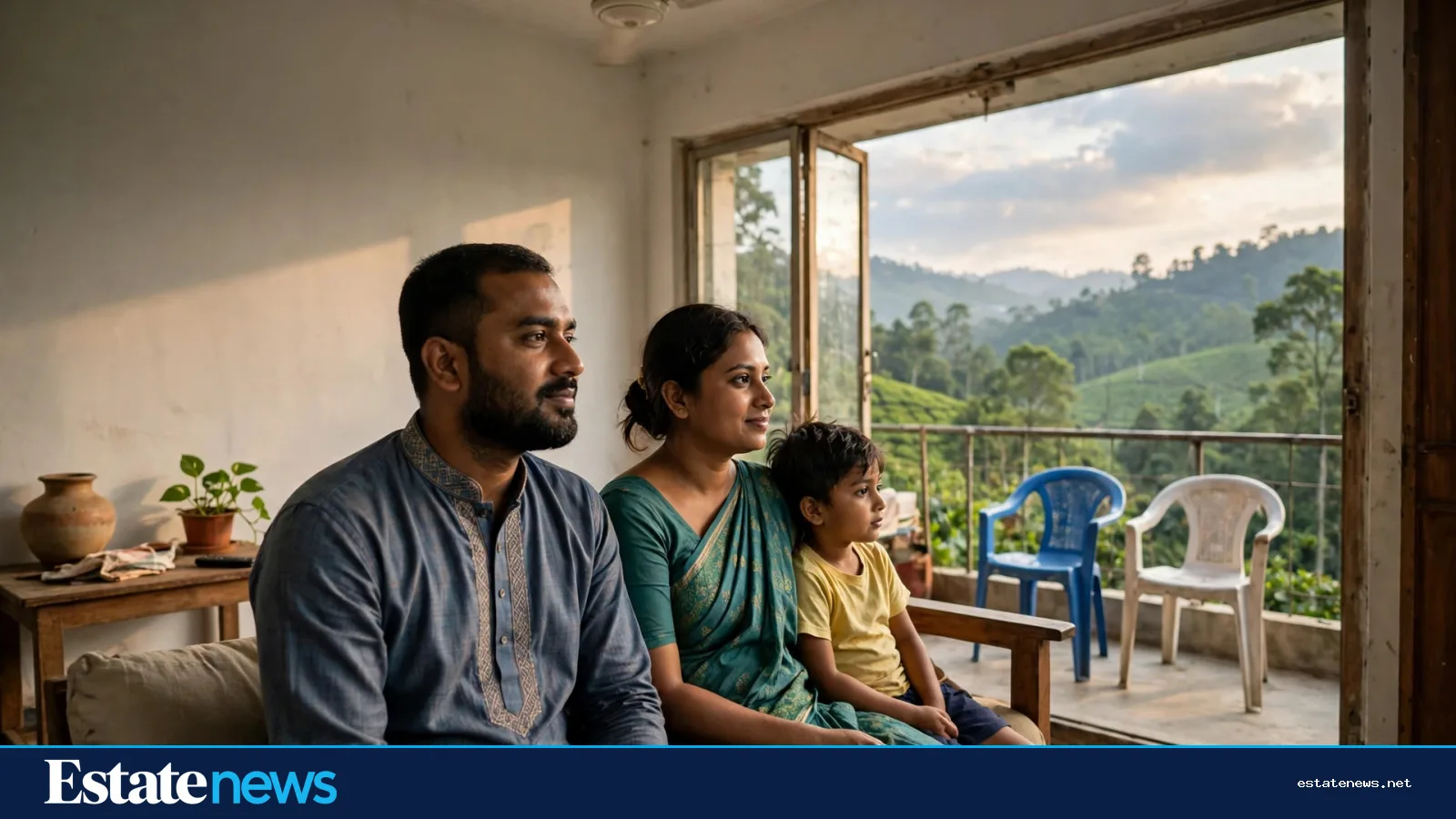
The view is the selling point nobody has to explain. A flat that looks over tea bushes or the Surma sells itself to a Sylheti in a way a flat facing a wall never will. Developers have learned to build for it, turning blocks to face the slope, putting the larger windows on the green side, leaving the roof open for evening air. The Keane Bridge still crosses the Surma in the old part of town, and the Ali Amjad clock tower still stands on the riverbank. The new city grows around those old markers without replacing them.
What the city has to get right
Growth on hills brings problems flat cities never face. Rain runs downhill fast, and a road cut into a slope needs drains that work. Water supply in a hillside neighbourhood is harder than on a plain. The city has about half a million people, and every new block adds to the load on roads, water and power that were laid out for a smaller place. None of this is a reason to stop building. It is a reason to build with the slope in mind, and to ask, before buying, how a building handles a monsoon night.
Sylhet's advantage is that it is still small enough to choose. Dhaka's housing market grew faster than its plans, and the city lives with the result. Sylhet can still decide which hills stay green and which streets take the new blocks. The tea gardens will not move. The shrine will not move. The river will not move. A city that builds between three fixed points has a shape already. The question is whether the new skyline respects it.
Evening comes early to the hills. The tea bushes go dark first, then the river, then the streets below. Lights come on in the new blocks one window at a time, and from a balcony above the town you can see the whole bargain Sylhet has made: a city that keeps its gardens, keeps its shrine, and still finds room to grow. If it holds that bargain, the skyline it is finding will be worth keeping.
[Read more: The Dhaka–Sylhet Highway: What Four Lanes Mean for the Towns Along It](https://estatenews.net/development/the-dhaka-sylhet-highway-what-four-lanes-mean-for-the-towns-along-it) | [Barishal: The River City Where Home Means a Plot, Not a Flat](https://estatenews.net/markets/barishal-the-river-city-where-home-means-a-plot-not-a-flat) | [Mirpur: The Neighbourhood That Builds Dhaka's Middle Class](https://estatenews.net/markets/mirpur-the-neighbourhood-that-builds-dhakas-middle-class)