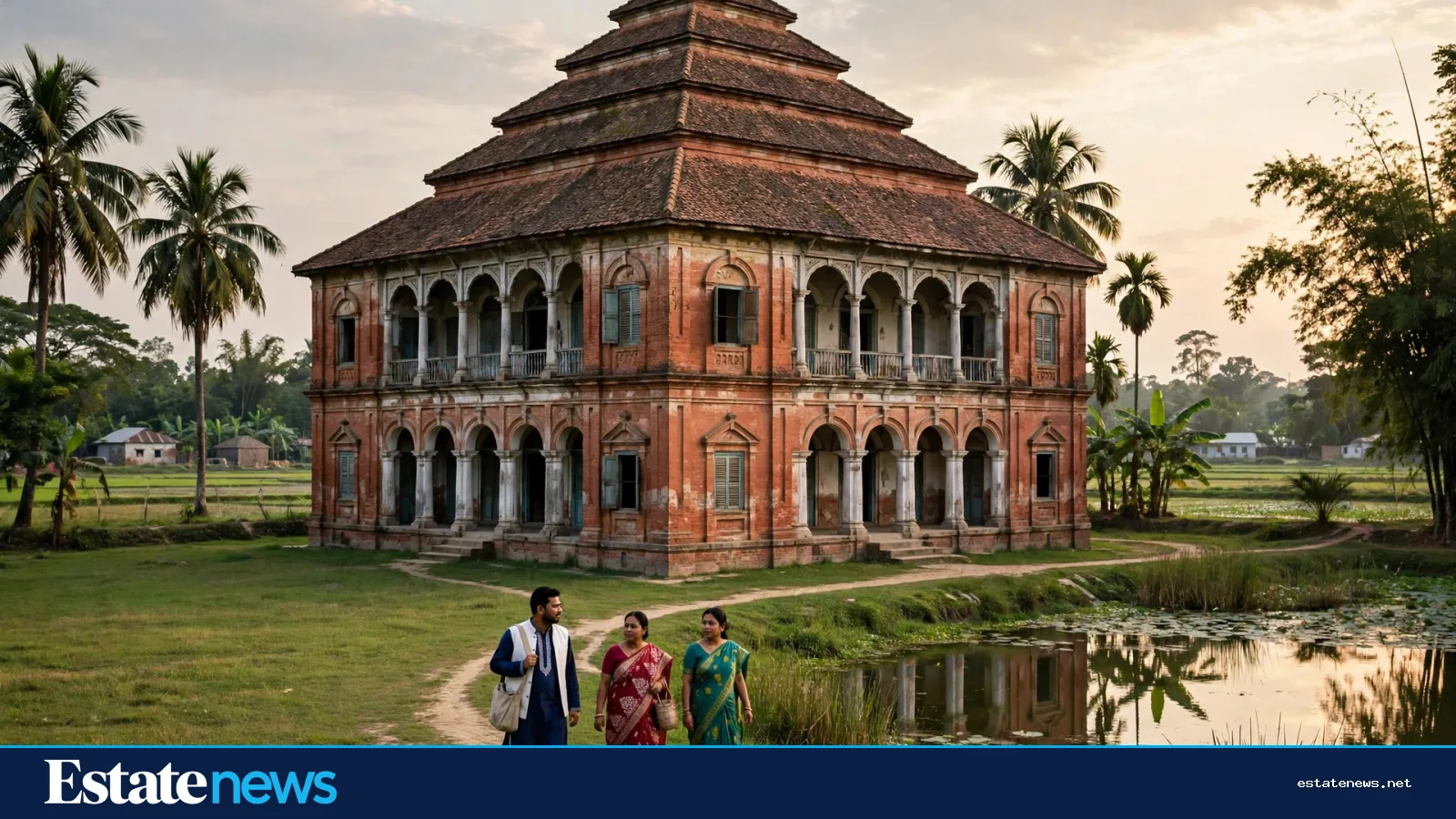
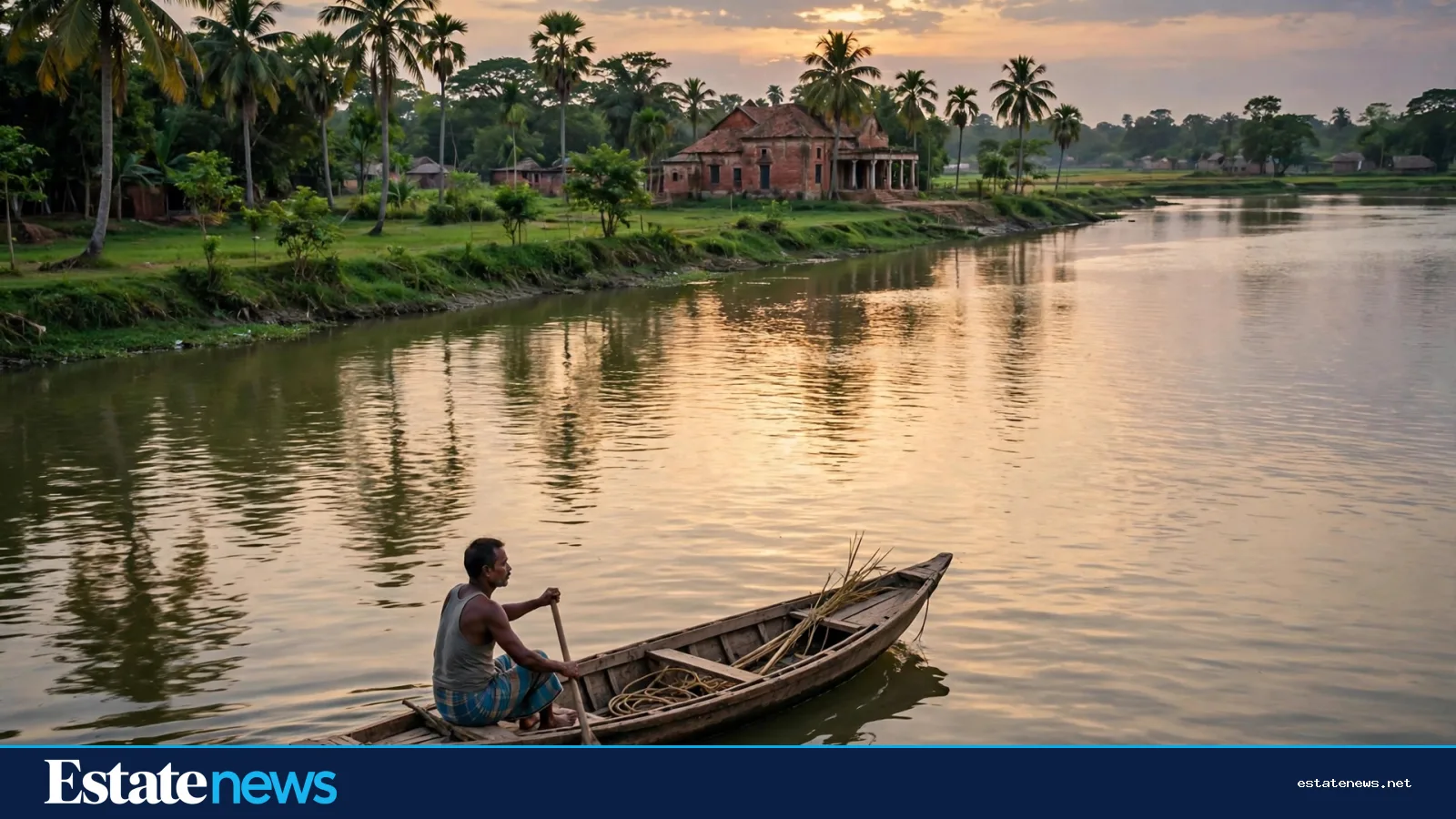
The Padma runs wide and brown past Shilaidaha, and on its south bank the land rises just enough to hold a house. From the river you see the roof first, a steep pyramid of tiles stepping up in tiers, then the brick walls and the verandas underneath. It does not look like a palace. It looks like a working country house that happens to have been lived in by the most famous writer Bengal ever produced.
Shilaidaha is a village in Kumarkhali upazila of Kushtia district, about 20 kilometres from Kushtia town. The house at its centre is known as Shilaidaha Kuthi Bari, or Rabindra Kuthi Bari. Today it is a museum. In the 1890s it was an office, a home and a writing room all at once, and the man who ran it was Rabindranath Tagore.
A house built by an indigo planter, bought by a prince

The village was once called Khorshedpur. Before the Tagore family arrived, an indigo planter named Shelly had built a house here, and the village took a version of his name, Shellydaha, which softened over time into Shilaidaha. In 1807, Prince Dwarkanath Tagore, Rabindranath's grandfather, bought the village and the house with it, through a will executed in his favour by Ramlochan Tagore. The estate, the Birahimpur zamindari, came with a kachari, the estate office, and with villages, rents and tenants to manage.
The house itself is a three-storey, pyramid-shaped terraced bungalow, built of brick and timber with corrugated tin sheets and Raniganj tiles. It was not built as a showpiece. A kuthi bari was a country house for an estate manager, solid, shaded and close to the river that carried the estate's boats. The terraced roof kept the rain off and the rooms cool. The verandas gave a place to sit and hear petitions. It was a building for work, and the work was the zamindari.
The poet as estate manager
Rabindranath Tagore began managing the family estates in Shilaidaha in 1890, and stayed at the Kuthi Bari at intervals between 1891 and 1901. He often lived on his houseboat on the Padma, moving between the estate's villages, hearing disputes, collecting rents and seeing, at close range, how the people on his family's land actually lived. The experience changed his writing. The poems and stories of those years carry the river, the fields and the tenants in a way his earlier work did not.
It was at Shilaidaha that he wrote parts of Sonar Tari, Chitra and Katha O Kahini, and it was here, in 1912, that he began translating Gitanjali into English. The translation would earn him the Nobel Prize in Literature in 1913, the first for an Asian writer. The house has no plaque that can explain that chain of events. A quiet room, a river outside, a decade of estate work, and then a book that travelled the world. That is the whole story, and it is enough.


Loss, rescue and a museum
The estate did not stay in Tagore hands. The Tagore estate fell into debt to a bank, the bank auctioned the property, and the house passed to the Zamindar of Bhagyakul in Munshiganj, the Roy family. It stayed with the Roy estate until the zamindari system was abolished under the East Bengal State Acquisition and Tenancy Act of 1950, when the government acquired it. By then the house was in poor shape.
Syed Murtaza Ali, then Divisional Commissioner of Rajshahi, took the initiative to preserve the dilapidated house in 1958. The provincial government had already planned in 1969 to keep it as a historical site. Since independence in 1971, the house has been under the Department of Archaeology, which completed its renovation. In 1986 it became a museum, the Tagore Memorial Museum, and it is now a protected national monument.
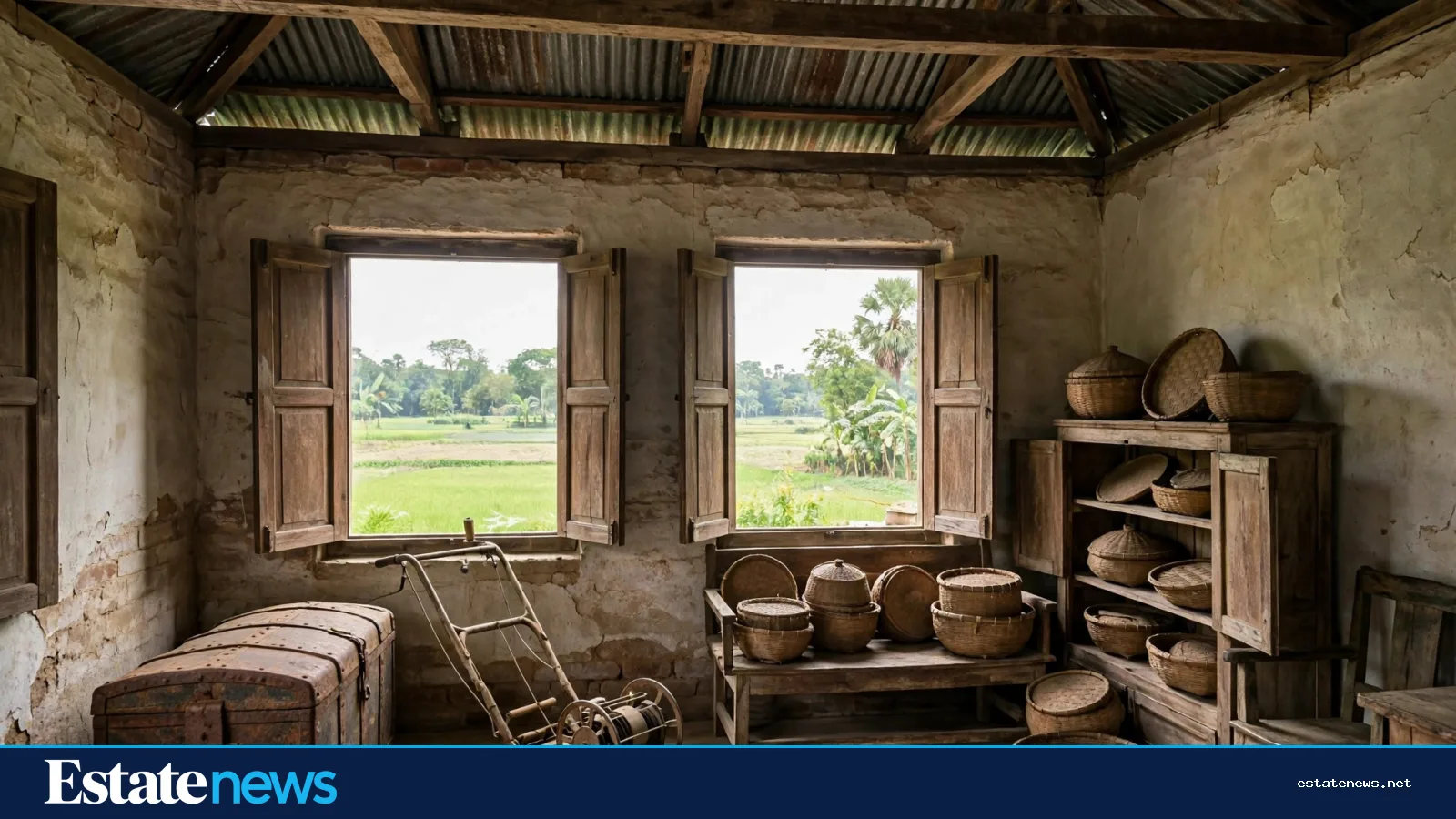
The museum holds the objects Tagore used: his bed, his wardrobe, an iron chest, a lawnmower, framed pictures, and a replica of his houseboat. More than 80 photographs of the poet are on display. They are ordinary things, and that is the point. A bed and a lawnmower say more about a working country house than any monument could.
What stands there today
Visitors come to Shilaidaha from across the country, and the house receives them with a calm that suits the place. The lawn in front is wide, the pond nearby holds the sky, and the river is a short walk away. On 25 Baishakh and 22 Shraban, the poet's birth and death anniversaries, the house is observed at a national level, and the village fills with people who have come to remember him.
For Kushtia, the Kuthi Bari is the district's best-known landmark and a steady reason for travellers to stop. For Bangladesh, it is something rarer: a writer's house that survived as a house, not as a replica. The rooms are the rooms Tagore worked in. The river outside is the river he wrote about. The building did not need to be remade into a monument. It only needed to be kept standing, and kept open, so that the next generation could walk in and understand what a decade on the Padma gave to Bangla literature.
[Read more: Mainamati: The Buddhist City Buried Under Cumilla's Hills](https://estatenews.net/markets/mainamati-the-buddhist-city-buried-under-cumillas-hills) | [Puthia Temple Complex: Rajshahi's City of Temples](https://estatenews.net/markets/puthia-temple-complex-rajshahis-city-of-temples) | [Barishal: The River City Where Home Means a Plot, Not a Flat](https://estatenews.net/markets/barishal-the-river-city-where-home-means-a-plot-not-a-flat)