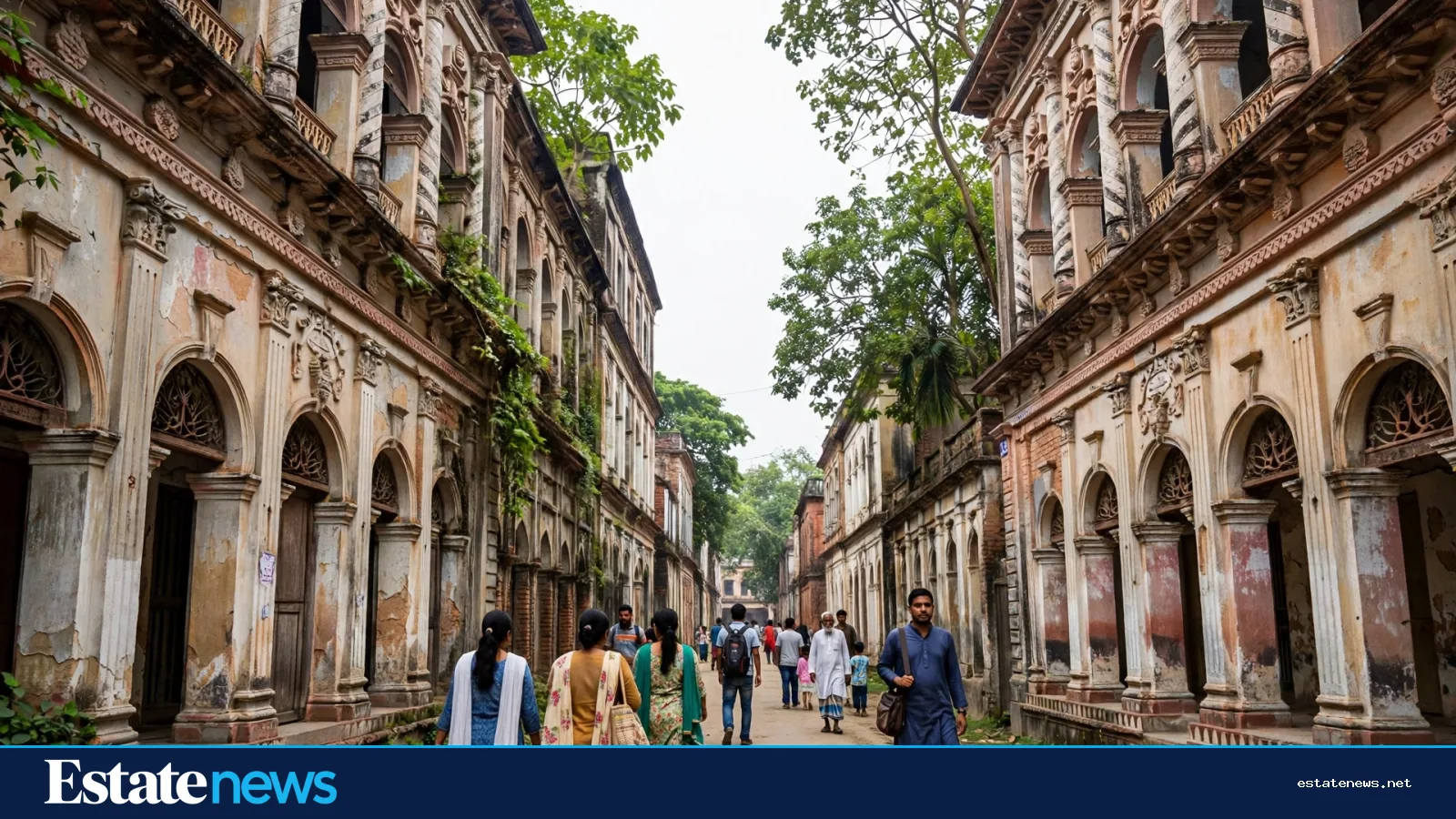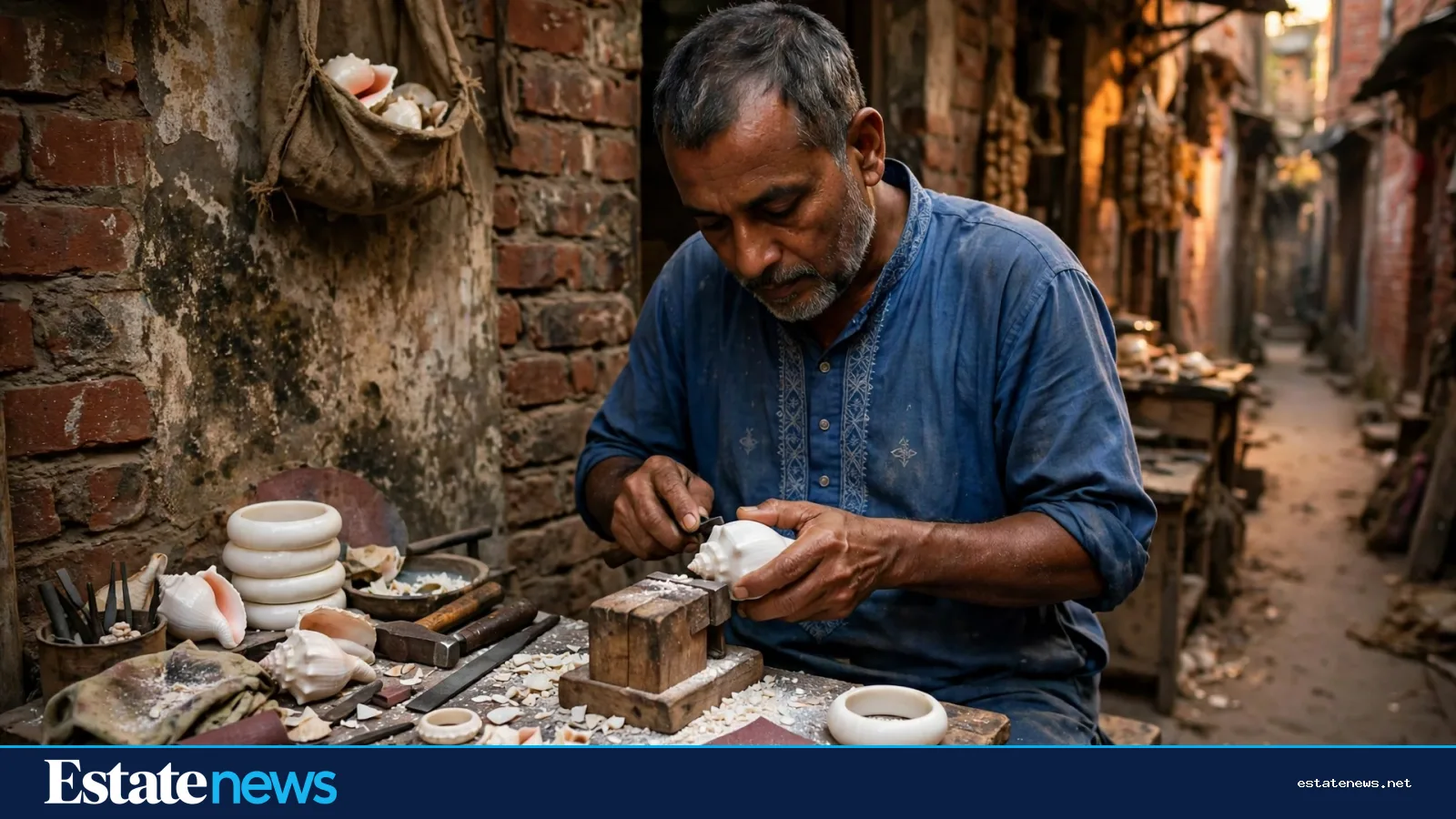
Walk into Shakhari Bazar from Islampur Road in the morning and the city changes shape. The road narrows until two rickshaws can barely pass. The buildings press close on both sides, tall and thin, their brick fronts decorated in styles from the late Mughal and colonial years. Somewhere inside, behind a shopfront no wider than a doorway, a saw moves back and forth through a conch shell. White dust settles on the bench. A bangle takes shape, one cut at a time.
The lane is named for the people who made it. Shankhari, or Shakhari, artisans cut bangles and rings from conch shells, and the white shankha bangle has long marked a married Hindu woman. The trade is hereditary, passed inside families, and the lane has held it for centuries. How many centuries is a matter of record and retelling at once. Local accounts say Raja Ballal Sen of the Sen dynasty first brought the community to Bikrampur, south of Dhaka. The Mughals later resettled them in the capital and gave them land free of tax to carry on the craft. The nineteenth-century historian James Wise, writing in 1883, documented 11,453 conch artisans across Bengal, with 835 living in this part of Dhaka alone. The Daily Star's heritage writing notes that the artisans paid no tax on their buildings until 1793, and that the French traveller Tavernier noticed the community in Bengal in 1666, which puts them in the same place for more than four centuries.
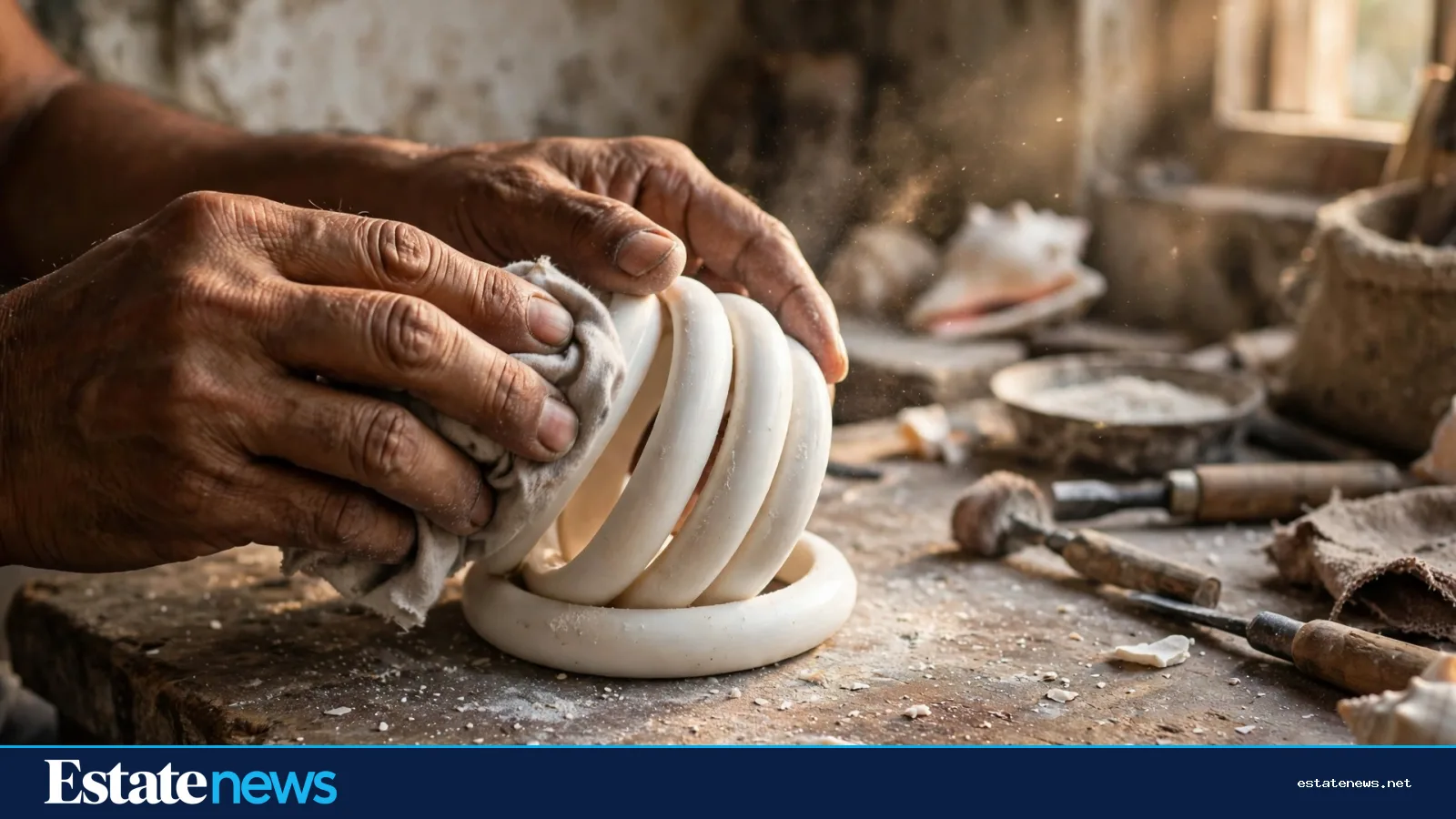
Numbers like Wise's matter because they show what the lane once was: not a curiosity, but an industry. Dhaka was for long the main centre of the conch-cutting industry in India. Raw shells came from Sri Lanka and South India, and before 1947 they reached Dhaka through Calcutta agents. A third-generation trader told The Business Standard in 2025 that raw shells still come from Sri Lanka. The work itself is slow by design. A shell is sliced, shaped, carved and polished by hand, and different hands handle different stages, from cutting to engraving to finishing. The finished bangles carry names of their own: Beki, Konkon, Beni, Shankh Pata and Dariban among them, each pattern etched by hand. A machine can copy a shape. It cannot copy the time inside it.

Houses built around the work
The lane's houses are as much a part of the story as the bangles. Shankhari families were given very little land, and they built upward on narrow slices of plot, commonly 10 to 12 feet wide and 20 to 30 feet long, with a front facade of just 3 to 5 feet. The result is a street of slender buildings with no side windows, decorated brick fronts, and workshops at the ground floor with living space above. A visitor walking the lane today sees that logic intact: the shop is the house, and the house is the shop. One local account counted 142 shankha shops in the lane in earlier years and 15 remaining in recent times, a figure that shows the direction of travel even if the exact count has moved since.
The buildings are old, and old here means fragile. A number of the slender structures collapsed in 2004, killing 19 people, according to local accounts of the lane. The 1971 Liberation War hit the lane harder still. The Daily Star records that the Pakistan Army partly demolished the area during the war, and that many Hindu craftsmen left everything behind to save their lives. After independence, artisans settled again in the same place, but the lane lost much of its earlier character. The people who stayed kept the trade alive in fewer hands and smaller rooms.


That shrinking is the lane's central fact. The Daily Star reported in 2022 that where a single shakha once passed through nine artisans to reach its finished form, workshops now bring in ready-made pieces because only a few artisans remain who can engrave designs. Cheaper machine-made bangles, imported mostly from Kolkata, have flooded the market, The Business Standard reported in 2025. A buyer who cannot tell a hand-cut bangle from a machine copy will usually buy the cheaper one. The lane's problem is not that people stopped wearing shankha. It is that the handwork inside it became invisible to the buyer.
What keeps the lane alive
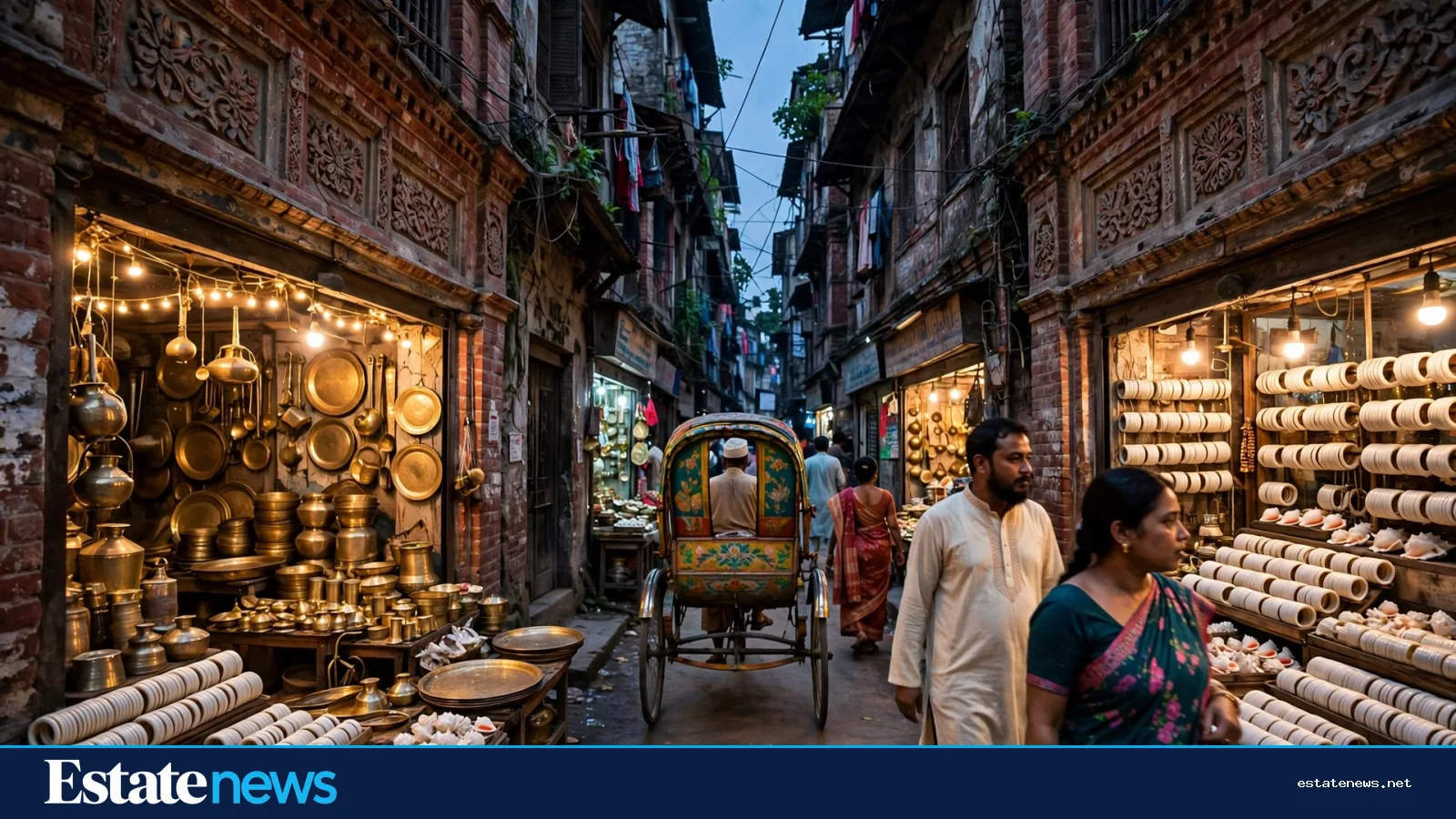
Walk the lane in the evening and the answer is visible. Alongside the shankha shops sit brass and bell-metal utensils, traditional musical instruments and small general stores. The lane is not a museum street. It is a working bazaar where a family can buy a bangle, a plate and a harmonium in one walk. Festivals still pull crowds. The lane is known for Holi celebrations, and the artisans' own religious life, centred on Vishnu and Krishna, once paused work for five days in the Bangla month of Bhadra for prayers to the sage Agastya, whom tradition credits with using the same cutting tools. Whether or not a visitor knows that story, the point stands: the lane survives because it is lived in, not because it is preserved behind glass.
For Dhaka, Shakhari Bazar is a test case in how the city treats its working heritage. The lane needs what any old housing stock needs: structural repair for buildings that were never built to modern codes, and a market that pays for handwork. A buyer who asks how a bangle was made, and pays the difference, does more for the lane than any plaque. A conservation plan that treats the workshops as the heritage, rather than only the facades, would do more still. The houses here were designed for a trade. If the trade goes, the houses become shells, and the lane becomes a backdrop.
Morning in the lane still starts with the saw. That sound, thin and steady behind a shopfront, is the best argument the lane has. It says the craft is not a memory yet. It is a job, done by people who learned it from their parents, in houses their grandparents built for exactly this work. Dhaka has very few streets left where that sentence is still true. Shakhari Bazar is one of them, and keeping it that way is a housing question as much as a heritage one. The homes and the work cannot be saved separately.