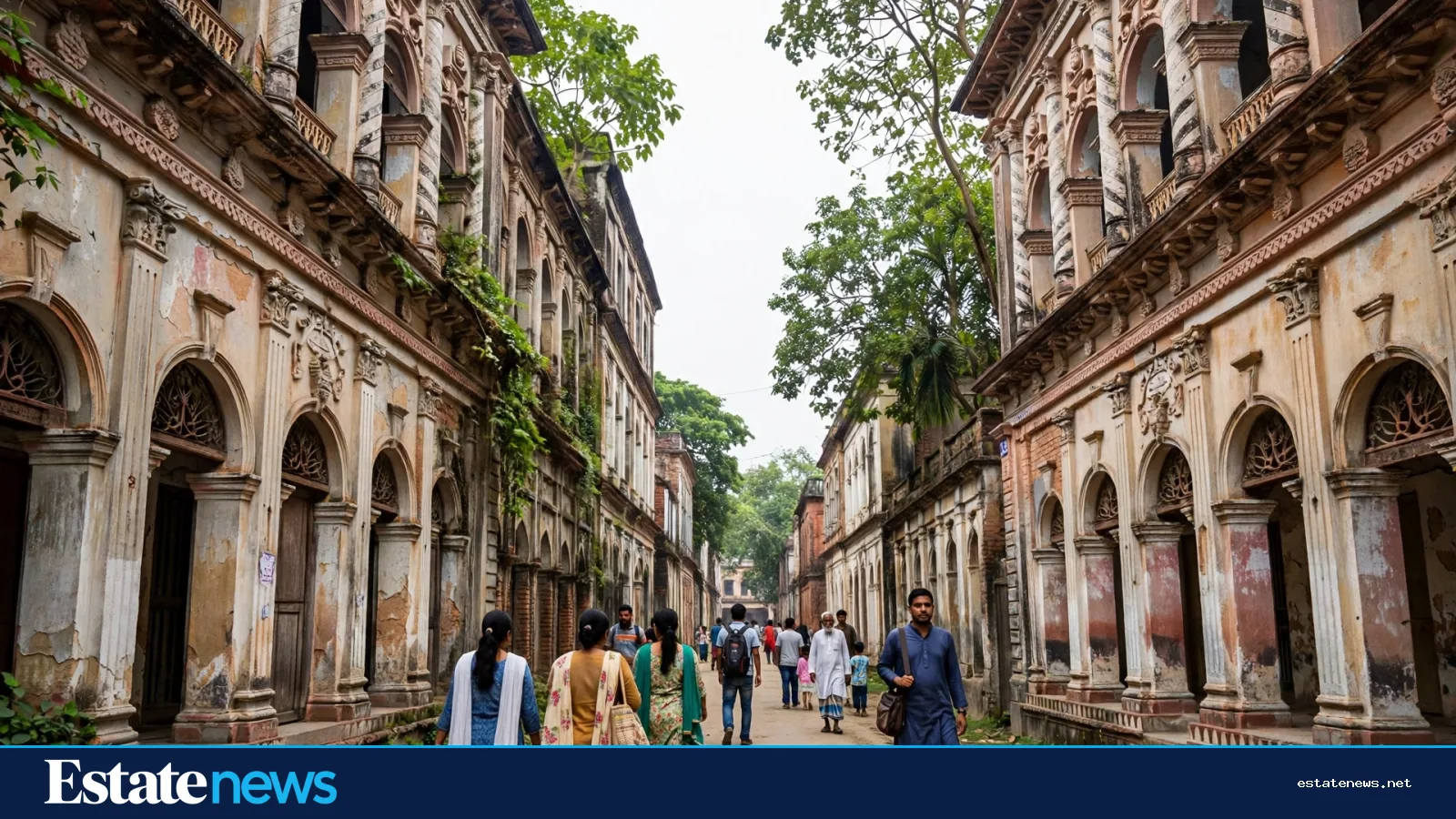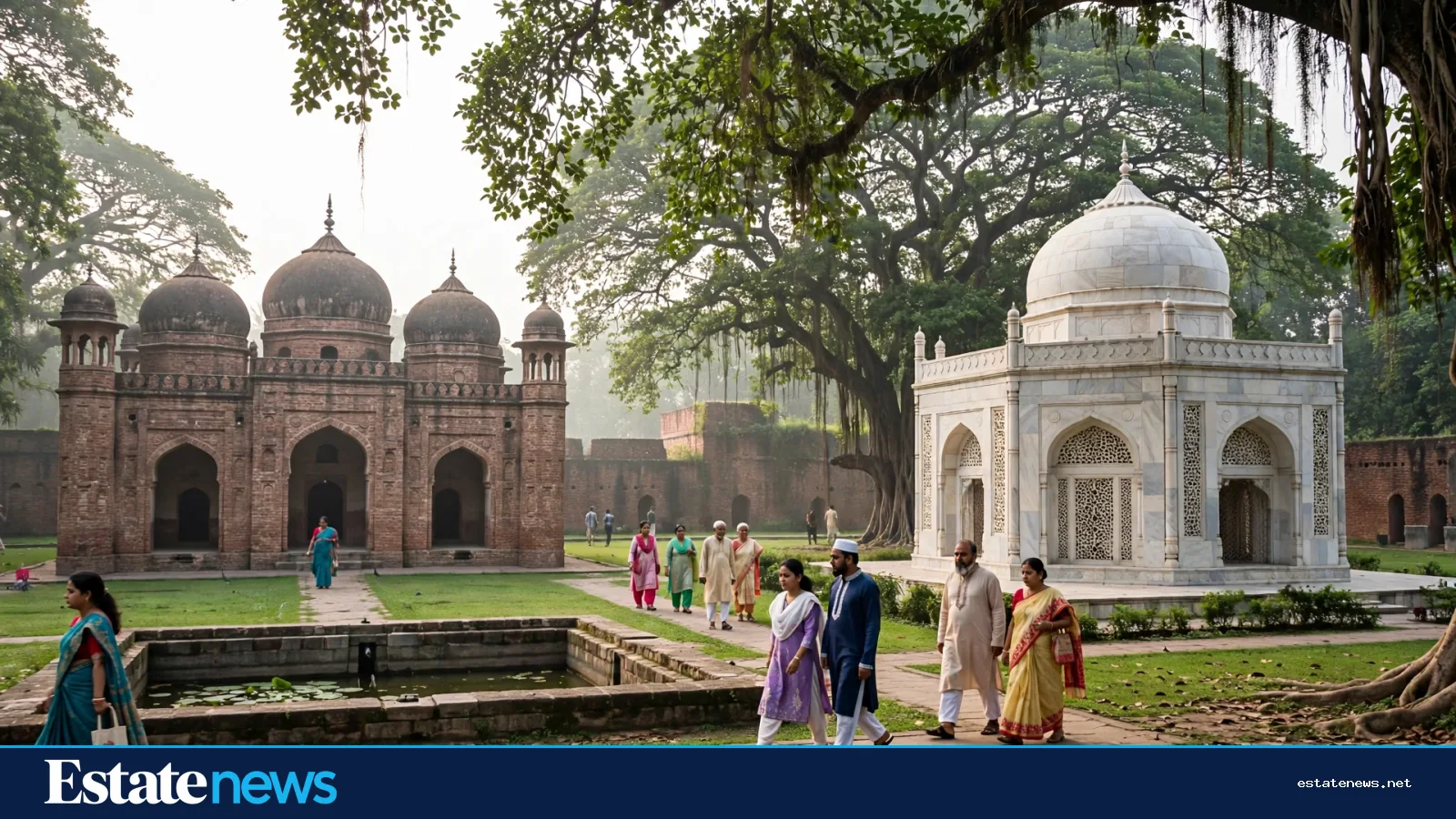
Stand at the gate of Lalbagh Fort on a winter morning and two Dhakas meet. Outside, the lanes of Lalbagh are narrow, crowded and built hard up against each other. Inside, 18 acres of lawn, trees and brick open out, and the noise drops. Schoolchildren run across the grass. Older residents walk the paths. A family poses near the white marble tomb. The fort was never finished as a palace. As a piece of public ground in a dense city, it may be the most useful unfinished building in Dhaka.
Banglapedia records that construction began in 1678, when Prince Muhammad Azam started the fort during his fifteen-month vice-royalty of Bengal. The prince, a son of Emperor Aurangzeb, laid out a palace fortress on the Buriganga in the southwestern part of the old city, then called Fort Aurangabad. Before the work could be completed he was recalled by his father, and he left Dhaka in October 1679. His successor, Shaista Khan, stayed in Dhaka until 1688 but did not complete the work. In 1684 his daughter Bibi Pari, also called Iran Dukht, died here, and tradition holds that Shaista Khan then took the fort to be ominous and stopped building. That belief is a traditional account, not a documented order, and it is worth saying so. What is certain is that the fort was left incomplete, and stayed that way.
What was built, and what the digging found

For a long time the fort was understood as three buildings, two gateways and a stretch of damaged wall: the mosque, the tomb of Bibi Pari and the Diwan-i-Aam, the hall of public audience. The mosque, with three domes, dates to the first years of the work. The tomb, in white marble, stands in the garden as the fort's most photographed building. Department of Archaeology excavations changed the picture. In the present 18-acre area, diggers found remains of 26 or 27 structures, with arrangements for water supply, sewerage, roof gardens and fountains. The finds also included strata from the Sultanate and pre-Muslim periods, with terracotta heads and plaques, evidence that the ground was inhabited long before the Mughals arrived. The present fort area, Banglapedia notes, may be only part of what Prince Azam planned, with the main wall line possibly running further east beneath today's Shaista Khan Road.
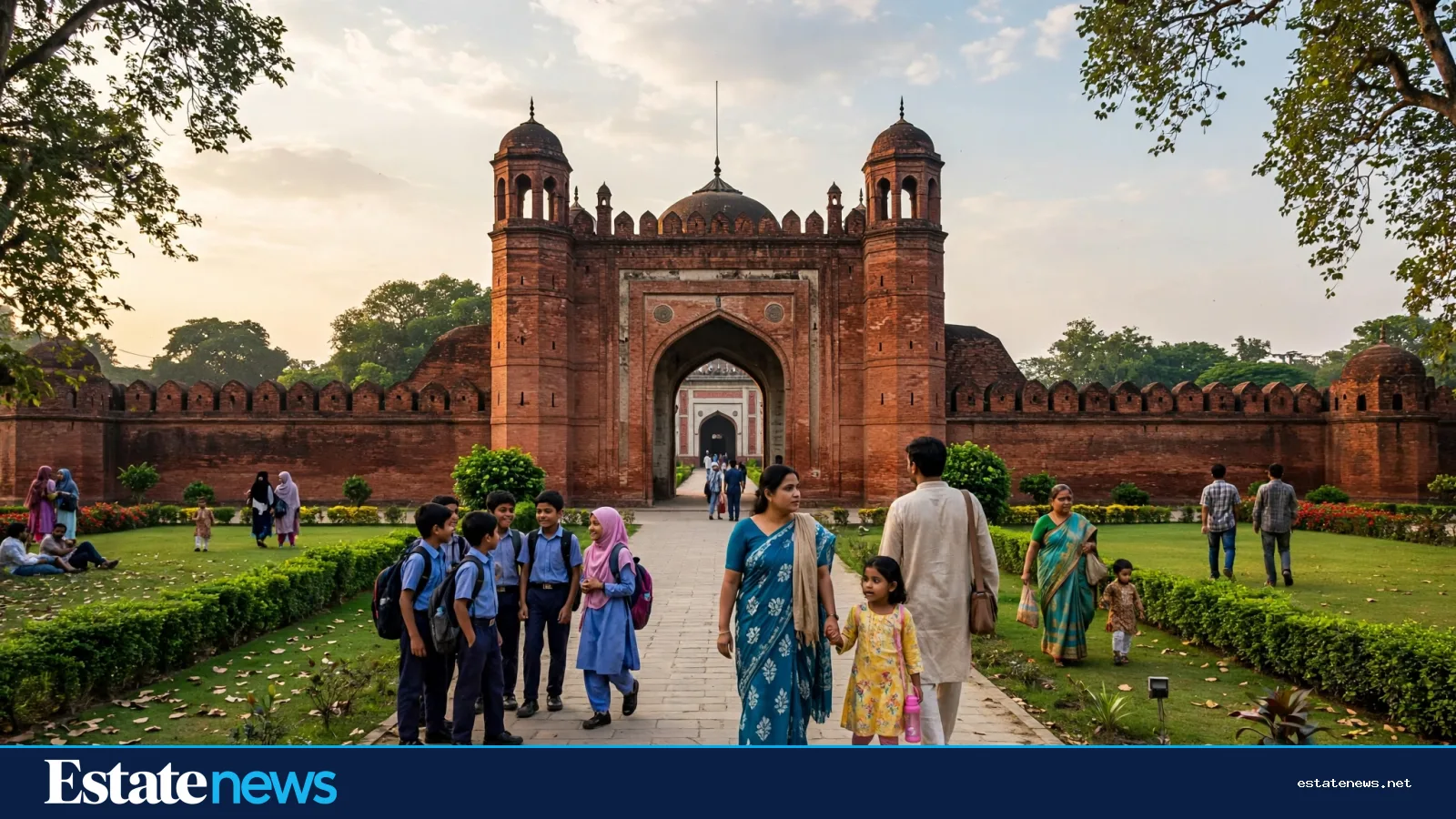
The area took the name Lalbagh, meaning red garden, in 1844, replacing Aurangabad. The Archaeology Department restored the site, and it is now a museum and one of Dhaka's most visited historic places. Visitors enter through the gateways, walk the garden paths, and see the mosque, the tomb and the audience hall in one circuit. The museum holds objects from the excavations and the Mughal period, giving the walls a context that a walk alone cannot.


A palace ground in a crowded quarter
Lalbagh today is one of the densest parts of Dhaka, and that is exactly why the fort matters. The neighbourhood around it has little open space. The fort's lawns act as the area's park, its paths as a morning walking route, and its shade as a gathering place. School groups come for history lessons they can walk through. Families come because there is grass and sky. For residents weighing a home nearby, the fort is a genuine amenity, but an unusual one: it cannot be built over, extended or replaced, because it is protected ground. That permanence is the point. A buyer near a park that can be sold will one day lose the park. A buyer near Lalbagh Fort will not.
The fort also shows what restoration can and cannot do. The Archaeology Department's work keeps the standing buildings safe and has revealed the buried ones, but the site still needs steady care: water management for old brick, protection for excavated remains, and control of the crowds that wear the paths. The unfinished state is part of the attraction. Visitors do not come to see a perfect palace. They come to see a grand plan interrupted, and to imagine what the finished fort would have looked like on the riverbank. The fort's story ends without an ending, and Dhaka has learned to live inside that gap. It is a palace that never housed a prince for long, and a garden that now houses a neighbourhood.