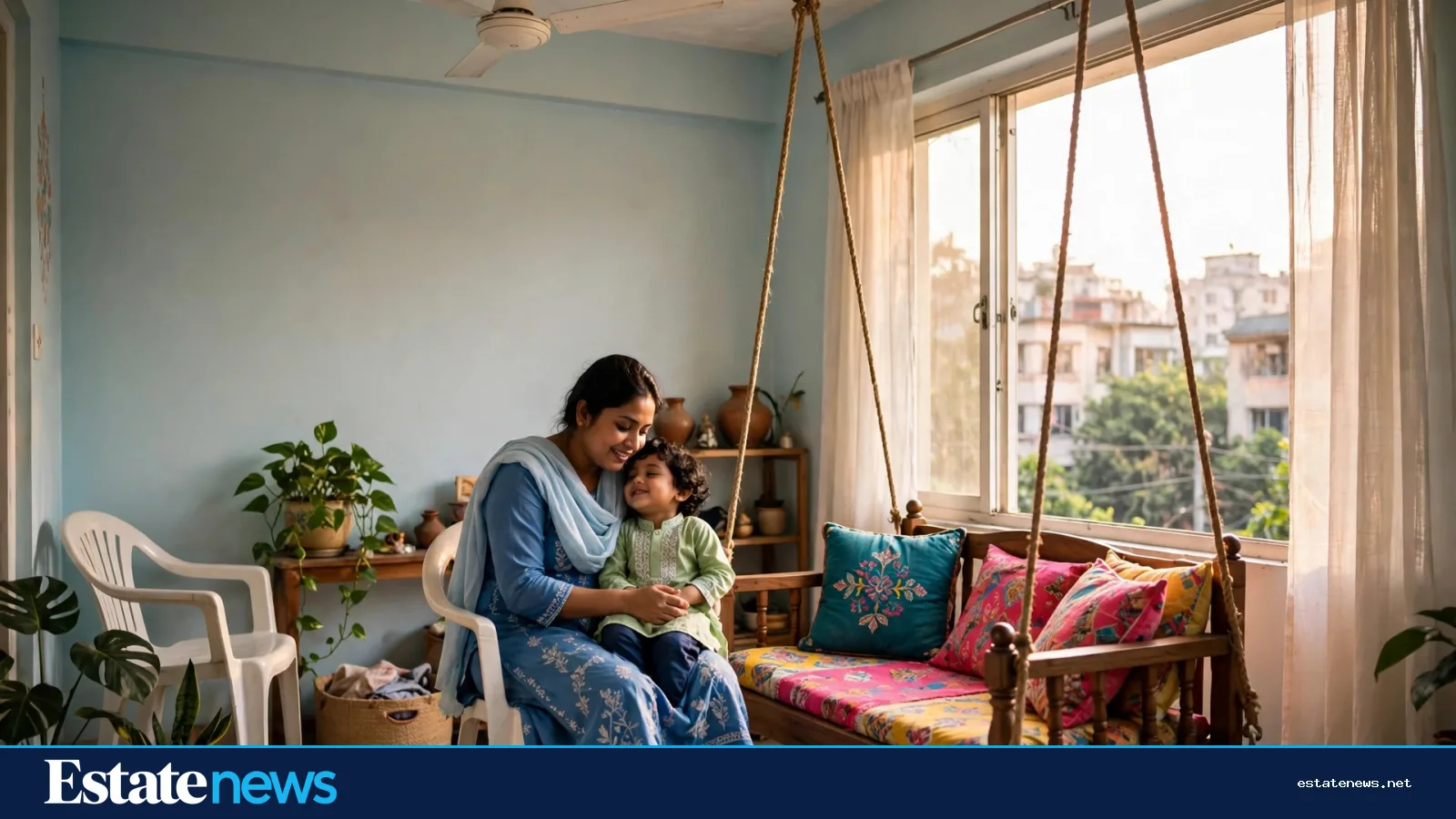
Every Bangladeshi of a certain age remembers a swing. It hung from a mango tree or a courtyard beam, and it creaked in the afternoon heat while someone pushed from behind. The dolna belonged outside, to open air and long summers.
Now it is coming inside. In Dhaka flats, where the courtyard has shrunk to a veranda and the mango tree is a memory, families are hanging wooden swings in living rooms and wide balconies. The dolna has become furniture: a seat for an evening chat, a nap spot for a grandparent, a slow corner in a flat that never quite slows down.
The move indoors suits the way Dhaka lives now. Flats are smaller than the houses they replaced, and every piece of furniture has to earn its floor space. A swing earns it by doing two jobs at once. It is a seat, and it is also the room's soft centre, the place people drift towards when the television goes off.

Where it fits
A dolna needs less room than people expect, and more than they think. The swing itself is about the size of a two-seater sofa, but it needs clear space around it to move. A wall behind it, a table too close in front, and the swing becomes a decoration nobody uses.
The best spot is usually near a window or on a wide veranda, where air moves and light falls. In many Dhaka flats the living room window wall is the natural place, with the swing facing into the room. A veranda works when it is wide enough and covered from rain, since wood and cane suffer in a monsoon downpour.
Measure before buying. Mark the swing's length on the floor with tape, then add an arm's length on each side for the sway. If the tape crosses a doorway or a passage people use every day, the spot is wrong. A swing that blocks the way to the kitchen will be cursed within a week, however pretty it looks on the first day.
What holds it up
This is the part that matters most, and the part people skip. A swing hangs from the ceiling, and the ceiling has to be able to carry it. In a concrete slab, a proper anchor bolt set into the concrete does the job. In a false ceiling, or a ceiling with a plaster board, it does not. The anchor must reach the real slab above.
Ask the building management or the developer which ceilings can take a hanging load. In older buildings, the answer may need a mason or an engineer to look at the slab. In a rented flat, ask the landlord first, in writing if the flat is not your own. A hole drilled into a slab without permission can become a dispute when the tenancy ends.
The hardware deserves the same attention as the wood. Chains and ropes should be rated for far more than the weight they will carry, and the hooks should be the closed kind that cannot slip off. Check the fittings every few months, the way you would check a fan. Dhaka's humidity works on metal slowly, and a rusted link is easy to miss until it matters.


Wood, cane and cloth
The classic indoor dolna is wood, usually with a cane or wooden slat seat and a backrest low enough to lean on. Teak and mahogany last longest, and they cost more for that reason. Cheaper woods work too, but they need varnish and care, and they warp faster in damp air.
Cushions change the swing completely. A thin mattress and a set of cushions turn a hard bench into a place to sit for an hour. Cotton covers in bright jamdani or block-print patterns suit a Bangladeshi living room better than imported fabrics, and they wash easily, which matters with children around. A light throw over the back keeps the wood cool in summer and warm in winter.
Children and safety
Children love a swing, and a swing in a living room will be used hard. The rules are simple, and they are worth stating plainly. The swing should hang low enough that a child's feet can touch the floor when it stops. It should never be pushed high indoors, where a wall or a window frame is within reach. Small children should not use it alone.
A backrest and side arms help. So does a rug underneath, which softens a fall and stops the swing from marking the floor. Keep the swing away from the ceiling fan, and check the distance with the fan running. A fan blade and a swinging seat are a bad combination, and it is easy to forget the fan is there until the swing rises towards it.
Weight matters too. Ask the maker what load the swing is built for, and believe the answer. Two adults and a child add up quickly, and a swing built for one person will tell you so, sooner or later, in the way wood complains.
A small piece of the old house
Part of the dolna's appeal is memory. For a family that moved from a village house or an old Dhaka home into a flat, the swing carries something of the old place with it. Grandparents sit on it and remember. Children who never saw a courtyard swing learn what one feels like.
That is why the details matter: the creak of the chain, the coloured cushions, the slow back and forth while the evening news plays in the background. A dolna is not a machine and it is not a status object. It is a slow thing in a fast flat, and that is exactly what people want from it.
Buy it from a maker who will come and fit it, not just deliver it. A good swing, hung well, will outlast the sofa beside it.