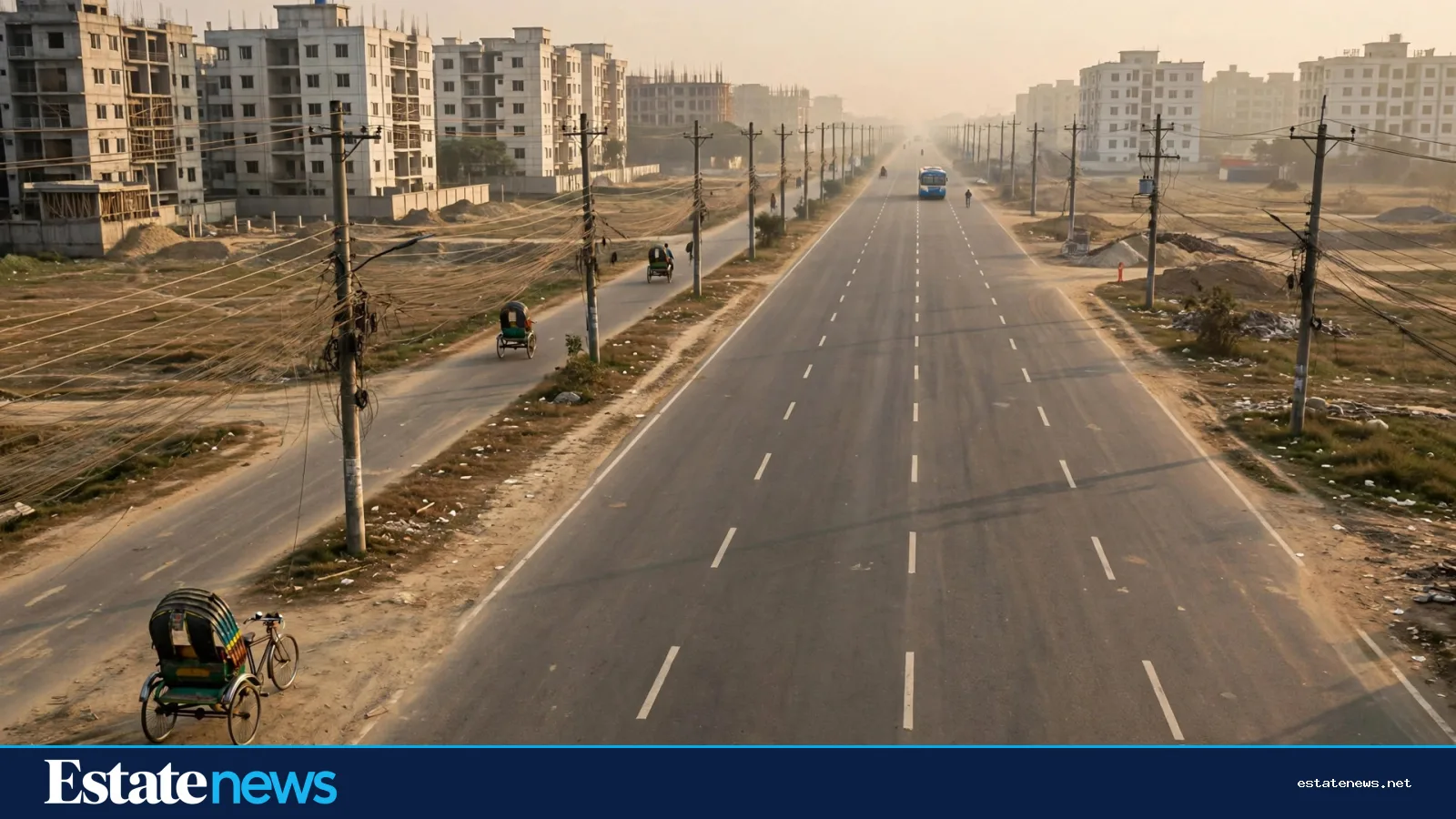
Stand on the 300-foot road in Purbachal on a clear morning and the first thing you notice is the width. The asphalt runs straight to the horizon, with room to spare on both sides, and the traffic is thin enough that a rickshaw can cross without hurry. Dhaka's roads are famous for the opposite. This one feels like a road built for a city that has not arrived yet.
That is the point. The 300-foot-wide road is Purbachal's main east-west artery, the spine of the new town rising on Dhaka's eastern edge. Everything in Purbachal is measured against it: plots are described by their distance from it, buildings face it or turn away from it, and a visitor's first sense of the place comes from driving along it.
The road's width is not an accident. Purbachal was planned as a township, not as an extension of Dhaka's old streets, and the plan gave its main road room for lanes, service roads and the utilities underneath. Whether the town grows into that width is the question the next decade will answer.

A road with room to breathe
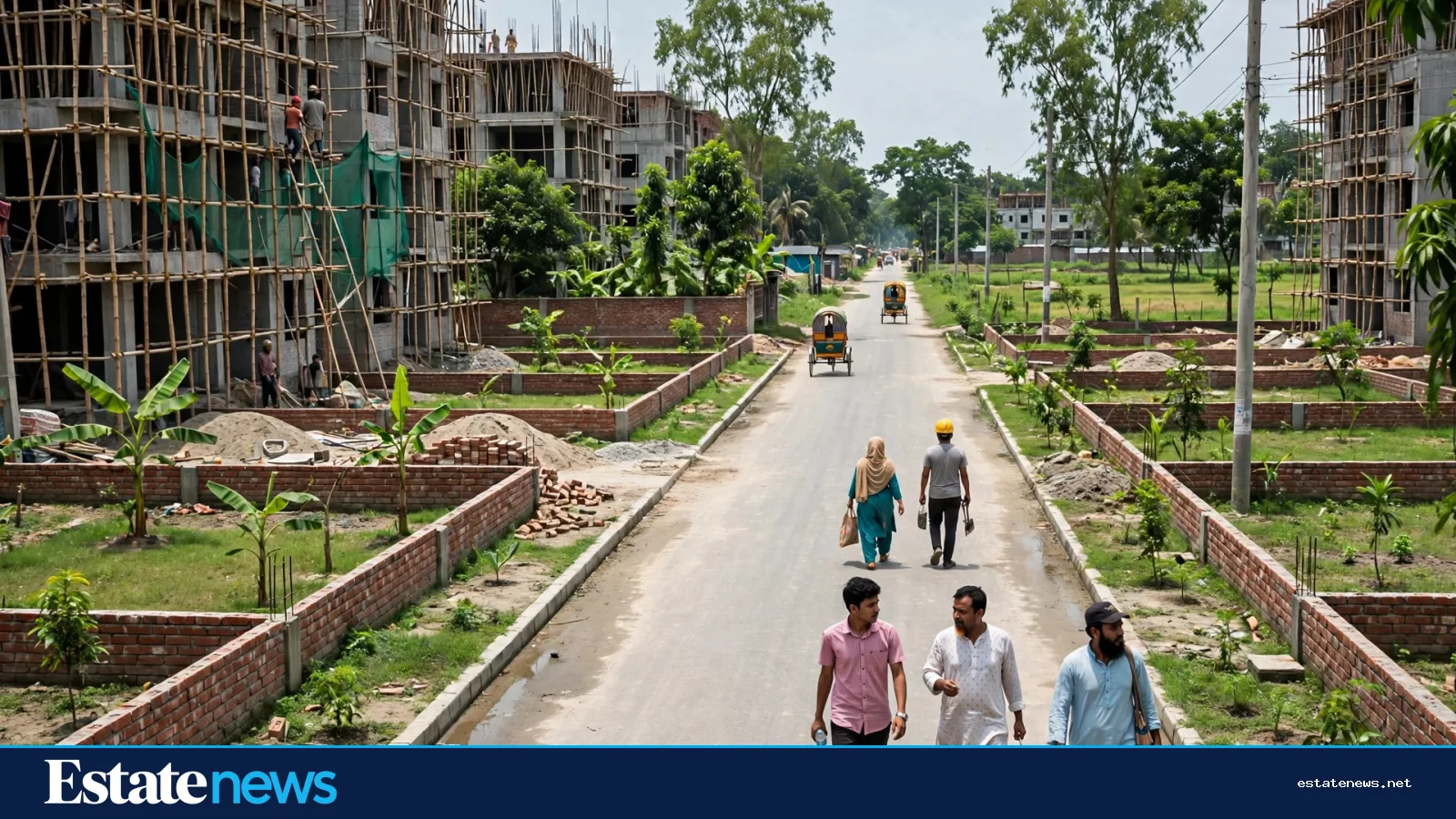
Drive east from the city and the change is gradual. The traffic thins, the buildings get newer, and the plots get bigger. Then the road opens out, and the scale of the plan becomes visible: wide carriageways, broad medians, and open land on either side where the town is still filling in.
Rickshaws still use it, and so do buses and the occasional truck carrying bricks. The mix tells its own story. This is a road in use, not a road on a map, but it is a road whose heaviest traffic is still to come. Morning and evening bring the workers and the early residents. Midday belongs to the construction vehicles.
For a visitor, the road is the easiest way to read Purbachal. The finished apartment blocks stand beside plots that are still empty, and beside others where a building is halfway up. The town is not arriving all at once. It is arriving block by block, and the road is the line along which it arrives.
The plots beside it
Land beside a main road always carries a premium in Dhaka, and Purbachal is no exception. Plots near the 300-foot road are the ones developers want, and the ones buyers ask about first. A plot on a wide road means easy access, and easy access means a building that fills faster.
But a plot is only as good as what surrounds it. A wide road with no shops, no school and no clinic nearby is a quiet address, and quiet is not always what a family wants. The plots further from the road, on the smaller internal streets, trade a little convenience for a little calm. Both have their buyers, and the town needs both.
What matters most for anyone looking at a plot here is what is already there, not what is promised. A finished road, a working drain, a water line that reaches the gate: these are facts you can check by standing on the plot. A promise about what will come is only a promise, and promises do not carry water.


Life arrives slowly
A new town does not fill like a glass. It fills like a neighbourhood: one family, then another, then a tea stall, then a pharmacy, then a school van route. Purbachal is in that early stage, where the buildings are ahead of the services and the residents are ahead of the shops.
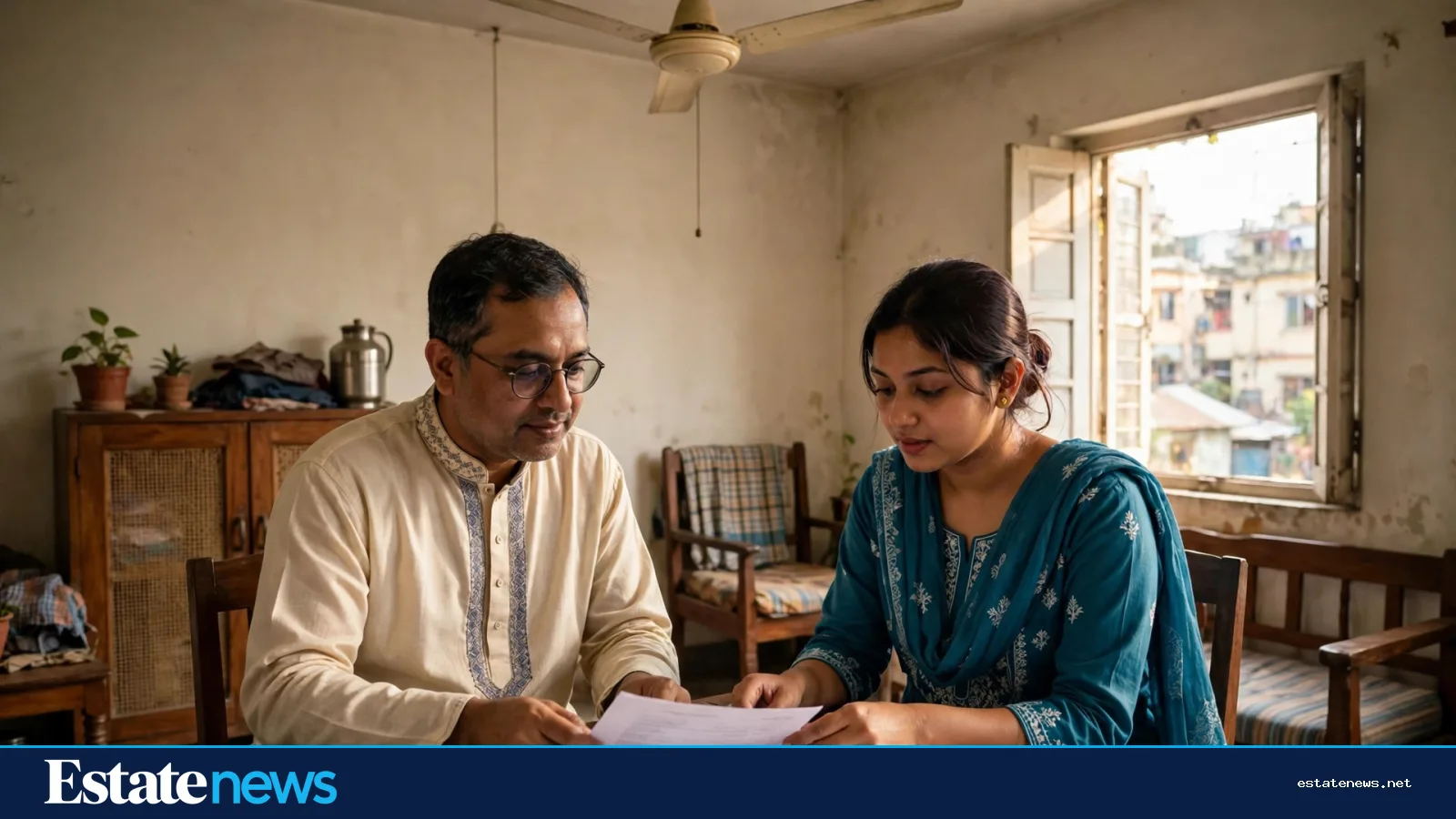
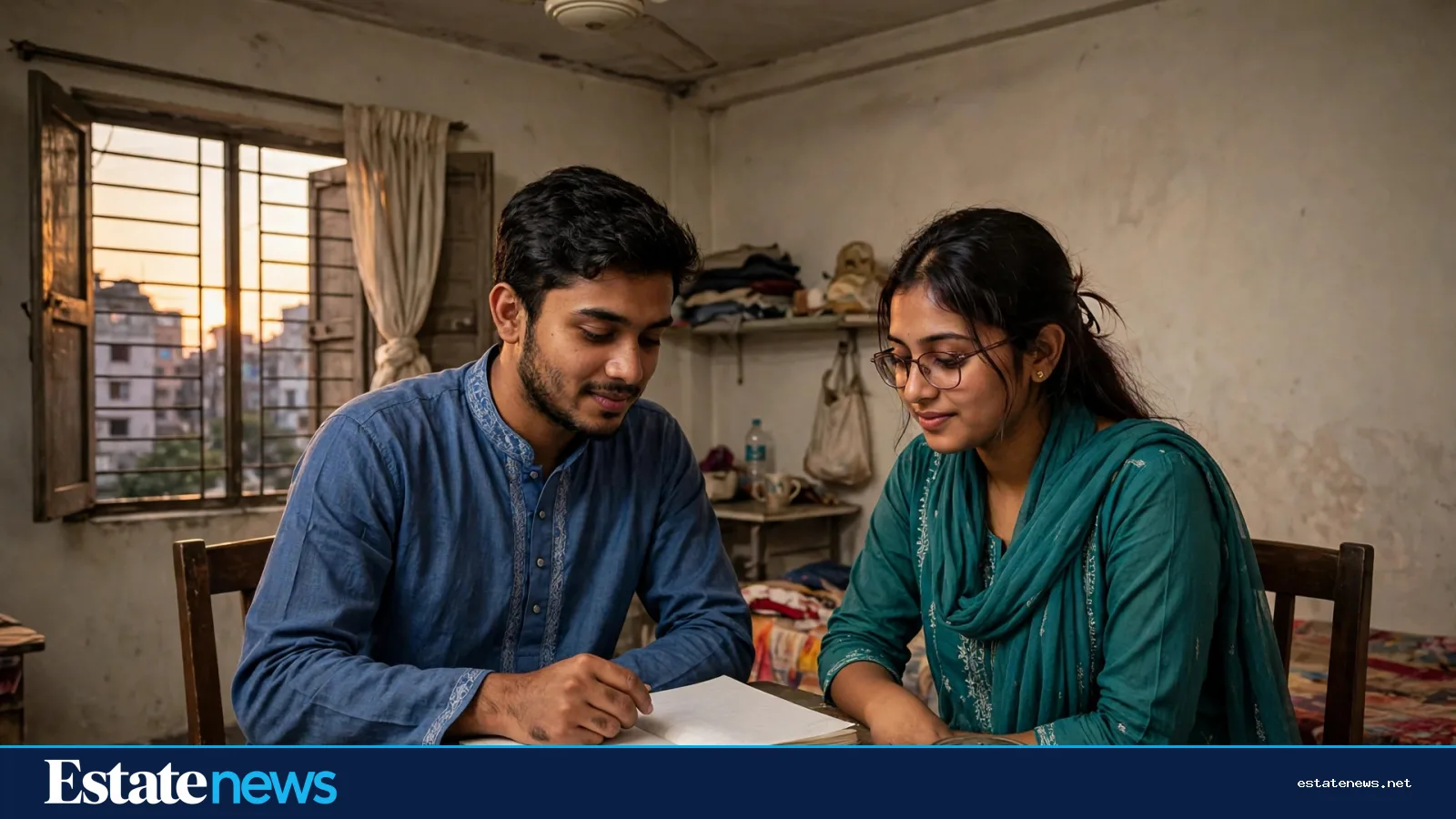
The early residents will tell you what that means in practice. A grocery run takes planning. A child's school may be a drive away. A doctor's visit means going back towards the city. These are not complaints so much as the terms of the deal: space and air in exchange for patience.
The services are coming, in the usual order. Building materials shops arrive first, because construction needs them. Then come the tea stalls and the small groceries, because workers and residents need them. Schools and clinics take longer, because they need a settled population before they open. Anyone moving here should ask what is open now, within walking distance, and not only what is planned.
What to look for on a visit
The best way to judge Purbachal is to spend a day there, not an hour. Drive the 300-foot road in the morning, when the workers arrive, and again in the evening, when the light falls across the new buildings. Walk a side street. Count the shops. Ask a resident where they buy rice.
Look at the drains after rain, if you can. Look at the water supply in a building that is already occupied. Ask how the gas reaches the kitchen, and what the building does when the power goes. These are the questions that decide whether a flat is a home or a weekend visit.
Look, too, at how the road is used. A wide road invites speed, and speed invites accidents. Crossings, footpaths and street lighting matter as much as the asphalt. A main street that is safe to cross is a main street people will actually use.
A town still becoming
Purbachal's story is unfinished, and that is what makes it interesting. The 300-foot road is already there, wide and straight, waiting for the town to grow up around it. Some of the town has arrived: the buildings, the plots, the early families. The rest is still on its way, in the usual slow order of shops, schools and services.
Dhaka has built new towns before, and each one took its time. The road is the promise, but the town is the delivery, and the delivery happens one family at a time. For now, the 300-foot road is the best place to watch it happen: a main street with room to breathe, in a town that is still learning how to live on it.