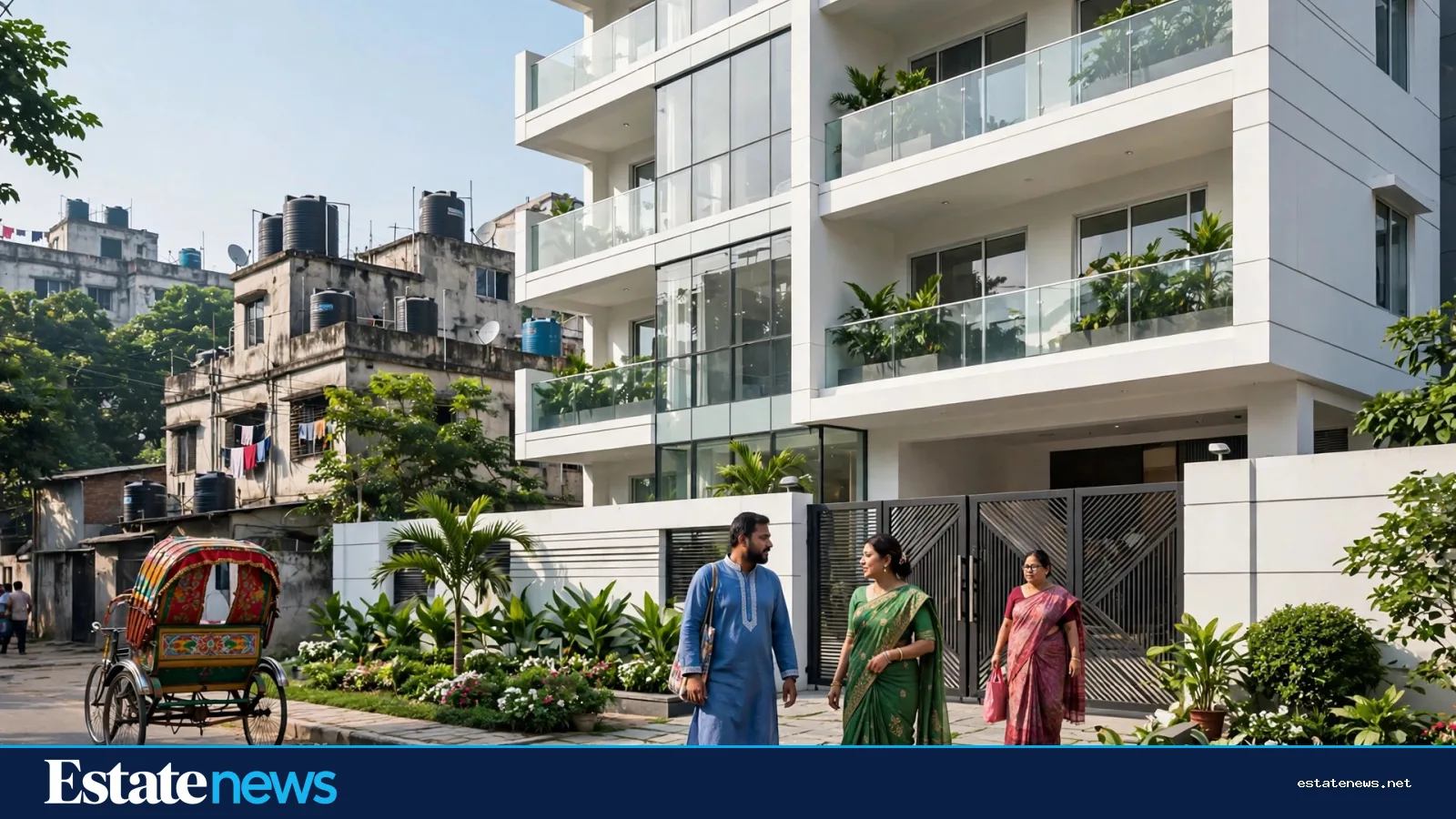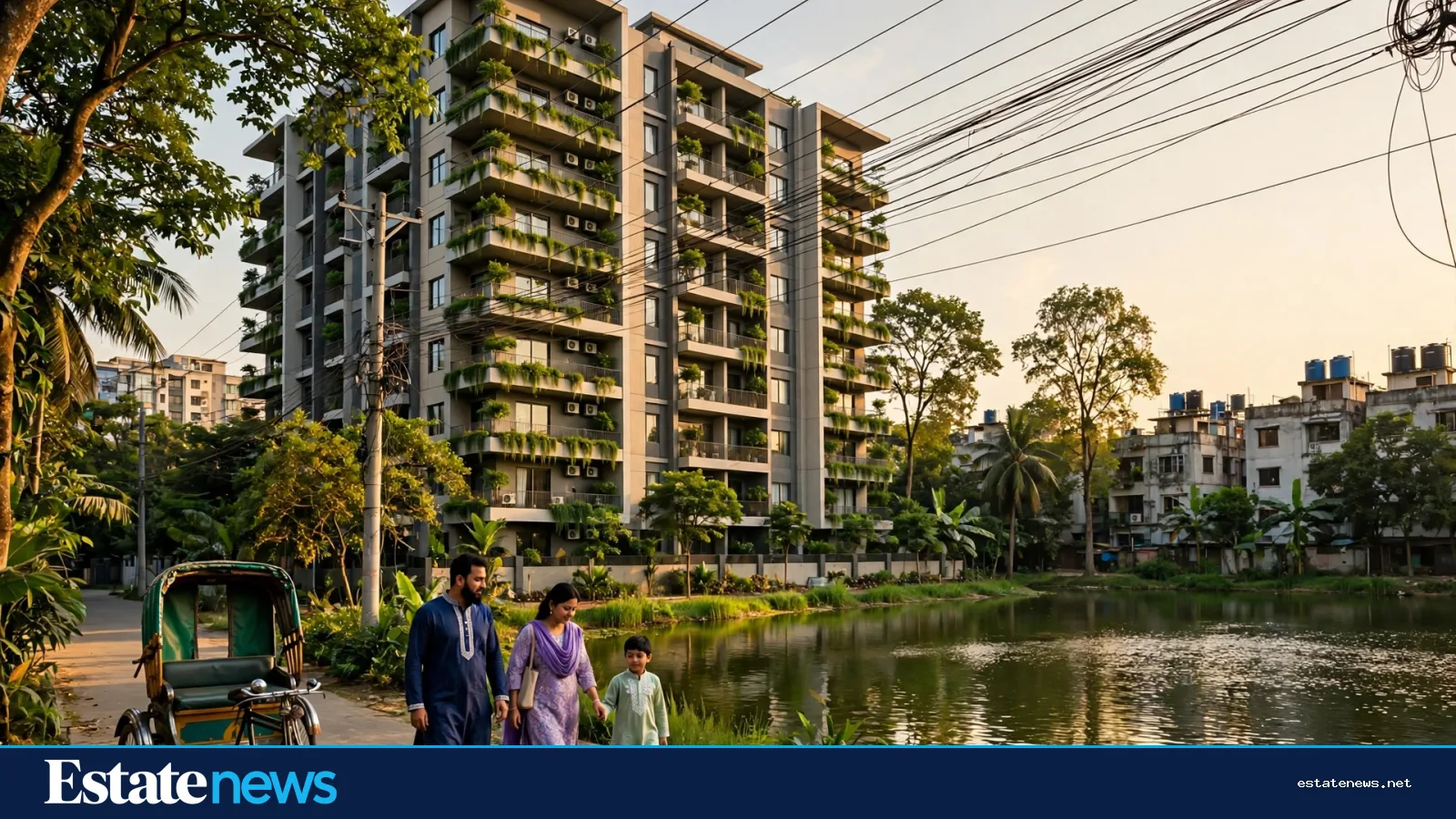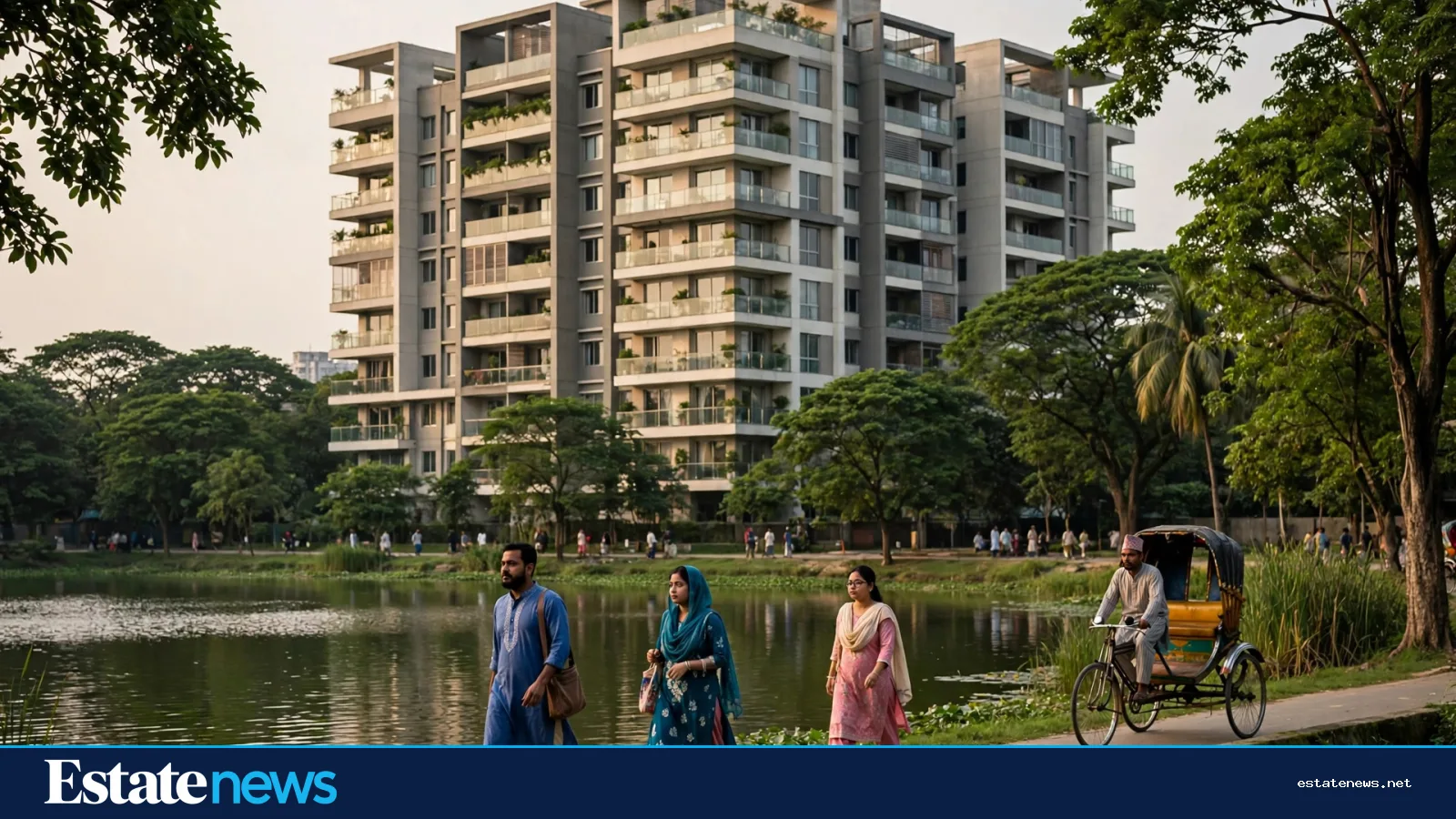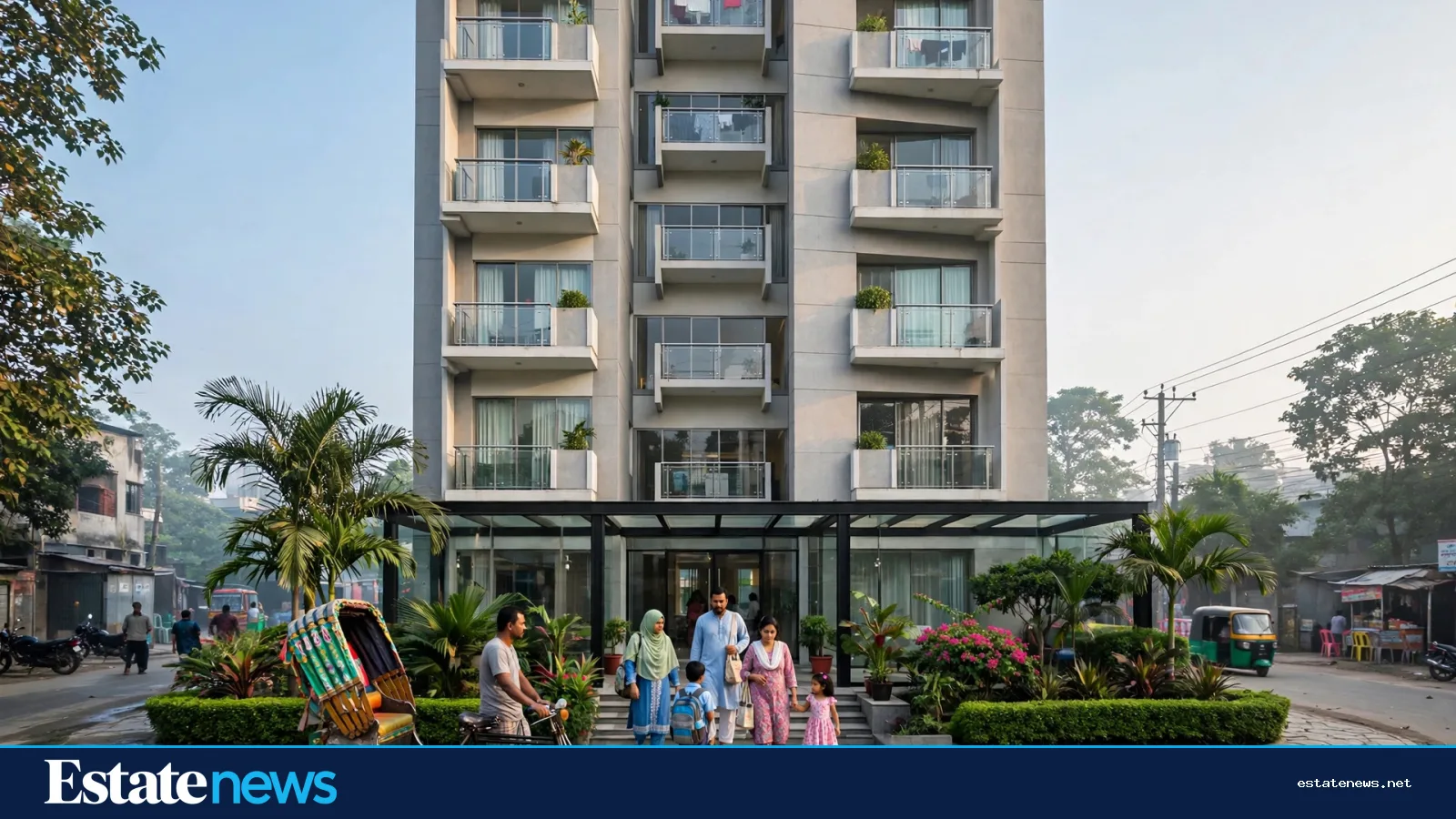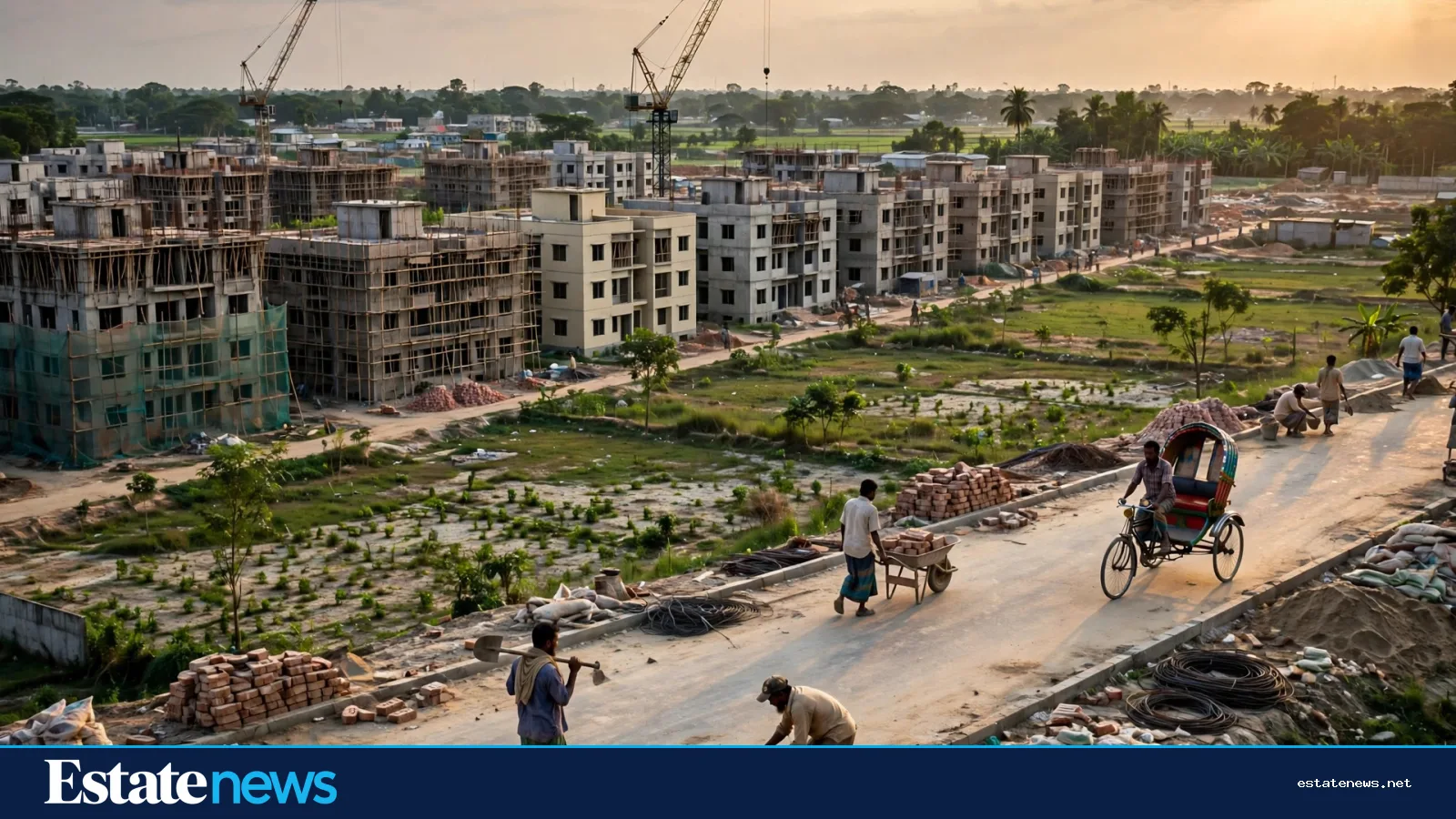
Drive past Purbachal and keep going, and the city thins out into something else: wide roads, open fields, and blocks of new buildings rising where there was farmland not long ago. This is Jolshiri Abashon, Dhaka's new township, and it is growing the way townships grow, block by block, with no single moment when it becomes a finished place.
A township is different from a housing project. A project is a building, or a cluster of buildings. A township is a plan for a whole area: plots laid out in blocks, roads drawn before the houses, space left for schools, markets and parks. Jolshiri is at the stage where the plan is visible on the ground, but the town is not yet lived in.
The REHAB company list records a Sheltech cluster at Jolshiri, one of the developer names attached to the township. Other developers are at work there too, and the mix of names is part of the story: a township is built by many hands, not one, and its character comes from that mix.

How a township grows
The order of things matters. Roads come first, because nothing else can arrive without them. Then come the plots, marked and numbered, and the first buildings. Water, power and drainage follow, sometimes quickly and sometimes not. Shops and services arrive last, when there are enough residents to keep them alive.
Jolshiri is somewhere in the middle of that order. The roads are there, and the blocks are laid out. Buildings stand at different stages: some finished and occupied, some half built, some still at the level of a boundary wall and a signboard. Between them lie open plots, some fenced, some still grass.
This unevenness is normal, and it is also the thing a buyer must understand. A township is not bought finished. It is bought while it is still becoming, and the price of an early plot or flat reflects that. The buyer is betting, in part, on the blocks that are still empty.
What the blocks tell you
Walk through Jolshiri and the blocks tell their own story. A block with several finished buildings and a tea stall at the corner is a block that has started to live. A block of empty plots with a single boundary wall is a block still waiting. Neither is good or bad on its own. They are simply at different points in the same long process.
The buildings themselves give clues. Look at whether the finished ones are occupied, not just built. Curtains in the windows, a gas cylinder by the door, a child's bicycle in the stairwell: these are the signs of residents, and residents are what turn a building into a neighbourhood. A building that stands empty a year after completion is a question, not an answer.
Look at the roads between the blocks. A township road that drains after rain is worth more than a wider road that floods. A street light that works is worth more than a street light that was installed and forgotten. These small facts add up to the daily life of the place.


The questions before buying
A buyer looking at Jolshiri should start with the papers, as anywhere else. The plot or flat should have a clear title, a recorded mutation, and approvals that match what is actually built. A township's scale makes this more important, not less, because a buyer is dealing with a larger plan and more parties.
Then come the practical questions. Does water reach the plot, and from where? Is the power connection in place, or promised? How does the gas arrive, if it does? Who maintains the roads and the drains, and who pays for it? In a township, these answers may sit with the developer, the owners association, or a public body, and the buyer should know which one before signing.
Distance is the other question, and it is best answered by driving it. How long does the trip to Dhaka actually take, at the hour you would travel? A township on the map looks close. A township in traffic can feel far. Make the drive at morning rush hour, not on a quiet Sunday, and decide with that journey in mind.
Who it suits
Jolshiri suits a particular kind of buyer. It suits the family that wants space and air and is willing to wait for services to catch up. It suits the buyer who can visit often, watch the blocks fill in, and judge the progress with their own eyes. It suits the investor who understands that a township rewards patience and punishes hurry.
It suits less the buyer who needs everything now: a school within walking distance, a clinic around the corner, a market that opens at dawn. Those things will come, in the usual order, but they are not there yet, and a family that needs them today should look at a settled neighbourhood instead.
A town in the making
Townships are slow promises. They take a decade or more to fill, and the early years look unimpressive: roads to nowhere, blocks half empty, a tea stall doing the work of a market. Then, almost without anyone noticing, the balance tips. The shops arrive, the school opens, the bus route extends, and the place that felt remote starts to feel like home.
Jolshiri is still before that tipping point. The blocks are laid out, the buildings are rising, and the first residents are finding their way around a town that is still learning its own shape. For a buyer with time and patience, that is the moment to look closely. For a buyer in a hurry, it is the moment to look elsewhere.
Either way, the right way to judge it is on foot, block by block. A township is not a brochure. It is a place, and places are understood by walking them.