Three projects, one map. On Friday 20 November, Road Transport, Railways and Shipping Minister Shaikh Rabiul Alam told a workshop of transport reporters in Dhaka that the government plans to transform the transport network over the next five years. The three projects he named will decide how people and goods move between Dhaka, the south-west, Chattogram and Cumilla for decades. None of them is built yet. All three are now moving through the paperwork that comes before construction.
The minister was speaking at a workshop for Reporters for Rail and Road at the Dhaka Transport Coordination Authority conference room in Tejgaon. State Minister for Rail and Road Transport Habibur Rashid attended the concluding session. The minister said some projects are at the preparation stage, others are undergoing feasibility studies or the preparation of development project proposals. The work, he said, takes time: approvals generally take one to one and a half years, and implementation takes three to four years.
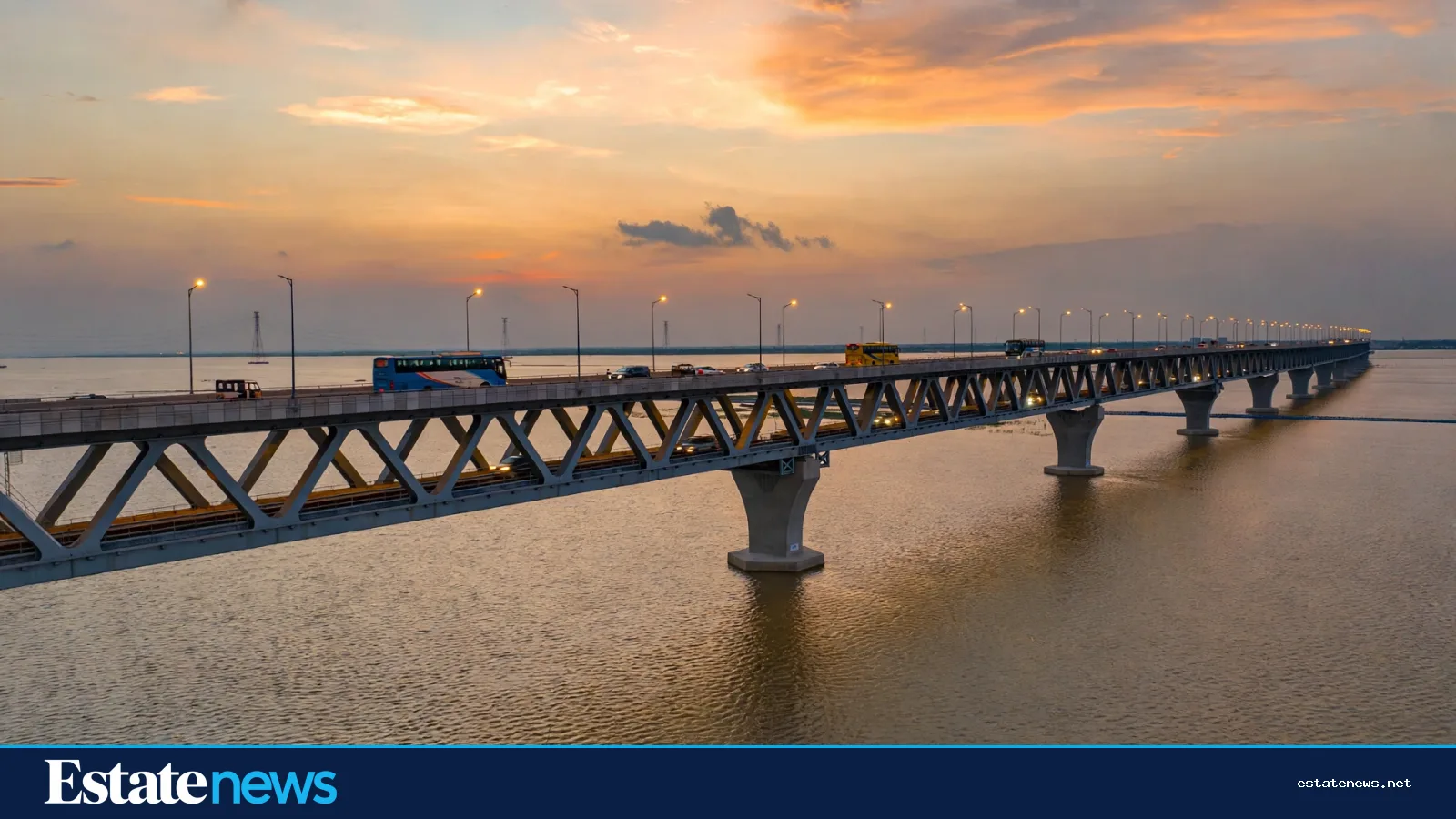
A second bridge over the Padma

The second Padma Bridge is the project furthest from construction and closest to the public imagination. The minister said its feasibility study has begun, and work on its detailed design is also under way. The project was listed as a priority in the government's election manifesto. There was early uncertainty over financing, but the minister said the feasibility study started quickly once the prime minister was briefed on the matter.
The bridge is planned in a Y-shape, linking three districts, according to Prothom Alo's project coverage on 17 November. An earlier report said three routes were under discussion, with the Daulatdia-Paturia point topping the list. The first Padma Bridge changed the map of the south-west when it opened. A second crossing would change it again, opening a new route for the districts on the far bank. What it would do to land and housing demand in those districts is a question for evidence, not assumption, and this article makes no claim about prices.
The expressway that may stay partly on the ground
The Dhaka-Chattogram Elevated Expressway has been discussed for years. The minister's update is the most concrete yet. Three alternatives were examined. The first was a fully elevated expressway of about 132 kilometres. The second, which the government now favours, is an elevated stretch of about 54 kilometres with the remaining sections built at grade, at ground level, with controlled access. The third option was not detailed in the reports.
The reason is cost. Making the entire route elevated would not be economically viable, the minister said, and the partly elevated option emerged as the more cost-effective choice. A proposal on that option will go to the prime minister. If it is approved, construction could begin within a year. That is a short fuse for a project of this size, and the approval is the step to watch.


The expressway matters because the Dhaka-Chattogram corridor carries the country's trade. Trucks run it day and night, and the port at Chattogram sits at its end. Estate News has followed the port's own changes closely, including in "Chattogram Port: DP World to Take Over New Mooring Terminal in March 2027" and "Chattogram Port Turns Landlord: Tenders, Terminals and the Bay Terminal Bill". A faster road to the port helps exporters, importers and the factories that sit along the route.
A railway on stilts to Cumilla
The third project is the Dhaka-Cumilla chord line, a railway estimated to cost Tk 83,000 crore, according to the Financial Express report on the workshop. It is planned as a fully elevated railway, so that it needs less land acquisition, faces fewer implementation complications and can be built faster. A chord line cuts the corner: instead of following the existing winding route, it takes the shorter path, and the trains that use it save the time the detour costs today.
Cumilla is already a junction town, with industry, education and a large commuter flow toward Dhaka. A direct elevated line would put it closer to the capital in time, if not in distance. For the towns along the line, the railway is the kind of project that changes where people live and work, though the effect will only be visible once the alignment is fixed and construction begins.
The metro keeps moving too
The minister's workshop was about the big projects, but the city's own railway is moving as well. Trial operations on the metro rail's Kamalapur extension are expected from January, with passenger service from April next year, according to Prothom Alo's project coverage. The extension carries the metro into the heart of the old city, and it is the piece of infrastructure Dhaka residents will feel first.
The pattern across all four projects is the same. Feasibility, design, approval, then construction. The minister asked journalists at the workshop to highlight the government's mistakes and shortcomings, but to check their facts first. That is a fair standard for reporting on projects that will take years to build. The announcements are real. The timelines are estimates. The map is being drawn, and the next step for each project is a decision, not a digger.