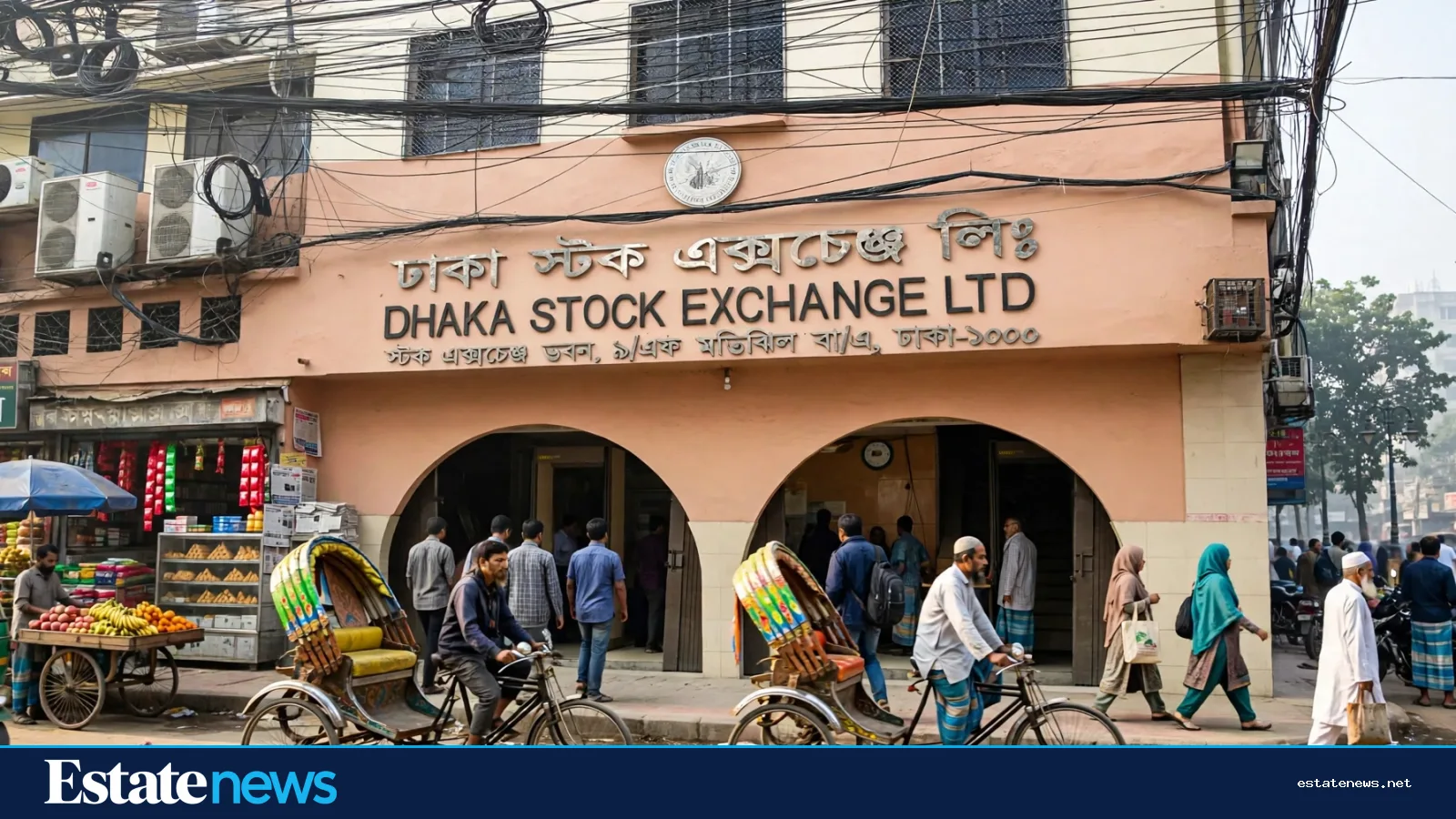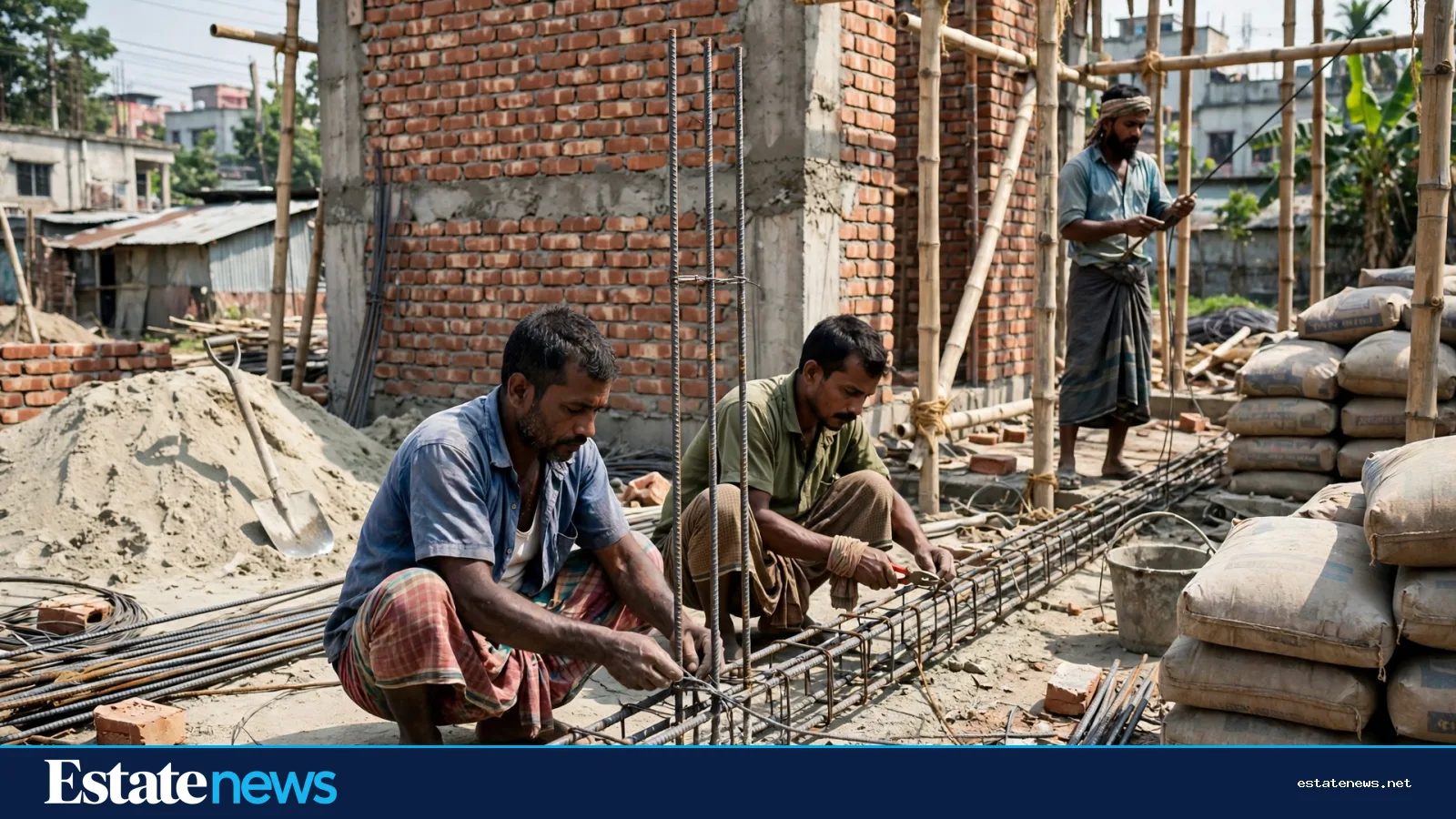
Ask three builders what a house costs and you will get three answers, all different, all honest. The price depends on the land, the soil, the design, the finishes and the year you build. What a buyer can do is pin down the pieces that are public, and this guide does exactly that. It gives the verified rates for the materials that go into a house, and it says plainly where the numbers stop.
Two sets of numbers matter, and they are not the same thing. The first is the official schedule of rates for government projects. The second is the market price a builder pays at a shop in Dhaka. Confusing the two is the most common mistake in any building-cost conversation.
The official schedule: sand up 86%

On 18 November, the Executive Committee of the National Economic Council, ECNEC, approved revised rates for materials used in government construction projects, revising the 2022 schedule of rates. The Business Standard reported the decision the same day. The meeting was chaired by Prime Minister Tarique Rahman.
The headline figure is coarse sand: Tk 1,900 to Tk 3,530 per cubic metre, a rise of 85.79%. Portland Pozzolana Cement went from Tk 10,000 to Tk 10,400 per tonne. Steel rods of 500 MPa grade rose from Tk 87,000 to Tk 89,000 per tonne, while 420 MPa rods were cut from Tk 90,000 to Tk 89,000 per tonne. Imported stone was reduced from Tk 8,400 to Tk 7,949 per cubic metre. Diesel rose by about 24%.
These are schedule rates, not shop prices. They are the rates the government uses to estimate and pay for its own projects. A private builder does not buy sand at the schedule rate, and this guide does not present these figures as retail prices.
What the market actually charges
Market prices sit close to the schedule but they move on their own. The Trading Corporation of Bangladesh put the Dhaka midpoint for 60-grade mild steel rod at Tk 91,250 a tonne on 12 November 2026, up 9.3% on a year earlier, according to AnalystBro's 16 November summary of TCB data. The same summary put 40-grade rod at Tk 87,000 a tonne, up 13% year on year.
A Bangladesh Post market review gave brand prices for rod at Tk 92,300 a tonne for BSRM, Tk 90,500 for KSRM, Tk 91,500 for AKS and Tk 91,000 for GPH, with cement at Tk 500 to Tk 530 a bag. A cement press price of Tk 540 to Tk 580 a bag, midpoint Tk 560, was recorded on 10 October, against Tk 520 on 16 May. These are market figures from named sources, and they will have moved since. Check the current price at the shop before you commit.


What drives the total
The materials above are the structure: sand, cement, rod, stone and brick. The rest of the cost sits in four places that no rate schedule can fix for you.
Land comes first, and it is usually the largest single cost. A plot in a Dhaka suburb and a plot in a district town are different purchases, and the land price swamps the material bill in the capital. Structure comes second: foundations, columns, beams and slabs, where the rod and cement above are spent. Finishes come third: tiles, sanitary fittings, doors, windows, paint and wiring, where a buyer's taste can double the bill or halve it. Approvals and registration come fourth: the building plan approval, the utility connections and the registration cost after purchase.
Estate News's construction-cost calculator page works through these pieces step by step, and the Bangla construction-cost guide published on 21 November covers the same ground in Bangla. The flat-price guide "Flat Price in Dhaka 2026: What a Flat Costs Area by Area" is the companion read for anyone weighing building against buying a ready flat.
What this guide will not do
There is no verified per-square-foot total for building a house in Bangladesh, and no verified total for a whole house, in the sources read for this guide. A figure that claims to be one would be invented. The honest answer is that the total depends on the land price, the size and design, the quality of finishes and the district, and it varies too widely for a single number to mean anything.
What is known is the direction of travel. Sand is up sharply in the official schedule. Rod and cement are up in the market. Diesel, which moves every material to site, is up about 24% in the schedule. A builder who priced a house in 2022 is pricing a different house now.
Before you build, get three things in writing: a quantity estimate from your engineer, a current market quote for rod, cement, sand and brick, and the approval and registration costs for your plot. The schedule rates above tell you where the official numbers stand. The market quotes tell you what you will actually pay. The gap between them is where the budget is won or lost.