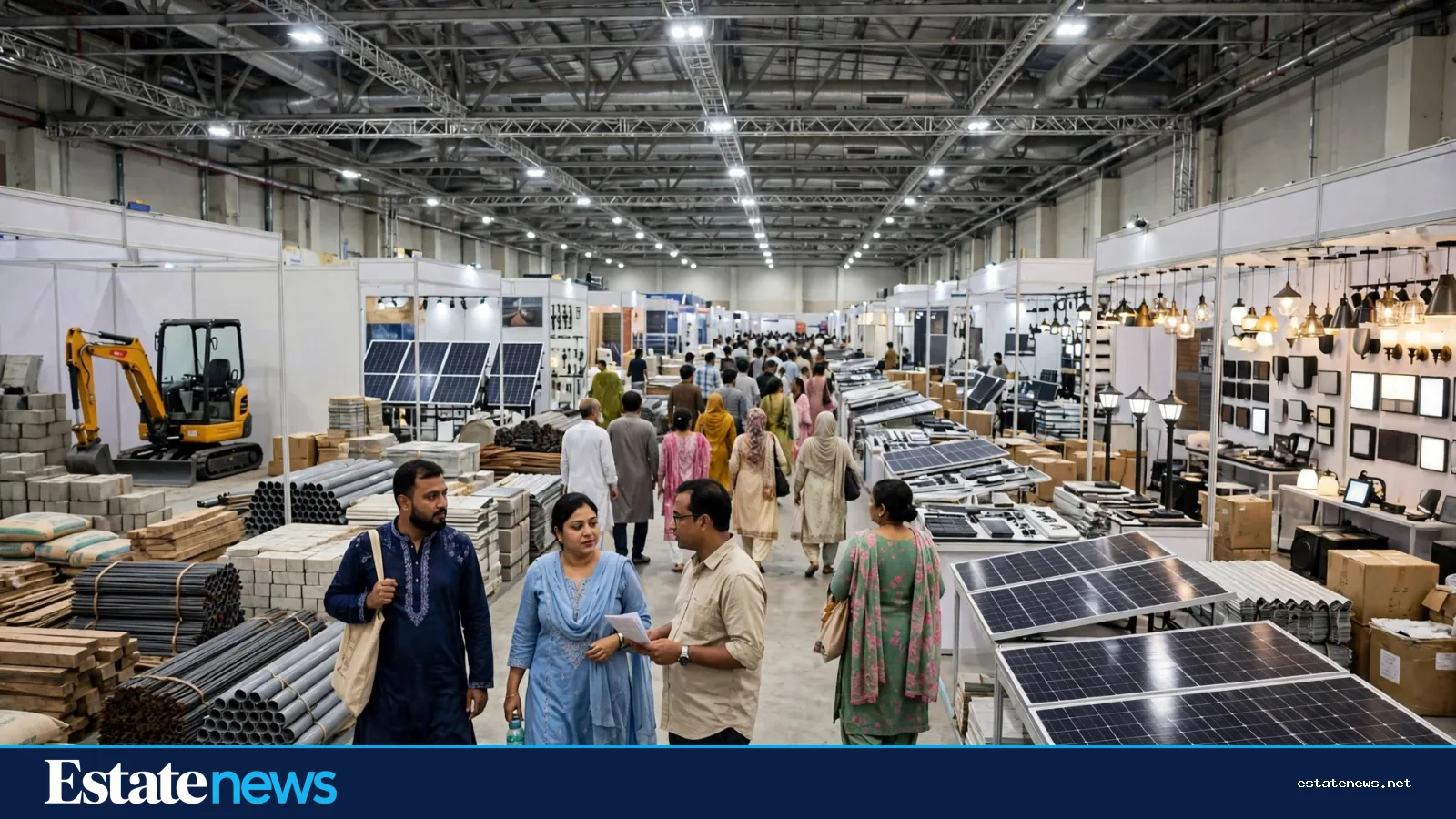
The last day always moves faster. By late morning on Saturday, the aisles at the International Convention City Bashundhara were full again, with visitors stopping at stalls of solar panels, steel rods, cables and lighting, and exhibitors making their final pitches before the halls close at 7pm.
Six expos have shared the venue since Thursday, 12 November, and all six end today. The list, according to the organisers, runs from the 31st Build Bangladesh International Expo and the 25th Real Estate Expo to the 28th Power Bangladesh, the 23rd Solar Bangladesh, the 8th Dhaka Lighting Expo and the 8th Water Bangladesh Expo. CEMS-Global USA organises the shows, and the International Finance Corporation is the strategic partner.
The scale is the point. More than 200 companies from over 20 countries have taken part across more than 500 booths, and the organisers expected more than 20,000 visitors over the three days. For Dhaka, where a builder or a homeowner usually chases suppliers across the city one by one, that concentration is the draw: a whole supply chain in a single hall, with the machines running and the samples on the table.

What was on the floor
The exhibitor list reads like a roll call of the trades that keep a building standing and running. It includes LESSO, Zoomlion, Huawei, Siemens, Walton, KingLong, R R Kabel, Rahim Steel, AKS and Akij Electronics, alongside a Sri Lanka Pavilion. Steel and cables sat near solar panels and water pumps. Lighting makers showed fittings for homes, offices and streets. Power equipment ranged from generators to switchgear.
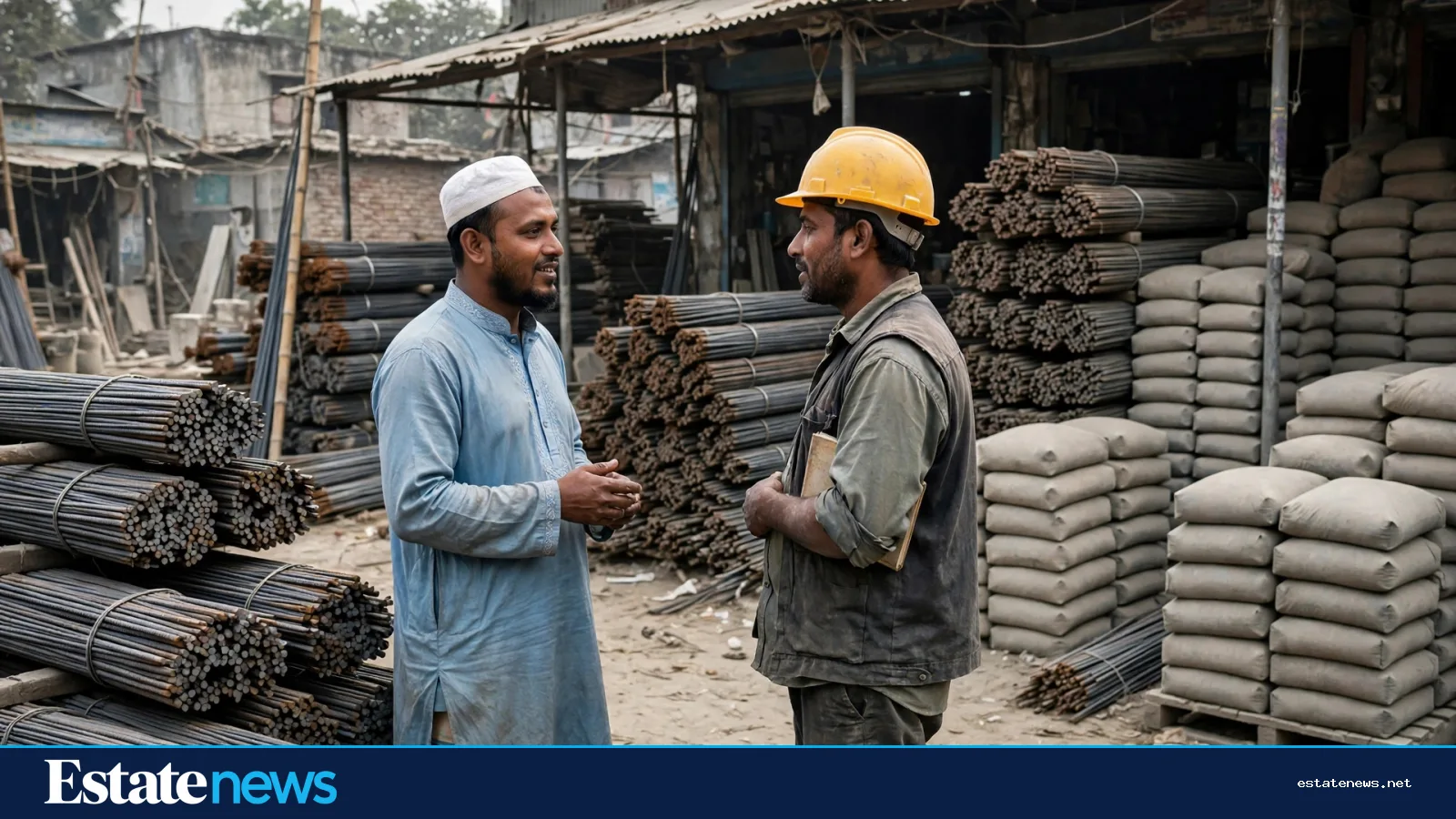
A visitor building a house could walk from a rod stall to a cement display, then to a lift supplier and a solar installer, without leaving the building. That is how most buying decisions in Dhaka actually get made, in conversation and by comparison, rather than from a catalogue alone. The expo format suits it: touch the material, ask the price range, take the card, and decide at home.
Prices on the floor move with the wider market, and the background figures give a sense of where that market sits. Rod, or steel, stood at Tk 93,500 a tonne as a published-range midpoint, within a range of Tk 92,500 to Tk 94,500, according to Trading Corporation of Bangladesh data reported by the Financial Express on 10 October 2026. Cement stood at Tk 560 for a 50kg bag as a midpoint, within a range of Tk 540 to Tk 580 in Dhaka retail. Both are indicative midpoints from published ranges, not fixed prices, and a buyer still needs a written quotation before committing.
Who came, and why
The crowd mixed three kinds of visitor. Developers and engineers came to compare suppliers for projects already under way. Contractors came to check machines they might hire or buy. Homeowners came with lists: a pump that needs replacing, a roof that could carry panels, a flat that needs new fittings before the family moves in.
The Real Estate Expo corner drew its own crowd. Flats and plots were on display beside the building materials, which is how the two sides of the market meet in practice. A buyer looking at a flat in Bashundhara or Uttara could step across the aisle and look at the fittings that would go into it. The organisers placed the shows together for exactly that reason.
Students of architecture had a separate reason to be there. The Delta Festival of Architecture ran at ICCB over the same three days, 12 to 14 November, organised by ARCHICONNECT with CEMS-Global, putting design talk and building trade in the same venue for the weekend.


The Delta Awards
The festival had already named its winners at a ceremony on 10 November in ICCB Hall 2. Md Didarul Islam Bhuiyan was named Architect of the Year. The Lifetime Achievement award went posthumously to Raziul Ahsan Khandaker.
Two projects shared the Sustainability and Resilience award: Kobita Kunjo by Jubair Hasan Architects and Rupgaon by Perceive. The Contextual and Social Impact award went to Meer Manzil by Indigenous and to Chawk Bazar Public Spaces and Park by FORM.3 Architects. Adnan Zillur Morshed received the Scholar Award.
The awards sit beside the trade stalls for a reason. The expos sell materials and machines; the festival asks what gets built with them. A visitor who spent the morning comparing solar panels could spend the afternoon listening to architects talk about courtyards, shade and shared public space.
Solar draws a crowd of its own
Solar Bangladesh, in its 23rd edition, drew steady attention. Rooftop solar has moved from a talking point to a practical question for building owners, and the questions at the stalls were practical ones: how many panels a roof can carry, what the wiring needs, and how a building society handles shared costs.
No single answer fits every building, and the exhibitors know it. The useful part of a visit is the comparison: different panel sizes, different mounting systems, different warranties, laid out side by side. A flat owners association thinking about common-area power can gather the options in an afternoon and take the discussion back to its own meeting.
What the day leaves behind
By evening the booths will come down and the machines will be packed away. What stays is quieter: supplier contacts, written quotations, price lists and the notes visitors carried home. A contractor who found a cheaper cable supplier will feel the difference on the next project. A homeowner who compared three lift makers will ask sharper questions when the building committee meets.
The expos return each year, and the editions count up: the 31st Build Bangladesh, the 25th Real Estate Expo. Suppliers and visitors come back, and the comparison gets easier each time.
For anyone who meant to go, Saturday evening is the last chance this year. The doors stay open until 7pm, and after that the halls go quiet until the next round.