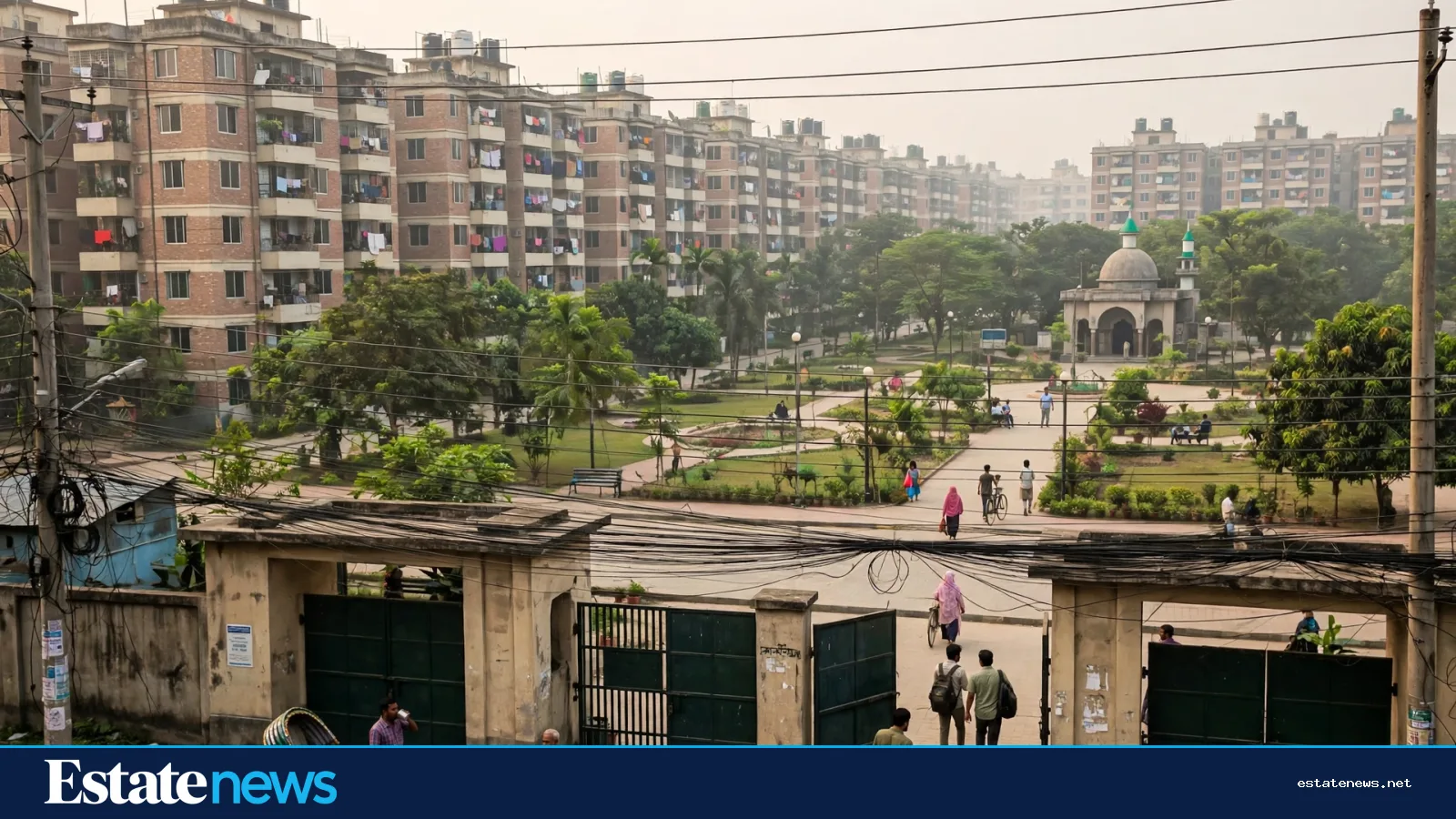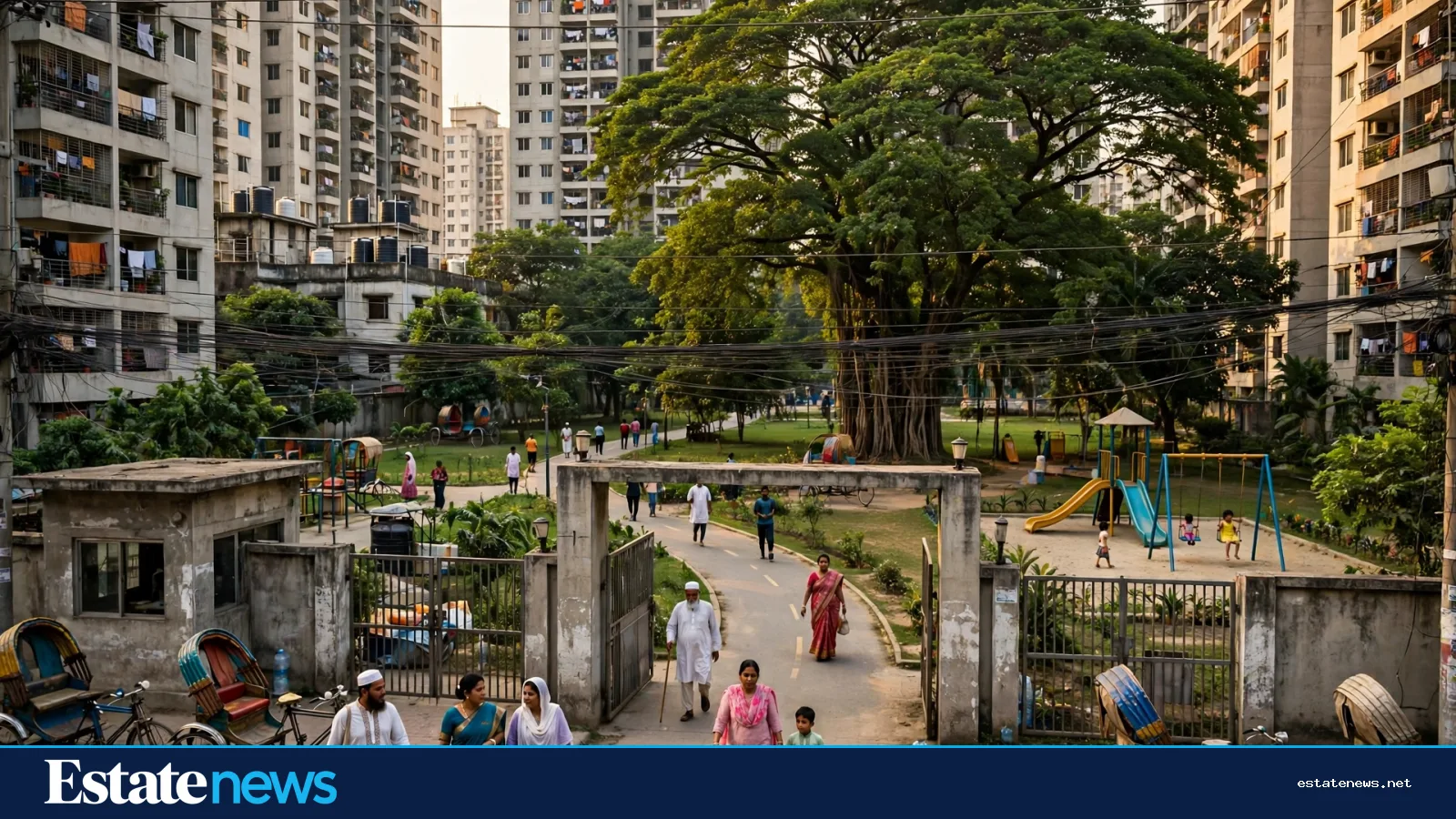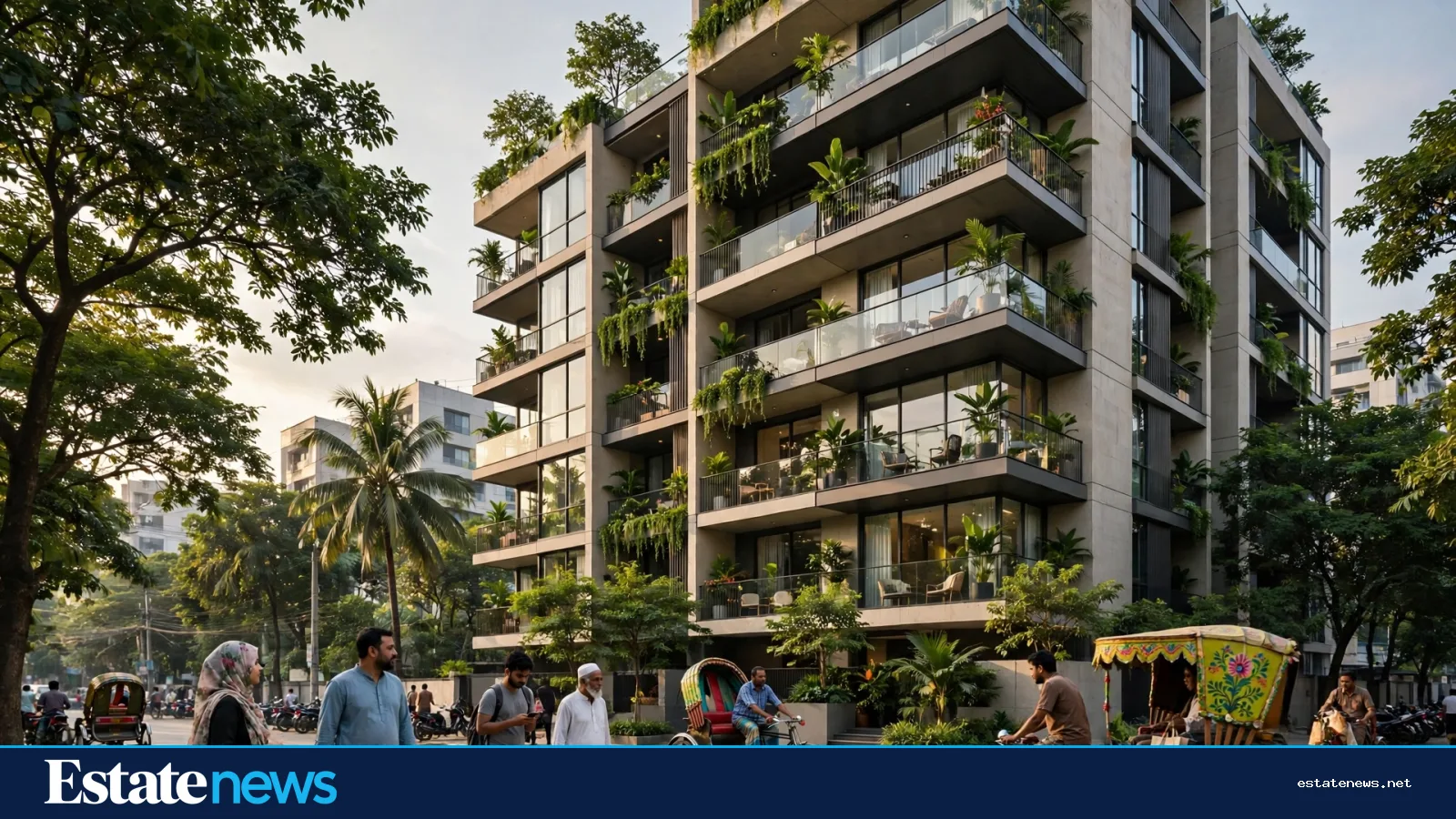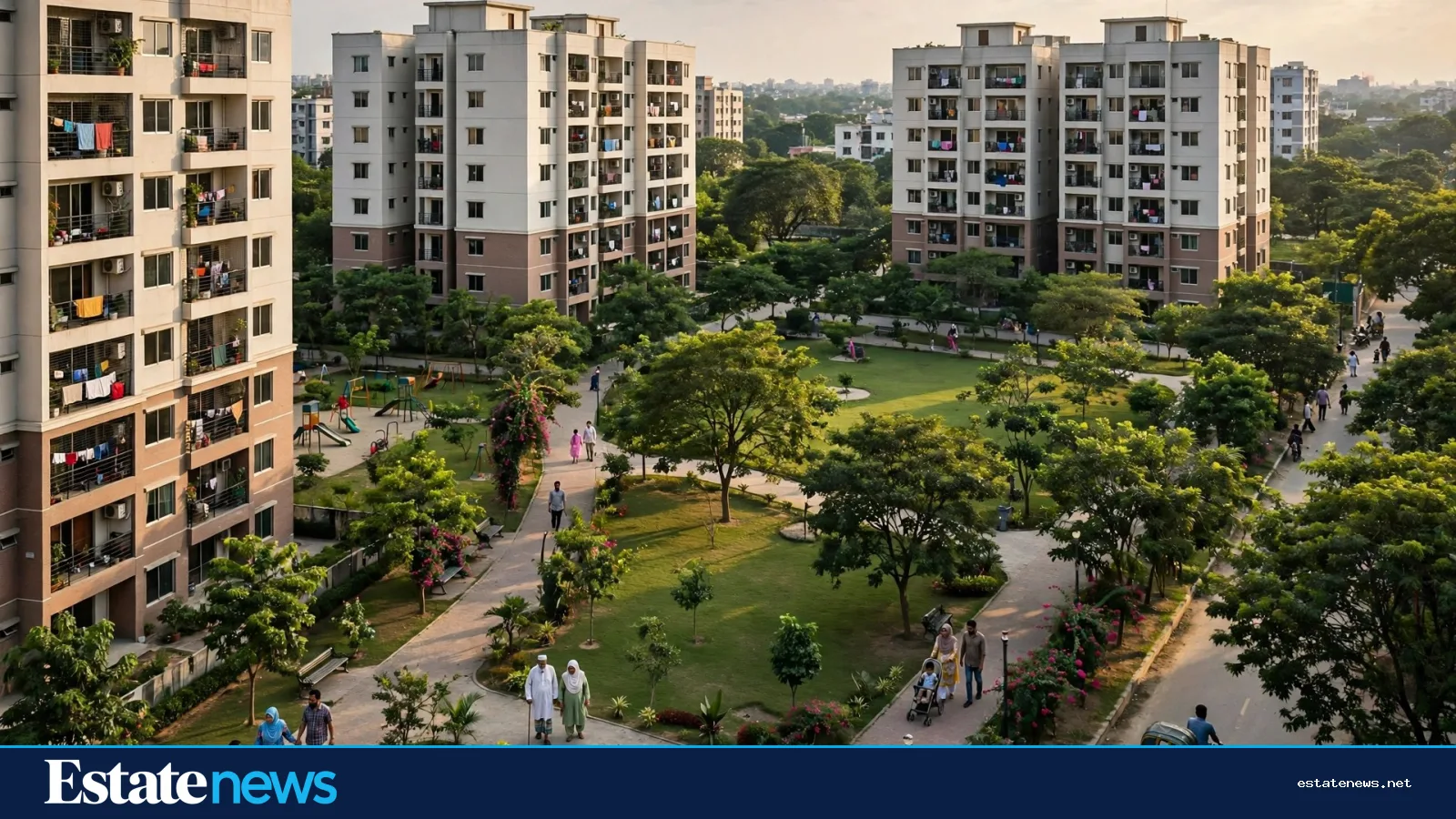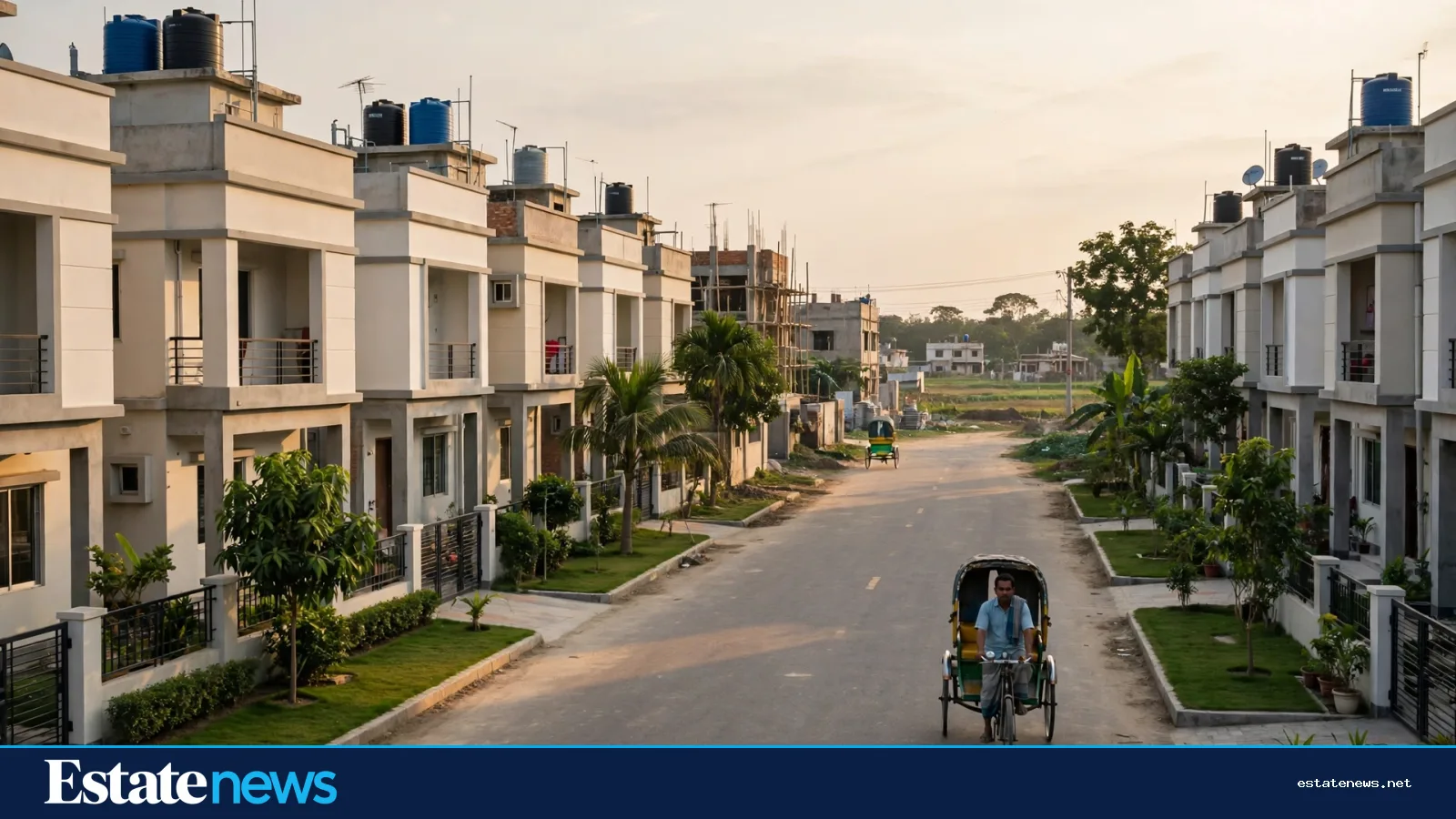
Late afternoon on a new street in Rupganj, the light falls across two rows of houses that look nothing like the Dhaka most buyers know. No tower rises above them. No lift hums behind a gate. The houses are two storeys high, each with a small lawn in front, and a rickshaw moves slowly down the wide road between them while a boy kicks a ball on the grass. Rooftop water tanks catch the last sun. It is quiet in a way that the centre of the city has forgotten how to be.
The company behind the street is Asian Town Development, and the bet it is making is simple to state and hard to pull off. Instead of stacking flats into towers, it is building houses on their own plots and selling the idea in one line. "At the price of a flat, get your own house," its chairman Bilash Das says, according to a profile of the project. The question the street asks of anyone who walks it is whether Dhaka's next generation of buyers wants a house with a gate of its own more than it wants a flat on the fourteenth floor.
A company that started with townships, not towers

Asian Town Development was established around 2011, and its parent, the Asian AB Group, has worked in urbanisation since the same year, according to the group's own published material. The group builds two townships under its own name. Purbachal Asian Town sits near the 180-foot Asian Highway in Purbachal, and Asian Shanti Nibash sits near the Dhaka-Mawa Expressway and the Nimtola railway station. The company was a diamond sponsor of the REHAB Fair 2025, alongside Eastern Housing, Sheltech and Tropical Homes, which puts it in the small circle of developers the industry's own fair treats as its biggest names.
The duplex arm of the group is Asian Duplex Town, a subsidiary building a gated community of duplex homes at Rupganj, on the edge of Purbachal. The company's own material describes it as the first and only mega gated duplex community in the country, a claim that belongs to the company and should be read as one. The community covers about 200 bighas. Its foundation was laid earlier in 2026, with Chairman Bilash Das and Managing Director Mir Afsar Ali present at the inauguration, and the company says multiple duplex homes have already been handed over to buyers.
The duplex idea, in plain numbers
The model is built around land, not height. Most duplex houses sit on five-katha plots, with room for a lawn, a garden, parking and space between neighbours. Main roads in the community run up to 100 feet wide and internal roads 40 feet, according to the company's material. Water comes from deep tube wells, the community has its own electric substation, and the whole site is gated with security. The master plan adds the parts of a small town: schools, hospitals, shopping zones and recreation spaces, so that a family does not have to leave the gate for the ordinary business of a day.
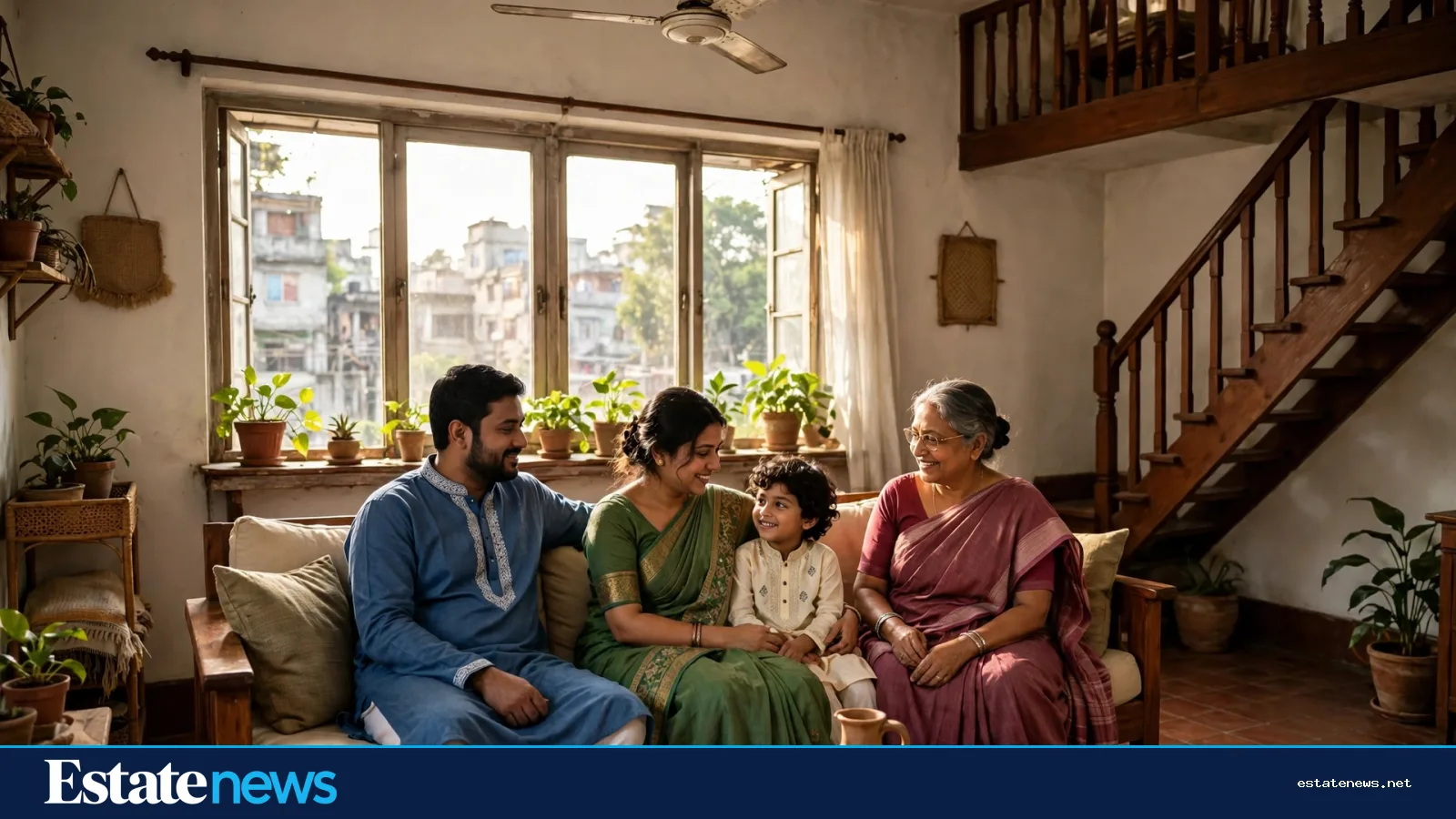
Step inside one of the duplexes in the late afternoon and the idea turns physical. The ceiling fan turns above a wooden dining table. Daylight comes through wide windows. A family sits together after the day's work, and the rooms feel finished for living in. Plants on the sill and a child's school bag by the door: the interior does the slow work of making a large development feel like a home.


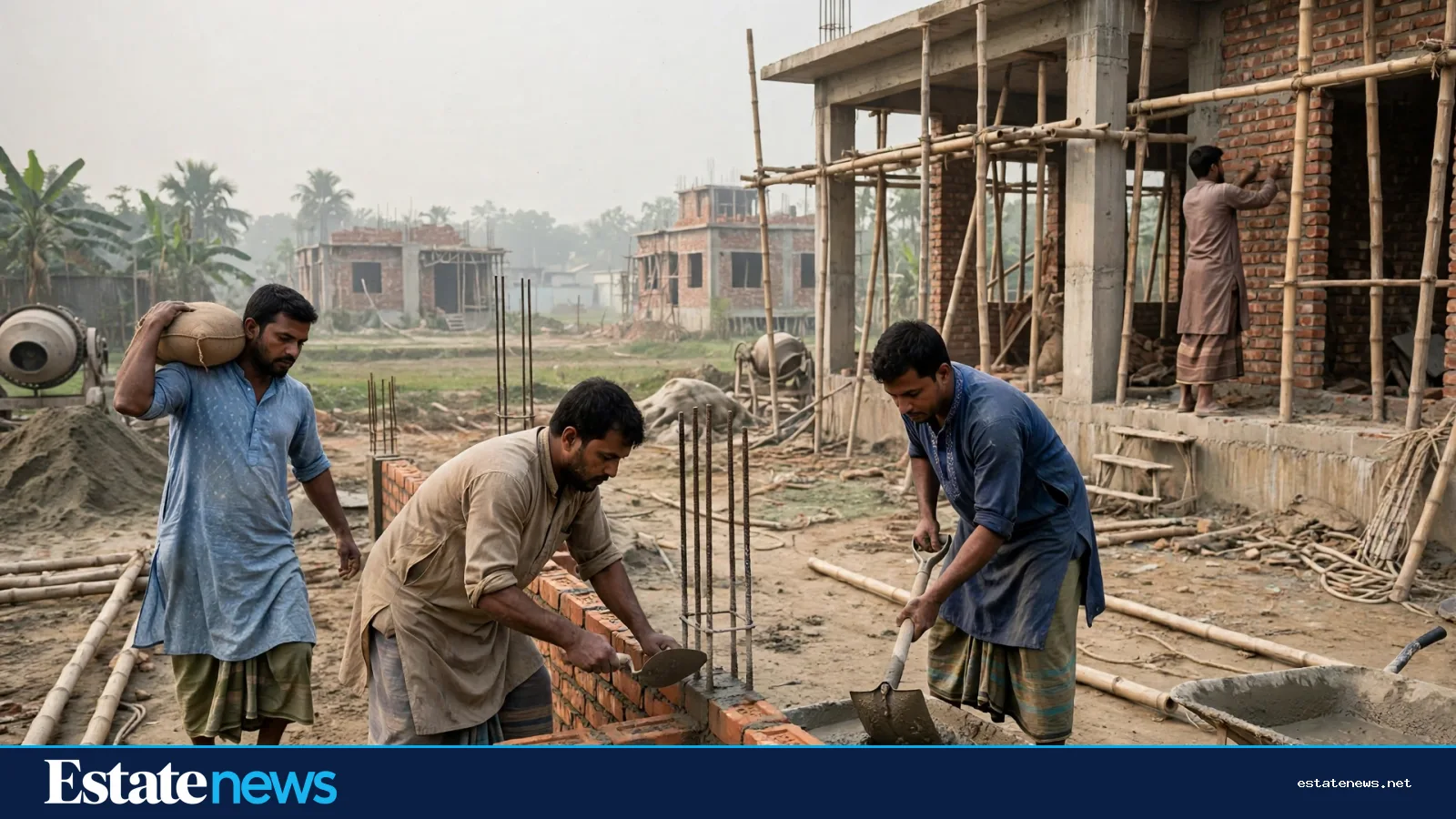
The building side of the story has its own detail. NextBlock AAC, the first autoclaved aerated concrete block maker in Bangladesh, signed a memorandum of understanding with Asian Duplex Town in about September 2026 to supply its blocks for upcoming projects, including the 200-bigha neighbourhood, according to New Age. The blocks are lighter than brick and cut well, which matters when a developer is building hundreds of low-rise houses rather than one tall frame. A BRAC University report states that Asian Duplex Town is a REHAB member, which is the kind of detail a buyer can check against the association's own list before paying anything.
Why Purbachal, and what the land question means
Purbachal is the reason this idea exists at all. Dhaka's centre has no room left for houses on five-katha plots at prices a middle-class family can reach. The new town on the city's north-eastern edge does, and the 180-foot Asian Highway gives it a spine that older suburbs never had. The company's site puts the project a 30-minute drive from Hazrat Shahjalal International Airport, a company claim that depends on the road and the hour, and a buyer should test it at rush hour rather than take it on trust.
The road out to Rupganj does as much of the selling as the houses themselves. Purbachal's plots were laid out on paper long before the houses arrived, and the value of a duplex here rests on two things that have nothing to do with the house: whether the plot's papers are clean, and whether the roads, water and power around it are real. A buyer who falls in love with the lawn should still ask for the deed, the chain of title, the mutation record and the RAJUK approval for the layout, and should check them the way Estate News explained in "How to Verify a Land Title in Bangladesh: The Documents That Matter". A gated community is only as good as its papers, and a house on a five-katha plot is a bigger commitment than a flat in a tower.
What a buyer should check before the house, not after
The first check is the handover record. Asian Town Development says homes have already been handed over inside the community, and a buyer should ask to see them, talk to the families living there, and look at how the roads, the water supply and the substation are holding up after a monsoon. The second check is the money that follows the purchase: who maintains the gates, the roads and the common areas, and what the monthly charge is. A house with its own plot still shares its streets, and the cost of keeping them is a number that should be written down before the booking amount is paid.
The third check is the one every Dhaka buyer knows by now. A developer's own figures are the developer's own figures, and they should be read that way. The community's size, its road widths and its amenities all come from the company's material, and they are worth verifying on the ground. Estate News set out the registration cost that follows a purchase in "Flat Registration Cost in Bangladesh: A Buyer's Guide for 2026", and the same arithmetic applies to a house. What the duplex model offers is space and air and a gate of your own. What it asks in return is the same care any Dhaka purchase asks: check the papers, walk the site, and count the costs that come after the keys.
Asian Town Development is betting that enough buyers will make that trade. The towers will keep rising in the centre, and the flats inside them will keep selling. But on a quiet street in Rupganj, with the rickshaw turning at the end of the road and the water tanks catching the evening light, the company's case is easy to understand. Some families do not want a flat on the fourteenth floor. They want a house, a lawn and a gate they can close at night, and they are willing to drive a little further out to get it. The test of the bet is not the launch. It is whether the families who move in are still glad they chose the house five years from now, when the lawn has grown in and the community around it has filled out. The same long view that built Lake City Concord's township made Concord the company it is, as Estate News told in "Concord Real Estate: The Builder Behind Lake City Concord", and the same question faces every builder who promises a town instead of a tower. Tropical Homes made a similar wager on open space and lakefront living, as Estate News told in "Tropical Homes: The Builder Behind Dhaka's Lakefront Flats". For Asian Town Development, the answer will be written one handed-over house at a time.