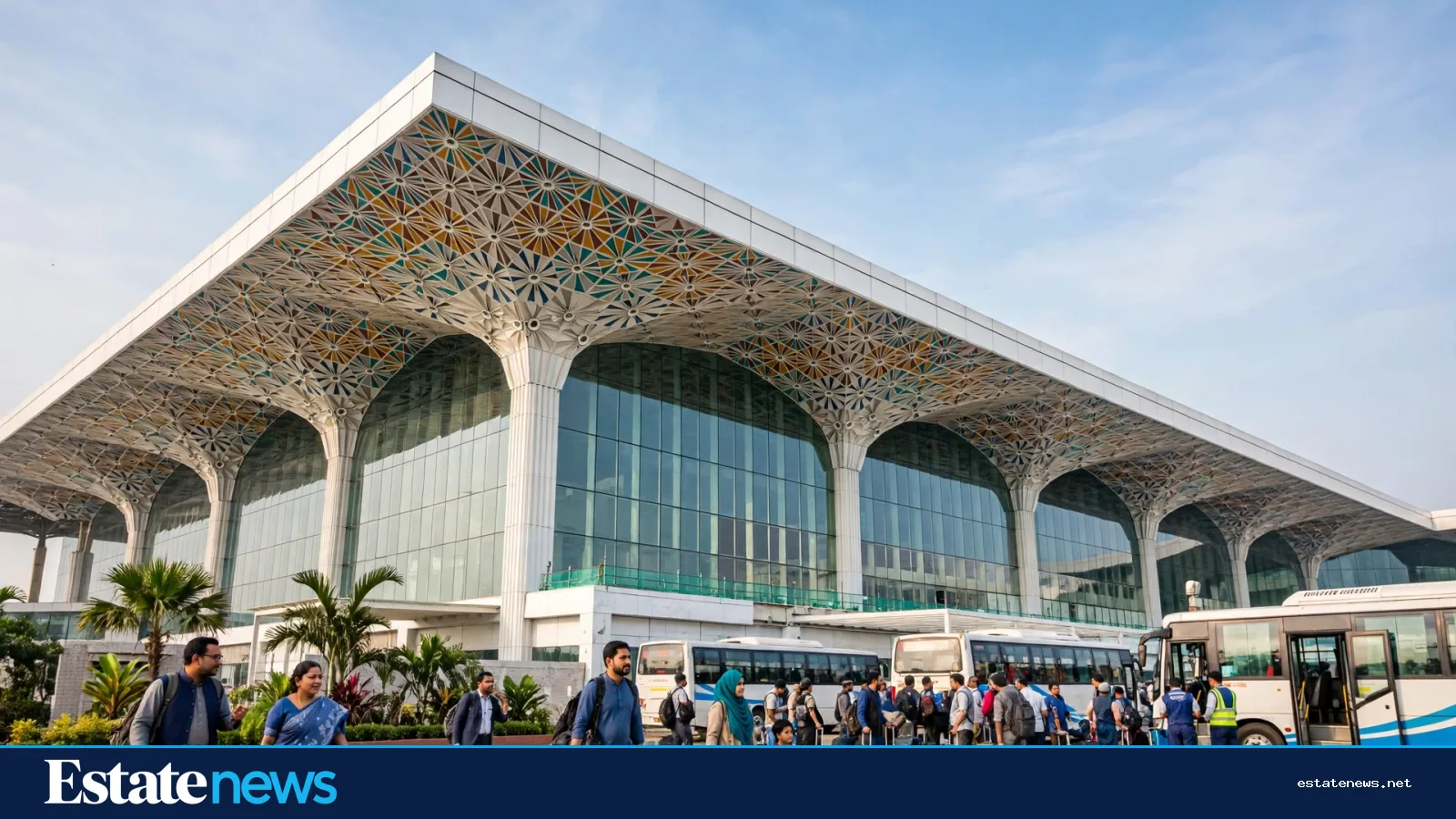
The newest wing of Dhaka's airport finally has someone to run it. On Monday the Cabinet Committee on Economic Affairs, chaired by Finance and Planning Minister Amir Khosru Mahmud Chowdhury, approved a 15-year concession agreement for a Japanese consortium to operate and maintain Terminal 3 of Hazrat Shahjalal International Airport. The agreement is to be signed by 30 November, and the first flights are due to leave the terminal on 16 December, Victory Day, with four Biman Bangladesh Airlines services first.
The terminal has waited a long time for this moment. Built with support from the Japan International Cooperation Agency at a cost of more than Tk 21,000 crore, it has stood nearly 99 percent complete and unused for about 23 months, according to The Business Standard. The building is valued at around $2.1 billion. Its opening has been announced and delayed more than once. This time the dates are attached to a signed deal, a named operator and a revenue split, which is what makes the announcement different from the ones before it.
Who runs it, and what the government gets

The consortium is led by Sumitomo Corporation and brings together Japan Airport Terminal Co Ltd, Nippon Koei and Narita International Airport Corporation. Under the agreement, the government receives $8.1 million upfront, about Tk 100 crore, and a 27 percent share of passenger-handling revenue, or $2.10 per passenger, whichever applies under the terms, along with 27 percent of cargo revenue or $11.50 per tonne. The embarkation fee at the terminal will be $12.50 per passenger, against the Tk 500 charged now. Biman is to handle up to 50 percent of ground handling for international airlines.
The 27 percent share is itself part of the story. The previous government had agreed to 15 percent, and the current government raised Bangladesh's share to 27 percent through negotiations, Civil Aviation and Tourism Minister M Rashiduzzaman Millat said after the meeting. The consortium is to take 25 percent of flight capacity within eight months of handover, and full-scale operations are to follow within 14 months.


What 16 December means for the airport corridor
Terminal 3 adds 12 million passengers a year, taking the airport's capacity to about 20 million, according to the project figures. The terminal was launched on 1 July 2016 and is scheduled to run to 30 June 2027, at a project cost of Tk 22,213.09 crore. For passengers, the change is concrete: a new building, new check-in halls and, from the middle of next month, the first flights actually leaving from it. For the north of the city, the change is slower and just as real. The airport corridor, from Uttara through the cantonment to the terminal road, is where hotels, offices and housing for airport workers and frequent flyers have been gathering for years, and a working Terminal 3 gives that corridor a reason to keep growing.
There are conditions in the deal that will draw attention. One stipulates that no new airport can be operated within a 100-kilometre radius of the terminal for the next 15 years. The government accepted the provision as part of the agreement, and it will be debated on its own terms in the months ahead. For today, the fact that matters is the one passengers can use: the terminal has an operator, the signing is due by 30 November, and the first flights are set for 16 December.
Estate News has followed the port side of the same trade story in "Chattogram Port: DP World to Take Over New Mooring Terminal in March 2027", and the port Bangladesh still does not have in "The Deep-Sea Port Bangladesh Still Does Not Have". The underground metro redrawing the city's map is covered in "MRT Line-1: The Underground Metro Redrawing Dhaka's Map". Terminal 3 now joins that list of projects that have moved from paper to pavement. The test, as with each of them, is the first day it actually works.