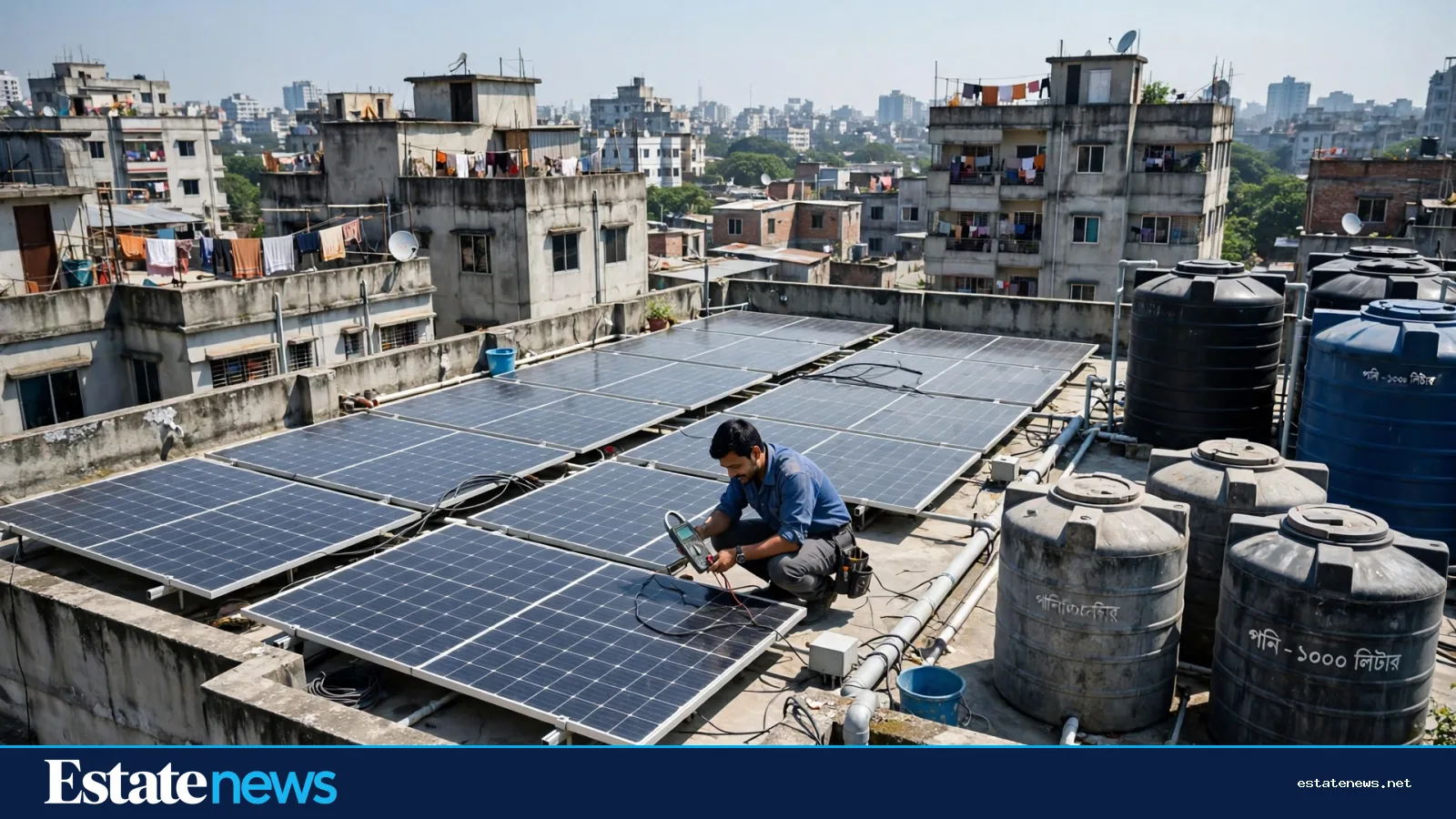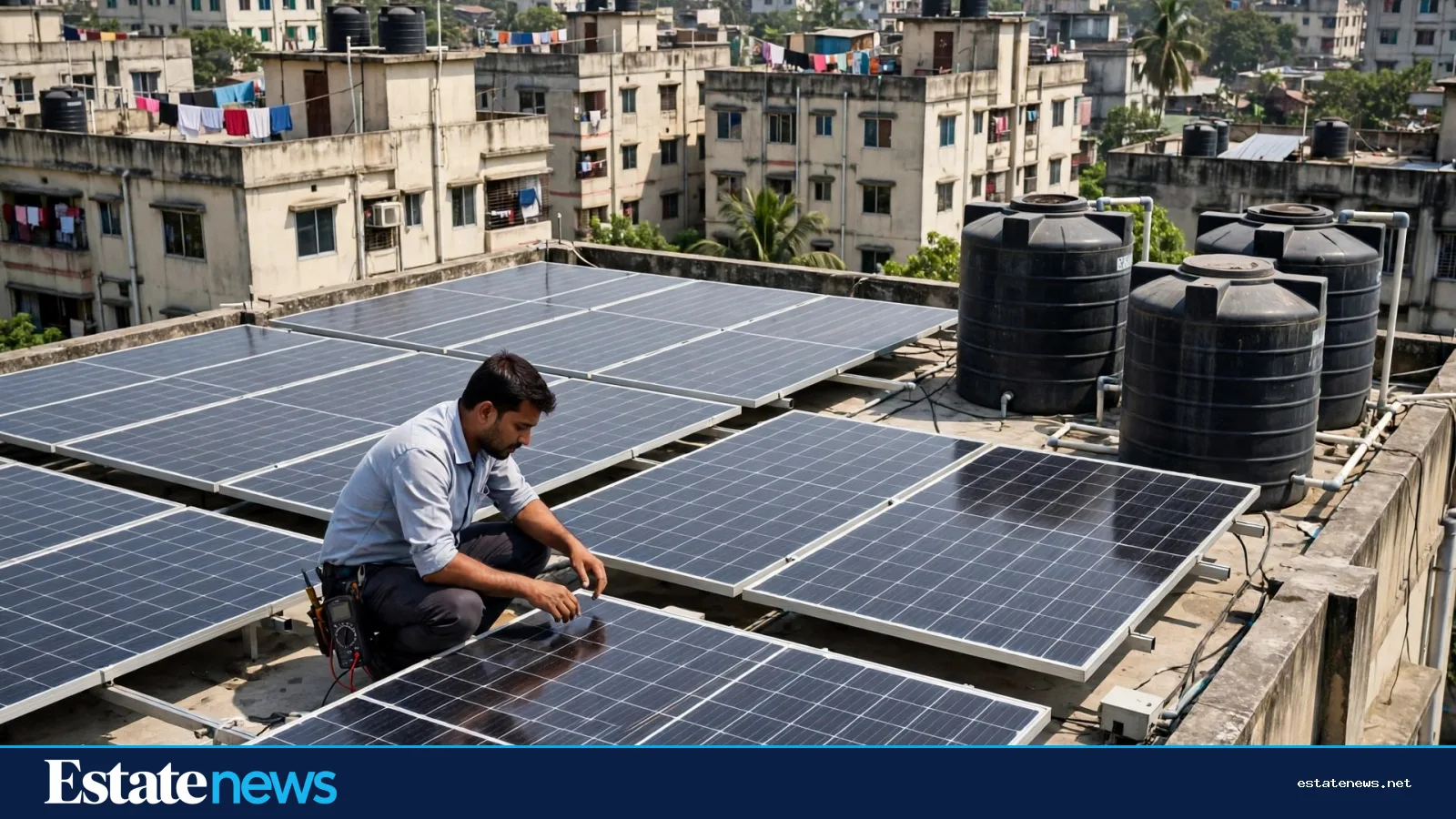
The panels are coming. The people who fit them are not, or not fast enough.
Bangladesh's renewable energy sector faces a skills shortage, according to a survey by the South Asian Network on Economic Modeling, SANEM, presented at a policy dialogue at The Westin Dhaka on 19 November. The survey of 60 renewable energy firms in Dhaka found that 82 percent of them report difficulties recruiting qualified workers, particularly engineers, designers and technical planners. Almost all of them, 97 percent, expect their workforce to grow over the next three to five years. The jobs are there. The workers are not.
Md Tuhin Ahmed, honorary deputy director of SANEM, who presented the keynote paper, put a number on the gap. The country will need an estimated 155,000 workers in the renewable energy sector by 2035, including around 75,000 STEM-qualified professionals. About 90 percent of the firms surveyed pointed to inadequate practical training and laboratory exposure in the existing training system as a major weakness.

A small workforce, and a narrow one
The survey also found that the sector's workforce is narrow in a second way. Women account for just 4 percent of the workforce at the surveyed firms, and 68 percent of the firms employ no women in renewable energy roles. Nearly 60 percent of the firms do not provide employees with social security or pension benefits. A sector that needs 155,000 people cannot afford to recruit from half the population, and it cannot keep the people it does hire without decent terms.
SANEM's executive director, Selim Raihan, set the numbers in context. Installed renewable energy capacity stood at approximately 2,185 MW in November 2026, about 6.66 percent of total electricity generation capacity. Under the National Renewable Energy Development Strategy 2026 to 2030, the country aims to add 10,450 MW of renewable capacity by 2030. That is the demand side of the skills gap: every megawatt needs someone to design it, install it and keep it running.
The dialogue heard one encouraging figure. Jahangir Hossain, director of the National Skills Development Authority, said about 5,000 people had been trained across 100 institutions under the Skills for Sustainable Energy initiative, with nearly 2,700 securing formal employment. It is a start. Against a need for 155,000 workers, it is also a measure of how far the training pipeline has to grow.


The projects waiting for hands
The shortage arrives at the busiest moment the sector has known. The Asian Development Bank will provide transaction advisory services for six solar and battery projects totalling over 1,000 MW, expected to mobilise more than $1 billion in private investment. The target is 20 percent of electricity from renewables by 2030 and 30 percent by 2040. Phase one is the 130 MW Sonagazi solar project in Feni, with a 26 MWh battery system, and its tender is expected this year. The government has sought $2 billion to add 3,000 to 4,000 MW of rooftop solar before next summer, and the ADB is mulling a $200 million lending package for rooftop solar. A Tk 15 billion fund has been created for the rooftop push.
Baraka Group and PIDG have now joined hands to develop a 45 MW solar power plant, the latest project in a pipeline that keeps growing. Every one of these projects needs the same people SANEM's survey cannot find: engineers who can design a system, technicians who can install it on a roof in Mirpur or a field in Feni, and maintenance crews who can keep it working through a monsoon.
What it means for a Dhaka roof
For a flat owner, the skills gap is not an abstract number. Rooftop solar only pays if the panels are installed properly and maintained, and a badly installed system on a Dhaka roof is worse than none at all: it leaks, it underperforms, and it gives the whole idea a bad name in the building. The net-metering rules already let households sell surplus power back to the grid, and the rooftop push means more buildings will be offered systems in the coming year. The question to ask any installer is no longer only the price. It is who trained the people on your roof, and who comes back when something stops working.
SANEM proposed a four-pillar roadmap: workforce planning and labour market intelligence, training and curriculum reform, inclusion and decent employment, and stronger institutional coordination. The recommendations include annual workforce surveys, industry-aligned curricula, competency-based certification, recognition of prior learning, better access to technical jobs for women, stronger labour protection, and an inter-ministerial mechanism for renewable energy skills development. None of it is glamorous. All of it is the difference between a solar target on paper and panels that actually work.
Estate News has followed the build-out step by step. "ADB Backs 1,000 MW of Solar: What It Means for Dhaka Roofs" covered the advisory deal and the Sonagazi project, "Rooftop Solar: What It Needs to Succeed in Dhaka" looked at the rooftop push and its financing, and "Smart Locks and Video Doorbells: What Dhaka Flats Actually Need" covered the other end of the same question, the technology going into flats today. The panels are the easy part. The hands are the hard part, and the country has nine years to train 155,000 of them.