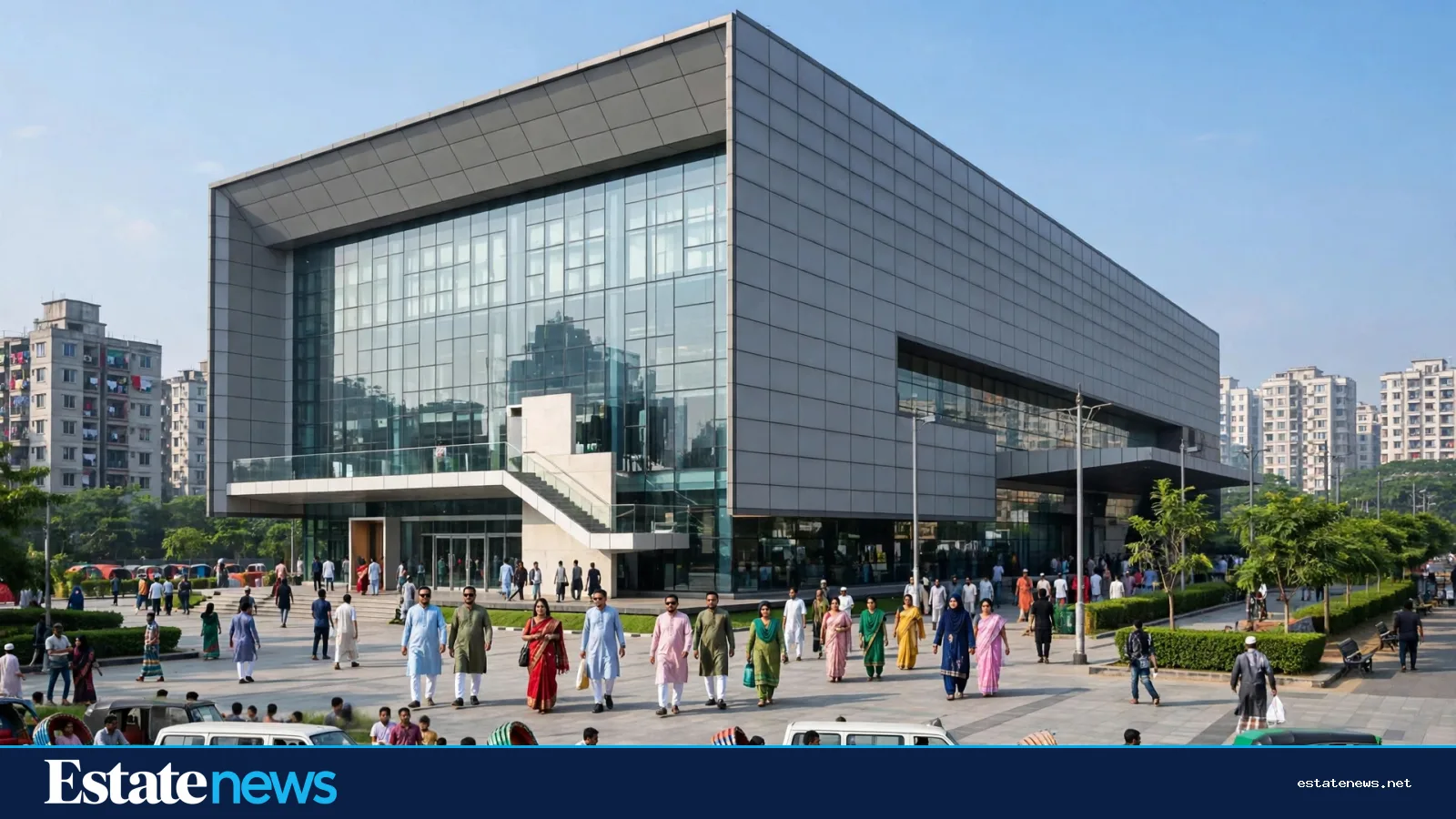
The Asian Development Bank is putting its weight behind solar power in Bangladesh at a scale the country has not seen before. On 17 November, ADB announced it will provide transaction advisory services for five additional solar and battery energy storage projects, expanding its programme to six projects with a combined capacity of more than 1,000 MW. The projects are expected to mobilise over $1 billion in private investment, cut reliance on imported fuel, and support the national target of 20 percent of electricity from renewables by 2030 and 30 percent by 2040.
The first project sets the pattern. The 130 MW Sonagazi solar project in Feni, paired with a 26 MWh battery system, is the phase-one project, and its tender is expected this year. The other five projects will follow in phases two and three, using Sonagazi as the template. A memorandum of understanding was signed by BIDA's Mostafa Kamal, BPDB secretary Afroza Sultana and ADB country director Qingfeng Zhang. ADB will help Invest Bangladesh Authority and BPDB assess government-owned land for the new sites.
The rooftop half of the story

The same day brought a second, separate piece of news, and it is the one that touches flat owners directly. The Financial Express reported on 17 November that ADB is also considering a $200 million lending package for the rooftop-solar ambition. The government has sought $2 billion to add 3,000 to 4,000 MW of rooftop solar before next summer, and a Tk 15 billion fund has been created, with Tk 10 billion repurposed from an SME allocation and Tk 5 billion from operating loans. Current renewable generation capacity stands at 2,188 MW.
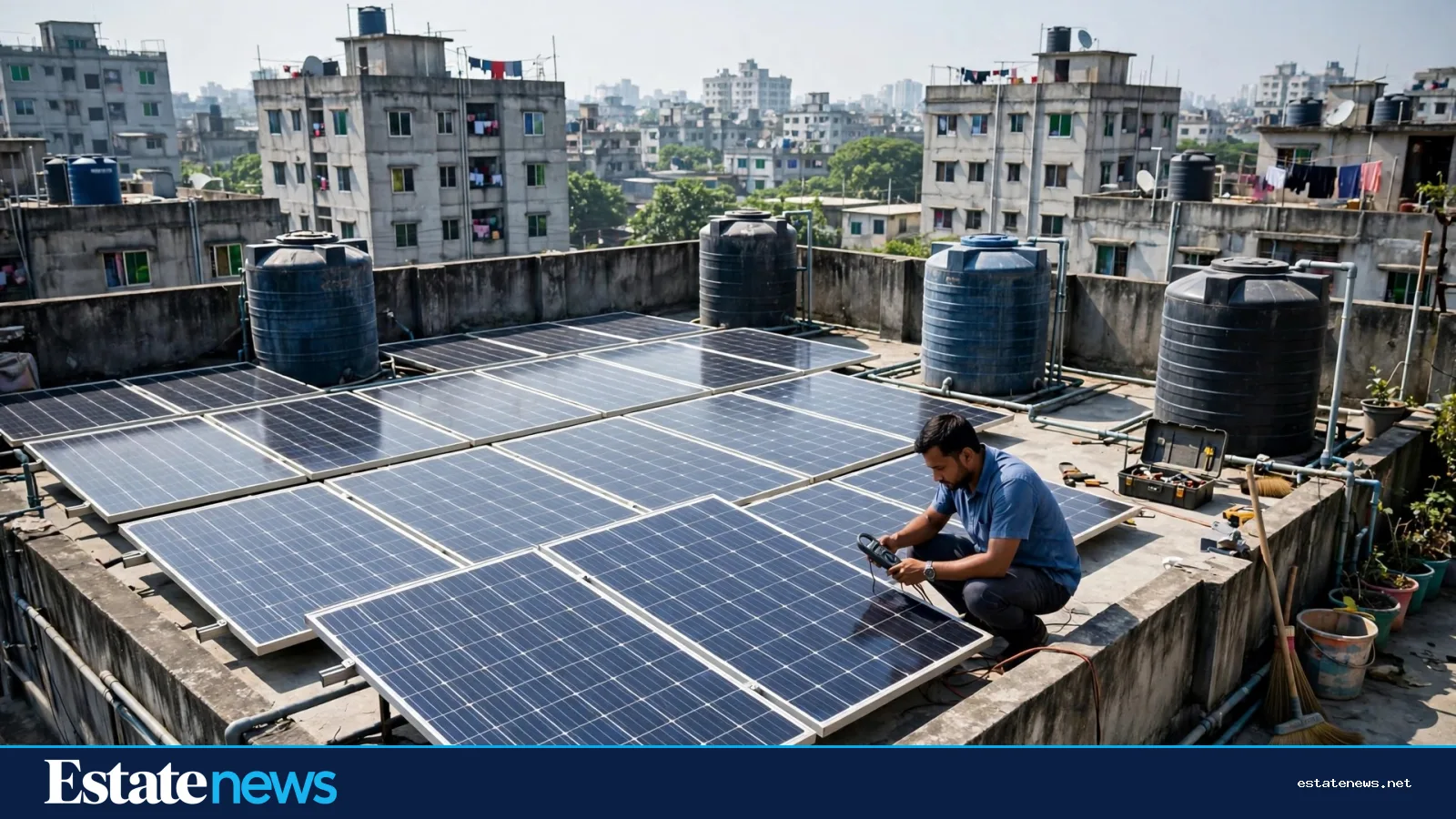
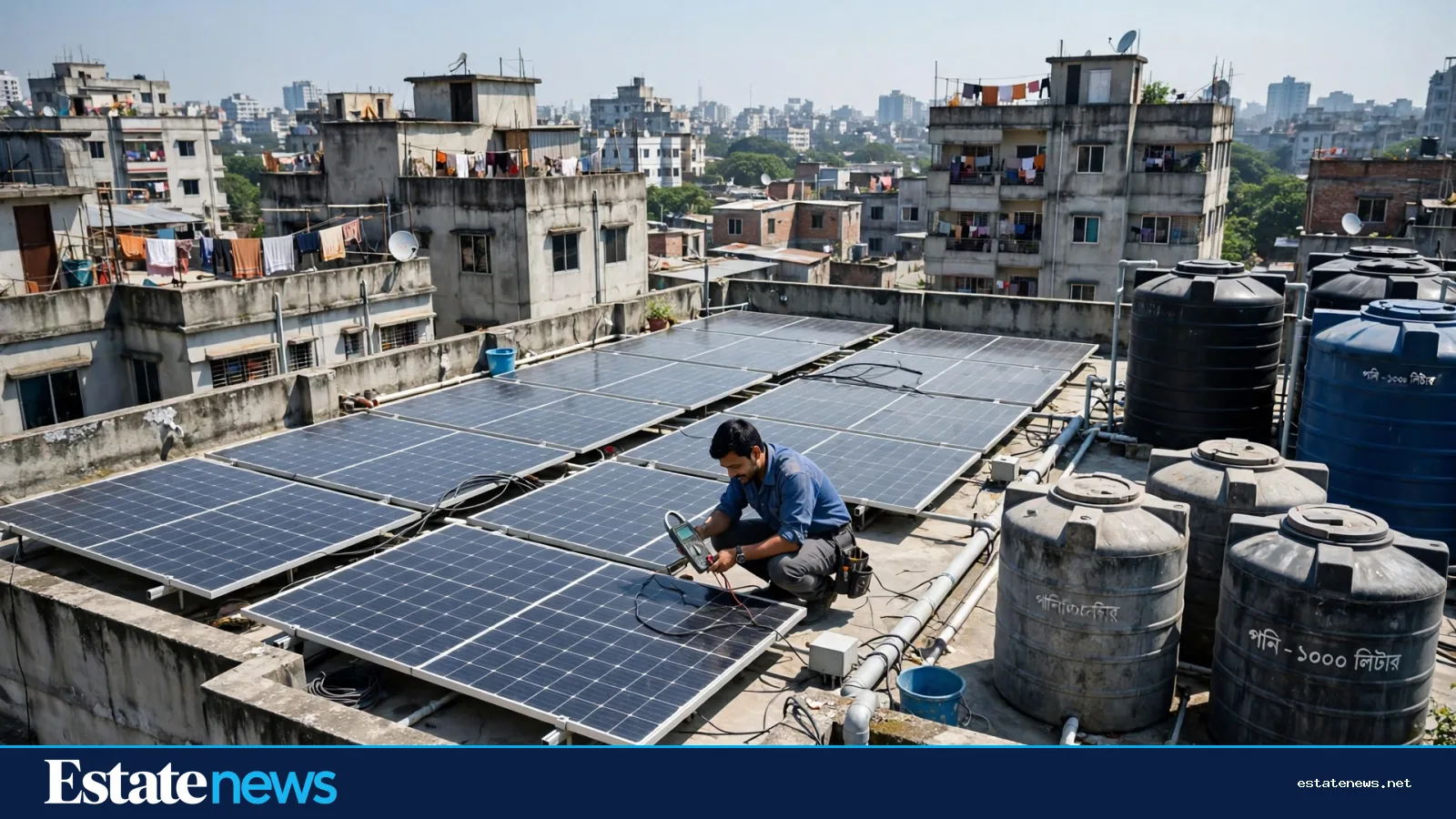
That is a large ambition, and it is worth reading it as one. Rooftop solar on a Dhaka apartment building is not the same job as a solar farm in Feni. The roof has to be shared between water tanks, lift rooms, washing lines and the panels themselves. The building's wiring has to be ready. The flat owners have to agree. And the economics depend on net metering, the system that lets a building sell its surplus power back to the grid. Estate News's 14 November guide to net metering walks through how that system works for a household, and it is the piece to read before anyone signs up for panels.


What a flat owner should ask
A solar panel on a roof is a piece of technology, and like any technology in a home it works best when the buyer knows what to check. The roof's load capacity comes first: panels and their frames add weight, and an older building needs an engineer's say-so. The second question is who maintains the system, and what happens when an inverter fails in a monsoon. The third is the agreement between flat owners, because a shared roof is a shared decision.
None of this is new ground for the portal. Estate News looked at which property apps are worth trusting in "Property Apps That Actually Help: What to Check Before You Trust a Listing", and at the gadgets that earn their place in a flat in "Smart Locks and Video Doorbells: What Dhaka Flats Actually Need". The Bangla piece "স্মার্ট হোম: ঢাকার ফ্ল্যাটে কোন প্রযুক্তি আসলেই কাজে লাগে" asked the same question in another form: which technology actually helps in a Dhaka flat, and which one just looks good in a brochure. Solar belongs in the first group when the numbers work, and in the second when they do not.
The ADB announcement is a statement of intent, reported by TBS, the Financial Express and bdnews24 on 17 November. The advisory work, the tenders and the lending package all still have to happen. What has changed is the scale of the backing: six projects, more than 1,000 MW, and a rooftop programme with a fund behind it. For a city where every rooftop already carries water tanks and washing lines, the question is whether solar panels can join them without a fight over space. The next two years will answer that, one roof at a time.