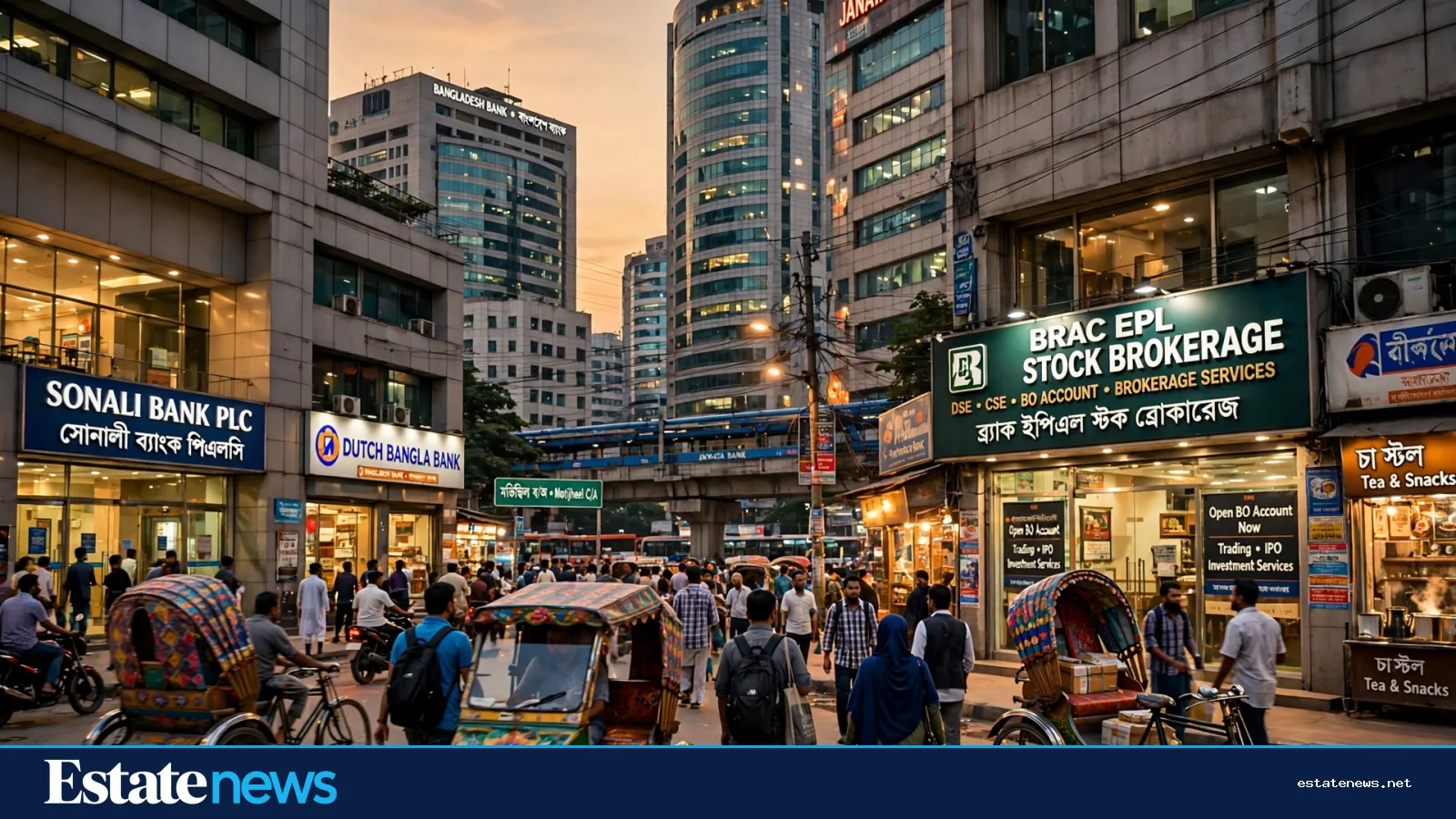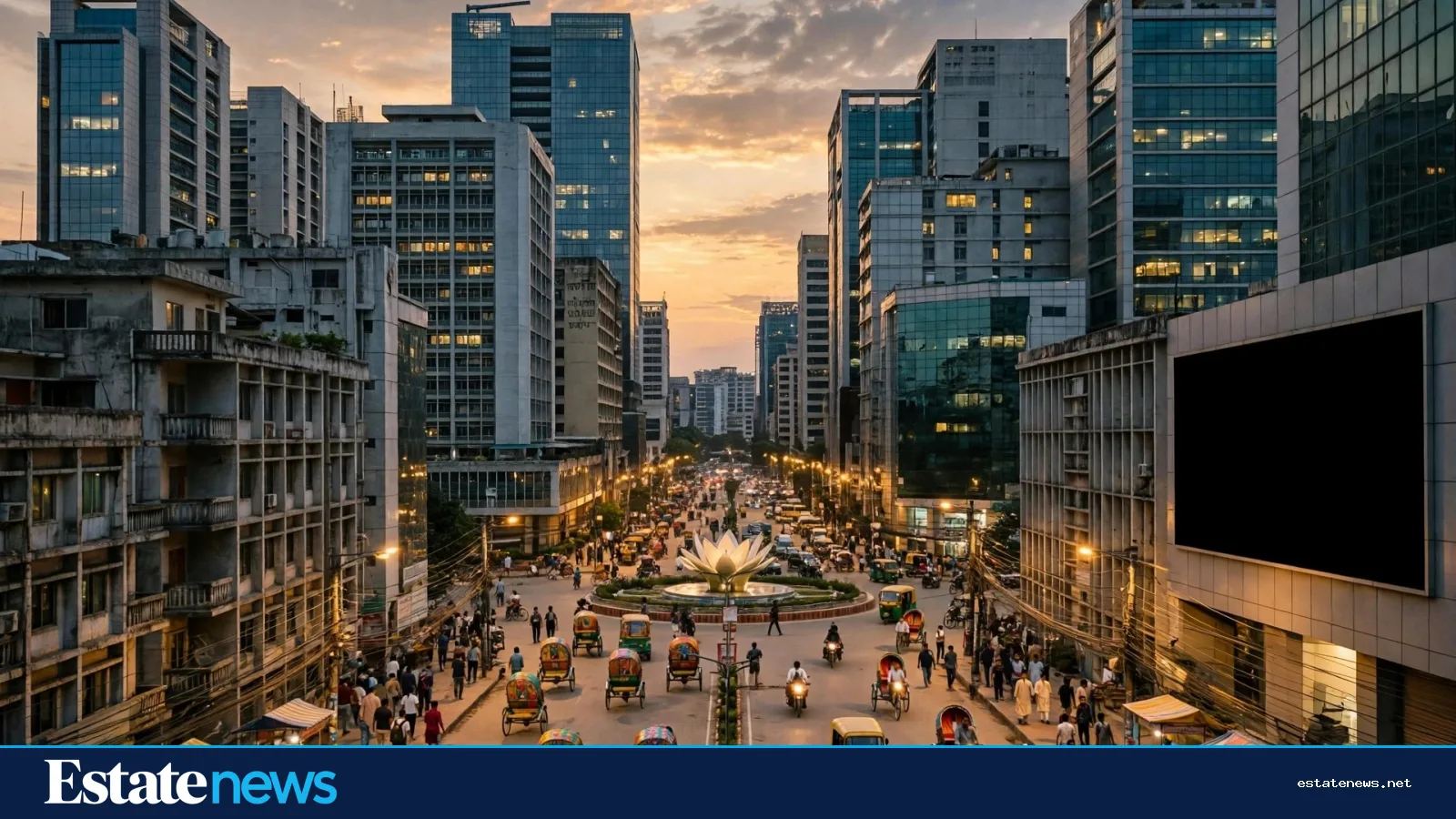
Wednesday gave the market a fourth straight green session and the wage debate a set of numbers to argue over. The DSEX closed at 5,500.84, up 9.05 points, its first finish above 5,500 since 1 October. The index has now recovered 216 points, or 4.1 percent, from its 3 November low. The day's trading told a familiar story: an early push, a mid-session wobble as investors booked profits, and a close that held the line. The index touched 5,530 at its high and 5,499 at its low before settling above the mark that matters.
Turnover cooled. The Dhaka Stock Exchange recorded turnover of Tk 819.90 crore, down 12.7 percent from Tuesday's Tk 939.07 crore, on 213,304 trades and 241.58 million shares. Retail investors still did most of the trading, accounting for 85.3 percent of turnover, according to Prime Bank Securities. Foreign buying fell to Tk 5.5 crore from Tuesday's Tk 24.7 crore, and foreign investors were net sellers of Tk 12.2 crore. Banks did the heavy lifting on the day, with banking sector turnover up 11 percent to Tk 122.7 crore, about 15 percent of the total. Of 359 issues traded, 129 advanced.
A number on the wage debate

The day's other big number came from the Centre for Policy Dialogue, which put a range on the garment minimum wage. CPD proposed on 18 November that the wage be negotiated within Tk 18,578 to Tk 24,204 a month, based on a study presented at its Dhanmondi office by Executive Director Nazneen Ahmed. The range rests on three estimates for a four-member family with 1.58 earners: Tk 16,351 to hold the purchasing power of the December 2023 wage, Tk 18,578 at the upper poverty line for urban Dhaka, and Tk 24,204 as a living wage covering food, housing, healthcare, education and a small emergency reserve. CPD cautioned that the figures are illustrative, since no large representative survey of garment workers exists, and proposed setting wages at least six months before they take effect.
The Wage Board's third meeting is set for 23 November at 11:30am in Segunbagicha, and the new wage is scheduled to take effect on 1 December, paid with January 2027 salaries. Workers' representatives have proposed Tk 32,000 for the entry grade, and owners have yet to table a proposal. The American Apparel and Footwear Association added a second voice, urging an inclusive and transparent review, annual wage revisions, safeguards against violence and retaliation, and responsible purchasing practices. The debate now has dates, a range and a timetable, which is more than it had a week ago.


Remittance, reserves and the dollar
Remittance kept its pace. Bangladesh Bank data show $1.964 billion arrived in the first 16 days of November, up 15.8 percent on the same period a year earlier, with $101 million on 16 November alone. From 1 July to 16 November the total reached $13.43 billion, up 13.4 percent year on year. The money matters to households in a direct way: it pays for deposits on flats, for building materials, for school fees. It is supporting data in today's wrap, not the lead story, but the flow is strong.
Bangladesh Bank sold $220 million at Tk 123.90 to the dollar, a reminder that the central bank is still smoothing the currency market. Reserves, on Bangladesh Bank's published figures, stood at $34.50 billion gross and $29.68 billion on the BPM6 measure as of 16 November. Those are the figures to use. Any other reserve number circulating today is not the central bank's published figure.
The government also cleared 16 development projects worth Tk 33,298 crore at an ECNEC meeting on 18 November, including 256 rural bridges and a sewerage line for Dhaka's Dasherkandi treatment plant. One line of context: about 535 garment factories were disrupted on 18 November, a figure that belongs in the background of the wage story rather than as a story of its own.
The day's numbers point in the same direction. A market holding above 5,500, a wage debate with a timetable, remittance running ahead of last year, and a central bank with room to sell dollars. For a household weighing a flat, the useful numbers are the ones that last: the registration cost guide, the rent-versus-buy maths, and the land verification checklist, all linked from this wrap. Estate News's Chattogram port coverage, which now ranks at position 1.5 in search, and our piece on how natural light shapes interior architecture and mood, at position 3.0, carry the same lesson. Steady numbers, reported plainly, are what readers come back for.