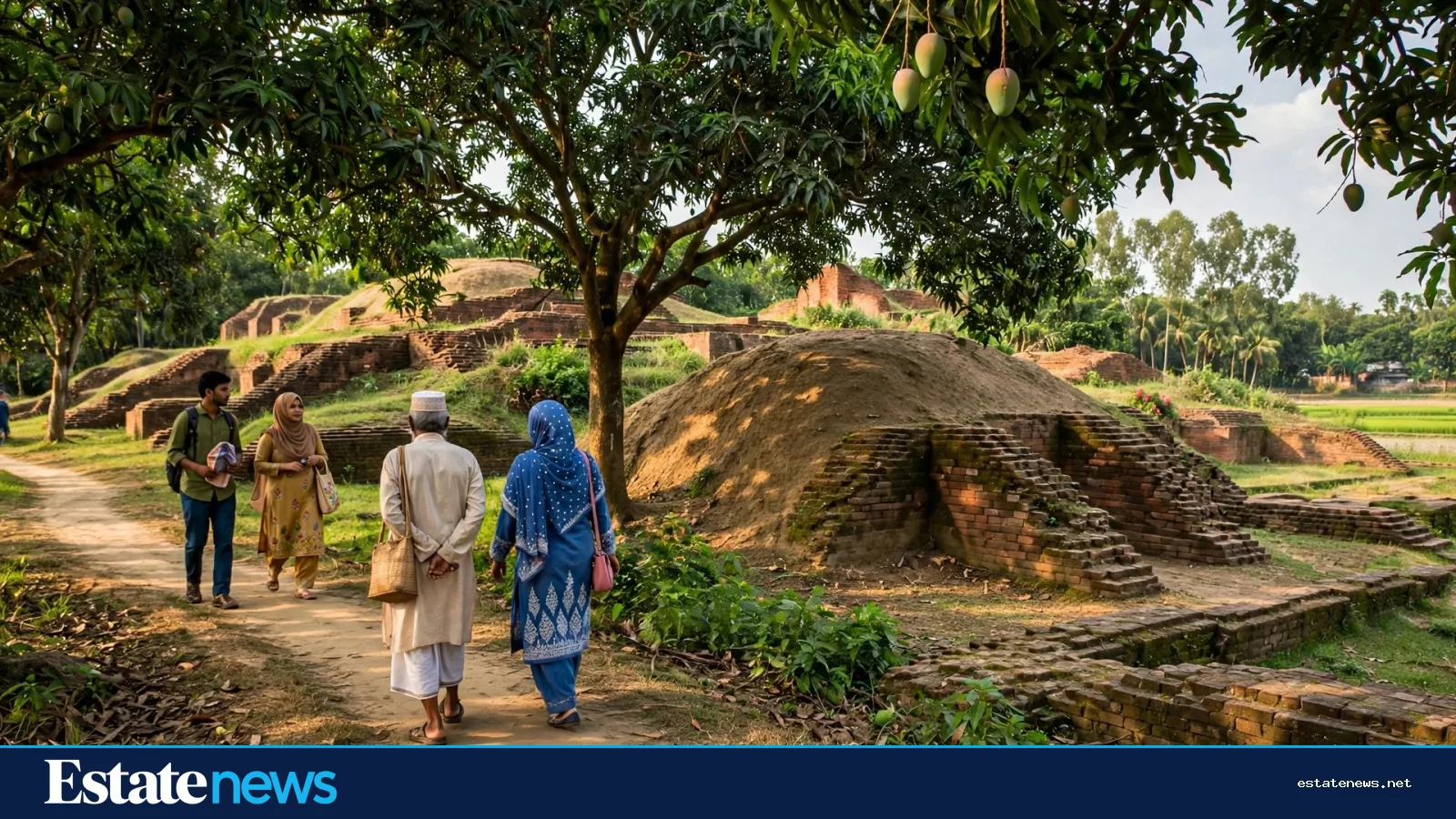
The path into Mahasthangarh runs under mango trees. Brick mounds rise on either side, grassed over and worn by weather, and the walls of an old citadel show through the earth in places where the rain has cut the ground away. Visitors walk slowly here. There is little to look at in the way a palace gives a visitor something to look at, and that is the point. This is not a building. It is the ground a city once stood on.
Mahasthangarh, in Bogra district, is the earliest urban archaeological site discovered so far in Bangladesh. Its origins reach back to the 3rd century BCE, to the Mauryan period, when it was the capital of Pundra, the ancient city known as Pundranagara or Paundravardhanapura. A limestone slab found here in 1931, bearing six lines of Prakrit in Brahmi script, dates the site to at least the 3rd century BCE. The name itself carries the claim: Mahasthan, a place of great sanctity, and garh, a fort. Local tradition has long held the ground sacred, and that belief is part of the story, told as tradition rather than as history.
The site lies about 11 kilometres north of Bogra town, on the Bogra-Rangpur highway, in Mahasthan village of Shibganj upazila. The citadel at its heart is rectangular, roughly 1.5 kilometres long from north to south and 1.37 kilometres from east to west, ringed by high, wide ramparts. It was a working city for a very long time. The fortified area stayed in use until the 8th century CE, serving as a provincial capital under the Mauryas, the Guptas, the Palas and the Hindu kings who followed. Alexander Cunningham, who visited in 1879, was the first to identify the place as the capital of Pundravardhana.

Why a city grew here
The answer is the river. The Karatoya flows along the eastern side of the citadel, and when the city was founded it was a wide, powerful river, a highway for trade and people. As recently as the 13th century it was described as three times wider than the Ganges. Today it is a small stream, and the change in the river is the change in the city. A capital needs water, transport and defence, and the Karatoya gave all three: a deep trench on the west, south and north sides of the citadel gave the rest.
Walk the ramparts and the plan of the place comes clear. Inside the walls stood the administrative and religious heart of Pundra. Outside them, on all sides except the east, spread the suburbs, workshops and houses of a city that traded across Bengal. Govinda Bhita, a temple site on the bank of the Karatoya near the museum, holds remains dated from the 3rd century BCE to the 15th century CE. Gokul Medh and Vasu Bihar, nearby mounds, belong to the same world, and together they make the area around Mahasthan one of the densest archaeological landscapes in the country.
What the ground still holds


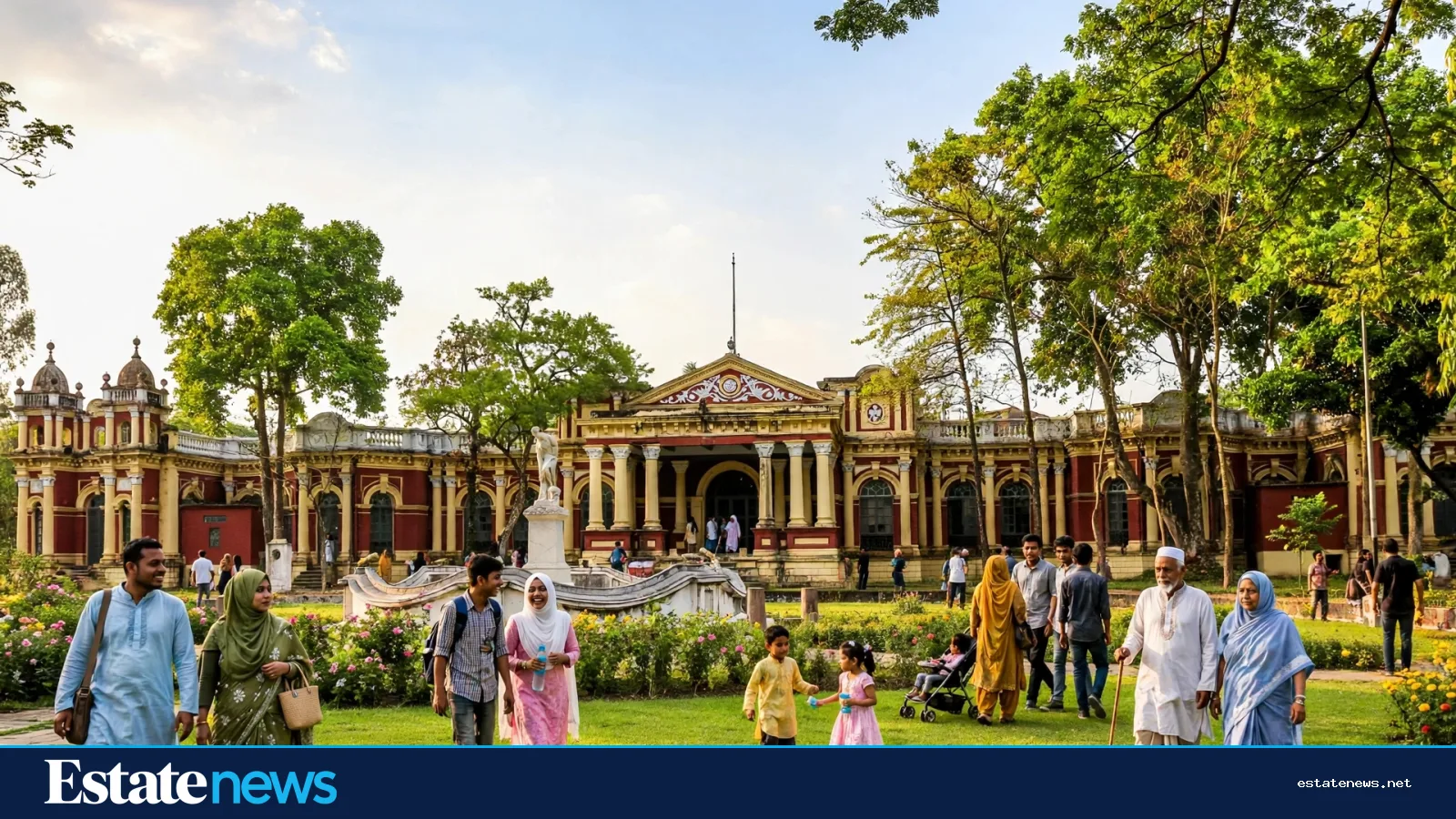
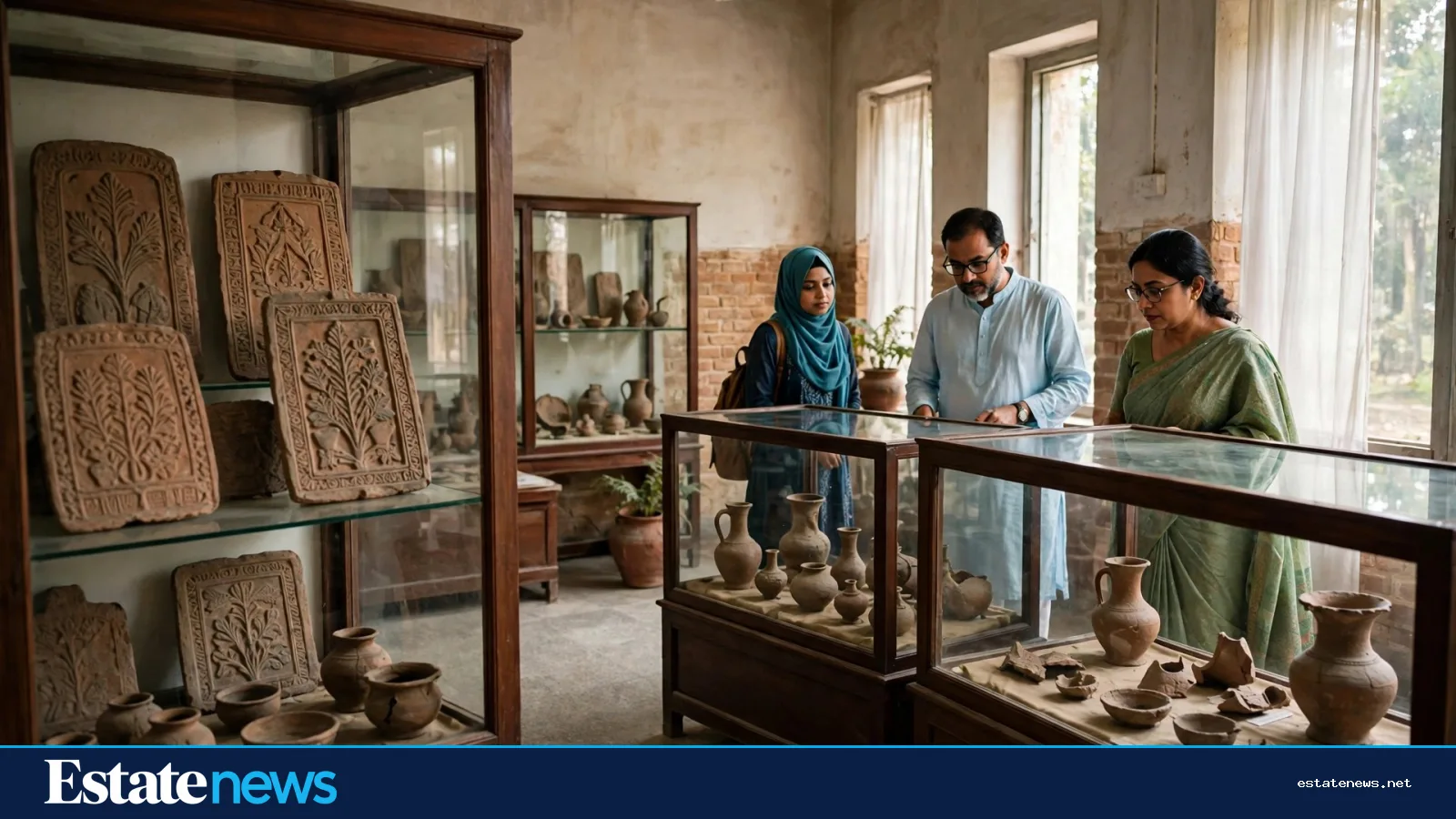
The museum at the site holds the small things that survived. Terracotta plaques, pottery, beads and stonework sit in display cases, and each one is a piece of evidence rather than a treasure. The most famous object is small: the limestone slab found in 1931, about the size of a hand, whose six lines of Prakrit record a land grant. It is the slab that fixes the city's date, and it is the reason archaeologists can say with confidence that a city stood here in the 3rd century BCE. The rest of the dating comes from the ground itself, layer by layer, dug over decades.
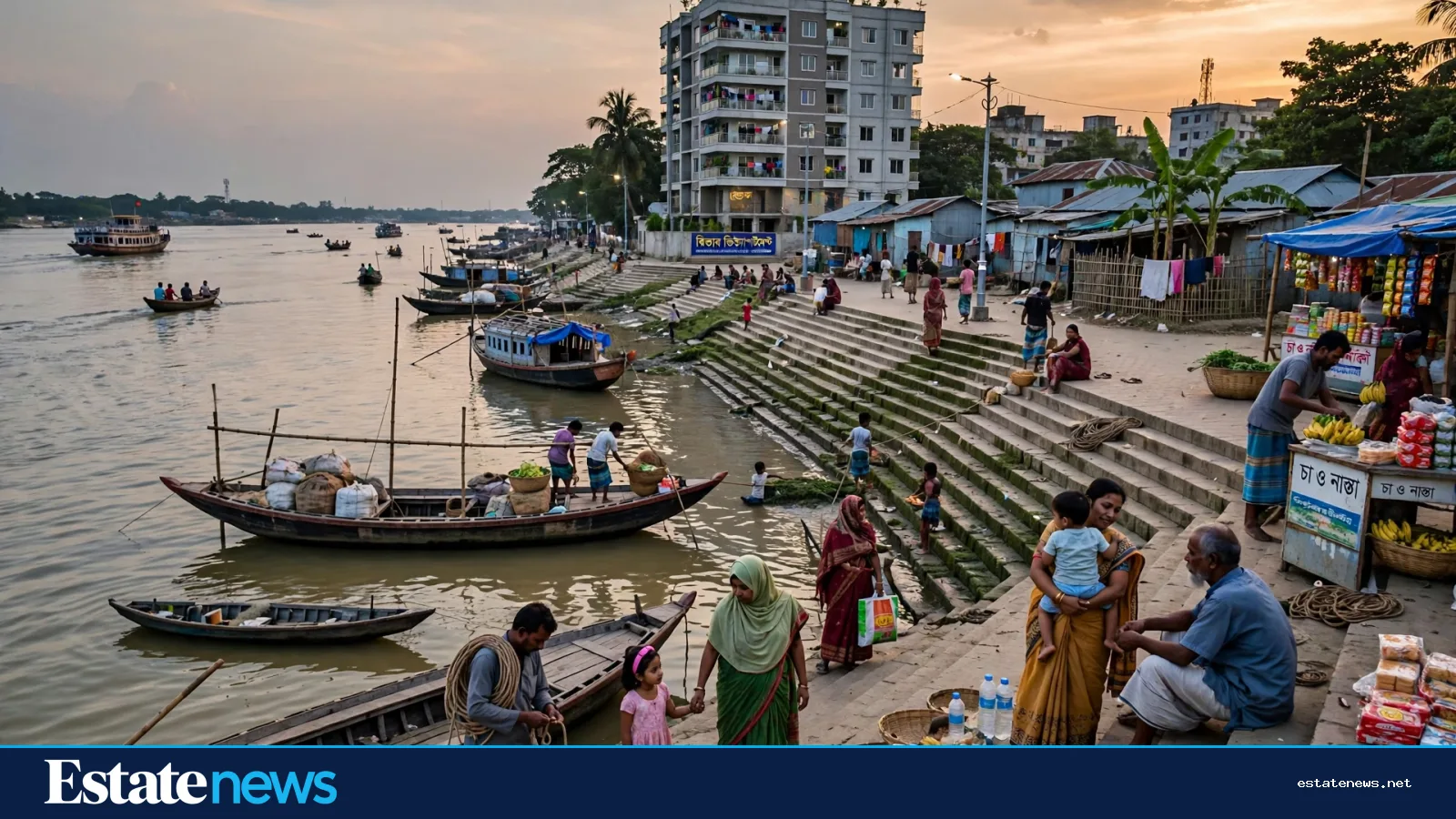
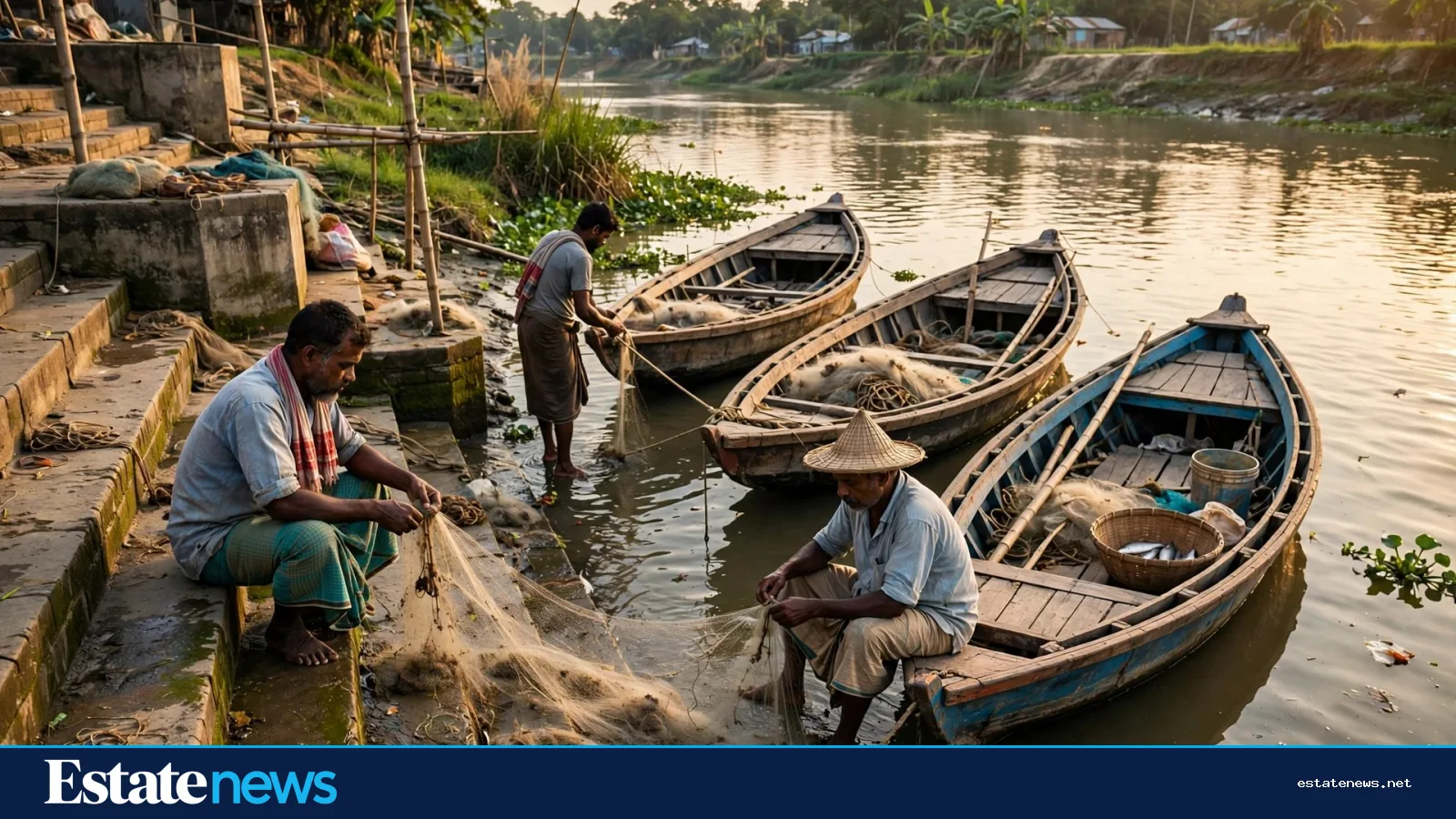
The river is the other half of the story. Stand on the bank of the Karatoya in the late afternoon and the city makes sense in a way the mounds alone do not explain. Boats still work the water, fishermen still cast nets, and the ghats still fill at dusk. The river shrank, the city went quiet, but the water never left. Mahasthangarh is on Bangladesh's UNESCO Tentative List, as the Cultural Landscape of Mahasthan and Karatoya River, a listing that covers the site and its river together rather than the ruins alone.
A place to visit, a past to keep
Mahasthangarh does not offer the easy pleasures of a restored palace. There are no painted halls, no furnished rooms. What it offers is older and rarer: the ground of Bangladesh's first city, still open to the sky, still farmed and walked over by the people who live beside it. The Department of Archaeology cares for the site, and the museum keeps the finds where they were found, a short walk from the mounds themselves.
For a visitor from Dhaka or Chattogram, the trip is a reminder that Bangladesh's cities did not begin with the ones we know. Long before the capital moved south, a city stood on the Karatoya, walled, traded with, and ruled from. Its bricks are still there, under the mango trees, waiting for the next person to walk the path and look down. Estate News has told the same kind of story at the Sixty Dome Mosque in Bagerhat, where a forest of pillars has stood for six centuries, and at Shashi Lodge in Mymensingh, the palace that made a town into a museum town, and at Tajhat Palace in Rangpur. Mahasthangarh is older than all of them, and it asks less of its visitors: only that they stand on the ground and remember how long a city can last.