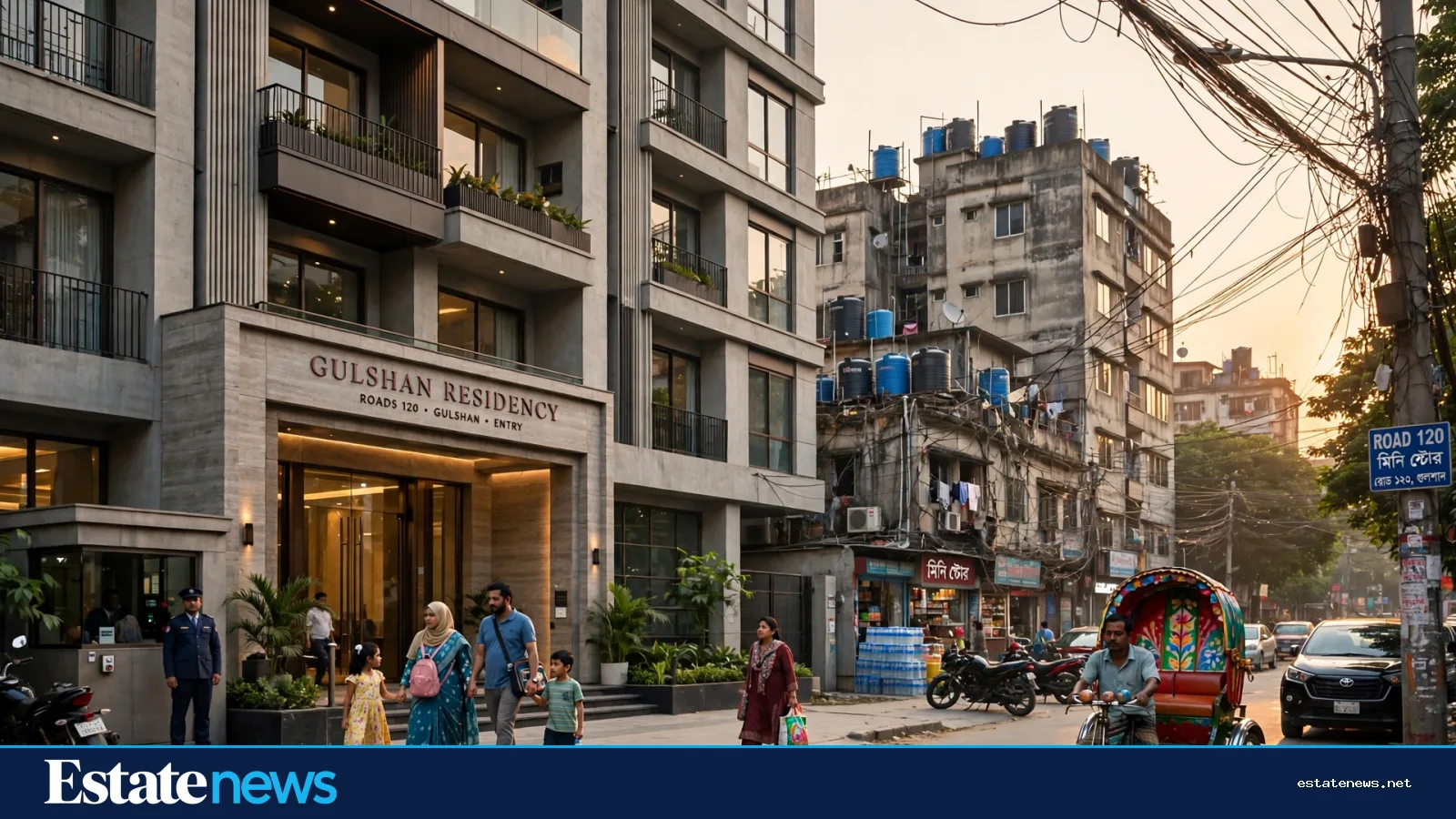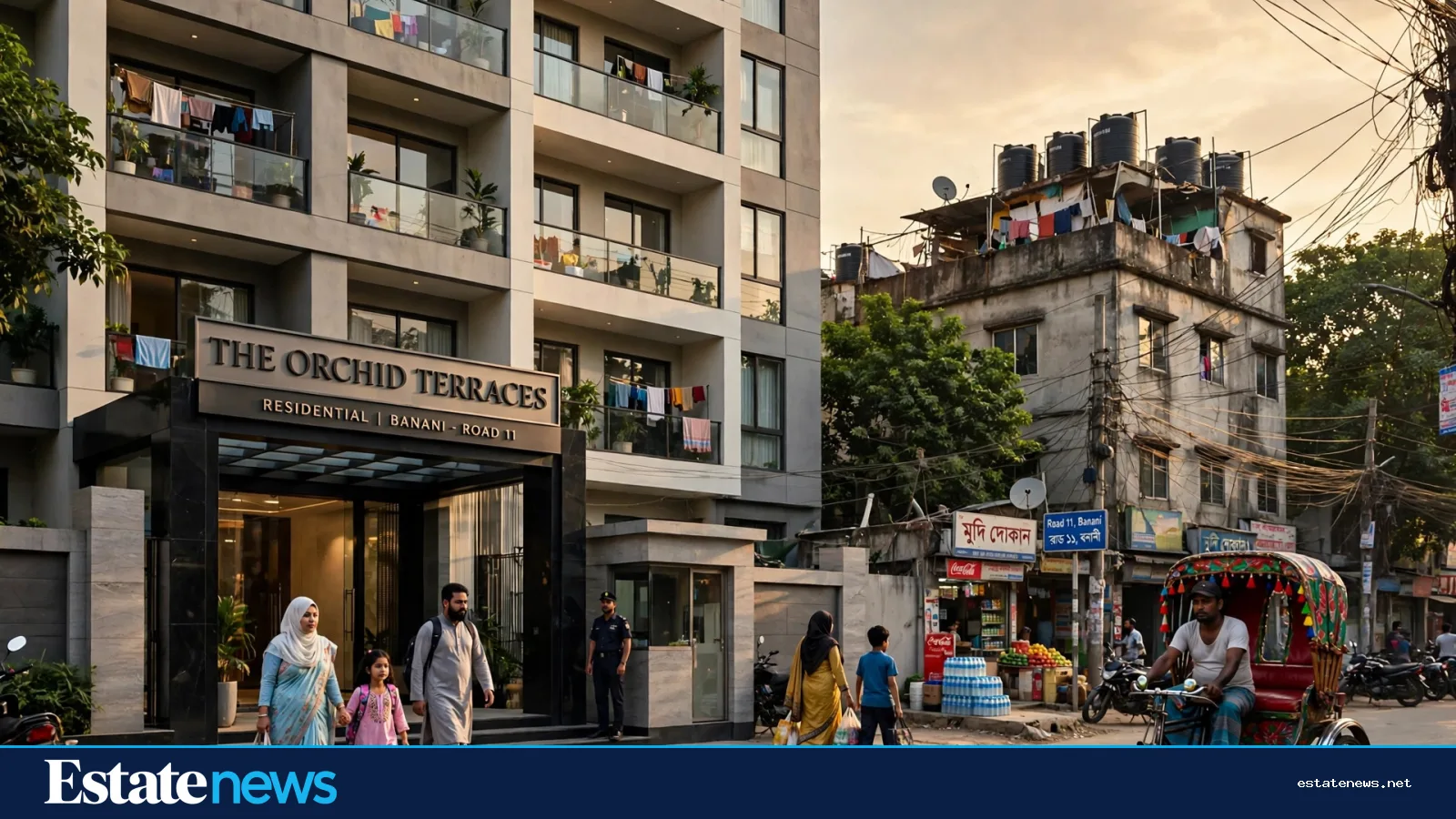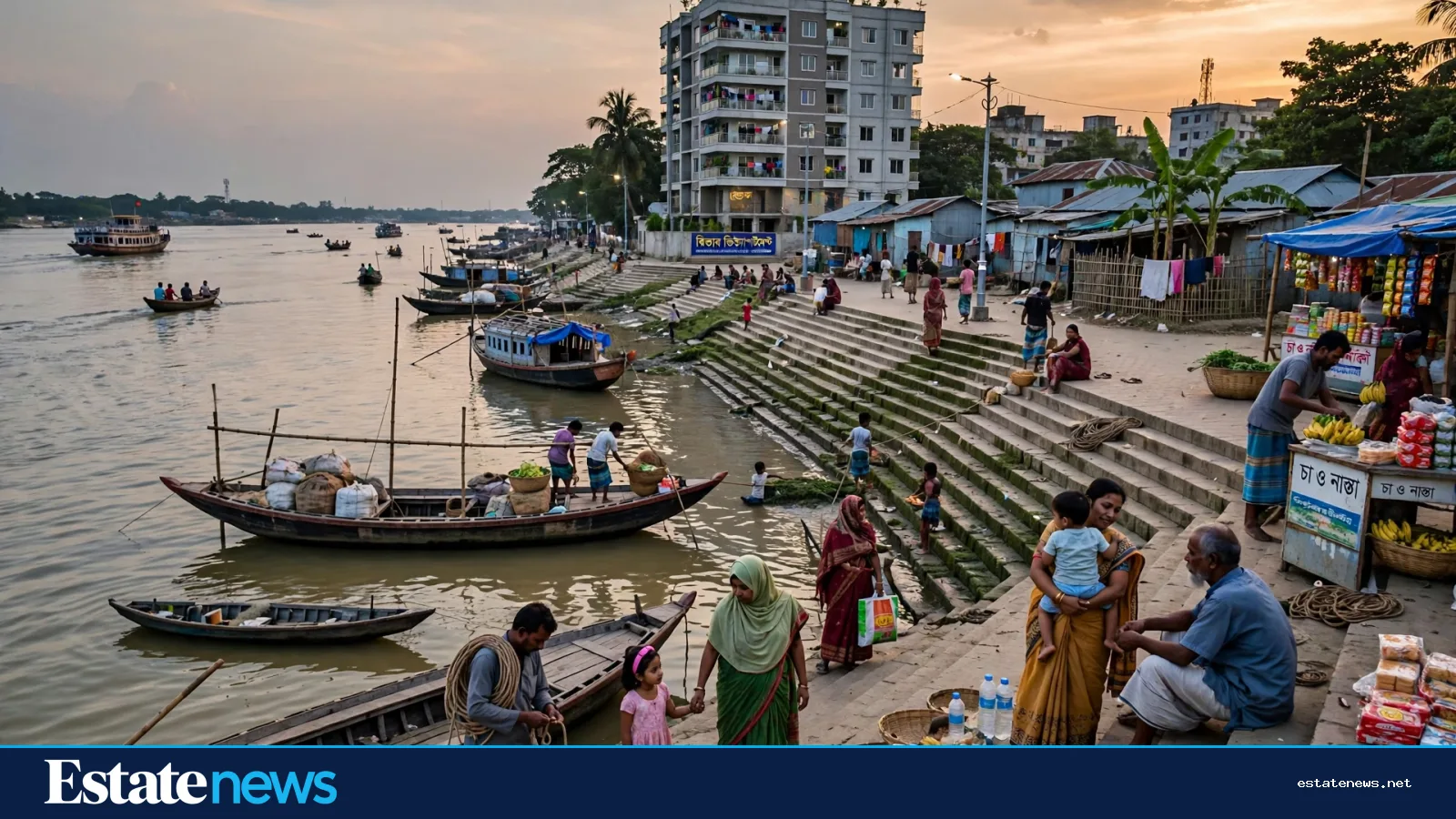
The light goes soft over the Kirtankhola just before six in the evening, and the ghat fills up. A launch slides in from Dhaka and the passengers come down the gangway with bags and baskets. Wooden boats cross the river in both directions, their boatmen standing at the stern. On the steps, a woman in a sari sells bananas from a basket while a boy carries a bundle of rope down to a fishing boat. Above the tin roofs and the market stalls, a new apartment block stands with its windows lit, taller than anything around it.
Barisal has always been a river city first and a housing market second. The Kirtankhola runs past the town the way a main road runs past other cities, and for generations the city's homes spread sideways along the water rather than upward. That is starting to change. The Padma Bridge, which opened to traffic in June 2022, cut the road journey from Dhaka to about three hours, down from seven or eight hours by ferry. A city that once felt a day away from the capital now sits within a morning's drive, and its housing is beginning to show it.
The city earned an old nickname, the Venice of the East, from the canals and waterways that thread through the south. Barisal is the divisional city of the region, and its river port is one of the busiest in the country for passengers. Launches still leave for Dhaka every evening, and they still carry the families, students and traders who keep the city's ties to the capital alive. The port and the ghats are not scenery here. They are the reason the city exists where it does, and they still set the rhythm of an ordinary day.

The river sets the shape
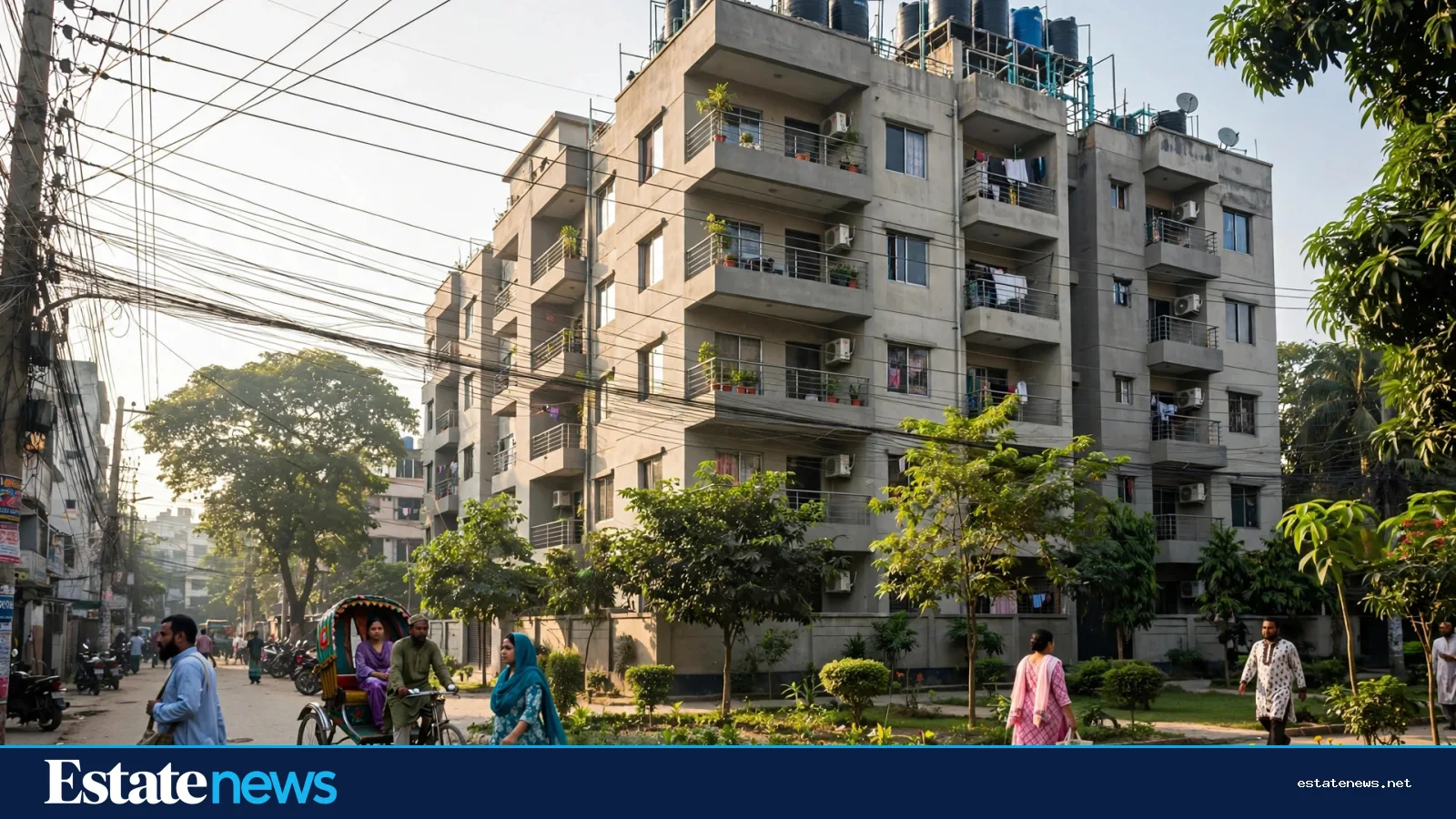
Walk away from the water and the city's housing tells its own story. Low houses with tin roofs stand beside concrete buildings of two or three storeys, and the lanes between them are narrow enough for a rickshaw and a cycle van to pass each other with care. Plots near the river have always been the ones people wanted, and the houses there grew room by room as families grew. Further out, newer neighbourhoods spread across open ground, with wider roads and plots laid out for the families moving in from the surrounding districts.
The ghat is Barisal's market, bus stand and meeting place rolled into one. Fish comes off the boats in the morning and reaches the kitchen markets before the sun is high. Traders from the river districts bring vegetables, fruit and rice, and the shops along the ghat road sell to the families who live within walking distance. A city that feeds itself from its river needs its homes close to the water, and for a long time that was enough. Nobody needed a lift or a rooftop garden when the river was outside the door.
Three hours to Dhaka
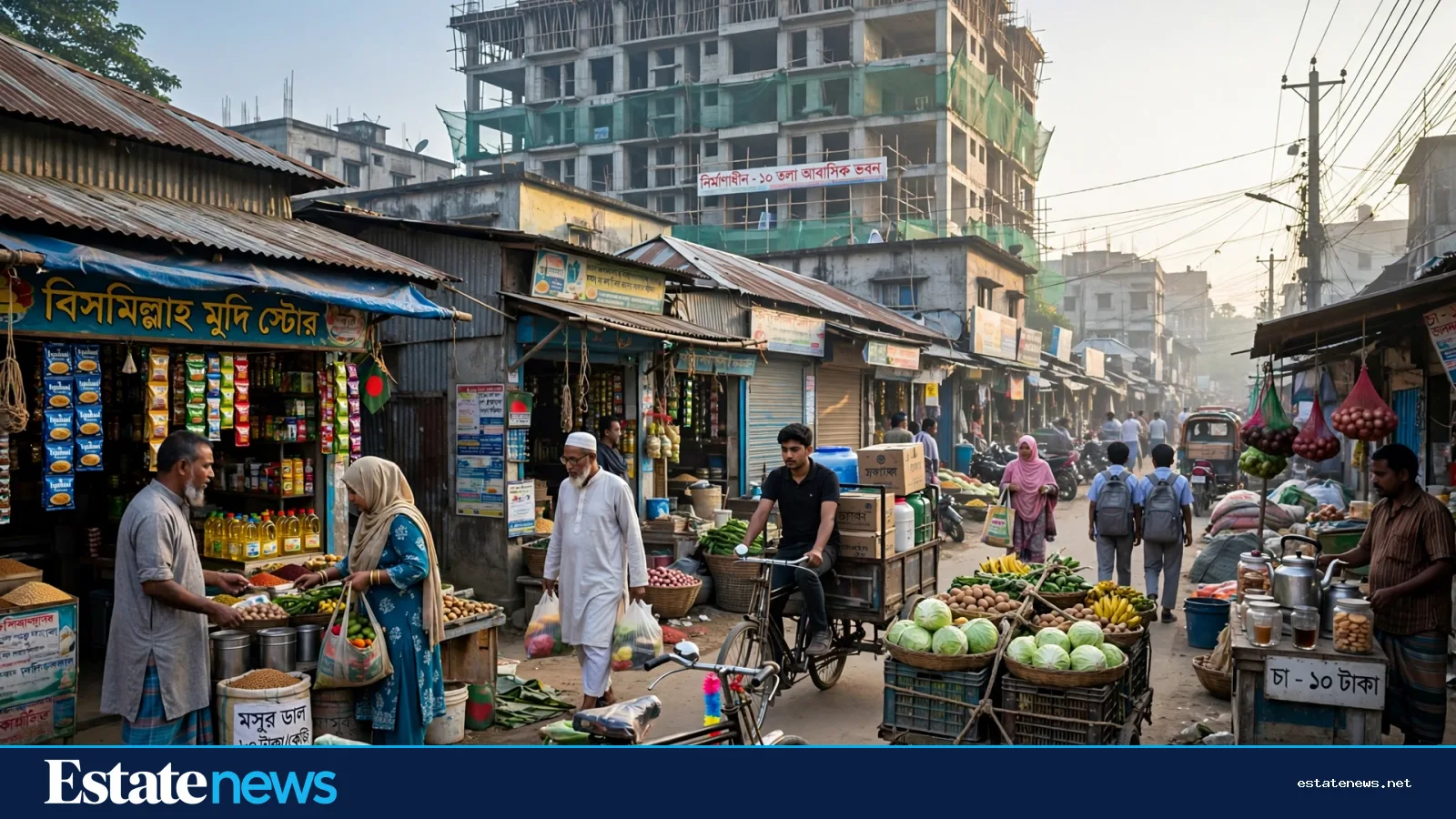
The Padma Bridge changed the arithmetic of distance for the whole south. The 6.15-kilometre bridge was inaugurated on 25 June 2022, and buses reached Barisal's Notullabad terminal in about three hours on the first morning of traffic. Before the bridge, the same trip took seven or eight hours with the ferry crossing, and longer still when the weather turned or the queue at the ghat stretched back. Students could now go home for a weekend. Traders could send a truck to Dhaka and have it back the same day. Families with work in the capital could think about keeping a home in Barisal and still reaching Dhaka when they needed to.


That shorter journey is the quiet fact behind the new blocks rising over the low roofs. Developers in the city are building mid-rise apartments, the kind of building Barisal rarely saw before, with lifts, parking and a gate at the entrance. Estate News covered the same shift in "Khulna: The Port City Where the South-West Buys Homes", where another southern port city is seeing its first proper apartment blocks, and in "যশোর: সীমান্ত বাণিজ্যের শহরে আবাসনের গল্প", which followed housing in the border-trade town of Jashore. Barisal's version of the change is slower and smaller, and it is shaped by the river rather than by the capital's developers.
Who lives in the new flats
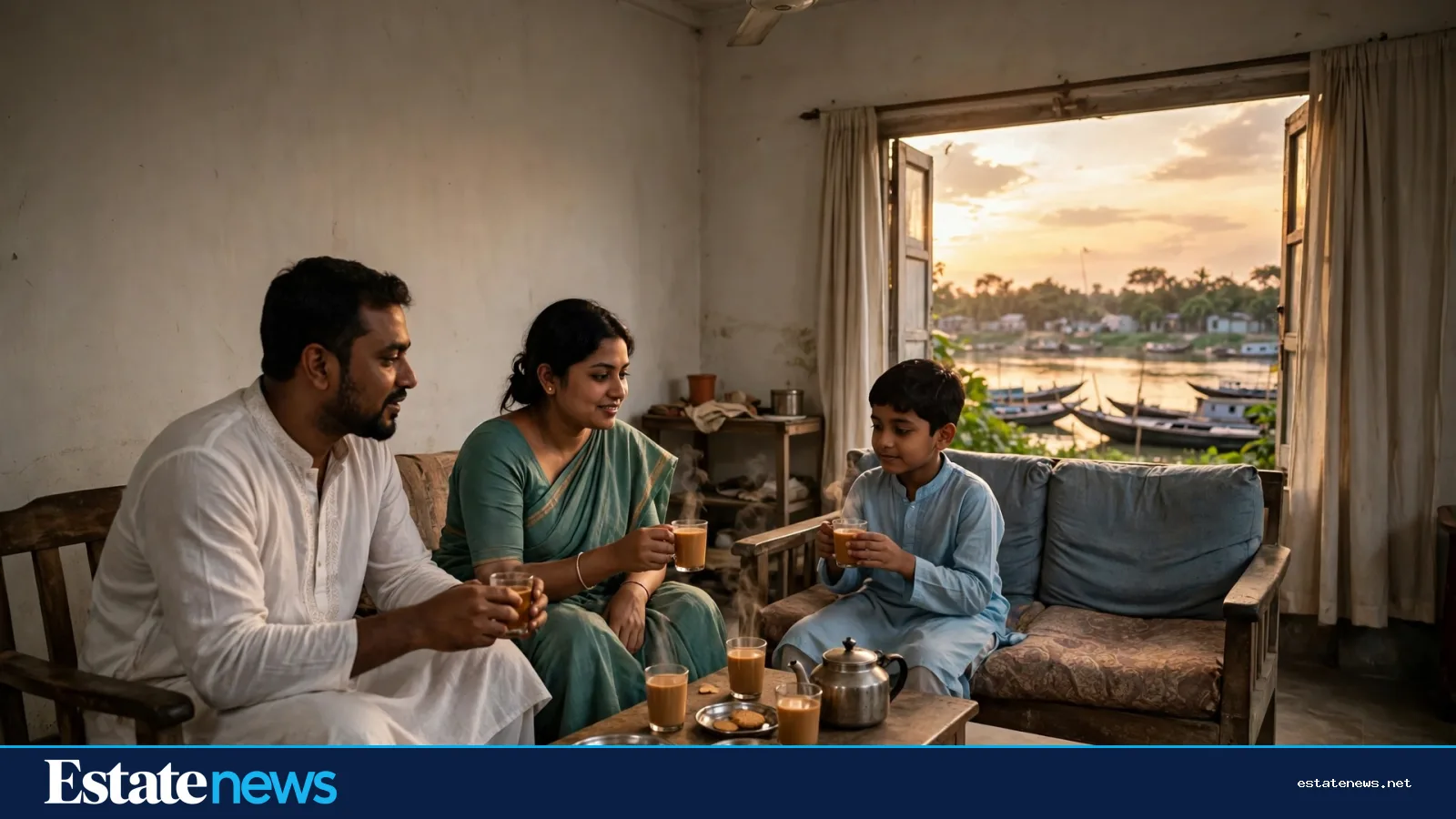
Inside one of those new flats, the evening looks familiar. A family has tea in the living room while the ceiling fan turns above them, and the window frames the river where the boats are coming in. The furniture is the same as in any Bangladeshi home, a wooden table, a sofa, a shelf of books, and the conversation is about school, the market and the relatives who are due on the next launch. What is different is the building itself: concrete stairs replaced by a lift, a shared gate instead of an open lane, and neighbours on the floor above and below who arrived from other districts.
The buyers are the people Barisal already had. Teachers at the colleges, doctors at Sher-e-Bangla Medical College Hospital, officers posted to the divisional offices, and families whose children study at the university and want to stay in the city after they graduate. Some are Barisal families who sold a piece of ancestral land and moved into a flat with less upkeep. Others are people from the surrounding districts, Bhola, Patuakhali, Pirojpur and Barguna, who came to the divisional city for work or schooling and decided to stay. No published price list tracks what these flats sell for, and this piece states no price, because none has been verified. What can be said is that the demand is local, and the buyers are buying a place to live rather than a flat to flip.
What the city still needs
A city that builds upward has to solve the problems that sideways growth could ignore. Water supply, drainage and waste collection matter more when a hundred families share one plot. The monsoon still tests the low ground near the river, and the roads that flood in a heavy rain are the same roads the new blocks stand on. Barisal's advantage is that it is growing from a small base, with room to lay services before the buildings arrive, if the planning keeps up with the construction.
The bridge era has given the city something it never had before: a choice. A young graduate can now look for work in Dhaka without leaving Barisal for good. A trader can keep a shop on the ghat road and still reach the capital's markets in a day. A family can buy a flat in a mid-rise block and still walk down to the river in the evening. Estate News looked at what the bridge did to land in the south in "পদ্মা সেতু: চার বছর পর দক্ষিণের জমির বাজারে কী বদলেছে", and the pattern it found was the same one Barisal shows: connection first, building second, and prices following slowly behind.
Barisal will not become Dhaka, and it should not try. Its future is a river city that builds a little taller, keeps its ghats and its launches, and gives its families homes that last through the monsoon. The boats will still cross the Kirtankhola at dusk. The difference is that more of the lights coming on along the bank will now be in flats above the tin roofs, and the people switching them on will be the city's own.