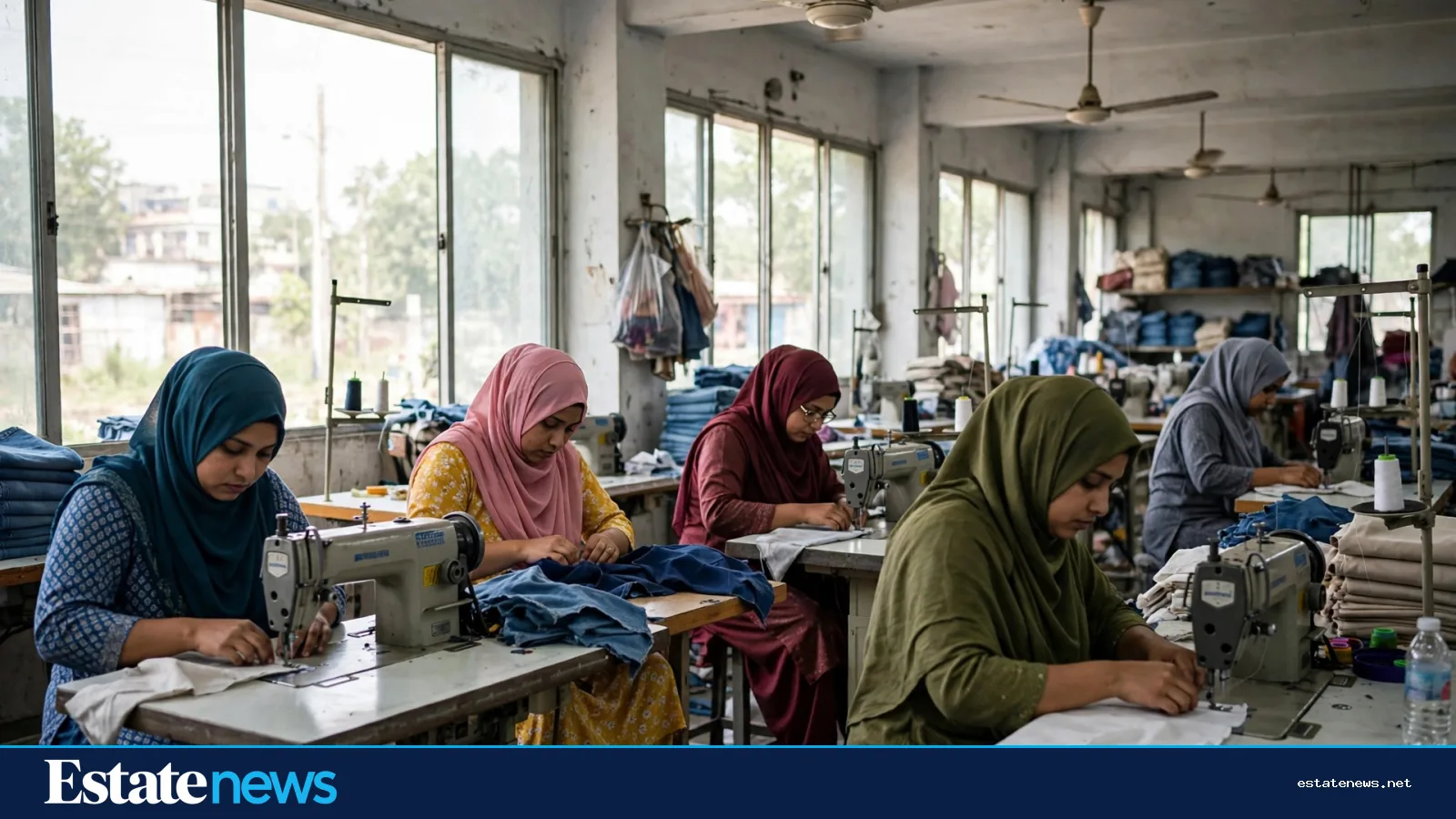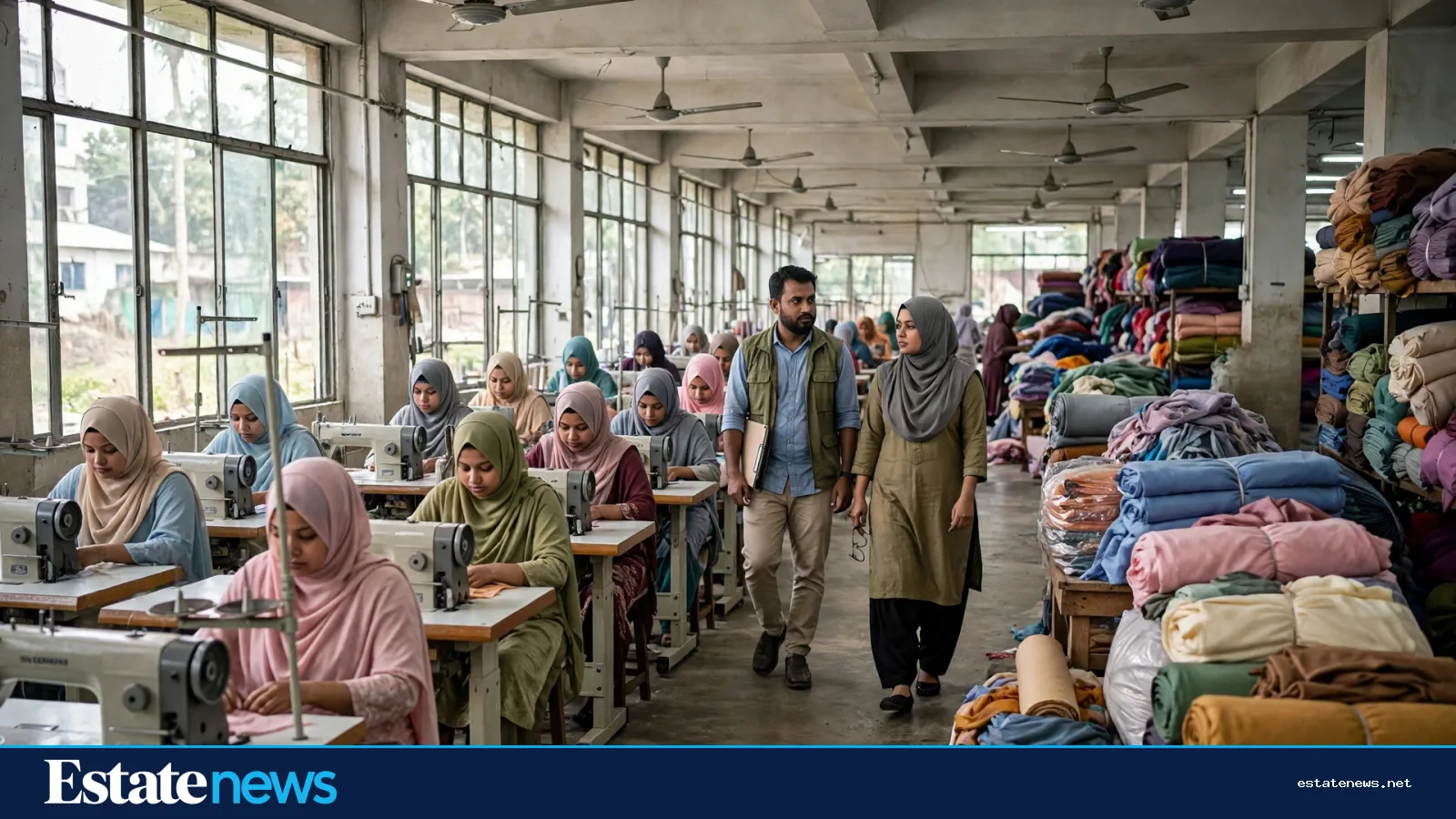
The meeting starts at 11am in Shrom Bhaban at Bijoynagar, and by the time it ends, the shape of the next garment wage may be clearer. The Minimum Wage Board holds its third meeting today, Monday 16 November, chaired by Syed Azad Subhani, with the factory owners due to submit their written proposal. Workers are demanding Tk 32,000 a month for a Grade 4 worker. Owners, according to sources quoted by The Business Standard, are expected to propose something around Tk 14,000 to Tk 15,000. The gap between those two numbers is the story of the day, and it is also the story of housing in the factory towns.
The current floor is Tk 12,500 a month, set in December 2023. Three years of price rises have eaten into it. Food inflation may have eased to 6.40 percent in October, according to Bangladesh Bureau of Statistics data, but non-food inflation, the part that covers housing, utilities and transport, has climbed to 9.89 percent. A worker's rent has not waited for the wage board to meet.
Three numbers on the table

The workers' demand is the boldest. Tk 32,000 for Grade 4, with Tk 38,000 for Grade 3, Tk 43,000 for Grade 2 and Tk 48,000 for Grade 1. The figure sits close to a living-wage benchmark of Tk 30,459 a month for Dhaka, calculated in 2025 research by the Global Living Wage Coalition. That benchmark is a research estimate, not a statutory figure, and it measures what a family needs for a decent standard of living rather than what the law requires an employer to pay.
The owners' expected proposal, around Tk 14,000 to Tk 15,000, would lift the floor by roughly Tk 1,500 to Tk 2,500. Owners argue that export orders are thin and buyers abroad are pressing prices down, though merchandise exports still rose 6 percent in the first four months of the financial year, with garments about four-fifths of everything Bangladesh sells abroad.
A third proposal comes from the Overseas Chinese Association, which has suggested a four-tier, zone-based structure of Tk 13,530 to Tk 16,605. The idea is that wages should differ by zone, since living costs in Gazipur are not the same as in Chattogram. Zone-based pay is not new in Bangladesh, but it has never been adopted for garments, and the board will have to decide whether the added complexity is worth it.
A Sunday of closed gates
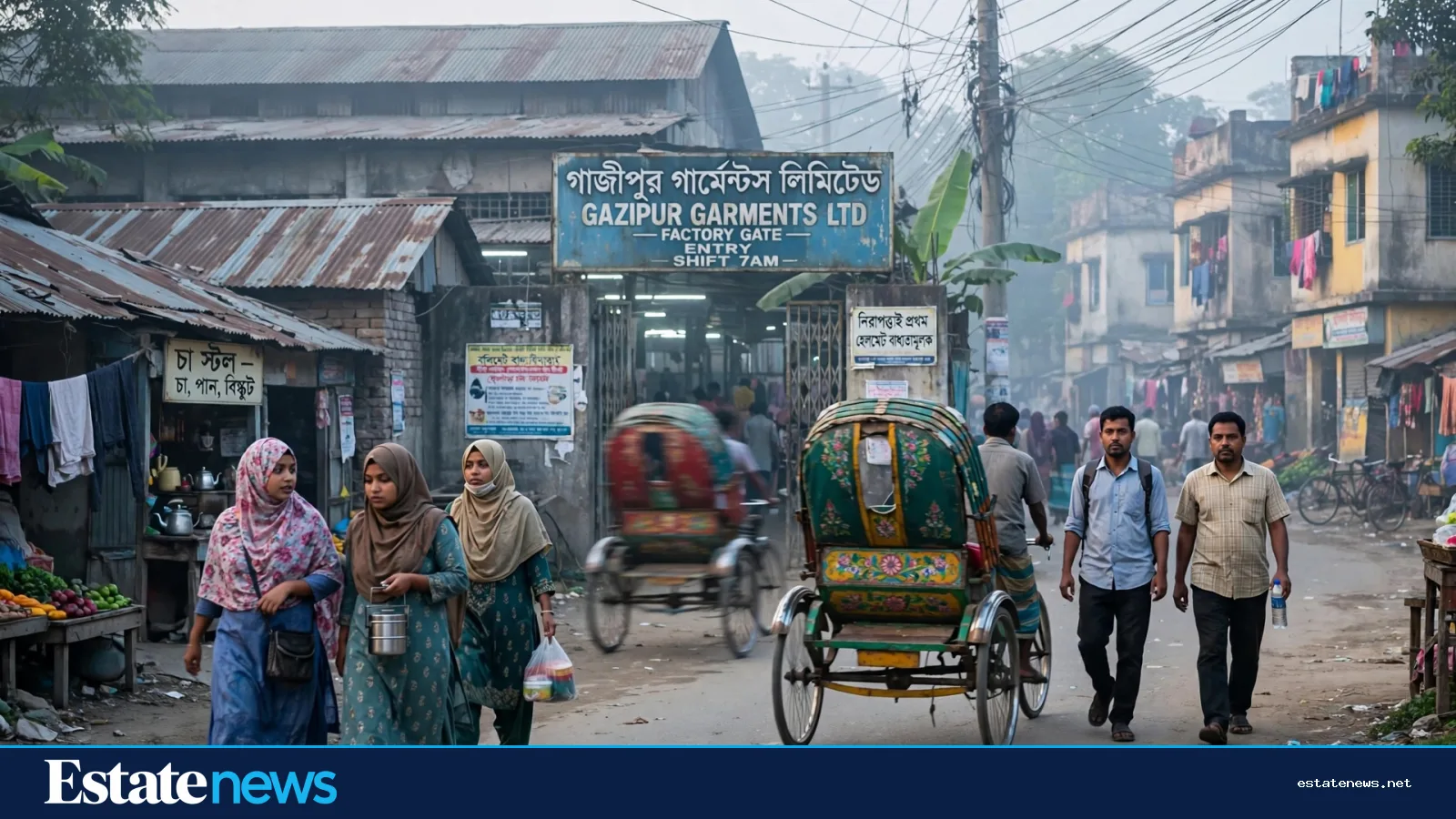
The negotiation is not happening in a calm factory belt. Production was halted at 148 factories in Savar, Ashulia and Gazipur on Sunday, and 65 factories were closed indefinitely, according to TBS. The closures are a reminder that the wage question is not an abstract debate about numbers. It is about whether the gates open on Monday morning.
The board's target is a new wage structure effective from December, with the first salaries at the new rate paid in January. That timetable gives owners and workers about six weeks to settle, and it gives landlords in the factory towns the same six weeks to guess what their tenants will be able to pay.


What it means for a room in Gazipur
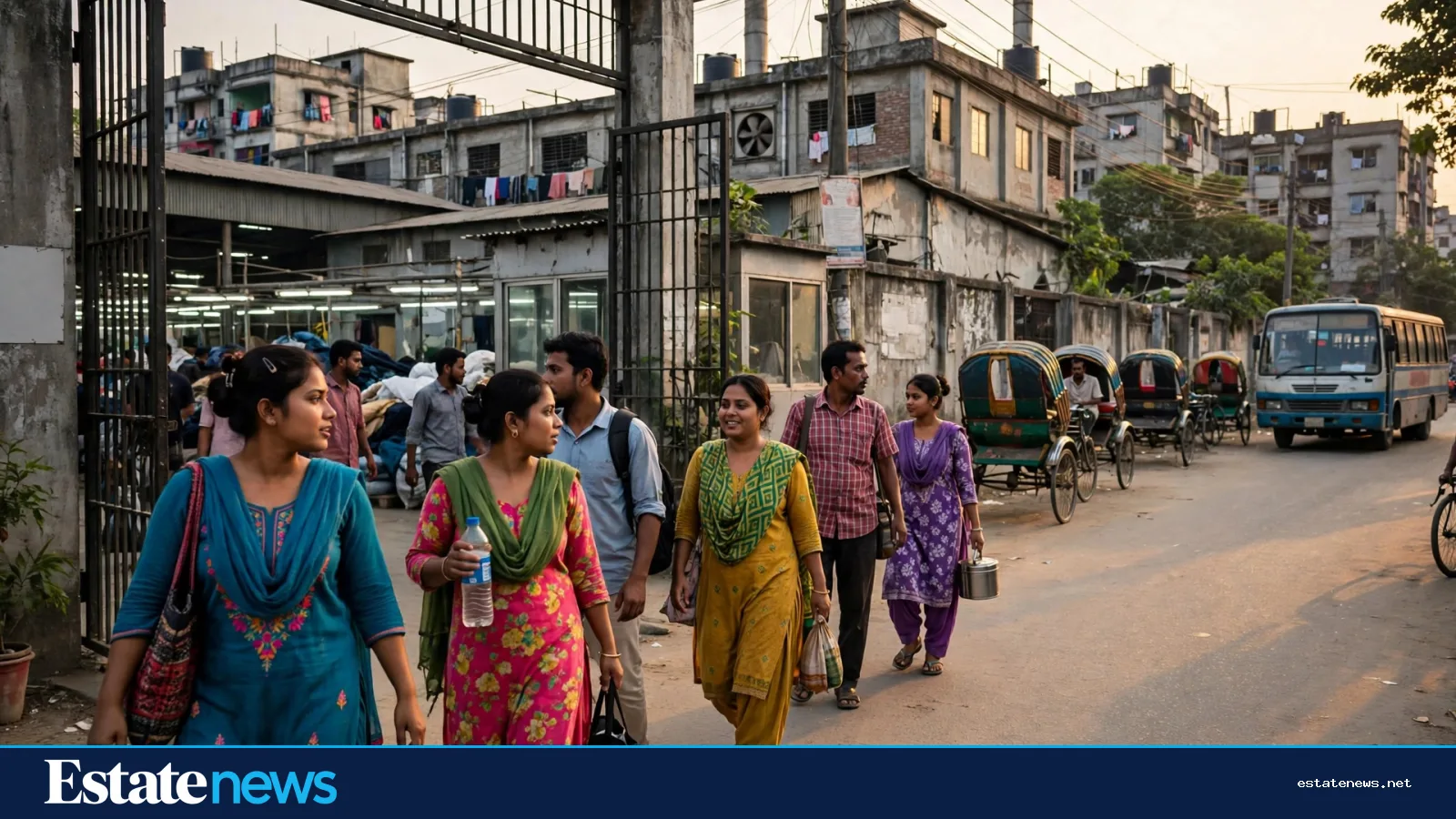
Garment workers are the largest single group of tenants in Gazipur, Savar, Ashulia and Narayanganj. A typical worker rents a room in a shared flat or a mess, often with three or four others, and the rent is the second-biggest cost after food. When wages rise, two things happen at once. Tenants can pay a little more, and landlords know it. Rents in the factory towns tend to follow wages with a lag of a few months, not a few years.
A rise to Tk 14,000 or Tk 15,000 would add Tk 1,500 to Tk 2,500 a month to a worker's pay. That is enough to cover a modest rent increase, or to move from a shared room to a room of one's own. A rise to Tk 32,000 would change the market entirely, putting a one-room flat with a family within reach for the first time for many workers, and pulling demand toward slightly better housing near the factories.
The other direction matters too. If the negotiation drags on, or if factories stay closed, workers lose pay first and housing second. A closed factory means no overtime, and no overtime means the rent is the first bill that gets stretched. Landlords in Ashulia and Gazipur know this pattern well. They have seen it in every wage round.
The housing angle nobody states
There is a quieter link between wages and housing. A large share of Dhaka's new flats is bought with money earned in the garment industry, not only by workers but by the supervisors, merchandisers and mid-level managers whose pay moves with the wage structure. When the floor rises, the whole ladder tends to move, and the people a rung or two up are the ones who book flats in Mirpur, Uttara and Bashundhara.
Today's meeting will not settle the wage. The board has to hear the owners' proposal, weigh it against the workers' demand, and then draft a structure the government can gazette. What it will settle is the range of the argument. If the owners come in at Tk 14,000 to Tk 15,000 and the workers hold at Tk 32,000, the negotiation has a long way to run, and the factory towns will wait with it.
Read more: Gazipur: The Factory Belt Turning Into a Housing Market — https://estatenews.net/development/gazipur-the-factory-belt-turning-into-a-housing-market | পোশাকশ্রমিকের মজুরি: ৩২ হাজার টাকার প্রস্তাবের অর্থ কী — https://estatenews.net/finance/posakshrmiker-mjuri-32-hajar-takar-prstaber-orth-kee | The Tk 40 Lakh Question: What a Small Flat Really Costs Beyond Dhaka — https://estatenews.net/markets/the-tk-40-lakh-question-what-a-small-flat-really-costs-beyond-dhaka