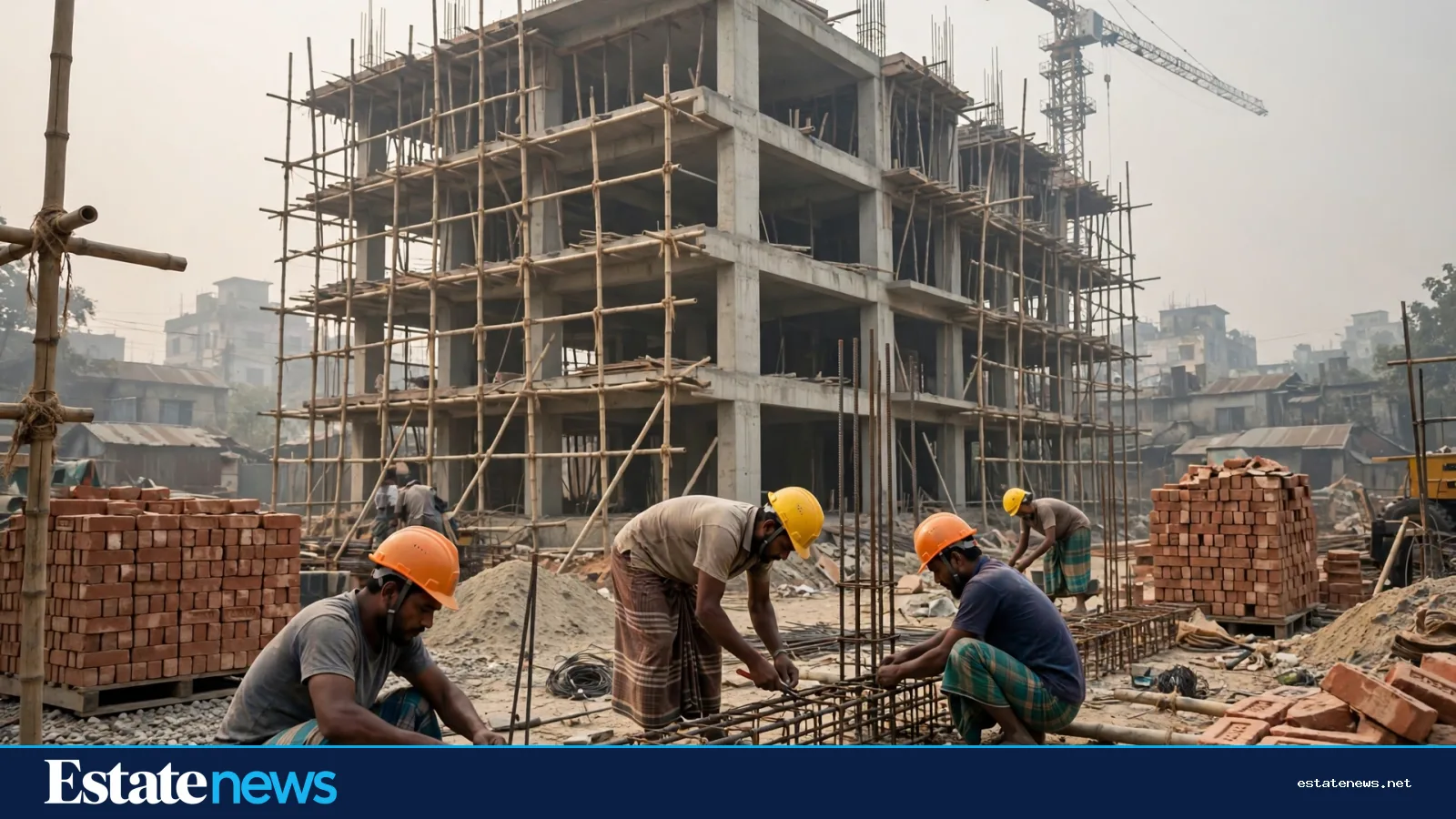
Ask a builder in Dhaka what it costs to build a house, and the answer starts with two prices: rod and cement. Everything else follows from them. The latest market figures put 60-grade MS rod at Tk 91,250 a tonne in retail shops, in a range of Tk 89,500 to Tk 93,000, according to Trading Corporation of Bangladesh data published on 12 November. Forty-grade rod sells near Tk 87,000 a tonne. Cement sells at Tk 540 to Tk 580 per 50-kilogram bag, with a midpoint of Tk 560, according to press figures from 10 October. Those are the prices a person building a house actually pays at the shop.
The brand figures behind the averages show how narrow the spread is. BSRM rod sells at about Tk 92,300 a tonne, KSRM at Tk 90,500, AKS at Tk 91,500 and GPH Ispat at Tk 91,000, according to a Bangladesh Post market review. These are indicative retail prices, not mill price lists, and they move with the market. A buyer who checks three shops in the same week will find three slightly different numbers, and the right habit is to check the price on the day of purchase rather than trust a figure from last month.
The government rates are not the shop prices

A second set of numbers arrived this month, and it is easy to confuse them with the first. On 18 November the Executive Committee of the National Economic Council revised the government's schedule of rates, the price list used for public projects. Coarse sand rose to Tk 3,530 per cubic metre from Tk 1,900, a rise of 85.79 percent. Portland pozzolana cement rose to Tk 10,400 a tonne from Tk 10,000. Five-hundred MPa rods rose to Tk 89,000 a tonne from Tk 87,000, while 420 MPa rods fell to Tk 89,000 from Tk 90,000. Imported stone was reduced. The schedule cement works out to Tk 520 per 50-kilogram bag.
These schedule rates are government project rates, not retail market prices, and the distinction matters. A schedule rate is what a government department is allowed to pay a contractor for a public building. A shop price is what a household pays at a rod or cement dealer in Dhaka. The schedule rod at Tk 89,000 a tonne sits below the retail 60-grade price of Tk 91,250, and the schedule cement at Tk 520 a bag sits below the retail midpoint of Tk 560. The two sets of numbers describe two different markets, and quoting one as if it were the other will mislead anyone planning a build.
What drives the total, beyond rod and cement


Rod and cement are the headline costs, but they are not the whole house. The total cost of building depends on the land, the structure, the finishes and the approvals, and each of those moves on its own. Land is usually the largest single cost in Dhaka, and it varies more by area than any material does. The structure, meaning the frame, the brickwork and the roof, follows the rod and cement prices. Finishes, from tiles and sanitary fittings to paint and woodwork, can cost as much as the structure or more, depending on the choices made. Approvals, including the RAJUK plan approval and the registration that follows, add their own fees.
No single per-square-foot total can honestly cover all of that, and this piece does not offer one. A house built with basic finishes on family land in a district town costs something very different from a house built with imported fittings on a purchased plot in Bashundhara. Anyone who quotes a single figure for the whole country is either averaging away the differences or inventing a number. The honest way to budget is to price each part separately: land, structure at current rod and cement prices, finishes at the quality you want, and approvals at the fees that apply.
How to use the numbers when you build
Start with the structure. Take the rod and cement prices above as the current retail range, and ask your contractor to show the quantities in the estimate, not only the total. A contractor who will not show how many tonnes of rod and how many bags of cement the house needs is a contractor to be careful with. Then check the schedule rates for what they are: a guide to what public projects pay, useful for judging whether a contractor's quote has moved far from the government's own figures, but not a substitute for the shop price.
Then work through the rest of the budget in the same way. Estate News tracked the month's material prices in "Rod at Tk 91,250 a Tonne, Cement at Tk 560 a Bag: November's Building Costs", and set out the full house-building arithmetic in "How Much Does It Cost to Build a House in Bangladesh in 2026?". The registration cost that follows a completed house is covered in "Flat Registration Cost in Bangladesh: A Buyer's Guide for 2026". The site's construction cost calculator can help with the sums, but the discipline is the same with or without it: price the parts, check the shop prices on the day, and keep the schedule rates in their own box. A house is built one purchase at a time, and the buyer who knows the price of each one is the buyer who stays in control of the total.