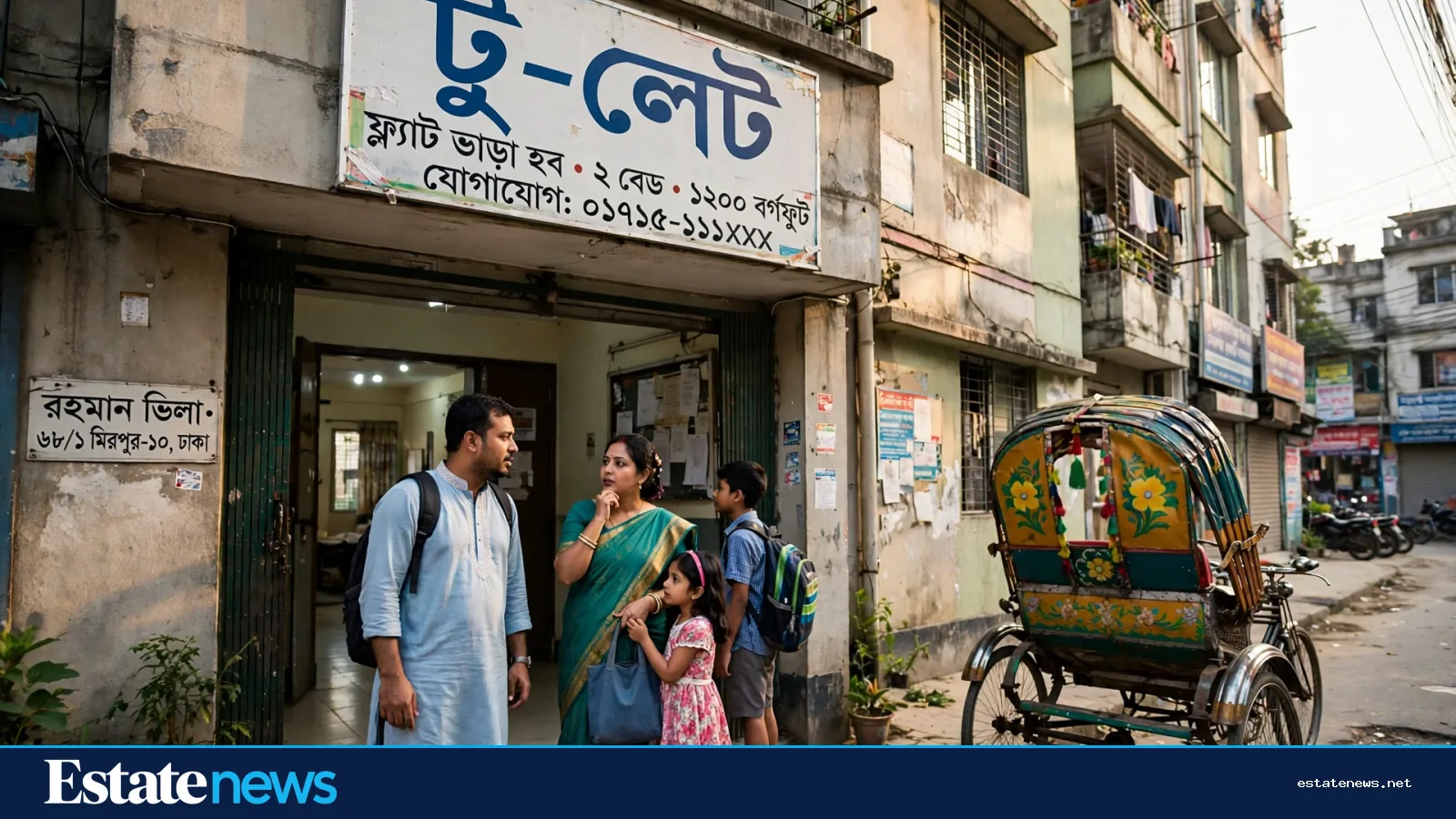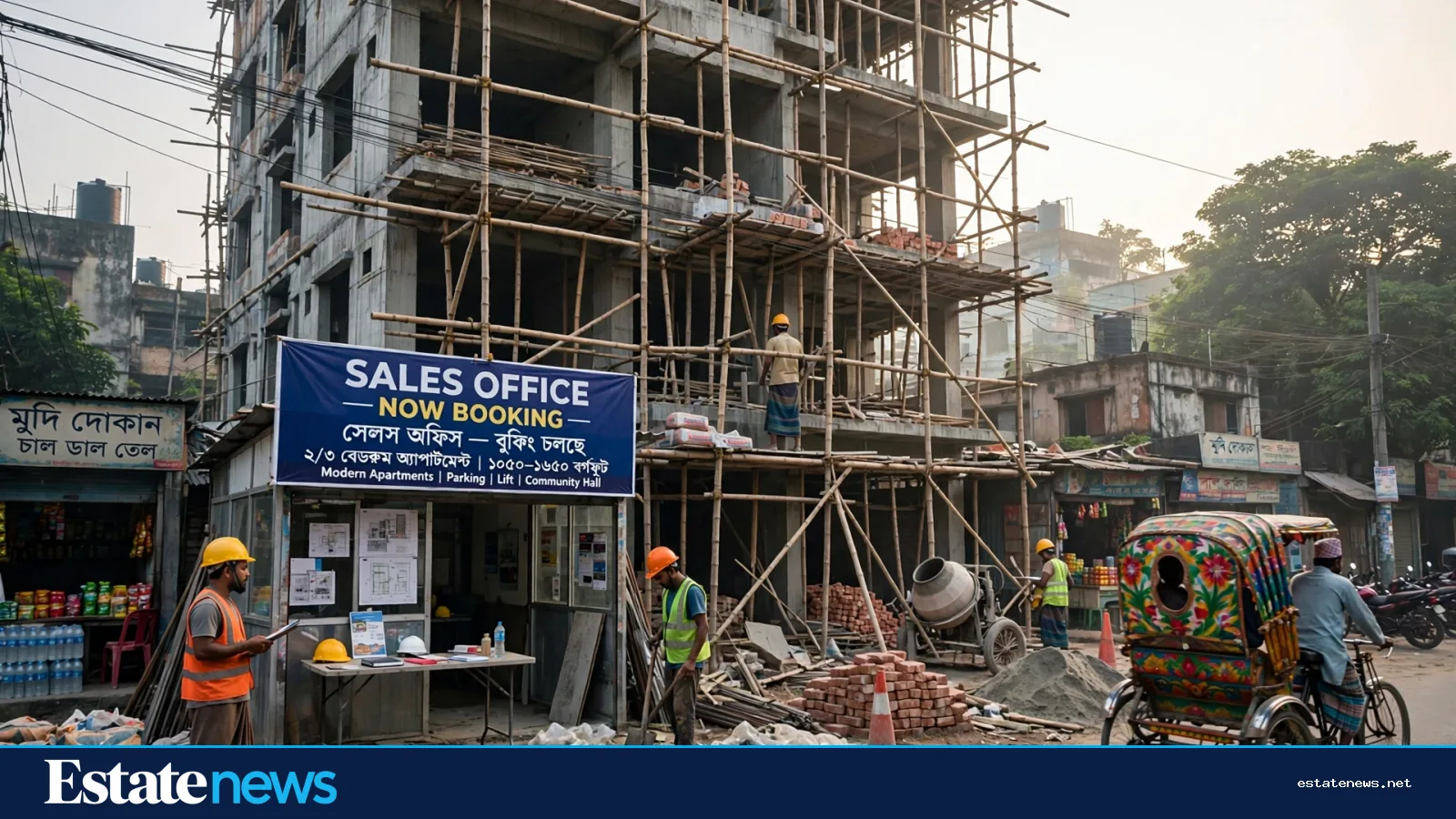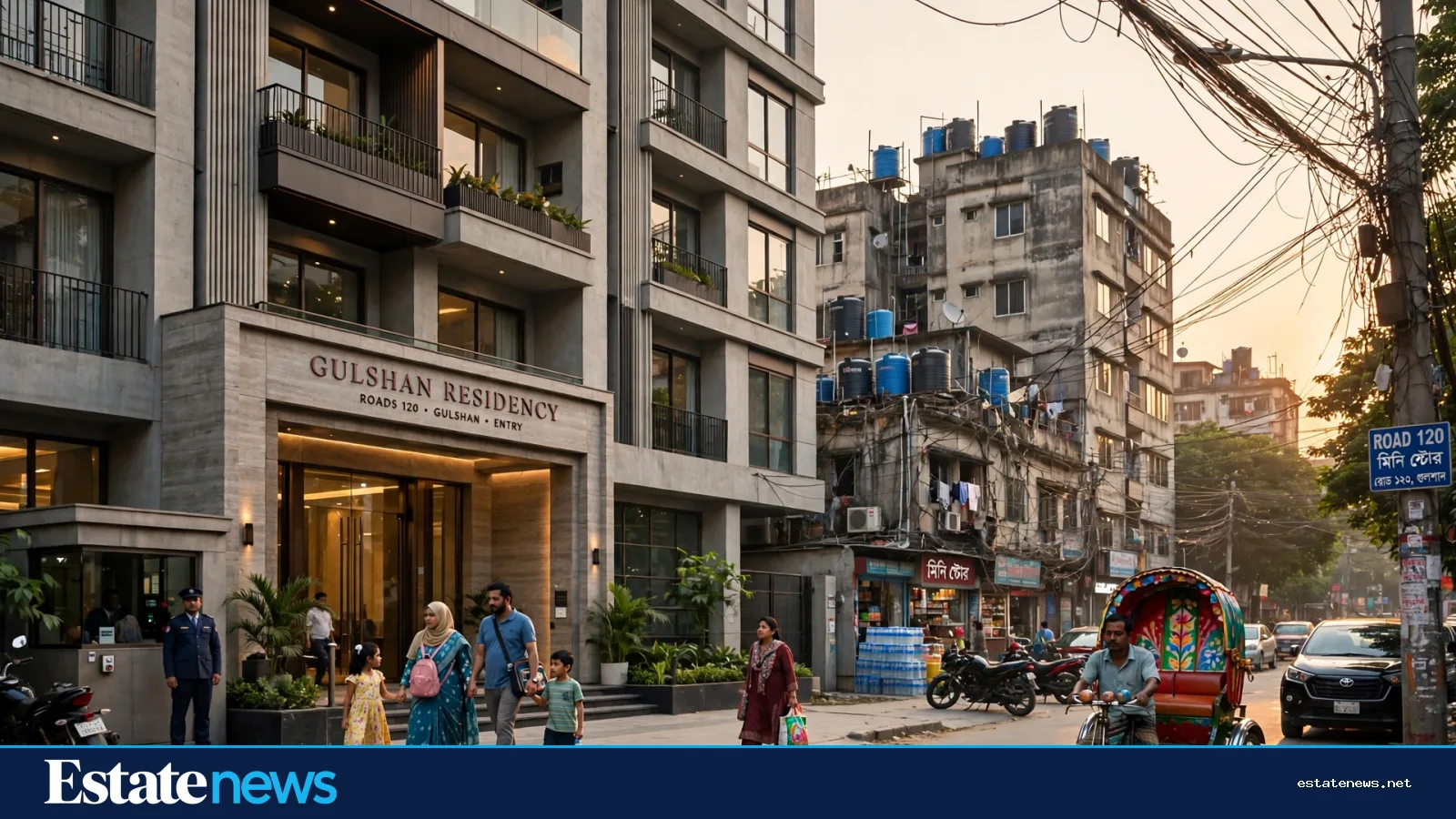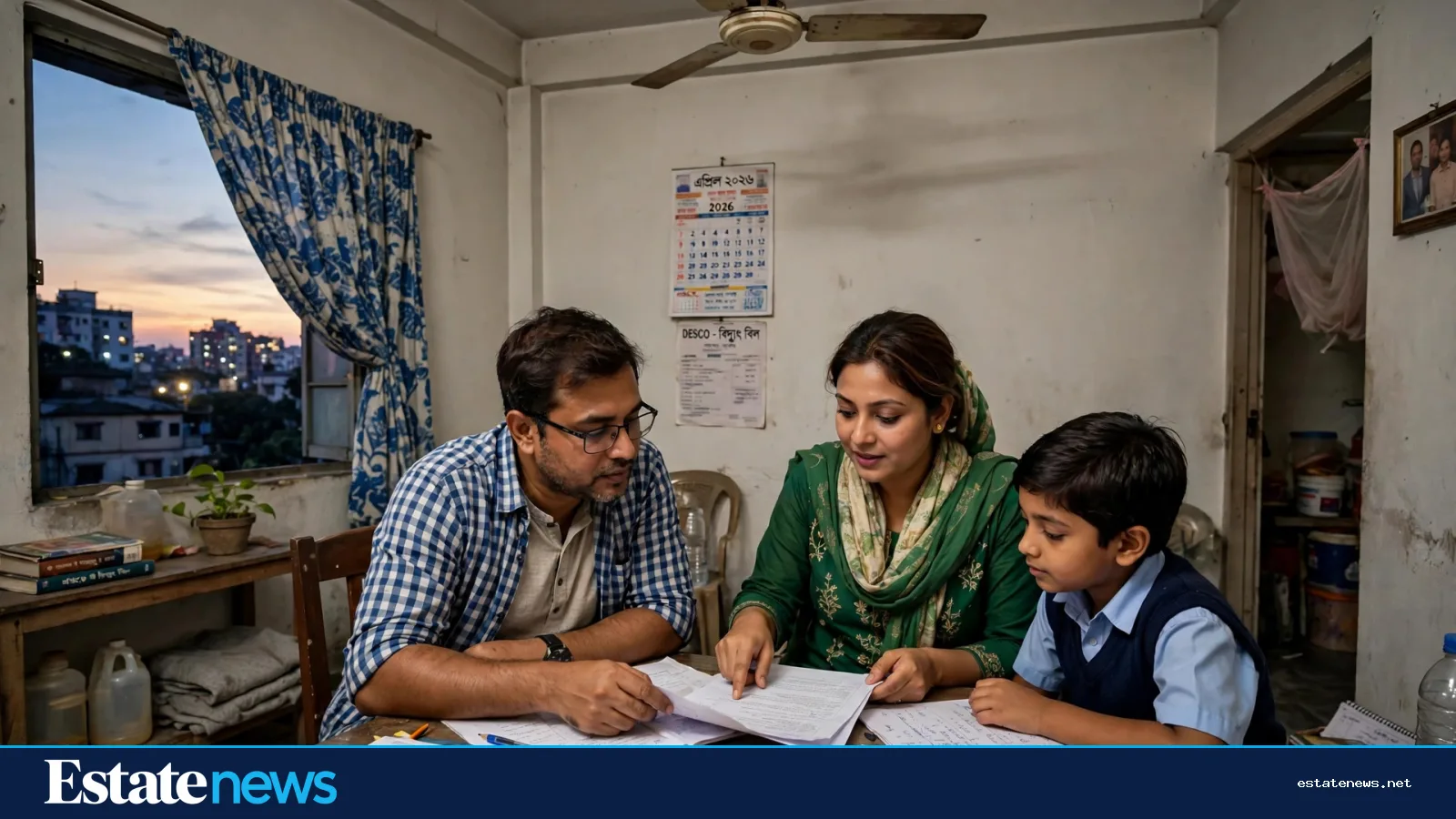
A flat in Dhaka and a flat in Chattogram are not the same purchase, even when the floor area matches. The asking price for a square foot in Dhanmondi is more than double what the same square foot asks in Mirpur, and the gap between Dhaka and the port city is wider still. This guide sets out what a flat costs across Bangladesh in 2026, using asking prices from current sale listings, so a buyer can see the scale of the difference before starting the search.
The figures below come from Estate News's own area-prices tracker, refreshed on 16 November 2026 from 9 to 11 current public sale listings per area. They are asking prices, the figures sellers list, not the prices at which deals close. A deal usually closes below the asking price, and the gap varies by area and by how long the flat has sat unsold. Treat these as the starting point of a negotiation, not the final bill.
In Dhaka, Dhanmondi leads the table at Tk 20,000 per square foot. A 1,200 square foot flat there asks around Tk 2.4 crore before any other cost. Gulshan follows at Tk 18,667 per square foot, Banani at Tk 13,888, Uttara at Tk 12,500 and Bashundhara Residential Area at Tk 9,865. Mirpur is the most affordable of the six tracked areas at Tk 8,700 per square foot, where a 1,000 square foot flat asks around Tk 87 lakh. The spread between Dhanmondi and Mirpur is more than twofold, and it is the single most useful number a Dhaka buyer can carry into a search.

Why one road costs twice another
The gap is not about the bricks. A flat in Dhanmondi and a flat in Mirpur can have the same tiles, the same lift and the same generator. The difference is what sits outside the gate: the schools, the hospitals, the lake road, the office district, and the number of buyers who want to live there. Gulshan and Banani charge for quiet streets and security. Uttara charges for planned sectors and wide roads. Bashundhara charges less because it is still filling up, and its price is the bet that the filling will continue. Mirpur charges least because it is the farthest from the old centre, and its buyers trade the commute for the floor area.
Outside Dhaka, the picture changes shape rather than scale. Chattogram's premium pockets sit in Khulshi and the hills around it, where port-city buyers pay for views and for addresses that have held their value through every cycle. Estate News has tracked that pocket in "Khulshi Hills: The Port City's Premium Pocket, Flat by Flat". Sylhet's market runs on a different engine: money sent home by families abroad, spent on flats in neighbourhoods their relatives already know. Khulna's market is smaller and slower, and its prices move with the road frontage and the age of the building more than with any city-wide trend. No tracker figure is quoted for these cities here, because the listings are too few to support a median. A buyer in any of them should compare several listings on the same road before trusting a single asking price.


The costs after the price
The asking price is only the first line of the bill. Registration adds lakhs. On a Tk 1 crore flat in a city corporation area, up to 1,600 square feet, the total registration cost comes to Tk 6,51,170: stamp duty at 1.5 percent, a registration fee of 1 percent, local government tax of 2 percent, VAT of 2 percent on a new flat, and a mutation fee of Tk 1,170. A buyer who budgets only for the flat price will be short by that amount at the registry office. Estate News's rent-versus-buy guide, "Rent or Buy in Dhaka: The Maths That Decides It in 2026", works through the full comparison for anyone torn between the two.
Finance adds a second layer. Home-loan rates in Bangladesh currently run from about 9.72 percent to 15 percent, and the difference between the cheapest and the dearest loan on a Tk 1 crore borrowing is several thousand taka a month. The rate a buyer actually gets depends on the bank, the employer and the flat's papers, and it is worth shopping before signing. A loan agreed in a hurry can cost more over twenty years than the discount negotiated on the flat.
The practical way to use these numbers is to start with the area, not the flat. Pick the neighbourhood that fits the commute and the budget, then look at the asking price per square foot there, then subtract the registration cost and the loan cost from what can actually be afforded. The rent guide, "What Renting a Flat in Dhaka Costs in 2026, Area by Area", gives the other side of the same table for anyone who decides to wait.
This is general information, not financial advice. Prices are asking prices from listings collected on 16 November 2026, and they move with the market. A buyer should verify the current asking price for the specific building, and check the papers, before making an offer.