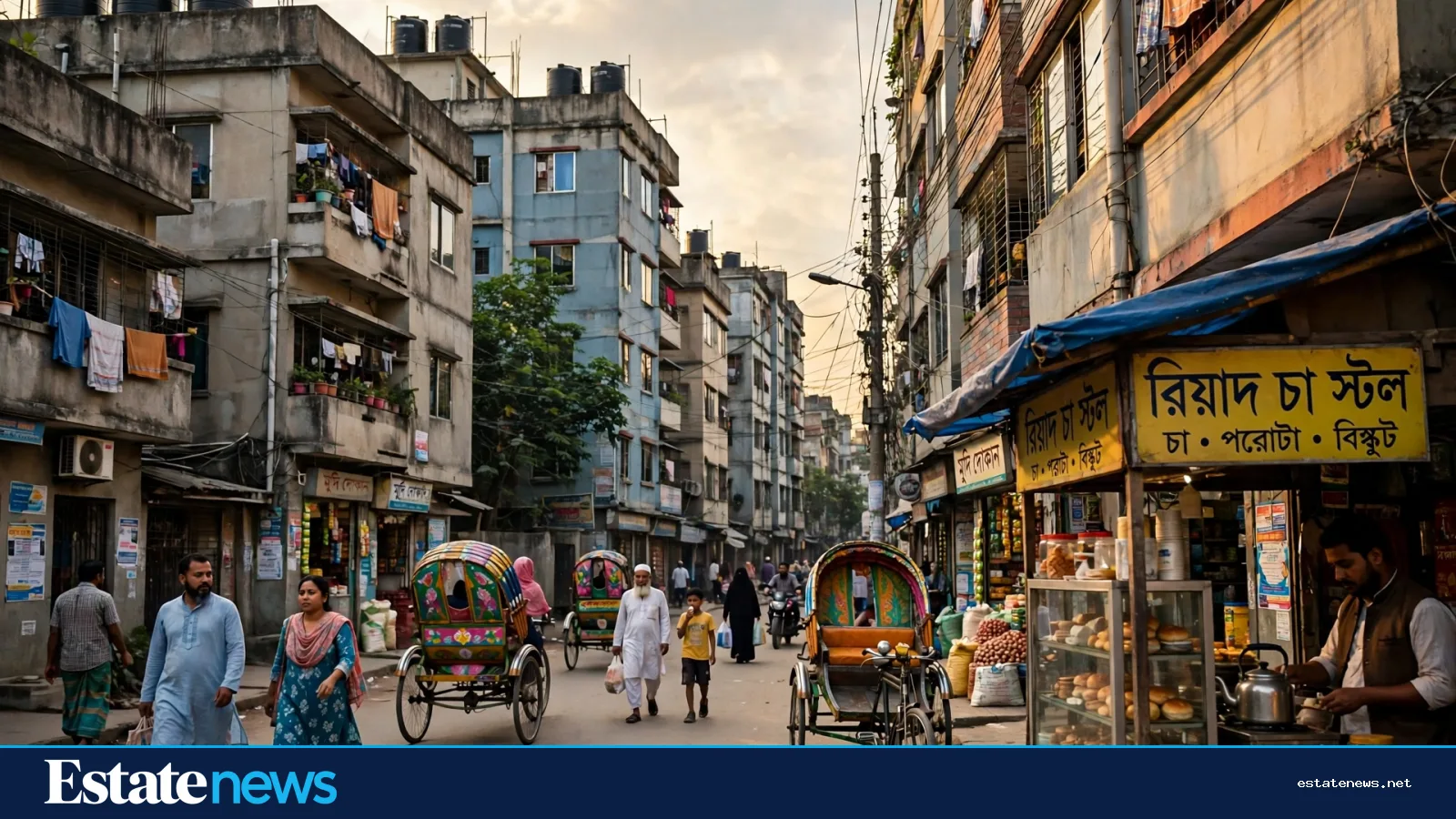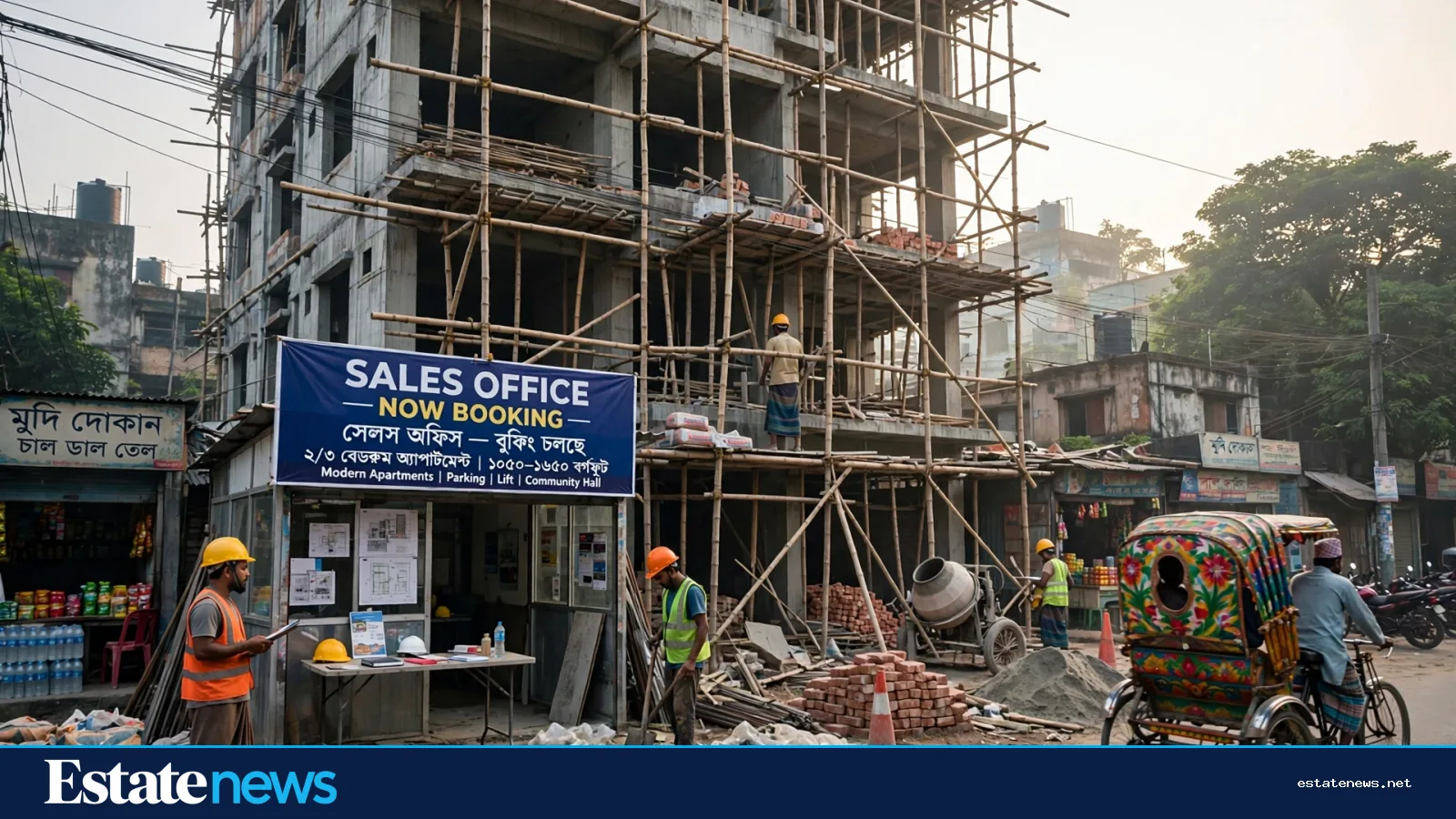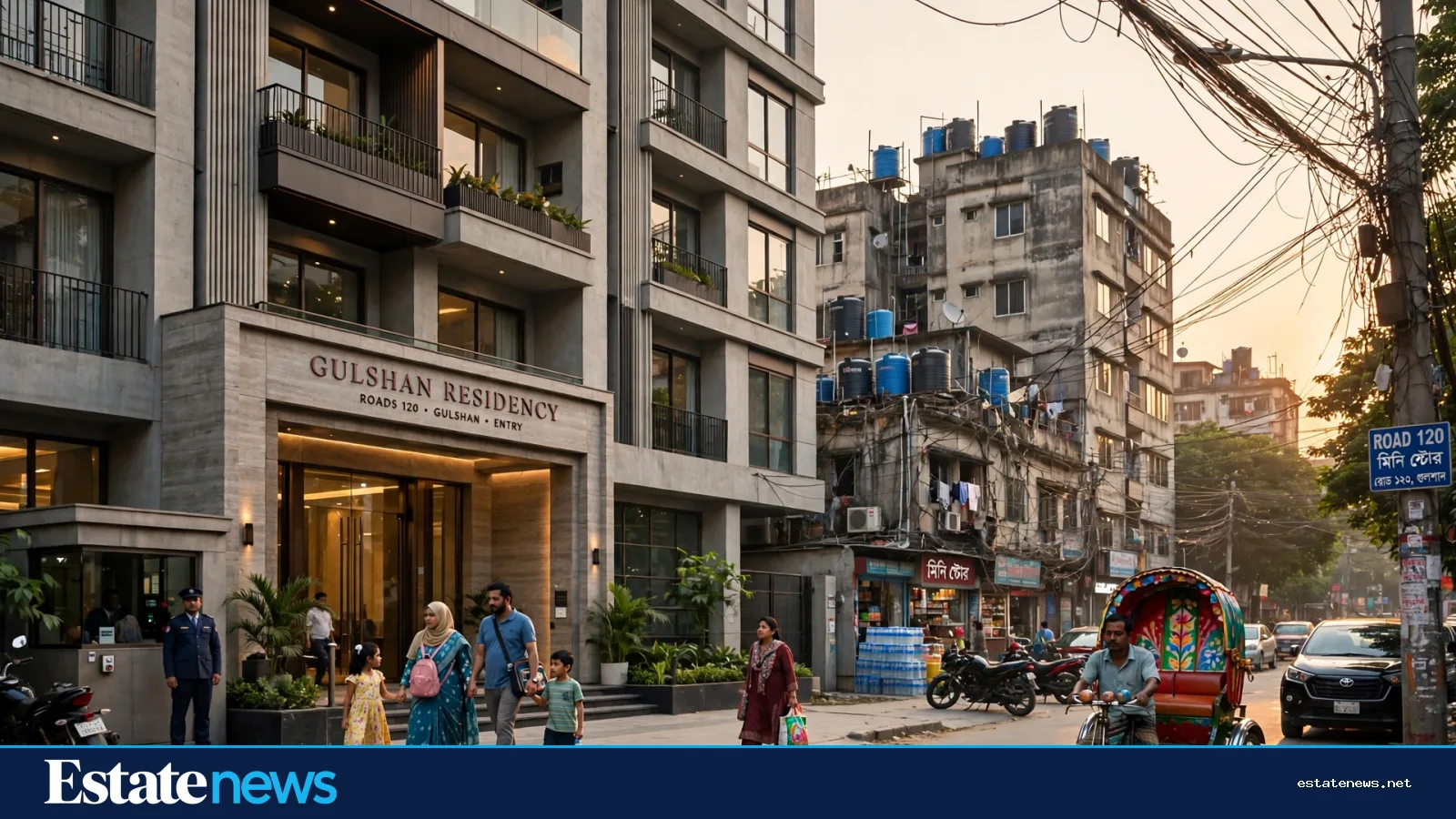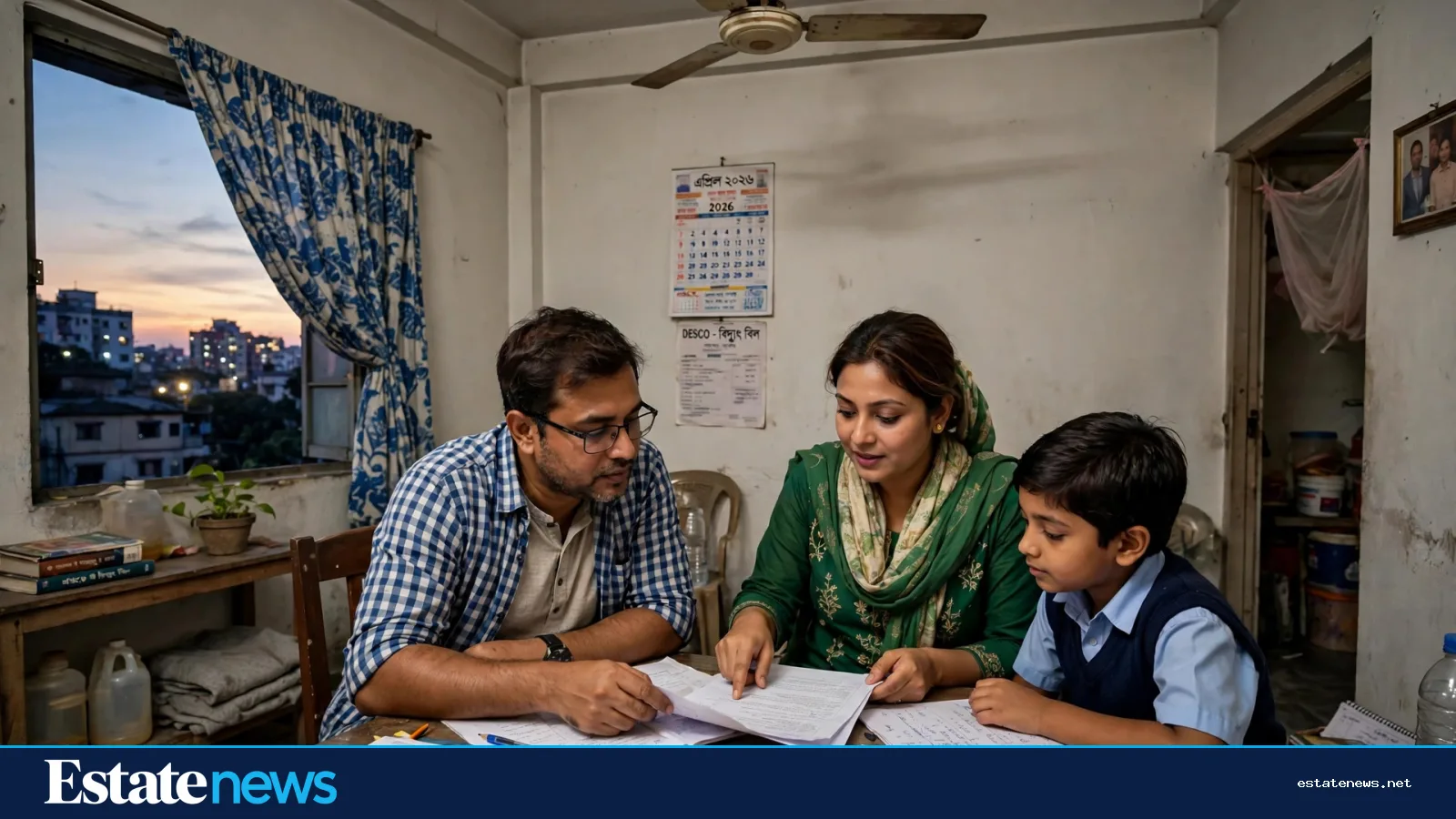
Ask a Dhaka buyer what a flat costs and the honest answer is: which area? The price of a square foot in Dhanmondi is more than double the price in Mirpur, and the six neighbourhoods tracked in this guide span almost the whole range of what a Dhaka family can pay. This is the area-by-area picture for 2026, with the figures a buyer will actually meet in the listings.
The numbers come from Estate News's own area-prices tracker, refreshed on 16 November 2026 from 9 to 11 current public sale listings per area. They are asking prices, the figures sellers list, not the prices at which deals close. A deal usually closes below the asking price, and the gap is wider where flats sit unsold for longer. Read these as the starting point of a negotiation, not the final bill.
Dhanmondi sits at the top of the table at Tk 20,000 per square foot. A 1,200 square foot flat there asks around Tk 2.4 crore. Gulshan follows at Tk 18,667 per square foot, Banani at Tk 13,888, Uttara at Tk 12,500 and Bashundhara Residential Area at Tk 9,865. Mirpur closes the list at Tk 8,700 per square foot, where a 1,000 square foot flat asks around Tk 87 lakh. The spread between the dearest and the cheapest of the six is more than twofold.

Dhanmondi and Gulshan: paying for the address
Dhanmondi and Gulshan charge for what is already there. Dhanmondi has the lake, the schools, the hospitals and the lanes where families have lived for generations. Gulshan has the quiet streets, the security and the offices. A buyer in either area is paying for a neighbourhood that is finished, not one that is promised. The flats tend to be older, the buildings lower, and the price per square foot higher than anywhere else in the city. What the buyer gets for it is certainty: the road, the neighbours and the commute are known quantities.
Banani sits just behind the two leaders at Tk 13,888 per square foot, and it trades on the same logic at a slightly lower price. The avenue's offices are a short walk away, the lake is close, and the area suits buyers who want Gulshan's access without Gulshan's price. A flat here is a compromise that still feels like a premium address, and that is why Banani holds its value.
Uttara, Bashundhara and Mirpur: the newer map


Uttara, at Tk 12,500 per square foot, is the planned city within the city. The sectors, the wide roads and the parks are all part of the price, and a buyer there is buying a layout as much as a flat. The metro has made the north easier to reach, and the sectors keep filling as families move out of the old centre. Bashundhara, at Tk 9,865, is the bigger bet: the largest residential area in the city, still filling up, with prices that reflect how much of it is still to come. A buyer in Bashundhara is paying less today for a neighbourhood that is still being built.
Mirpur, at Tk 8,700 per square foot, is where the most floor area meets the least money. The trade is the commute and the distance from the old centre, and the reward is a flat a family can actually afford. A 1,000 square foot flat at Tk 87 lakh is within reach of buyers who could not look at Dhanmondi at all. Mirpur's market is also the most forgiving for a first-time buyer: more listings, more choice, and more room to negotiate.
The bill beyond the price
The asking price is only the first line. On a Tk 1 crore flat in a city corporation area, up to 1,600 square feet, registration adds Tk 6,51,170: stamp duty, registration fee, local government tax, VAT and the mutation fee. Estate News's Bangla guide to flat registration costs works through that arithmetic in full. Home-loan rates currently run from about 9.72 percent to 15 percent, and the rate a buyer gets can matter as much as the price negotiated. A buyer who budgets for the flat alone will be short at the registry office.
The other side of the decision is rent. Estate News's guide to what renting a flat in Dhaka costs in 2026, area by area, sets out the monthly cost in the same six neighbourhoods, and the companion piece, "Apartment Price in Bangladesh: What a Flat Costs From Dhaka to Chattogram", puts Dhaka's prices beside the rest of the country. Read together, the three pieces give a buyer the full table: what a flat asks, what it costs to register, and what it costs to rent instead.
A flat is the largest purchase most families will ever make, and the area decides most of the price. Pick the neighbourhood first, on the commute and the budget, then look at the price per square foot there, then count the registration and the loan. The flat that fits is usually the one in the right area at the right size, not the cheapest one on the list.
This is general information, not financial advice. Prices are asking prices from listings collected on 16 November 2026, and they move with the market. A buyer should verify the current asking price for the specific building, and check the papers, before making an offer.