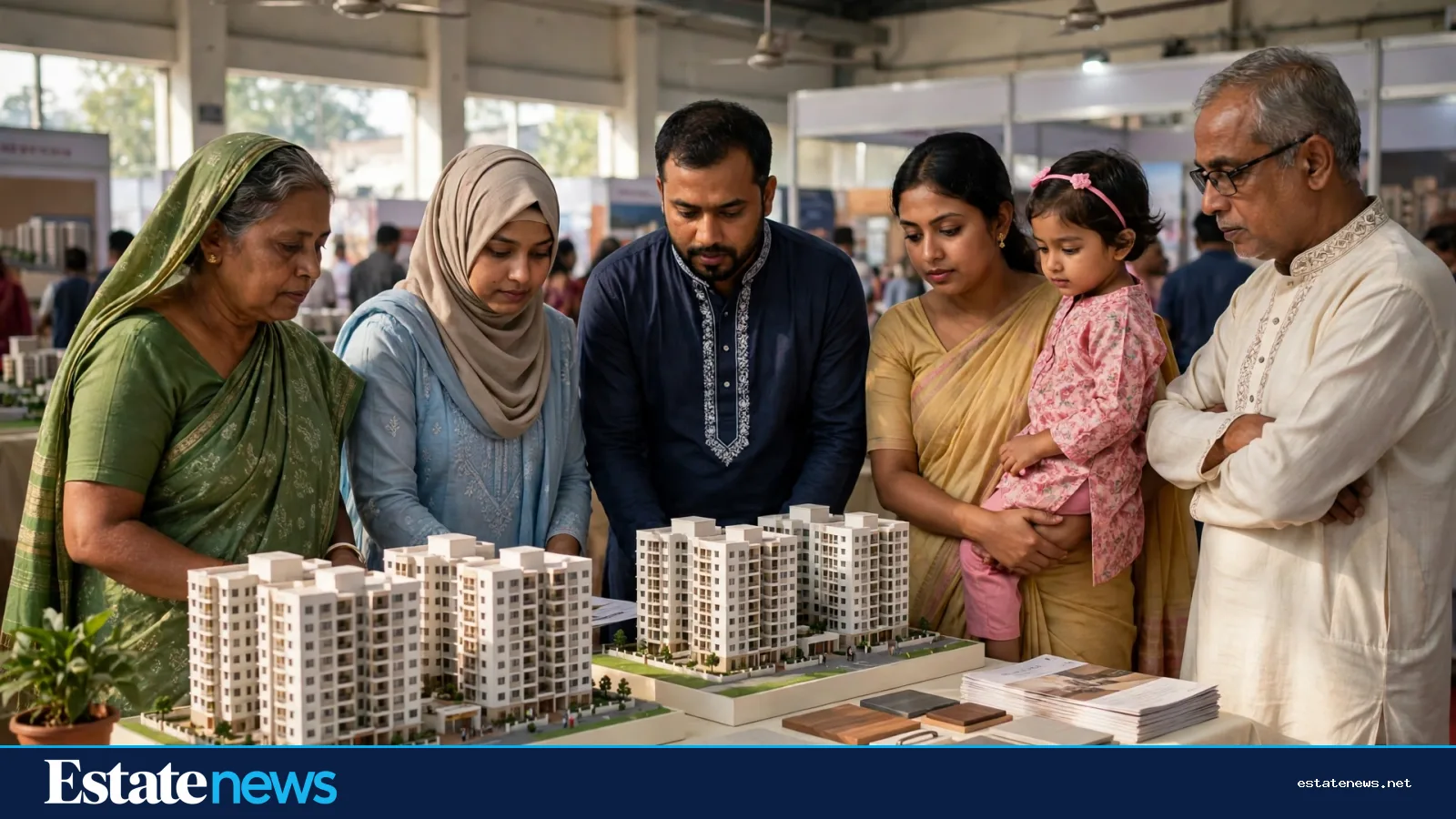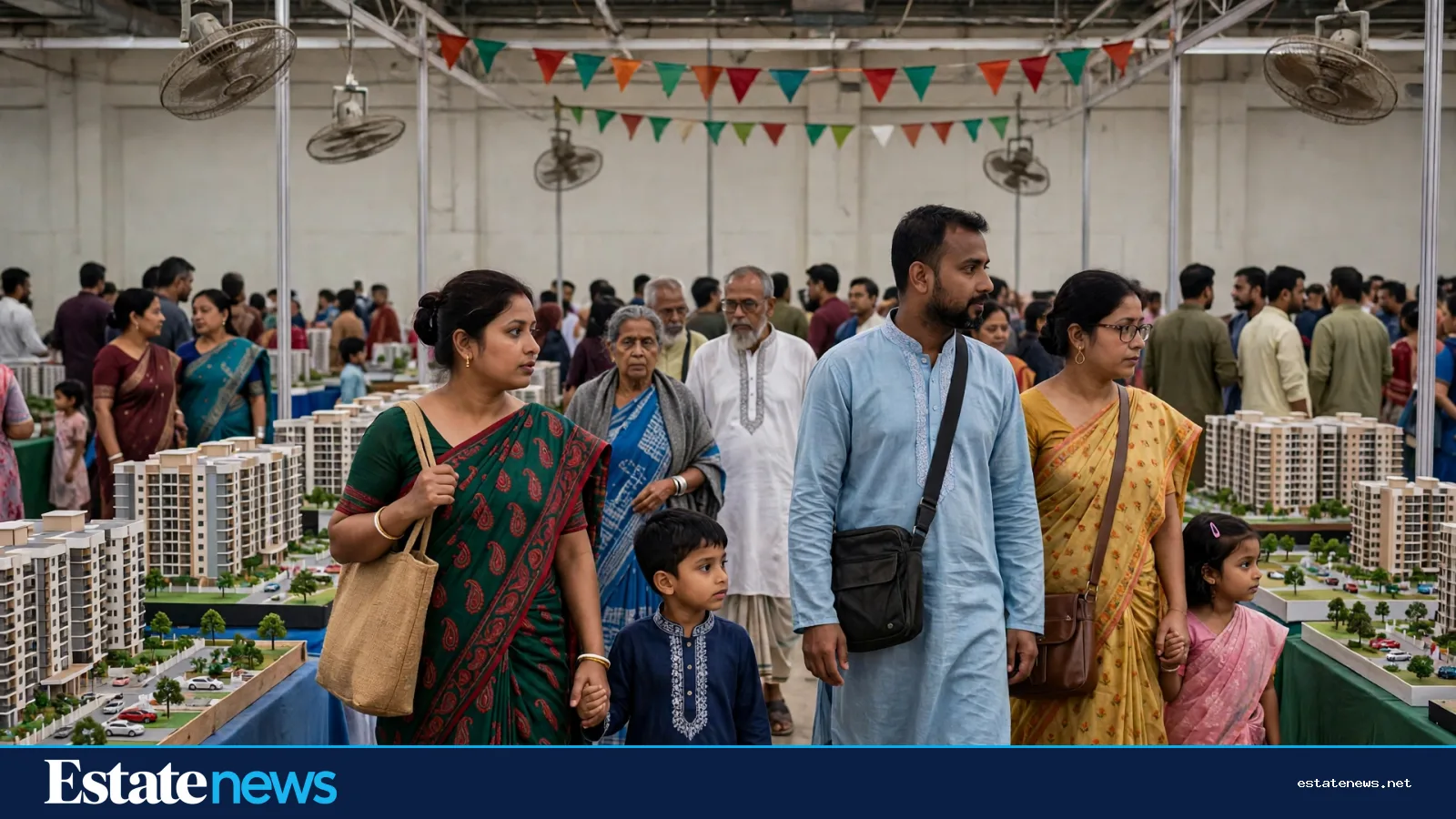
Dhaka's biggest housing fair is coming back to Agargaon. According to the fair's promotional poster, circulated on 23 November, the REHAB Fair 2026 will run from 24 to 28 December at the Bangladesh-China Friendship Conference Centre in Sher-E-Bangla Nagar. The poster is the organiser's own announcement, and the dates and venue it carries are the ones buyers should plan around until REHAB publishes its formal notice. The fair is the Real Estate and Housing Association of Bangladesh's flagship event, and for five days it puts the country's developers, banks and materials companies under one roof.
The timing is no accident. December is the month when Dhaka's housing trade does its year-end business. The dry season is under way, construction sites are at full pace, and families with a bonus or a remittance in hand start looking seriously at flats. A fair in the last week of the year catches that mood. It also catches the new leadership at REHAB, which has made affordable flats its headline promise.
A new team at the top

The fair will be the first big test for REHAB's new leadership. Ali Afzal won the presidency with 232 votes, ahead of outgoing president Md Wahiduzzaman's 193, and Abdur Razzaque won the senior vice presidency with 216 votes, narrowly ahead of Liakat Ali Bhuiyan's 214, in the election by direct member votes on 18 April. The new committee, seven office-bearers and 22 directors, will lead the association for a two-year term, and the handover was reported in the months after the election. Estate News reported the leadership and its promise in "REHAB's Tk 45 Lakh Flat Promise: What It Will Take to Deliver".
That promise is the one to watch at the fair. The new leadership announced plans to build small flats in and around Dhaka priced at around Tk 45 lakh, aimed at buyers long priced out of the city. It also committed to tackling the bottlenecks every buyer knows: high registration costs, limited access to bank finance, and approval processes that take too long. A fair is where those promises meet the public. Visitors will be able to ask the developers themselves whether a Tk 45 lakh flat exists anywhere on the floor.
What a buyer can check at the fair


A housing fair is useful in a way a brochure is not. The developer is standing in front of you. The bank that will lend the money has a stall two aisles away. The materials company whose tiles will go into the bathroom has a sample in its hand. A buyer who walks the floor with a list can check more in an afternoon than a month of phone calls would settle.
Start with the developer. Ask for the RAJUK approval number of the project on display, and ask to see it. Ask when the project started, how many flats have been handed over, and what the handover date in the agreement actually says. A developer that answers plainly is worth more than a developer with a bigger stall. Estate News sets out the checks in "Before You Book a Flat, Check the Developer: Five Verifications That Matter", and the fair is the place to run them face to face.
Then the bank. Home loans are the other half of a flat purchase, and the fair gathers the lenders in one hall. Ask for the rate in writing, the processing fee, and the monthly instalment on the loan you would actually take. Compare two banks before you compare two flats. The difference between lenders is often larger than the difference between developers.
How to use the fair without being sold to
The fair has a raffle draw for visitors, according to the poster, and the stalls will be busy with offers. That is the point of a fair, and it is also the risk. A discount that expires at the end of the day is a sales tactic, not a reason to sign. A booking made in the noise of a crowded hall is the easiest decision in housing to regret.
The better way to use the fair is as a shortlist machine. Walk the floor, collect the names, note the projects that fit your budget and your area, and go home. Check the prices against the asking medians Estate News tracks in "Flat Price in Dhaka: What a Flat Costs Area by Area in 2026". Then visit the two or three projects that survived the shortlist, in daylight, with the agreement in hand. The fair opens the door. It should not close the deal.