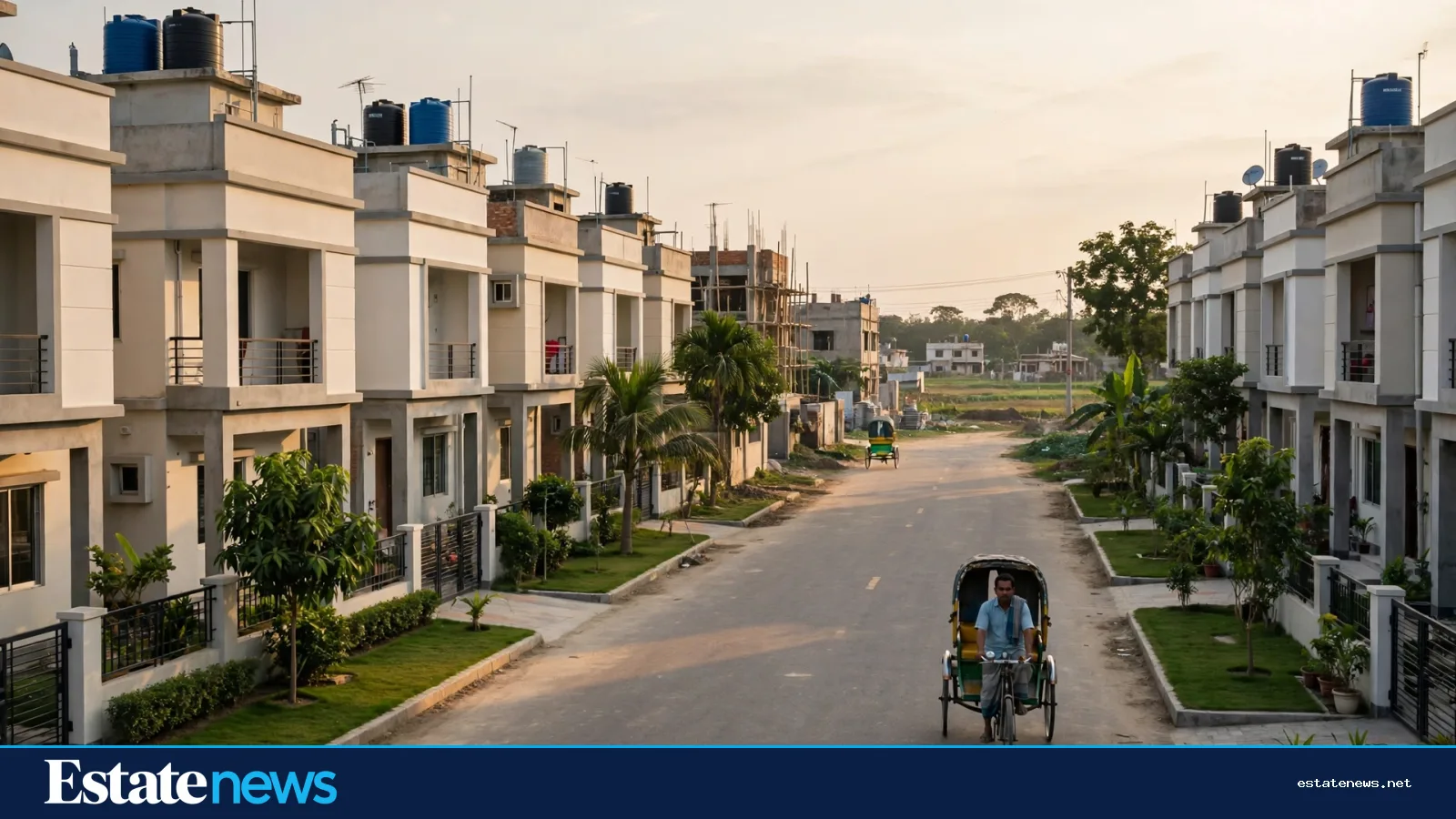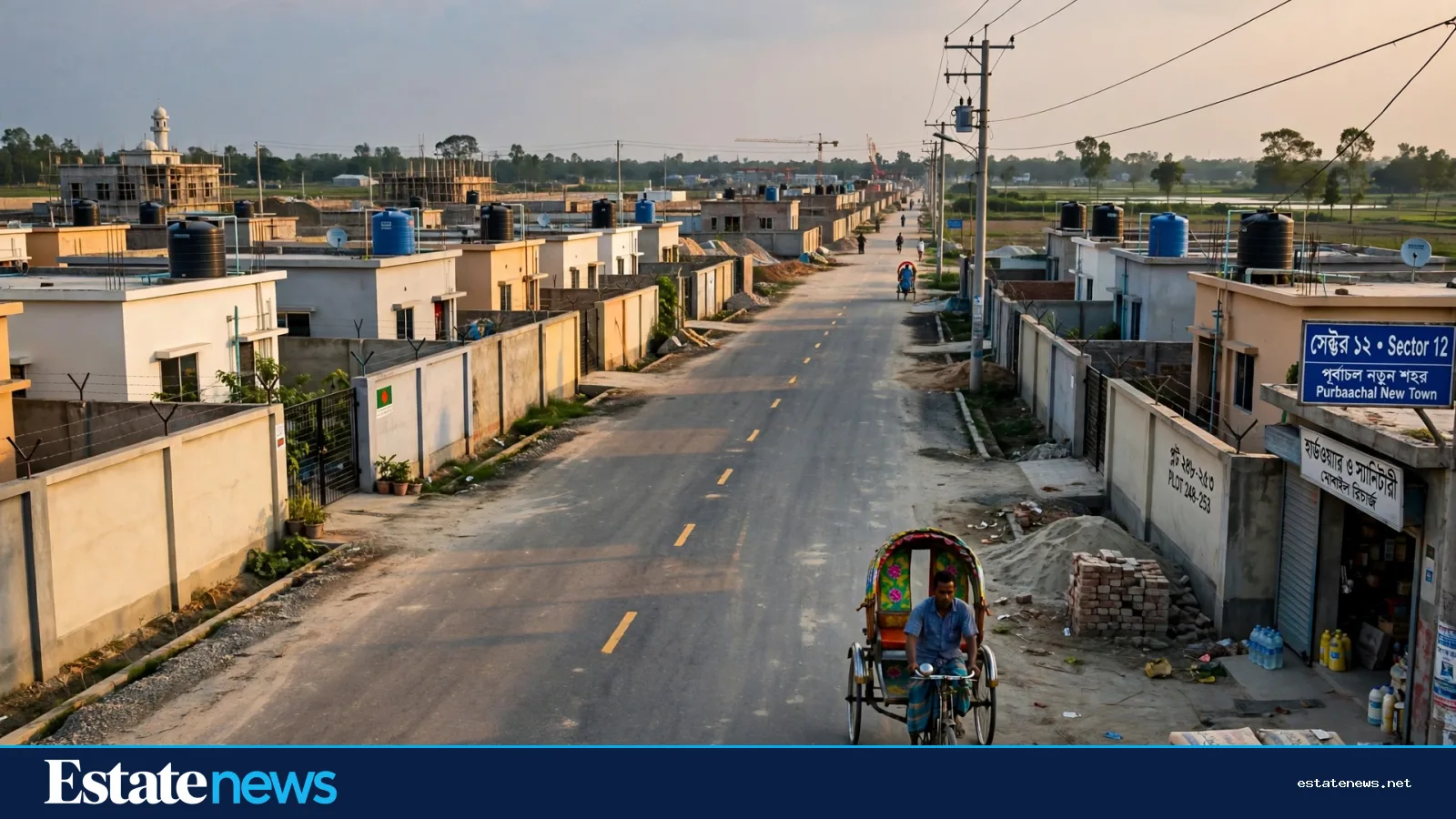
Late afternoon on a new street on Dhaka's eastern edge, the light falls across two rows of low houses that look nothing like the city most buyers know. No tower rises above them. No lift hums behind a gate. The houses sit behind boundary walls on their own plots, each with a rooftop water tank, and a rickshaw moves slowly down the wide road between them while a boy cycles past a stack of bricks. It is quiet in a way the centre of the city has forgotten how to be.
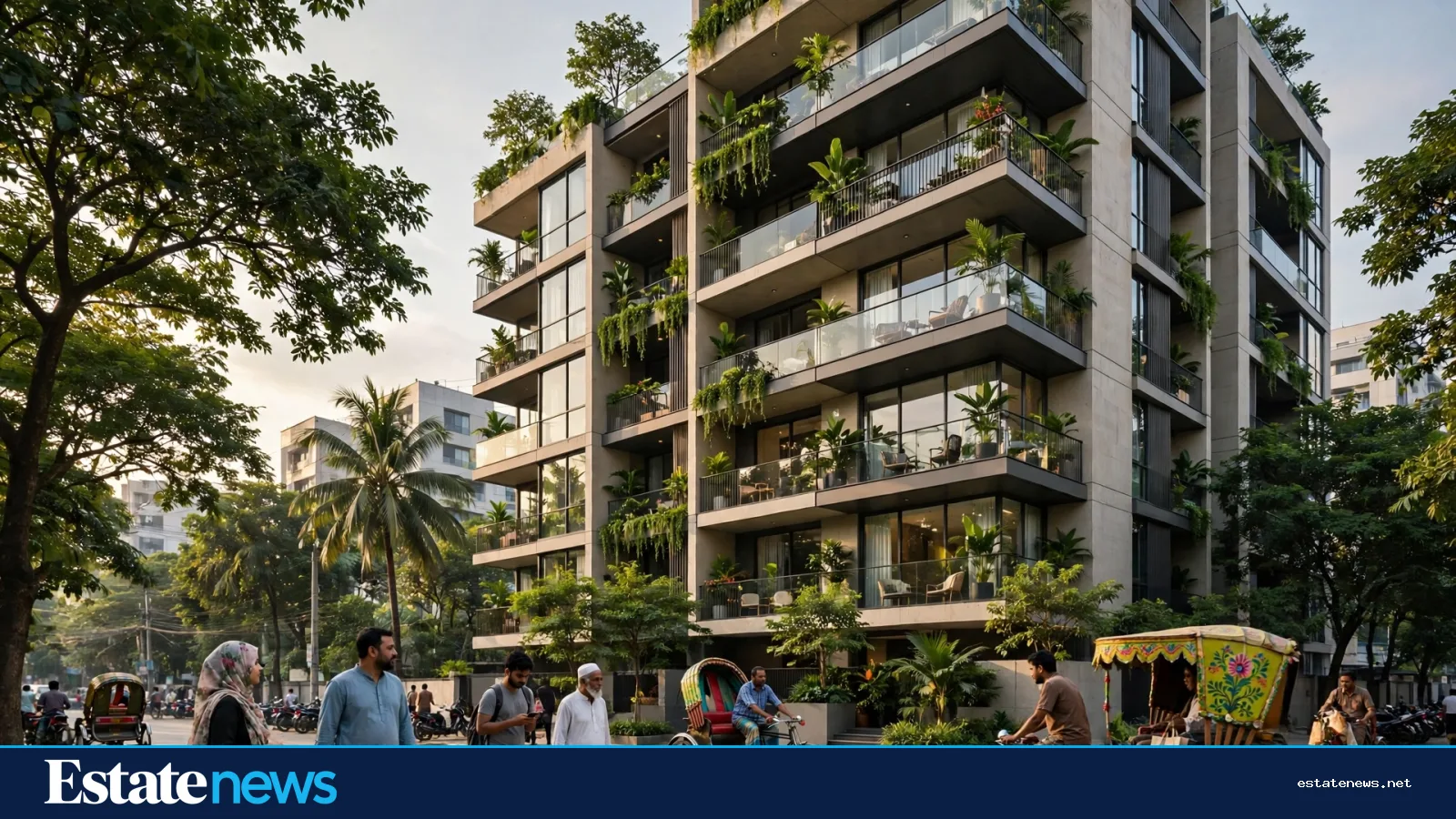
The company behind streets like this one is Amin Mohammad Group, and the bet it has made over three decades is simple to state and hard to pull off. Instead of stacking flats into towers, it sells plots in townships and lets families build on them. The question the street asks of anyone who walks it is whether Dhaka's next generation of buyers wants a plot of their own more than it wants a flat on the fourteenth floor.
A company that started with land, not buildings

Amin Mohammad Group was founded in 1993 by M. M. Enamul Haque, and it is one of Bangladesh's largest land development firms, according to a 2026 guide by Manzar Properties. Its land arm, Amin Mohammad Lands Development Ltd, was set up in 2000. The company's own material says the land arm has handed over more than 5,000 residential and commercial plots, a figure that belongs to the company and should be read as one.
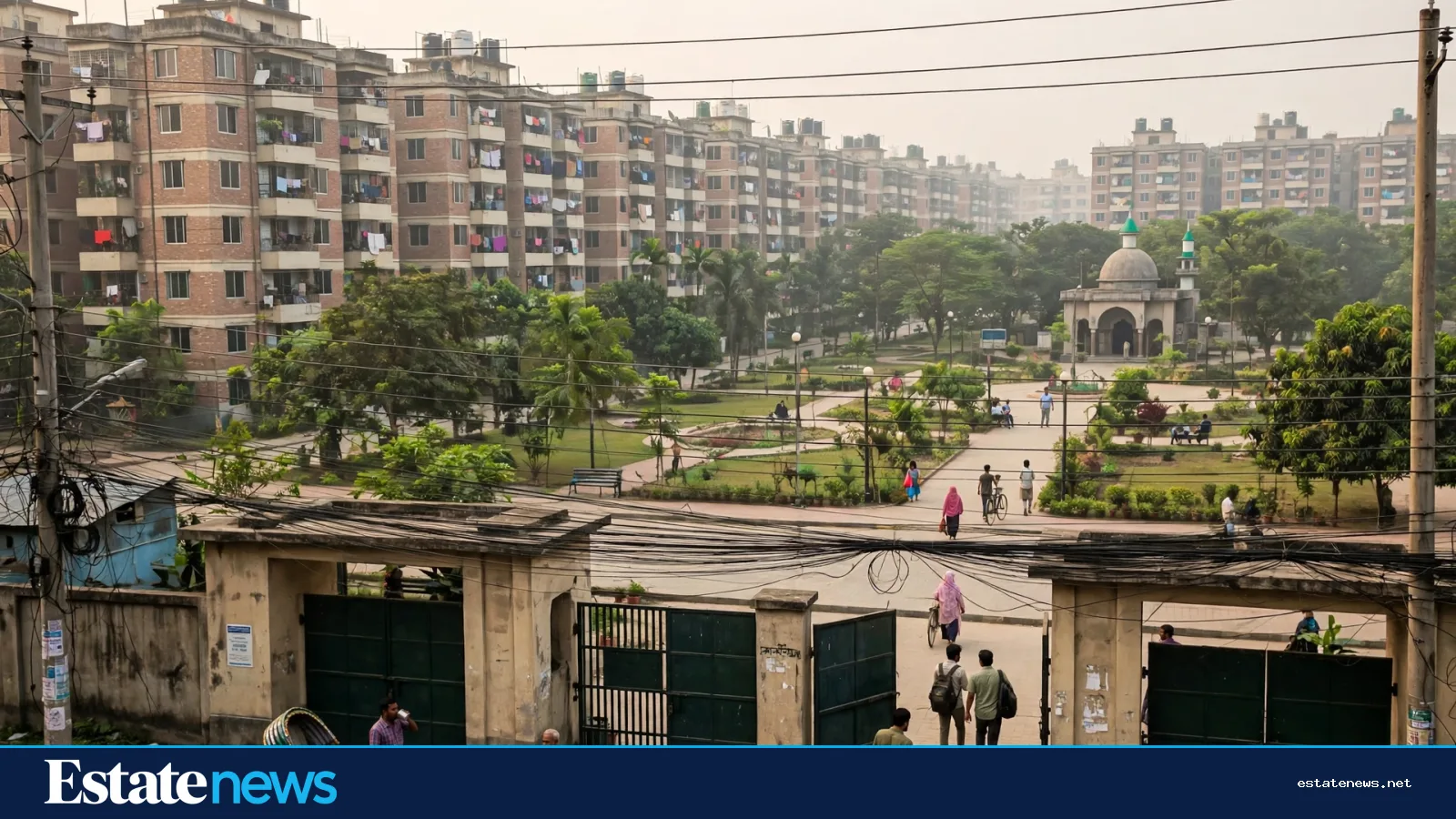
The group's projects read like a map of Dhaka's eastern fringe. Amin City Purbachal sits in the new town. Green Model Town straddles Demra, Mugda and Khilgaon, with its main entrance at Manda in Dhaka South City Corporation wards 71 to 73. Amin Mohammad City, Ashulia Model Town, Alokito Bangladesh, Amin Mohammad Town and Green Bonosree complete the list in the company's material. The group has since spread into construction, engineering and agriculture, and its material says it follows the Bangladesh National Building Code with earthquake-resistant designs. Its work now reaches Dhaka, Chattogram, Sylhet and Cox's Bazar.
The township model, in plain terms
A township sells something a tower cannot. The buyer gets a plot, a road in front of it, and the right to build a house to their own plan. The developer's job is the groundwork: laying out the plots, cutting the roads, bringing in water and power, and keeping the drains clear. When that groundwork holds up, a family can live in a house with a gate of its own at a cost a tower flat cannot match. When it does not, the plot is only a piece of paper.
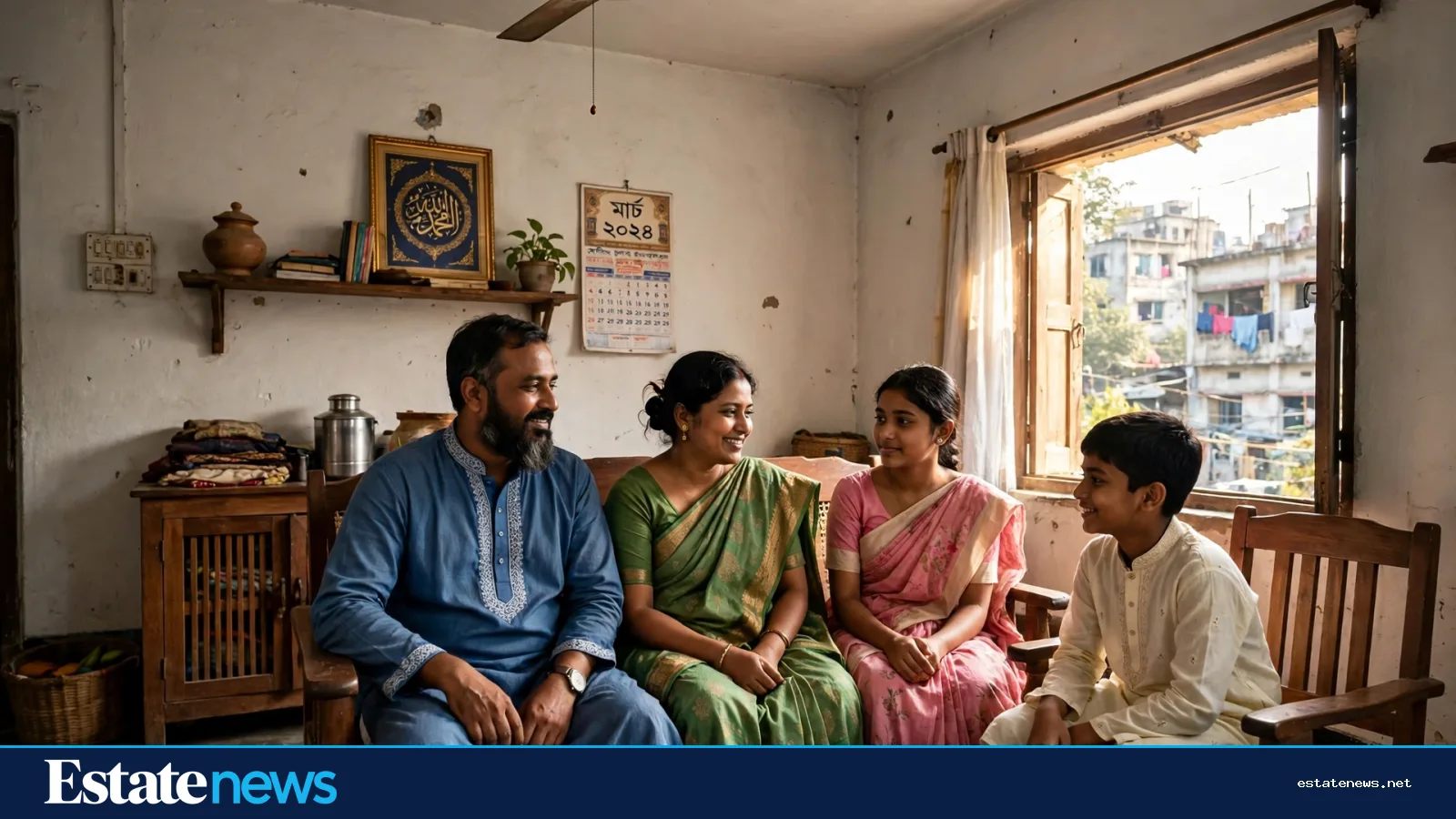
Step inside one of the township houses in the late afternoon and the idea turns physical. The ceiling fan turns above a wooden dining table. Daylight comes through wide windows. A family sits together after the day's work, and the rooms feel finished for living in. Plants on the sill and a child's school bag by the door: the interior does the slow work of making a large development feel like a home.
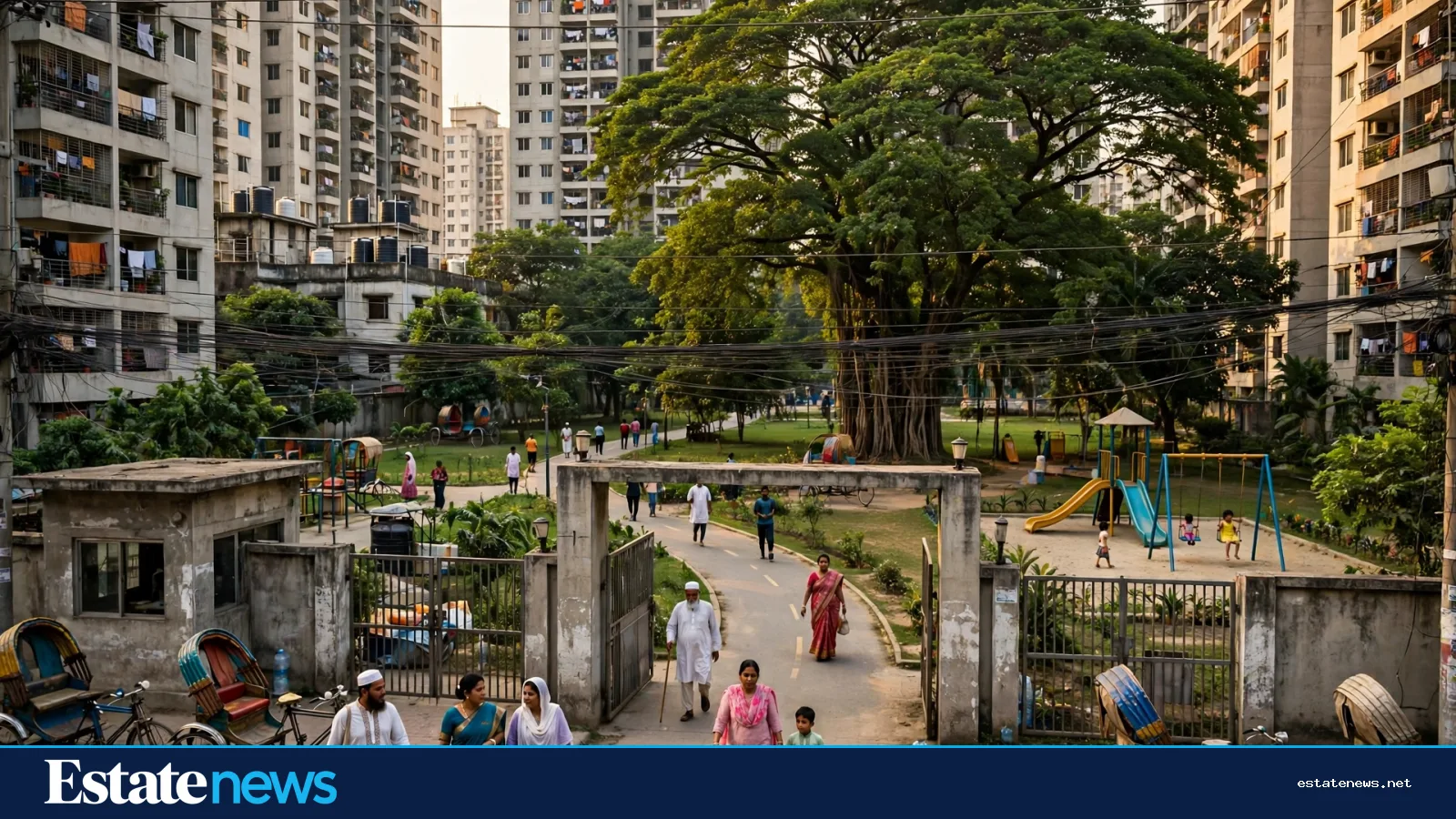
The scale is what sets this model apart from a single building. Five thousand handed-over plots means thousands of families, and a township lives or dies on whether its roads, water and power keep working after the first monsoon. The group's own record is the starting point for that question, not the answer. A buyer who walks a township should look at the drains after rain, ask the families already living there how the water supply holds up in summer, and check whether the street lights work at night. Those are the tests no brochure can pass on its own.


Why Purbachal, and what the land question means
Purbachal is the reason this idea exists at all. Dhaka's centre has no room left for houses on their own plots at prices a middle-class family can reach. The new town on the city's north-eastern edge does, and its wide roads give it a spine that older suburbs never had. Amin City Purbachal sits inside that promise, and the value of a plot there rests on two things that have nothing to do with the house: whether the plot's papers are clean, and whether the roads, water and power around it are real.
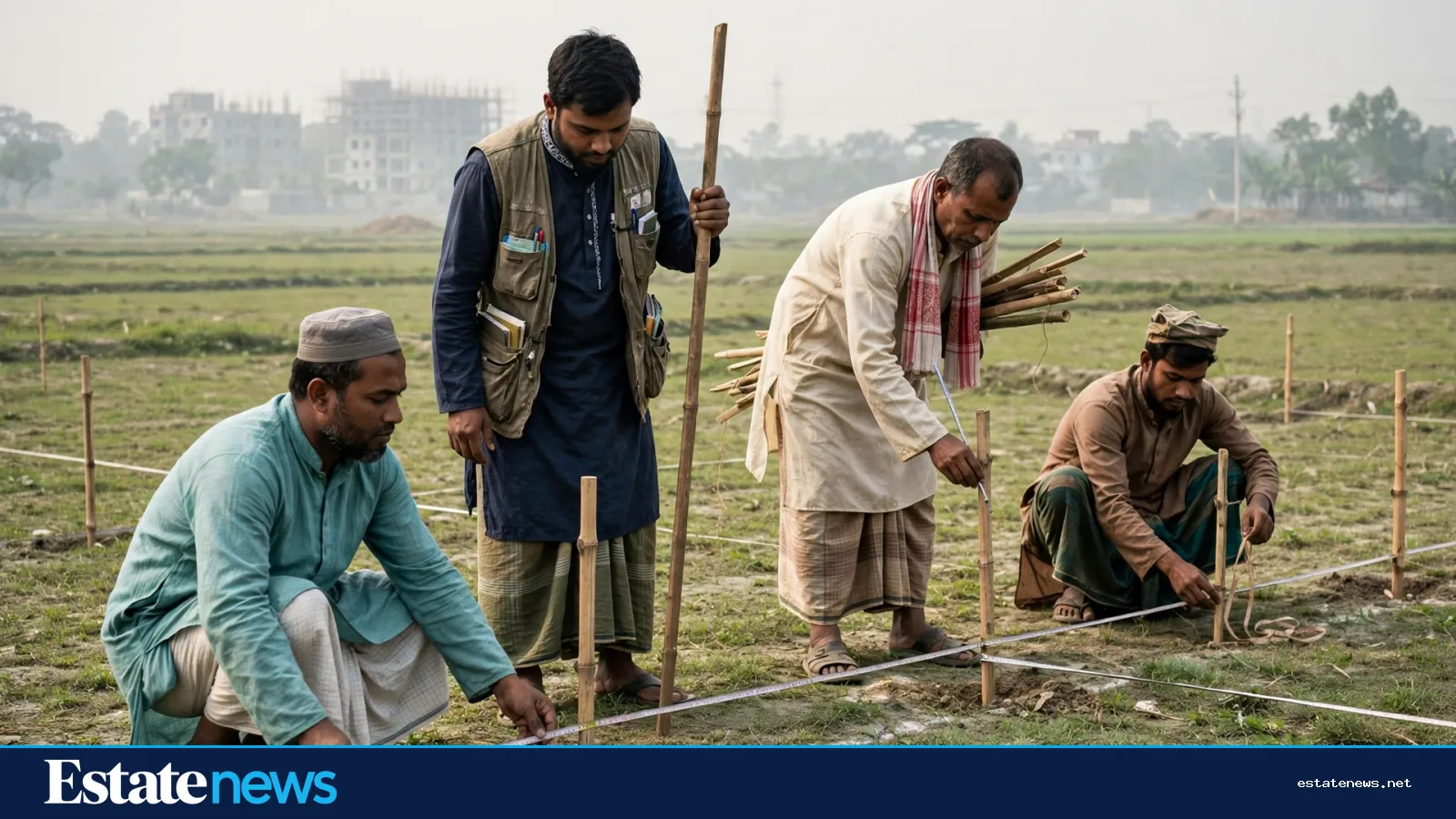
Out on the open land near Purbachal, the work starts with bamboo and string. Surveyors mark out the plots one by one, measuring tapes stretched across ground that was paddy field not long ago. The scene looks simple, and it is the part of the business that matters most. A plot is only as good as its dag and mouza, and a buyer who falls in love with the open sky should still ask for the deed, the chain of title, the mutation record and the approval for the layout, and should check them the way Estate News explained in "How to Verify a Land Title in Bangladesh: The Documents That Matter".
The group has also moved beyond plots in recent years. In 2021 it signed an agreement with Aviation Dhaka Consortium to work on the construction of Terminal 3 at Hazrat Shahjalal International Airport, and in 2022 Berger Paints signed an agreement with Amin Mohammad Construction Ltd. Those deals show a company that has grown past its original trade. They also show why a buyer should judge a township on its own ground, not on the group's wider name. A terminal contract does not fix a township drain.
What a buyer should check before the plot, not after
The first check is the handover record. The company says it has handed over more than 5,000 plots, and a buyer should ask to see the handed-over streets, talk to the families living there, and look at how the roads, the water supply and the drainage are holding up. The second check is the money that follows the purchase: who maintains the gates, the roads and the common areas, and what the monthly charge is. A house on its own plot still shares its streets, and the cost of keeping them is a number that should be written down before the booking amount is paid.
The third check is the one every Dhaka buyer knows by now. A developer's own figures are the developer's own figures, and they should be read that way. The plot count, the project list and the building standards all come from the company's material, and they are worth verifying on the ground. Green Model Town itself carries a history a buyer should know: the High Court declared it among 77 housing projects illegal in June 2011, and the project received approval from the Ministry of Housing and Public Works in 2012. A buyer should ask for the current approval papers and check them against RAJUK's records before paying anything. Estate News set out the registration cost that follows a purchase in "Flat Registration Cost in Bangladesh: A Buyer's Guide for 2026", and the same arithmetic applies to land. What the township model offers is space and air and a gate of your own. What it asks in return is the same care any Dhaka purchase asks: check the papers, walk the site, and count the costs that come after the keys.
Amin Mohammad Group is betting that enough buyers will make that trade. The towers will keep rising in the centre, and the flats inside them will keep selling. But on a quiet street on the city's eastern edge, with the rickshaw turning at the end of the road and the water tanks catching the evening light, the company's case is easy to understand. Some families do not want a flat on the fourteenth floor. They want a plot, a house and a gate they can close at night, and they are willing to drive a little further out to get it. The test of the bet is not the launch. It is whether the families who build on those plots are still glad they chose the land five years from now, when the houses have gone up and the township around them has filled out. The same long view that built Lake City Concord's township made Concord the company it is, as Estate News told in "Concord Real Estate: The Builder Behind Lake City Concord", and the same question faces every builder who promises a town instead of a tower. Tropical Homes made a similar wager on open space and lakefront living, as Estate News told in "Tropical Homes: The Builder Behind Dhaka's Lakefront Flats". For Amin Mohammad Group, the answer will be written one handed-over plot at a time.