Oil is cheaper than it has been in three months, and the reason is supply, not peace. Brent crude futures fell 75 cents, or 0.8 percent, to $88.62 a barrel by 0915 GMT on Tuesday, after touching their lowest since 27 August. United States West Texas Intermediate crude fell 64 cents, also 0.8 percent, to $79.53 a barrel, after hitting its weakest since 10 August. The Daily Star carried the Reuters report on Tuesday, and the numbers moved through the day as traders weighed two forces pulling in opposite directions.
On one side sits a market with more oil than it needs. Deutsche Bank said global observed liquids inventories rose 52 million barrels in October, which points to oversupply of 1.7 million barrels a day. Libya's Sharara pipeline has reopened after an unauthorised valve closure, and oil has begun flowing into storage tanks at the Akakus facility in Zawiya, the chair of the National Oil Corporation told Reuters. Releases from strategic reserves are also keeping supply comfortable, according to UBS analyst Giovanni Staunovo, even with lower regional exports and stronger Chinese demand.
The strait still sets the risk

On the other side sits the Strait of Hormuz, and the risk there has not gone away. Three vessels were struck by unidentified projectiles on Monday as they sailed east through the strait, according to the United Kingdom Maritime Trade Operations. Iran's Revolutionary Guards navy said three oil tankers had caught fire after hitting naval mines, Iran's Press TV reported. The United States is also investigating whether Iran was involved in cyberattacks on as many as 50 energy tankers, the Wall Street Journal reported, citing United States officials.
"Brent has largely lost any upward impetus in recent days as supply conditions remain benign despite the continued closure of the Strait of Hormuz," Staunovo said, "and the market weighs the possibility of a future supply glut against persistent Middle East tensions and shipping disruptions." Suvro Sarkar, head of energy research at DBS Bank, added the caution that prices could rise again depending on talks between the United States and Iran, since both sides could test the other's resolve over the strait.


What cheaper oil does at home
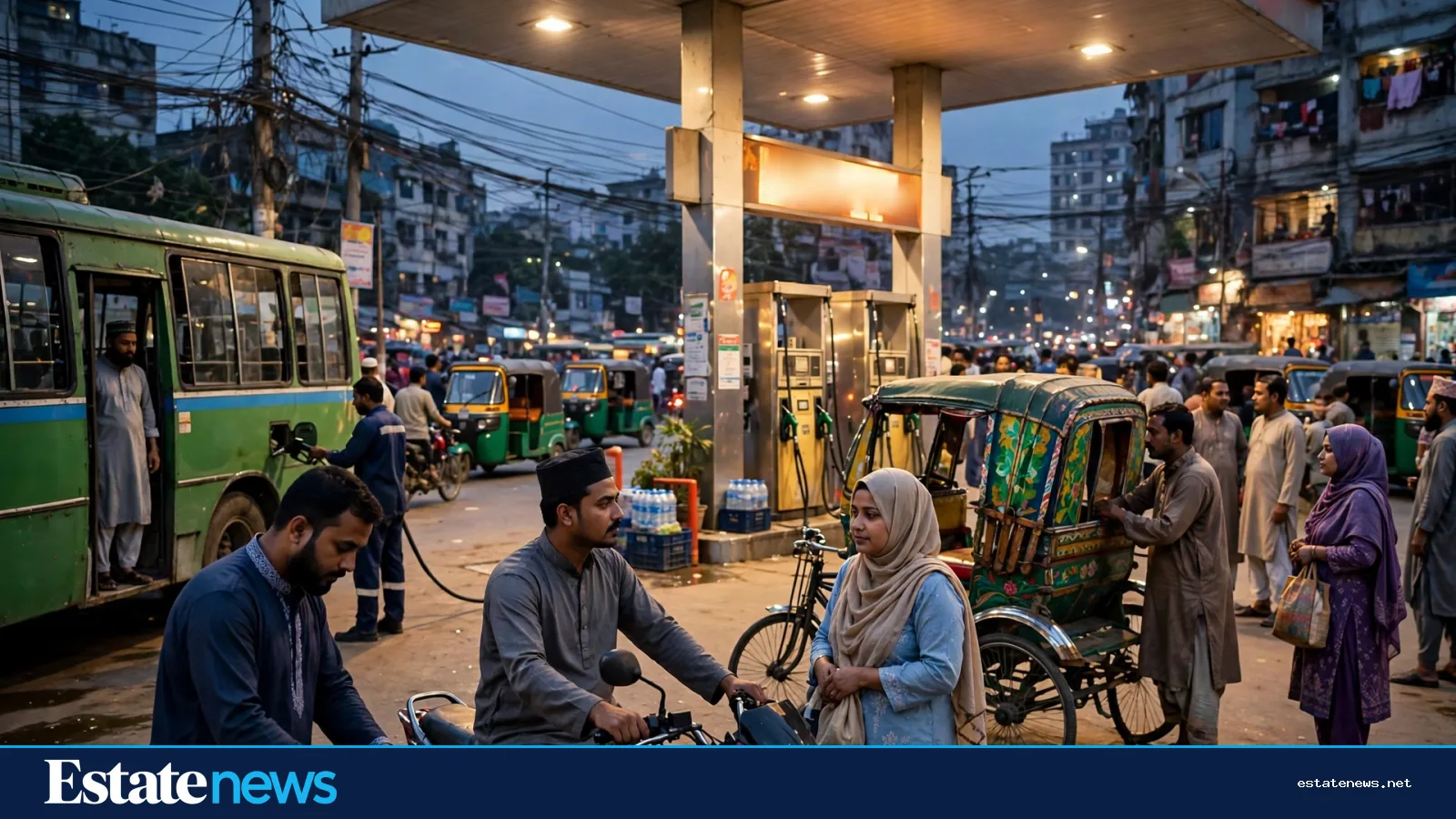
Bangladesh buys almost all the oil it burns, so the world price reaches Dhaka through the import bill first. A lower crude price, if it holds, trims what the country pays for diesel, petrol, octane and furnace oil, and that feeds into transport fares, irrigation pumping and the running cost of factories and building sites. Diesel matters twice over in this economy: it moves goods on the road and it powers the pumps and generators that keep farms and construction going when the grid falters.
None of that is automatic. Pump prices at home are administered, so a fall in Brent does not cut the price at a filling station the next morning. What it does is give the exchequer room: a smaller import bill, less pressure on the dollar, and less subsidy strain if the government chooses to pass any relief on. The same logic runs the other way. A single incident in the strait can send the price back up in a day, and the October surplus that Deutsche Bank measured can shrink just as fast if shipments are disrupted.
For a household, the honest way to read the week is this. Fuel is cheaper on the world market today than at any point since August, and that is good news for an importing country. But the discount comes with a warning label attached, because the shipping lane that carries much of the region's oil is still a place where tankers are being hit. The price at the pump, the bus fare and the cost of running a generator will follow the world price only if the calm holds.
Estate News put the wider economy in context in "3.2% Growth, the Lowest in 25 Years: What the Numbers Say About Bangladesh's Economy", and the export engine behind the dollar earnings in "The Garment Sector Kept $6.77 Billion This Quarter. That Is the Real Number". The day's full picture, wages and the market included, is in "Bangladesh Market Wrap, 24 November: Wages, the Terminal and a Market That Paused". Watch the strait and the talks around it. The oil price will tell you first when either of them moves.