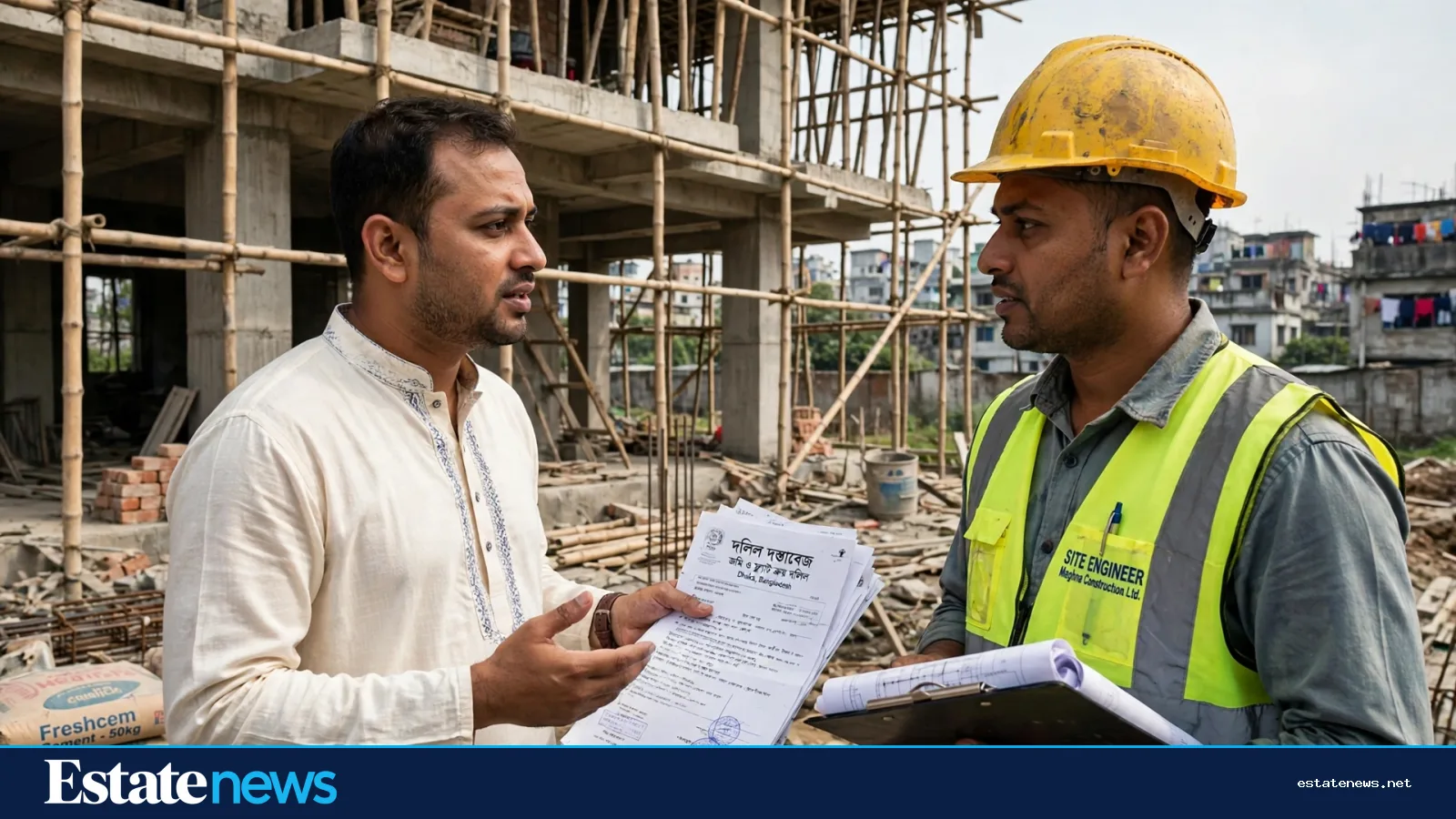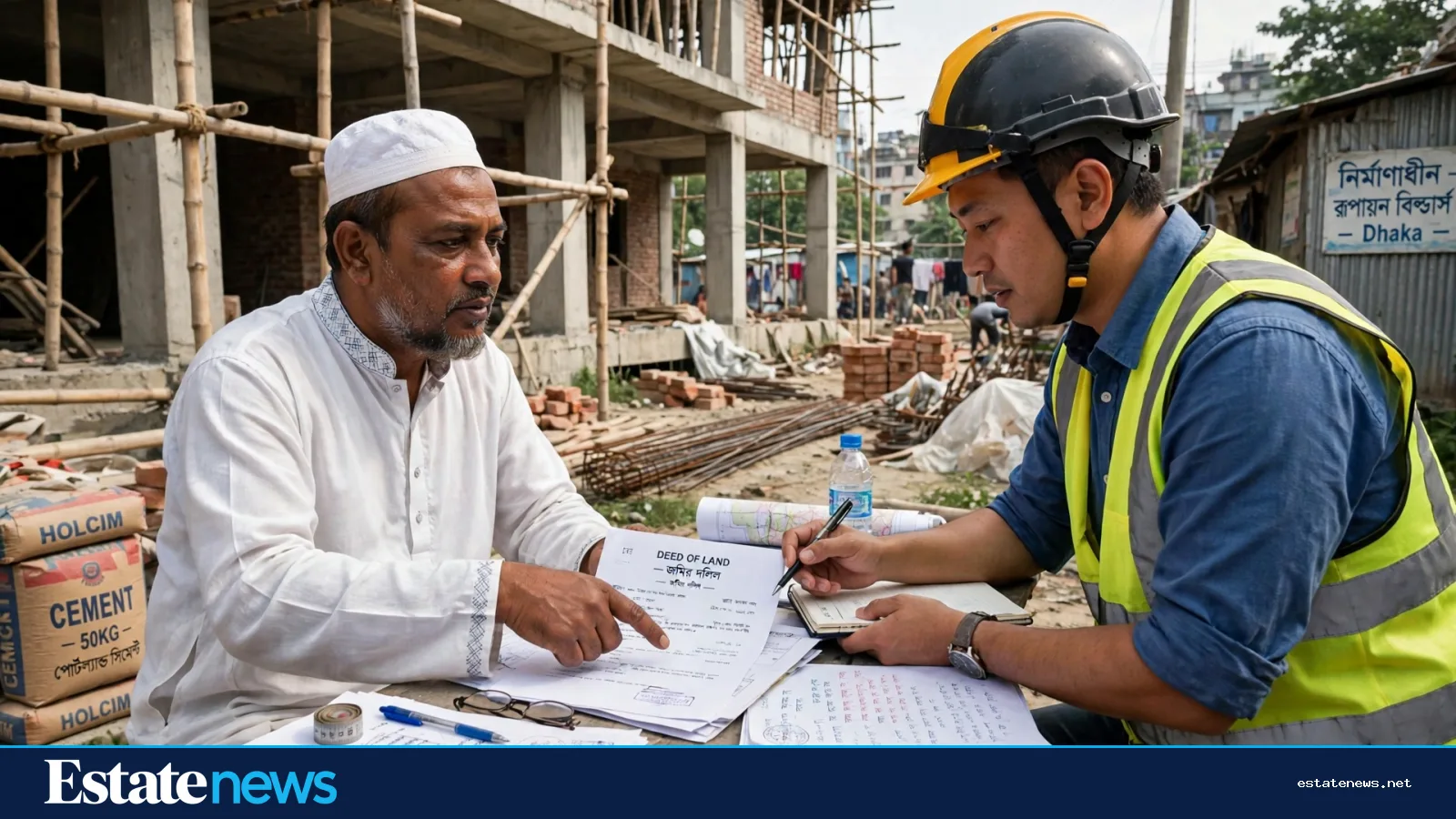
The deed is registered. The money is paid. The keys are in your hand. Most buyers stop there, and that is the mistake. Registration records the sale, but it does not change the land record. Until your name is entered in the khatian, the record of rights, the land office still shows the seller as the holder. That entry is called mutation, or namjari, and without it the flat is not fully yours in the eyes of the office that keeps the record.
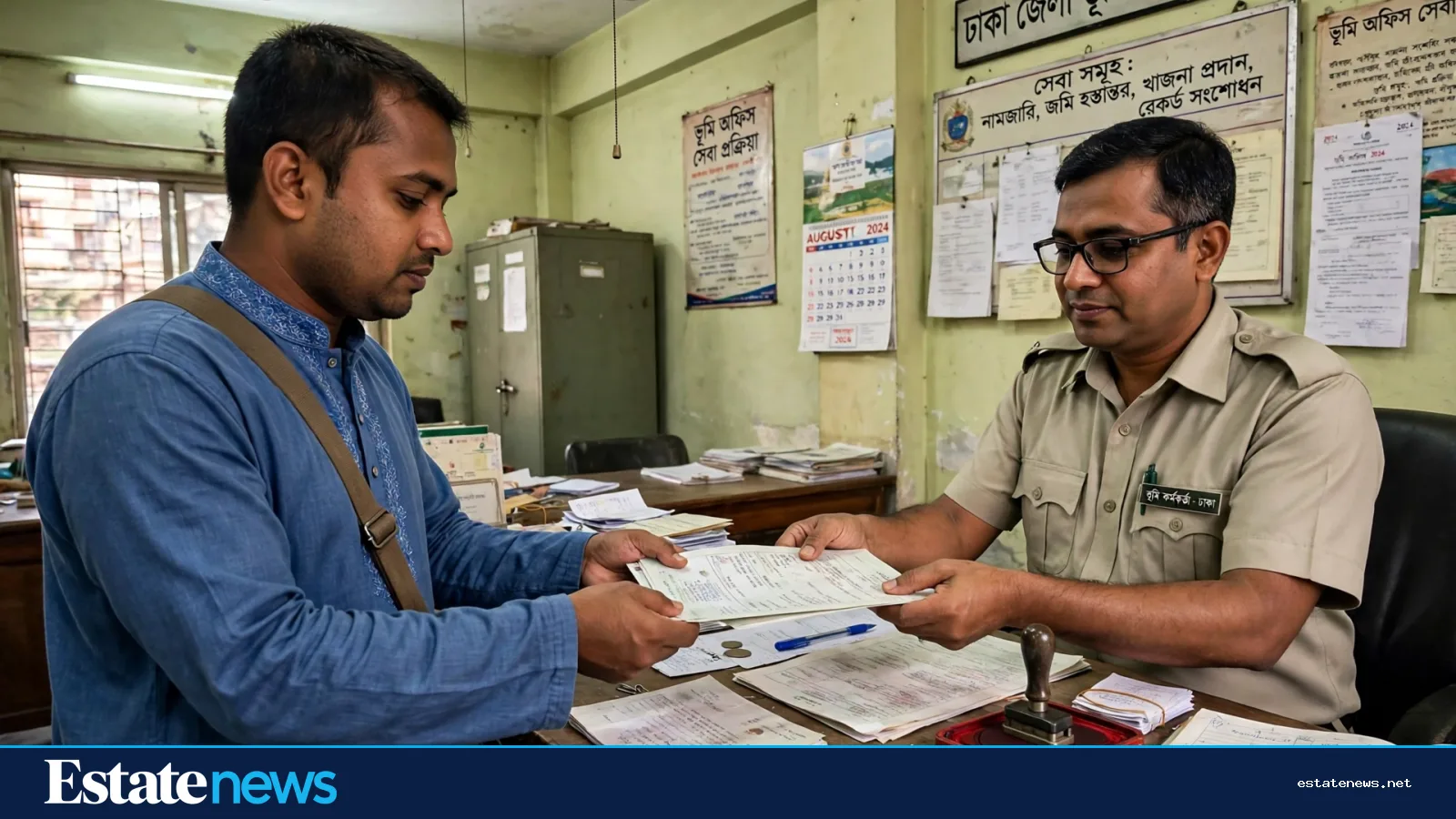
Mutation is an administrative step, not a second purchase. You apply to the Assistant Commissioner (Land) of the area where the land sits, through the government's online e-Namjari portal, and the office updates the khatian in your name. The government fee is Tk 1,170 in total: Tk 20 as the application court fee and Tk 50 as the notice fee when you file, then Tk 1,000 for the record correction and Tk 100 for the DCR, the duplicate carbon receipt, after approval. A clean application is meant to be decided in about 28 working days, though files with gaps take longer. The fee does not depend on the value of the flat.
What the office asks for

The application stands or falls on the papers you upload. The core set is short: the registered deed in your favour, the latest khatian or porcha, the most recent land development tax receipt, your national ID card, a passport photograph, and a mobile number that can receive the one-time password and status messages. For an inherited property the deed is replaced by the death certificate and the warish, or heirship, certificate, with the names of all the heirs. For a gift, the registered gift deed. For a court decree, the certified copy of the decree. If the seller is not the person named in the khatian, you also need the deeds that link the seller to the record, and the seller's own mutation record where it exists.
Names must match across the papers. A spelling that differs between the deed, the national ID and the khatian will slow the file down, and the office will ask for an affidavit or a supporting document explaining the difference. Dag numbers and areas must match the deed exactly. The land development tax must be paid up to date, and the receipt kept. In city corporation areas, the portal also asks for proof of income tax return submission. None of this is difficult on its own. Together, it is the reason a buyer should gather the papers before filing, not after the office sends the file back.
The hearing, and what can go wrong


After you file, the union land office checks the record and the possession of the land, and notices go to the co-sharers and anyone else the change affects. The Assistant Commissioner (Land) then fixes a hearing date, and you attend with the originals of your documents. Objections, if any, are heard there. If the application is approved, you pay the Tk 1,100 balance online and download the new khatian and the DCR, which carry a QR code for checking. After that, open the land development tax holding in your own name, so the next khajna receipt comes in your name too.
Two warnings matter more than the rest. First, mutation does not create title by itself. It records the name of the person who holds the land under a deed or a decree. If the deed itself is defective, a mutation will not cure it, which is why the title check comes before the purchase, not after. Estate News explained the documents that matter in "How to Verify a Land Title in Bangladesh: The Documents That Matter", and how to read the record itself in "জমির খতিয়ান পড়বেন যেভাবে". Second, delay is a risk. Every month the record stays in the seller's name is a month in which a dishonest seller can try to sell the same land again. File in the same week the deed is registered.
The flat buyer's version
For a flat buyer the process is the same, with one extra point to check. A flat sits on land held in the name of the developer or the landowner, and the buyer's mutation covers the share of land that comes with the flat. Ask the developer or the seller for the mutation of the land itself, and for the chain of deeds that connects the land to the person selling you the flat. If the land's own record is not in order, your application will stall at the first check. The registration cost that comes before mutation is set out in "Flat Registration Cost in Bangladesh: A Buyer's Guide for 2026", and the fee for the whole mutation, Tk 1,170, is the smallest bill in the purchase. It is also the one that makes the purchase count in the record.
The paper is dull and the queue at the land office is long, and that is why so many buyers put it off. But a flat without a mutation is a purchase the record does not know about. The deed proves you bought it. The mutation proves the state knows you own it. Get both, and keep both, in a folder you can find.