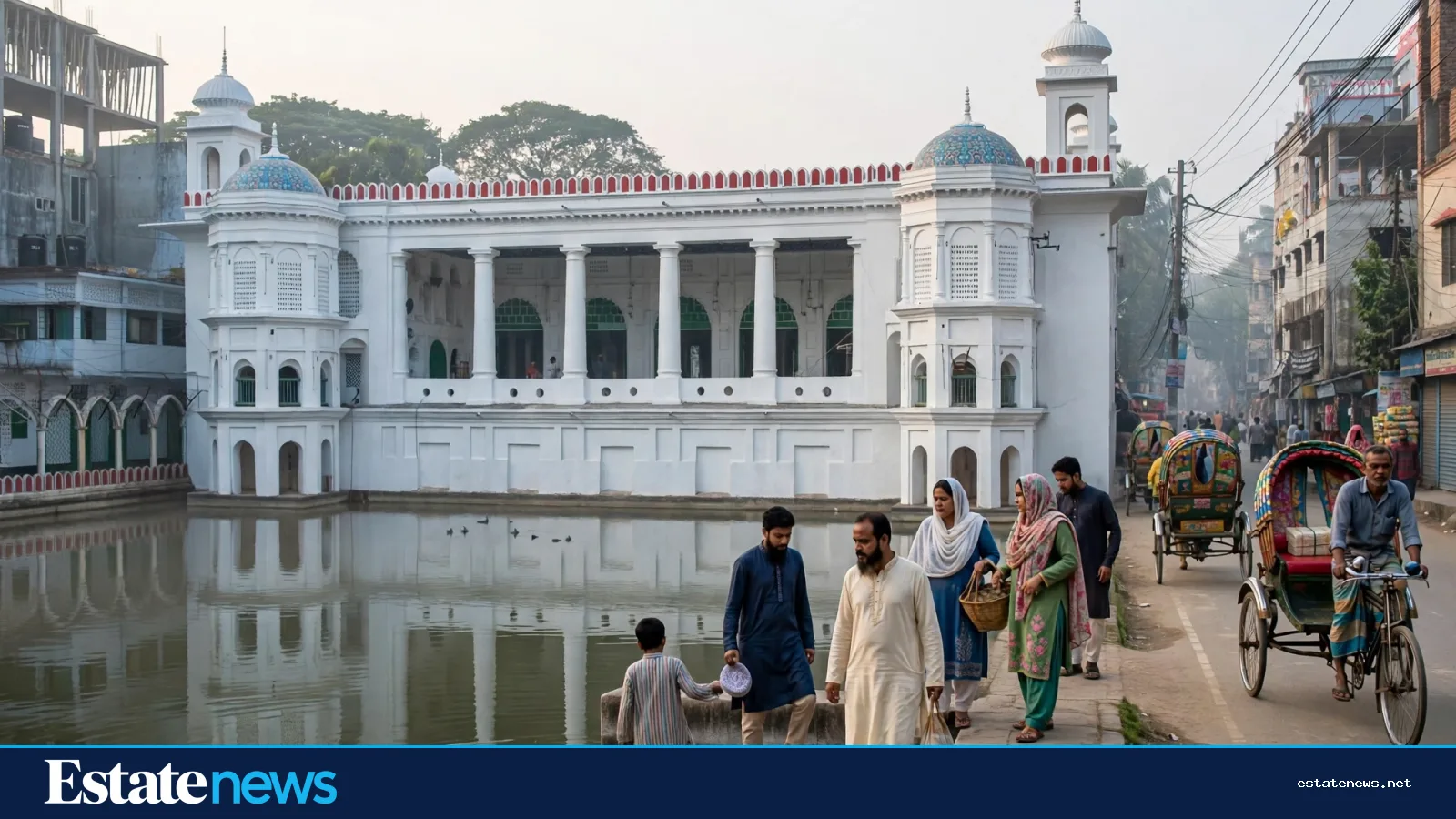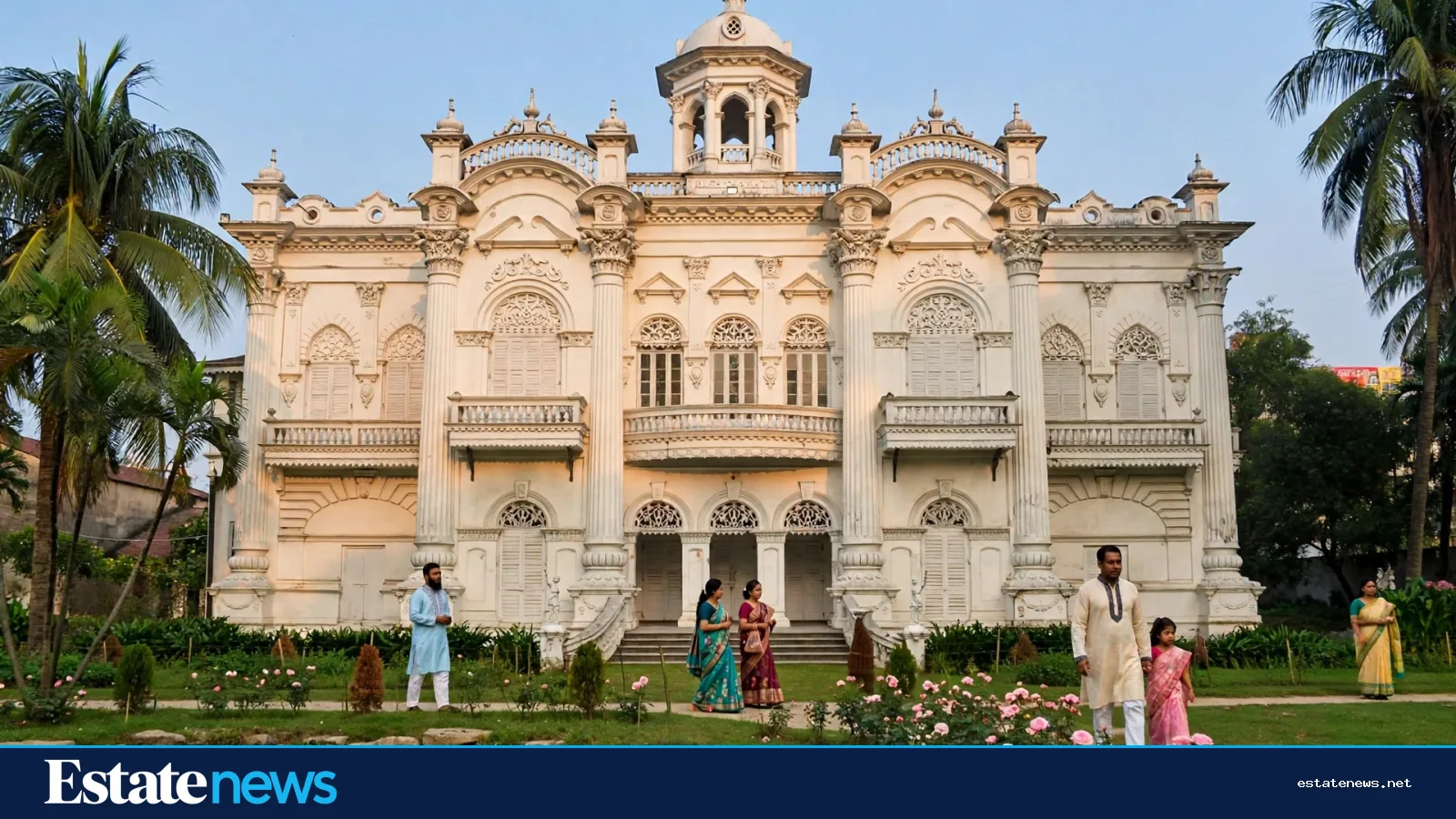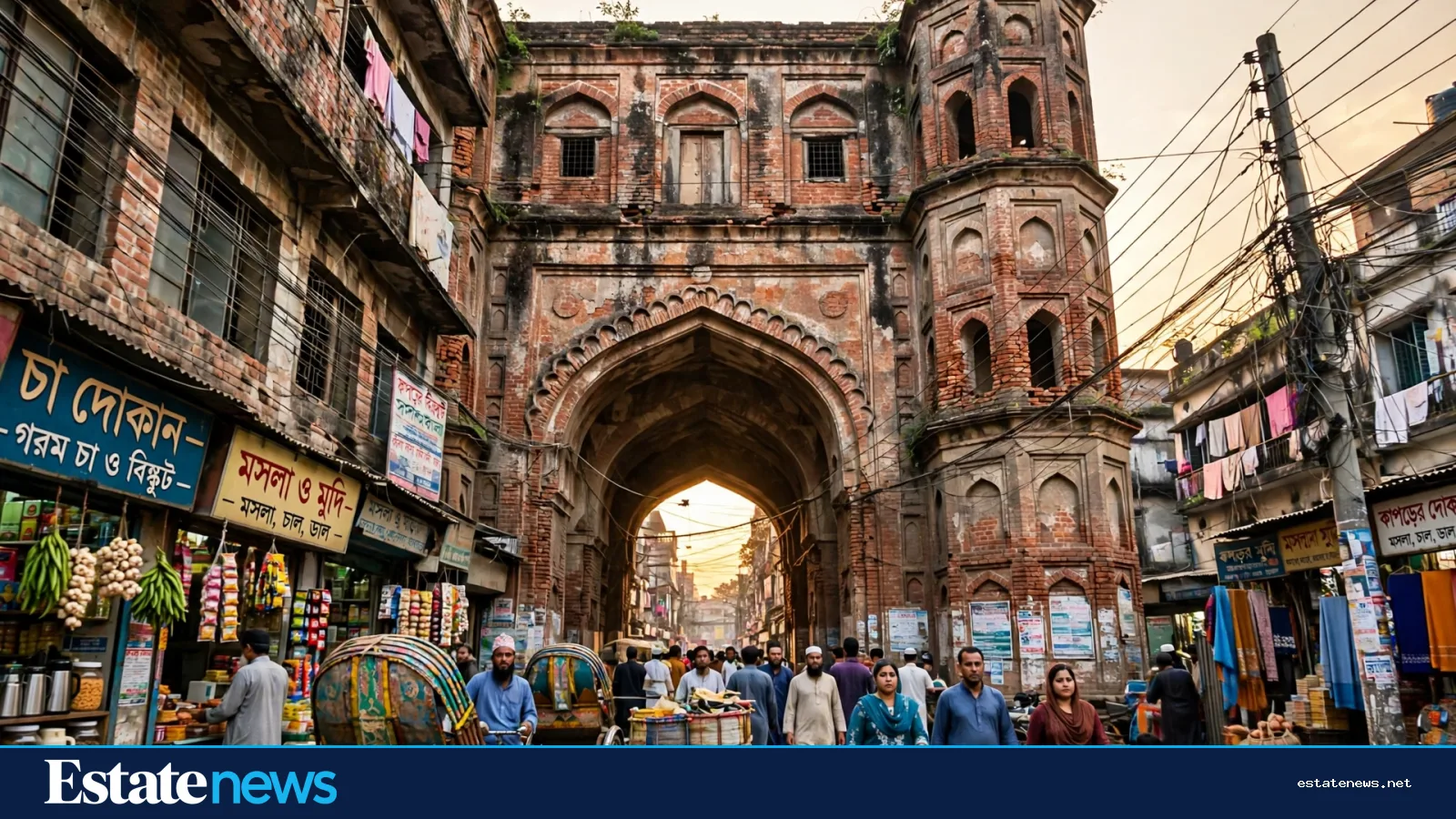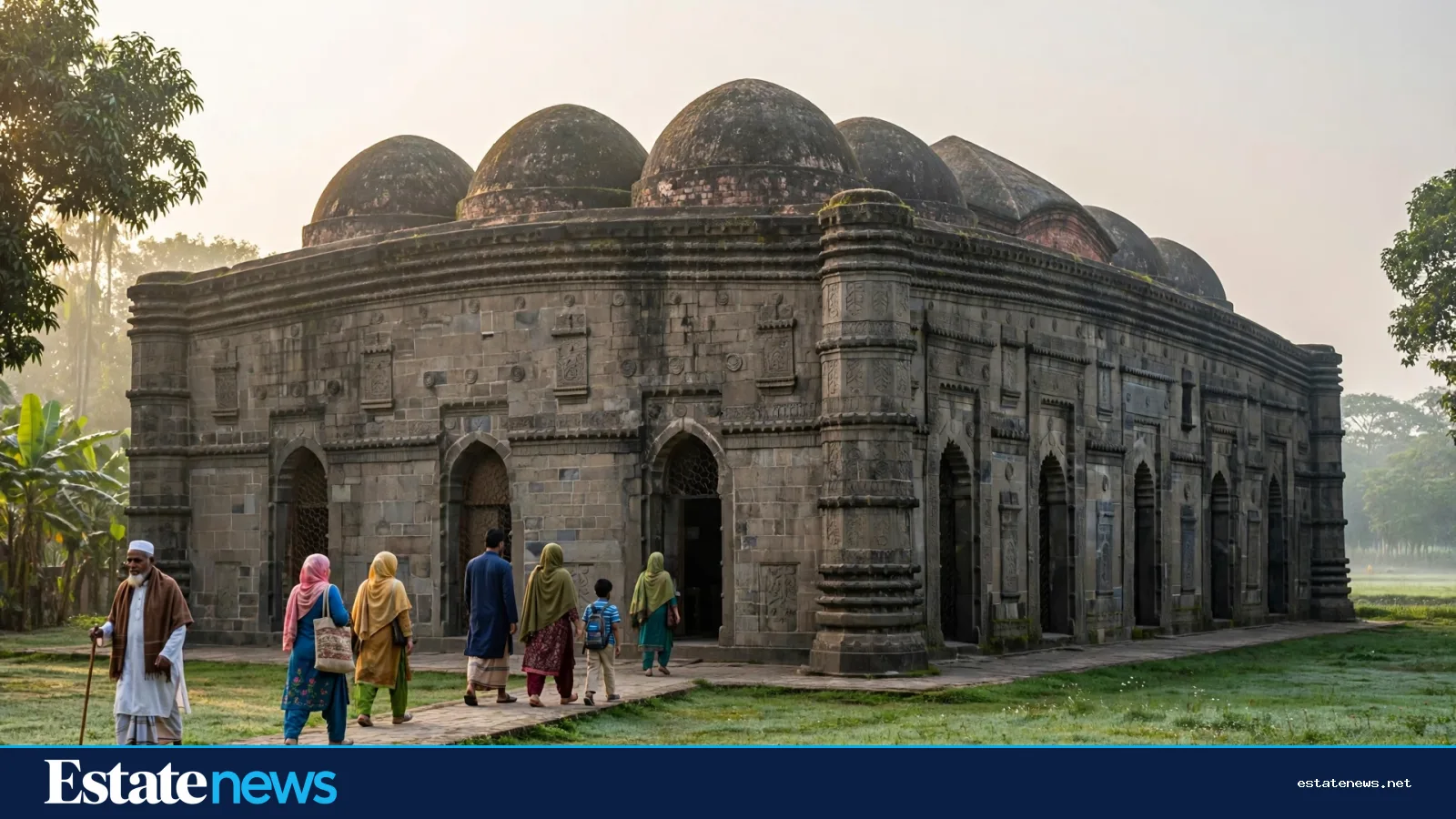
The road to Gaur runs north from Chapainawabganj town through fields and mango groves, past villages that sit close to the Indian border. Then the ground rises a little and a low stone building appears behind a wall, its fifteen domes lined up against the sky. There is no town around it any more. The capital it served is gone, its palaces and gates mostly fallen, its streets lost under fields. Choto Sona Mosque is what is left of Gaur that still stands whole, and it has stood here for more than five hundred years.
The mosque was built between 1493 and 1519, during the reign of Sultan Alauddin Husain Shah, by a nobleman named Majlis Mansur Wali Muhammad bin Ali. An inscription tablet still fixed over the central doorway records the builder's name, though the Arabic letters giving the exact date have worn away. The name it carries is a small joke of history. Choto Sona means little gold, and all fifteen of its domes were once gilded, so that the roof shone in the sun. No trace of the gilding remains now. The stone is grey and weathered, and the gold lives only in the name. Banglapedia calls it a gem of Sultanate architecture, and the description fits: it is small, it is finished with care, and it has outlasted the city around it.
The capital that is gone

Gaur, or Gaur-Lakhnauti, was the capital of Sultanate Bengal, and the mosque stands in its Firuzpur Quarters, about 3 kilometres south of the Kotwali Darwaza, the old gateway of the city, and half a kilometre south-east of the Tahakhana complex. The sultans built their capital on the western edge of what is now Bangladesh, on ground that traded with the whole of Bengal. When the capital moved on, Gaur emptied. Its bricks were carried away for other buildings. Its tanks silted up. What survives is a scatter of monuments across the fields, and Choto Sona is the best kept of them, looked after by the Department of Archaeology as one of the best-preserved Sultanate monuments in the country.
The mosque is not large. The prayer hall measures 21.2 metres by 12.2 metres inside, divided into three aisles by two rows of stone pillars, four in each row. A wide central nave cuts the aisles into halves, each half holding six square units of 3.5 metres a side. Three rectangular units in the middle are roofed with chauchala vaults, the curved four-sided roofs that echo the thatched huts of Bengal, and the other twelve square units each carry an inverted tumbler-shaped dome. Fifteen roof units in all, each one different in shape from its neighbour, each one carried on arches that spring from the free-standing pillars. The whole compound measures 42 metres east to west by 43.5 metres north to south, and it was once walled, with a gateway on the eastern side.
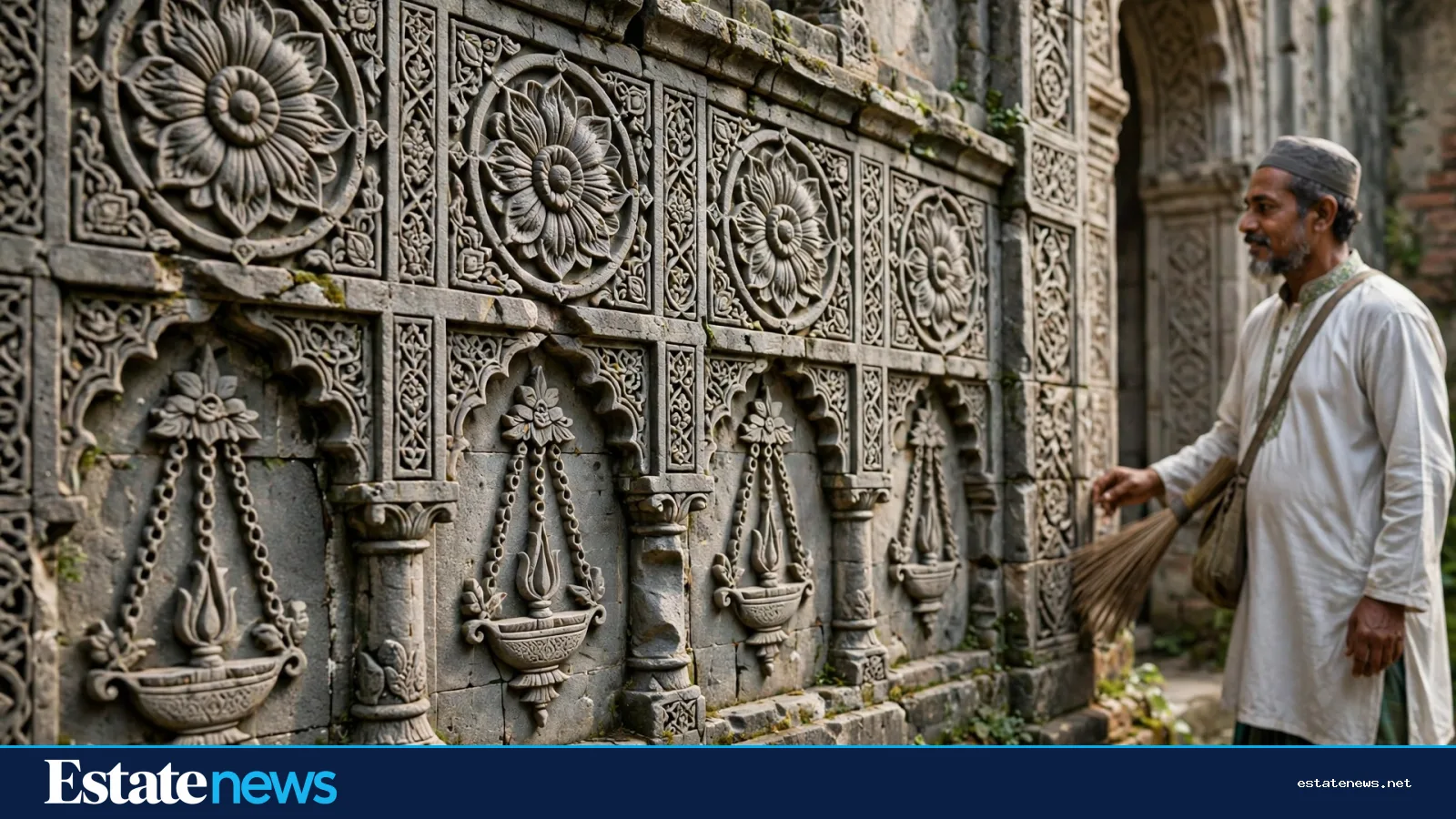
The stone is the first thing a visitor notices. The mosque is faced in stone, not brick, and the carving covers it like a second skin. Rosettes, hanging lamps, creepers and flowers are cut into the stone in patterns that copy Bengali wood carving and the fine metal filigree of the time. Terracotta panels and glazed tiles fill the gaps between the stonework, and brick-setting frames the whole composition. The decoration is not grand in scale. It is patient, worked by hand, and it rewards a visitor who stops and looks closely rather than one who hurries past to the next monument.
The earthquake and the rebuild


The mosque nearly did not survive. In the great earthquake of 1897, three of the domes and the three chauchala vaults of the central aisle came down, and much of the west wall collapsed with them. For a building that had stood for four centuries, it was the closest it came to ruin. The restoration that followed, between 1900 and 1907, put the roof back and rebuilt the wall, and the mosque has been cared for since. The domes a visitor sees today are the restored ones, and the stonework carries the marks of both the original builders and the men who repaired it.
That repair is part of why the building matters. Most of Gaur's monuments fell and were never raised again. Choto Sona was rebuilt because people thought it worth rebuilding, and it has been kept since, through the British period, through Partition, and through the decades since independence. The Department of Archaeology now looks after it, and the compound is kept clean and open, with a lawn in front where visitors walk and sit. The mosque is still in religious use, and prayers are held there.
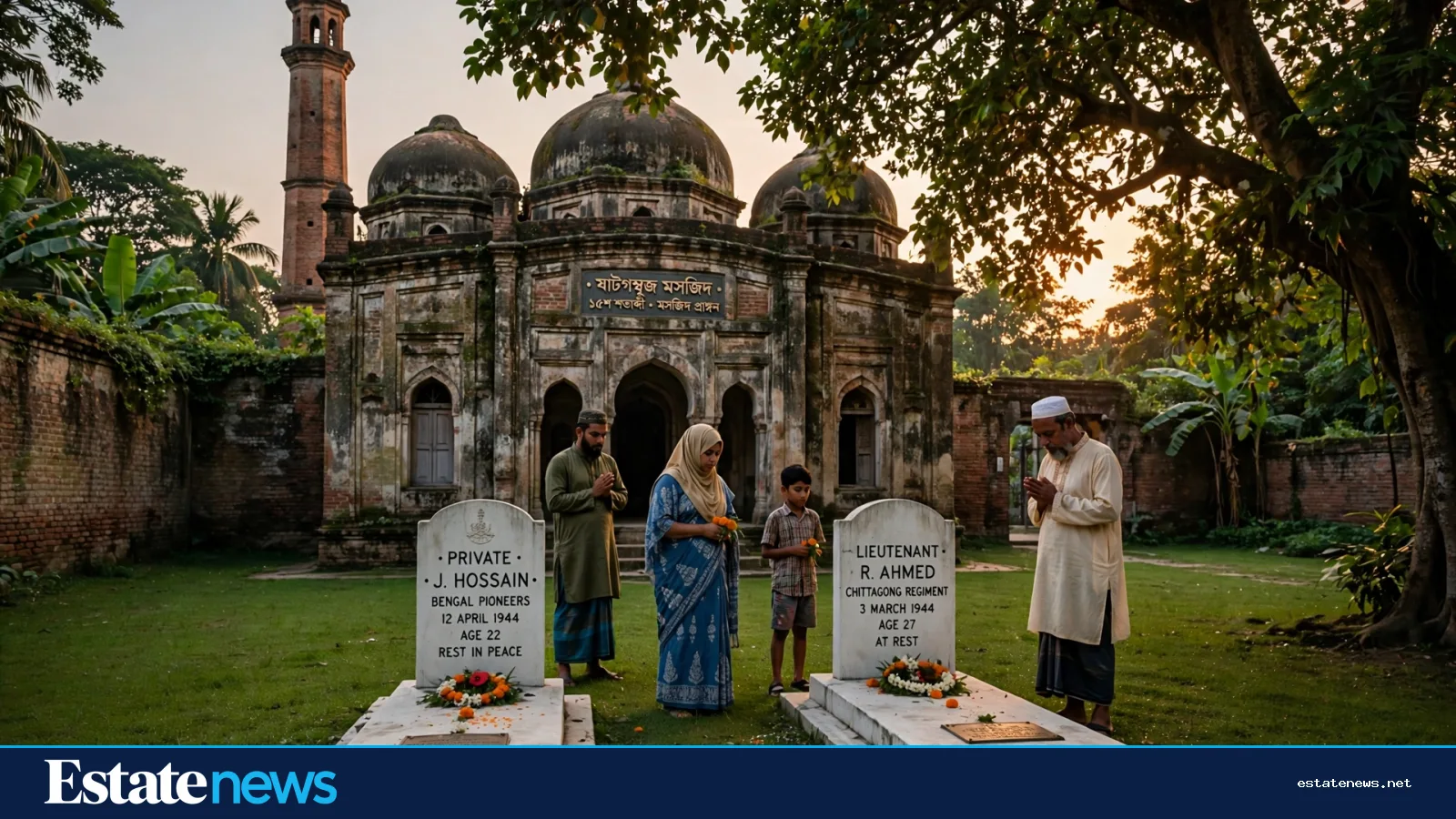
The two graves lie under the trees at the edge of the compound. Captain Mohiuddin Jahangir died on 14 December 1971, and Major Nazmul Hoque died on 27 September 1971, both fighting near Nawabganj town in the Liberation War. Jahangir was one of the seven Bir Shreshtho, the highest gallantry honour of the war. Their graves sit in the ground of a five-hundred-year-old mosque, and visitors stop at them on the way to the prayer hall. The building holds two histories at once: the Sultanate capital that built it, and the war that made the country it now stands in.
A border mosque, still in use
Choto Sona stands close to the Sona Masjid land port on the India border, and the trucks and traders of the border pass within sight of it. The mosque does not compete with that traffic. It sits behind its wall in the quiet, and the people who come are mostly visitors and worshippers, families from Chapainawabganj town and school groups and the occasional traveller who has come up from Dhaka to see Gaur. They walk the path across the lawn, take off their shoes at the steps, and step into the cool stone interior, where the light falls through the doorways in shafts.
Old Dhaka keeps its history in buildings like this one, and the story of the city's old neighbourhoods continues in "Hussaini Dalan: The Imambara That Has Watched Old Dhaka for 384 Years". The Mughal inn that once gave travellers free rooms is told in "Bara Katra: The Mughal Inn That Gave Old Dhaka Free Rooms for Travellers", and the memorial at Savar in "Seven Walls for Seven Struggles: The National Martyrs' Memorial at Savar". Choto Sona is further from Dhaka than any of those, a day's journey to the border, and it repays the trip. The gold is gone from its domes, but the stone is still there, carved and standing, five centuries after the men who built it laid the first block. Gaur is gone. Its little golden mosque is not.