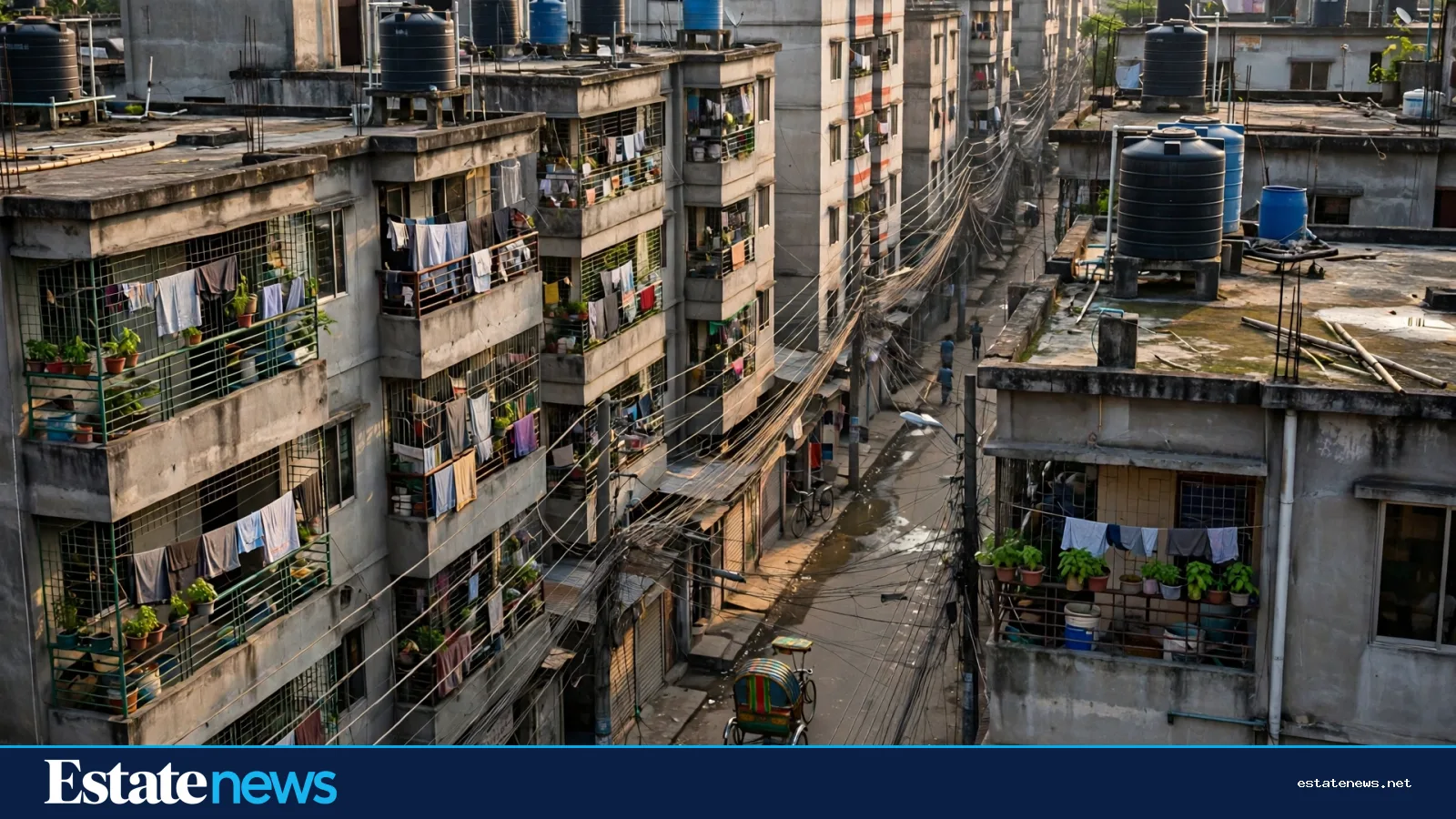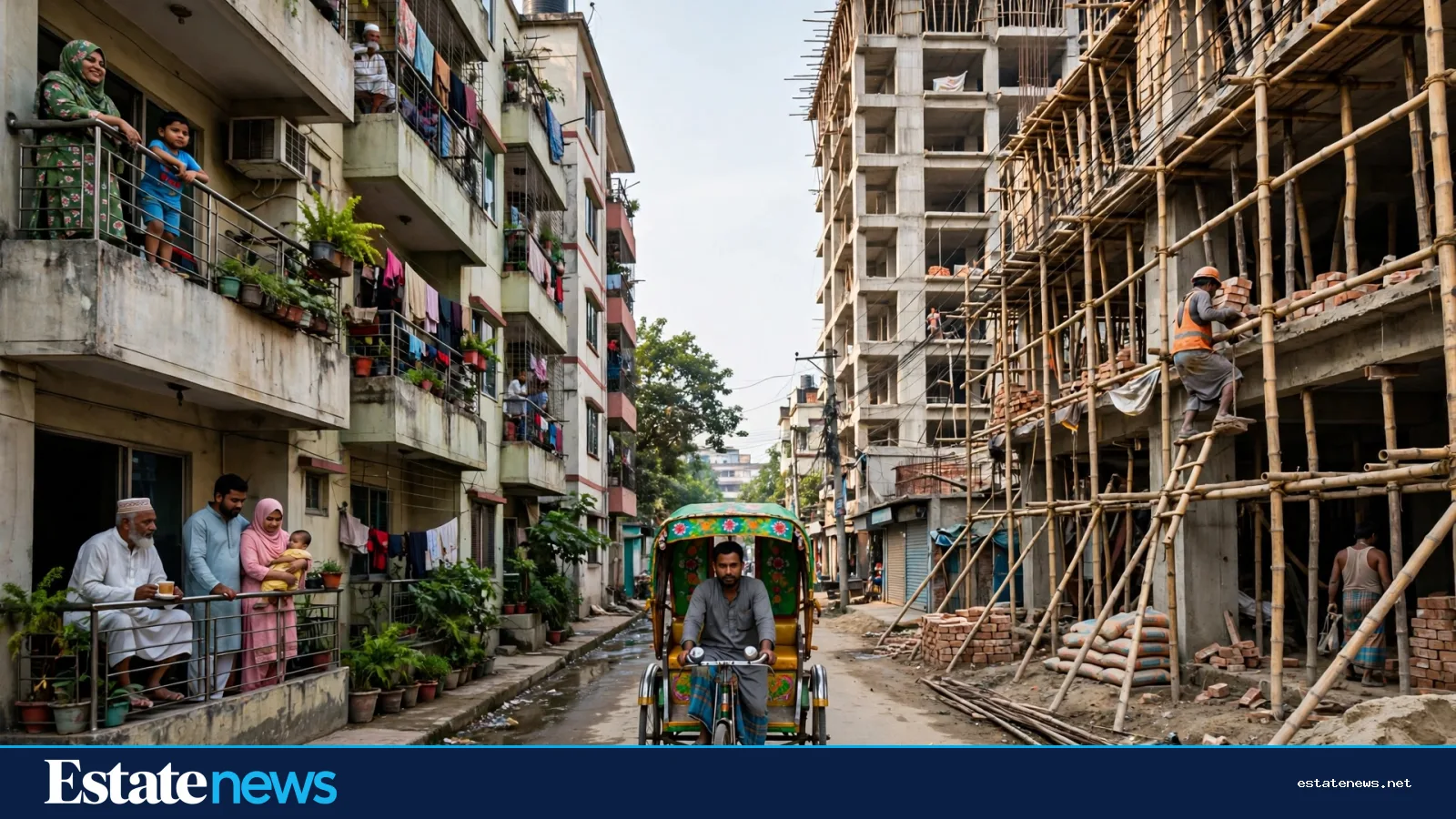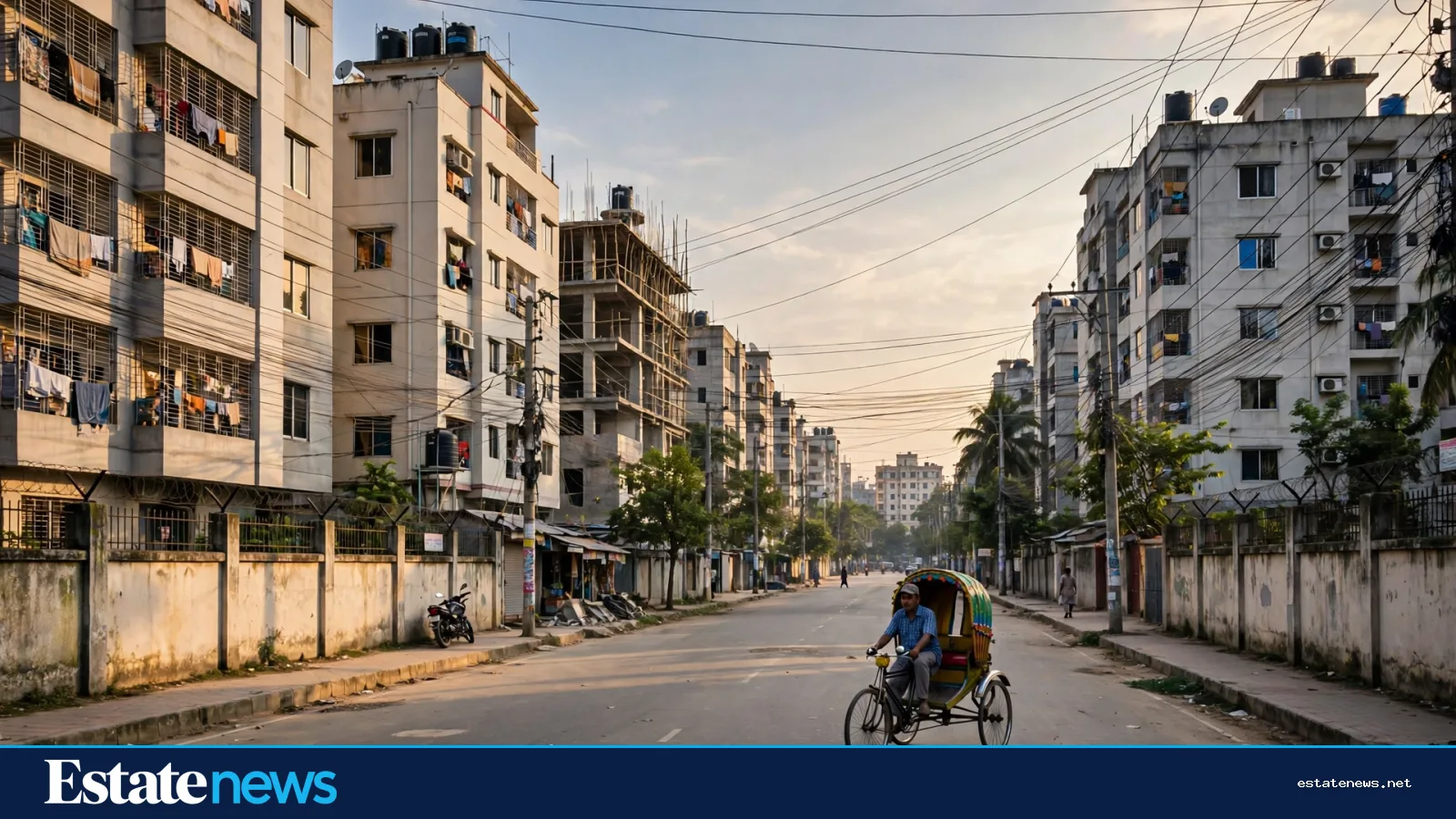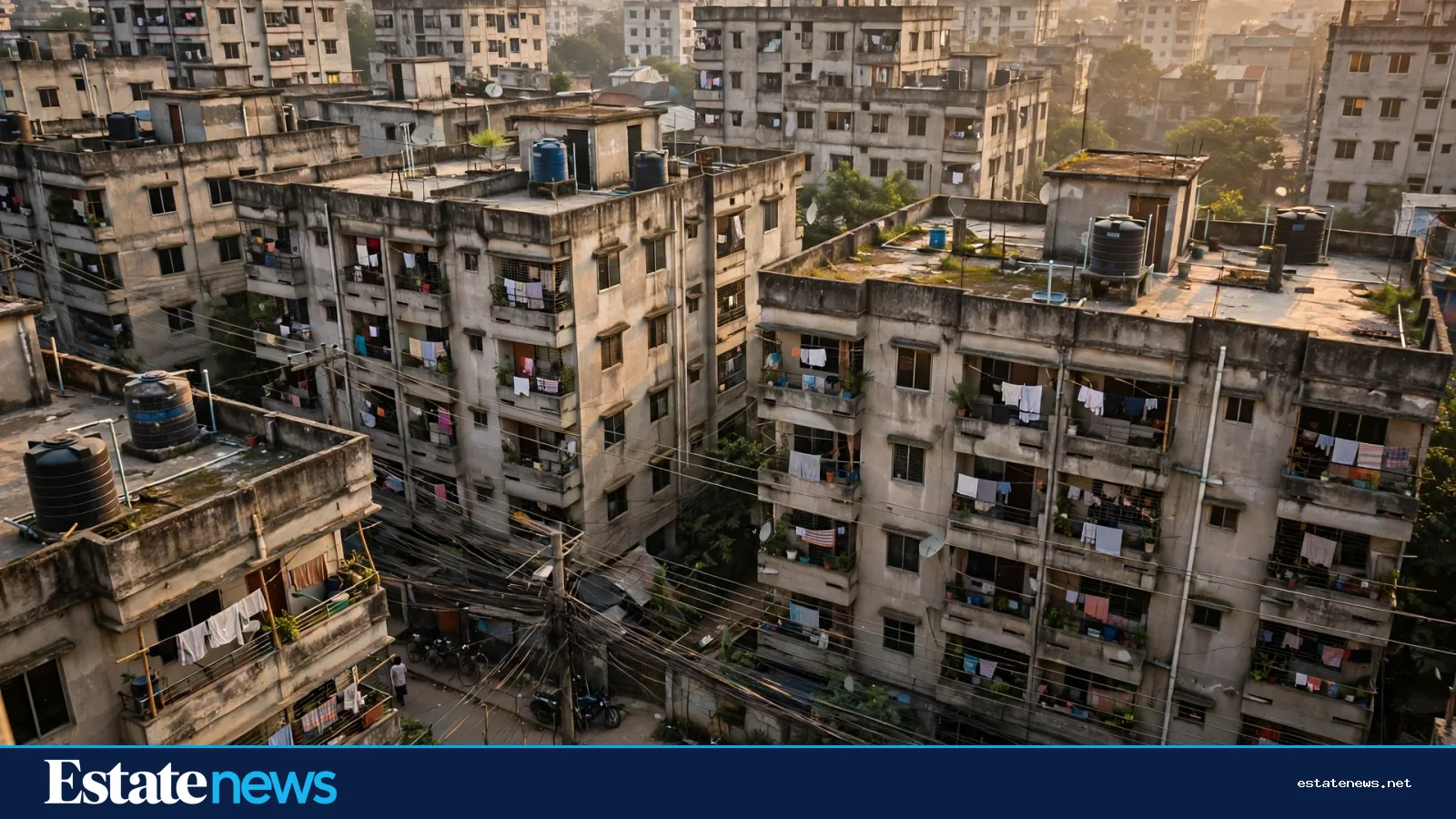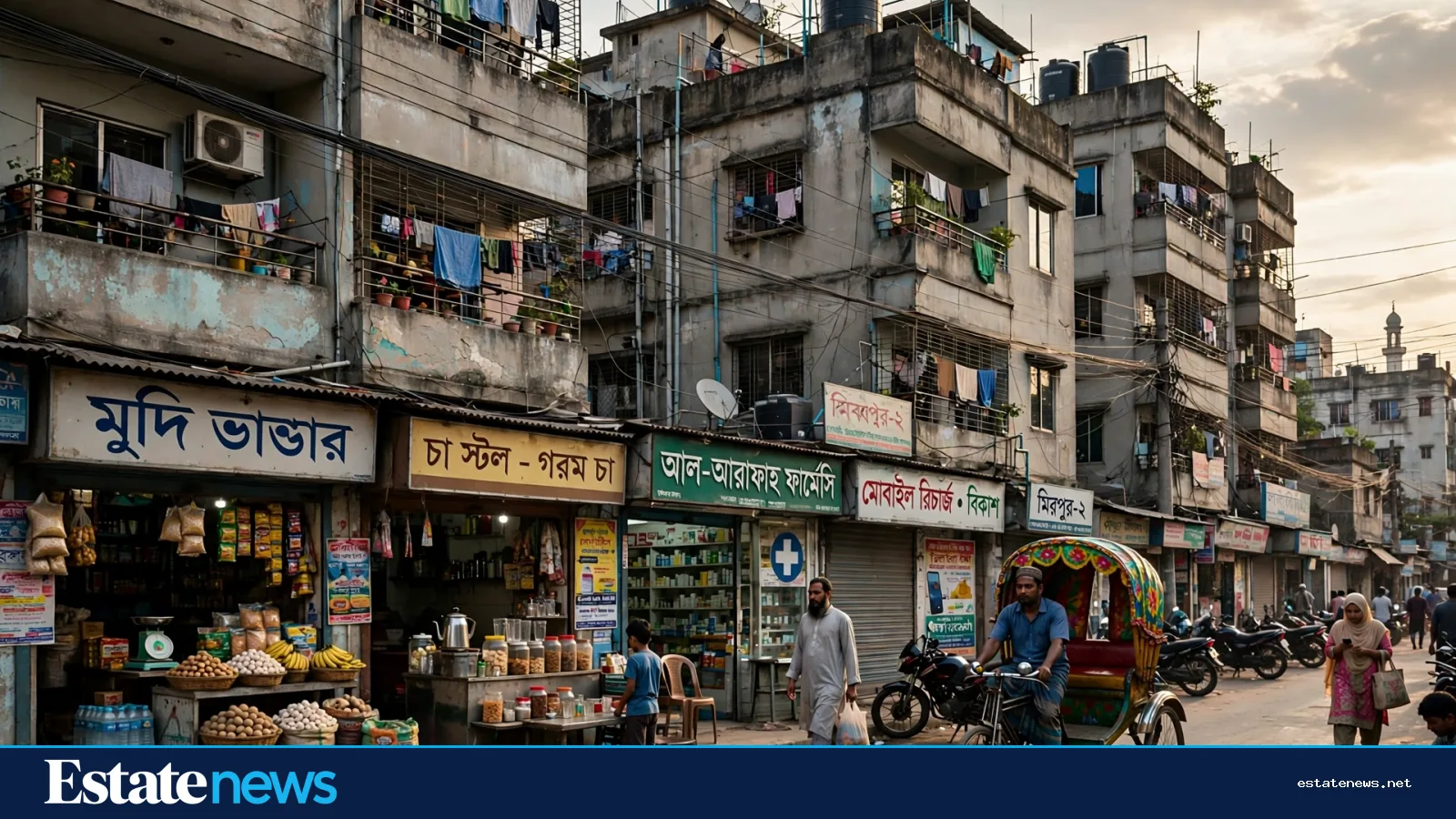
Evening comes down over Mirpur-10 and the street fills in the way it always does. Rickshaws thread between buses and cars under the metro line. Shopkeepers pull their shutters halfway down and switch on the tube lights. Above the shops, the flats stack up floor by floor, balconies hung with laundry, rooftop tanks catching the last of the light. A family walks home with a bag of vegetables. A tea stall does its briskest trade of the day. Nothing here looks like a showpiece neighbourhood, and that is the point. Mirpur is where Dhaka lives when it cannot afford Gulshan or Dhanmondi, and it works.
The numbers say it plainly. Flats in Mirpur ask Tk 8,700 a square foot, the lowest of the six areas Estate News tracks, against Tk 20,000 in Gulshan and Tk 20,000 in Dhanmondi. Banani asks Tk 13,888, Uttara Tk 12,500, and Bashundhara Residential Area Tk 9,865. Those are asking prices, taken from current public sale listings on 24 November, ten listings in Mirpur's case, and they are medians, not deals done. Still, the gap is the story. A flat in Mirpur costs less than half of the same space in Gulshan. For a buyer with a salary, a small business, or a remittance cheque, that gap is the difference between owning and renting for another decade.
The planned estate that started it

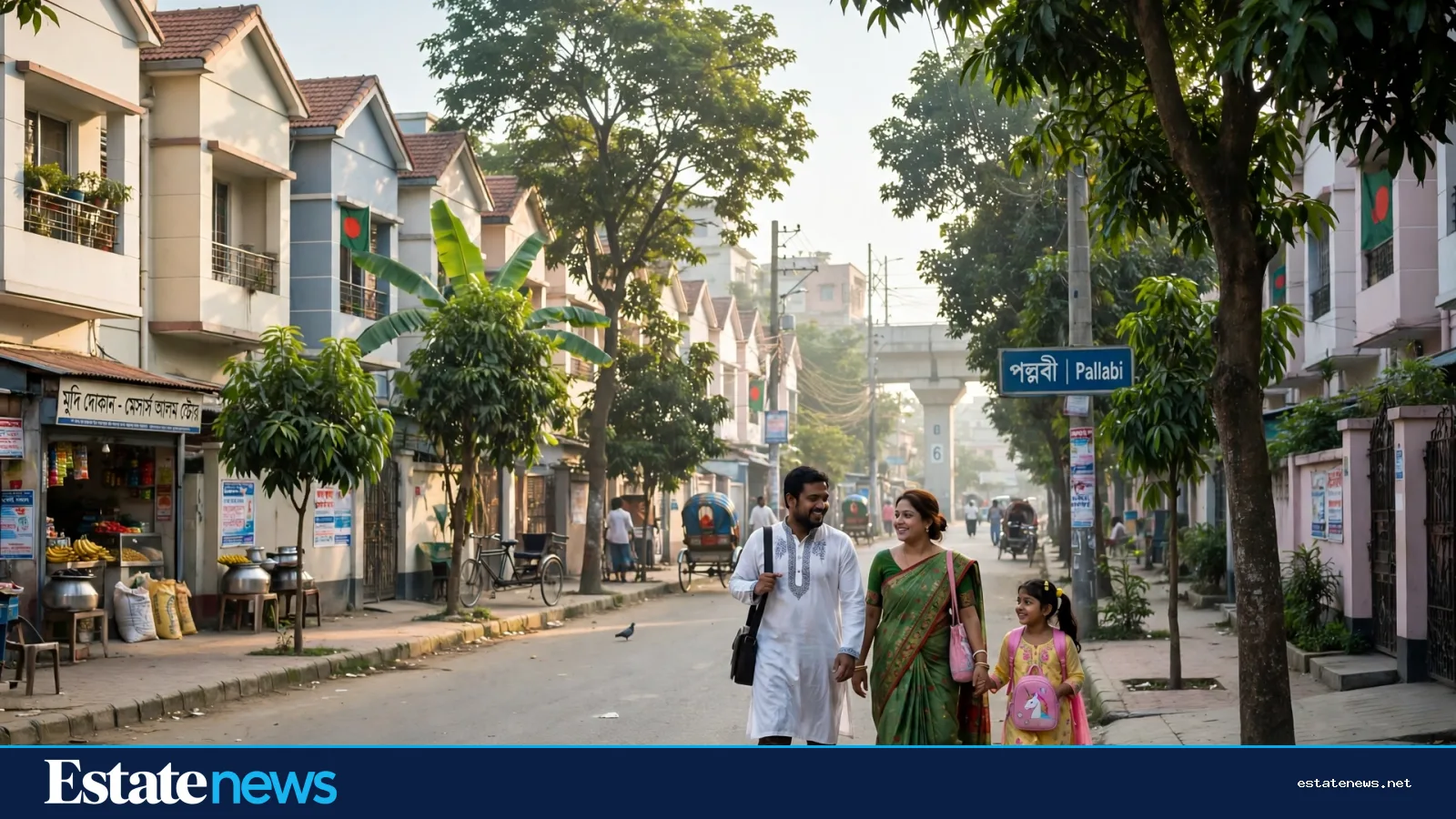
Mirpur did not grow by accident. In the north of the area sits Pallabi, the estate Eastern Housing built as its first major project, one of the earliest attempts at planned housing in Dhaka. Eastern Housing began in 1964, when the city was still learning what a housing company could be, and Pallabi was its answer: laid-out streets, plots of a regular size, houses built in rows rather than wherever a family could find land. Estate News told that story in "Pallabi: The Estate That Taught Dhaka Planned Housing", and the estate still reads that way on the ground. The streets are wider than the lanes of the old city. The houses sit back from the road behind boundary walls. Trees run along the kerb.
Pallabi's streets still show the plan. Walk them on a morning and you see what planned housing gave Mirpur: room to park a car without blocking the street, a pavement a child can walk on, houses that face each other across a road instead of crowding a lane. The estate was built for the middle class of its day, government officers and teachers and small traders, and their children still live in many of those houses. Some have added floors. Some have rebuilt entirely. The plan held even as the city grew around it, and that is rarer in Dhaka than it sounds.
The rest of Mirpur grew faster and messier. Kazipara, Shewrapara, Mirpur-1 and Mirpur-2 filled in with mid-rise buildings, six and eight and ten storeys, built plot by plot. The metro line now runs overhead through the area, with stations at Kazipara, Shewrapara, Mirpur-10, Mirpur-11 and Pallabi. Mirpur is also home to the National Zoo, the Botanical Garden and Mirpur Stadium, three of the city's big public draws, sitting inside a neighbourhood that most of Dhaka still thinks of as ordinary.
What Tk 8,700 buys
A buyer in Mirpur gets more space for the money, and that is the whole calculation. The flats are not small by Dhaka standards. Three bedrooms, a drawing room, a dining space, a kitchen that fits a family: this is the shape of a Mirpur flat, built for a household that eats together and hosts relatives. The buildings are plain. The lobbies are narrow. The lifts, where they exist, are slow. What the buyer is paying for is the room inside, not the address outside, and for many families that trade is an easy one to make.
Who buys here? The pattern is steady rather than flashy. Salaried families moving out of rented flats in the same area. Small traders who have built a business in Mirpur-1 or Mirpur-10 and want to live near it. Families with a member working abroad, sending money home for a flat the whole family can live in. The remittance flow that shapes so much of Bangladeshi housing runs through Mirpur too, though the district map shows the money landing hardest in Dhaka district itself, which took 36.5 percent of July to October remittance, and in Chattogram, Cumilla and Sylhet after it. Mirpur's buyers are more often people who already live and work in Dhaka, saving a deposit over years rather than receiving one in a single transfer.


The price gap has a reason, and it is not a secret. Mirpur is far from the commercial heart of the city, its roads are crowded, and its water and drainage struggle in the monsoon like everywhere else in Dhaka. The buildings are older on average than the towers of Gulshan. A buyer who wants a flat as an investment to show off will look elsewhere. A buyer who wants a flat to live in will look here first.
The wage-board household
One number from this week sets the budget for a large part of Mirpur's population. The wage board has fixed Tk 17,000 as the garment minimum, up from Tk 12,500, though the proposal still awaits Labour Ministry approval and takes effect on 1 December, paid with January 2027 salaries. Estate News set out the grades in full in "Tk 17,000: The Wage Board Sets the Garment Minimum, Up 36 Percent". For a factory worker's household, Tk 17,000 is the wage, not the household income: two earners, a small shop on the side, a relative's remittance, and the total stretches further. But even a household earning twice that wage does not buy a flat at Gulshan prices. It rents in Mirpur, in a room or a small flat shared with relatives, and it saves toward a deposit in the same area.
That is the link between the wage decision and the housing market that rarely gets drawn. The workers who make the garments live in and around Mirpur, in rented rooms and mess housing, and their landlords are often the same families who bought Mirpur flats a generation ago. A higher wage means a household can pay a little more rent, or save a little faster, or move from a shared room to a flat of its own. It does not mean the same household can suddenly afford Dhanmondi. The demand it creates lands in Mirpur first, in the cheapest flats in the city.
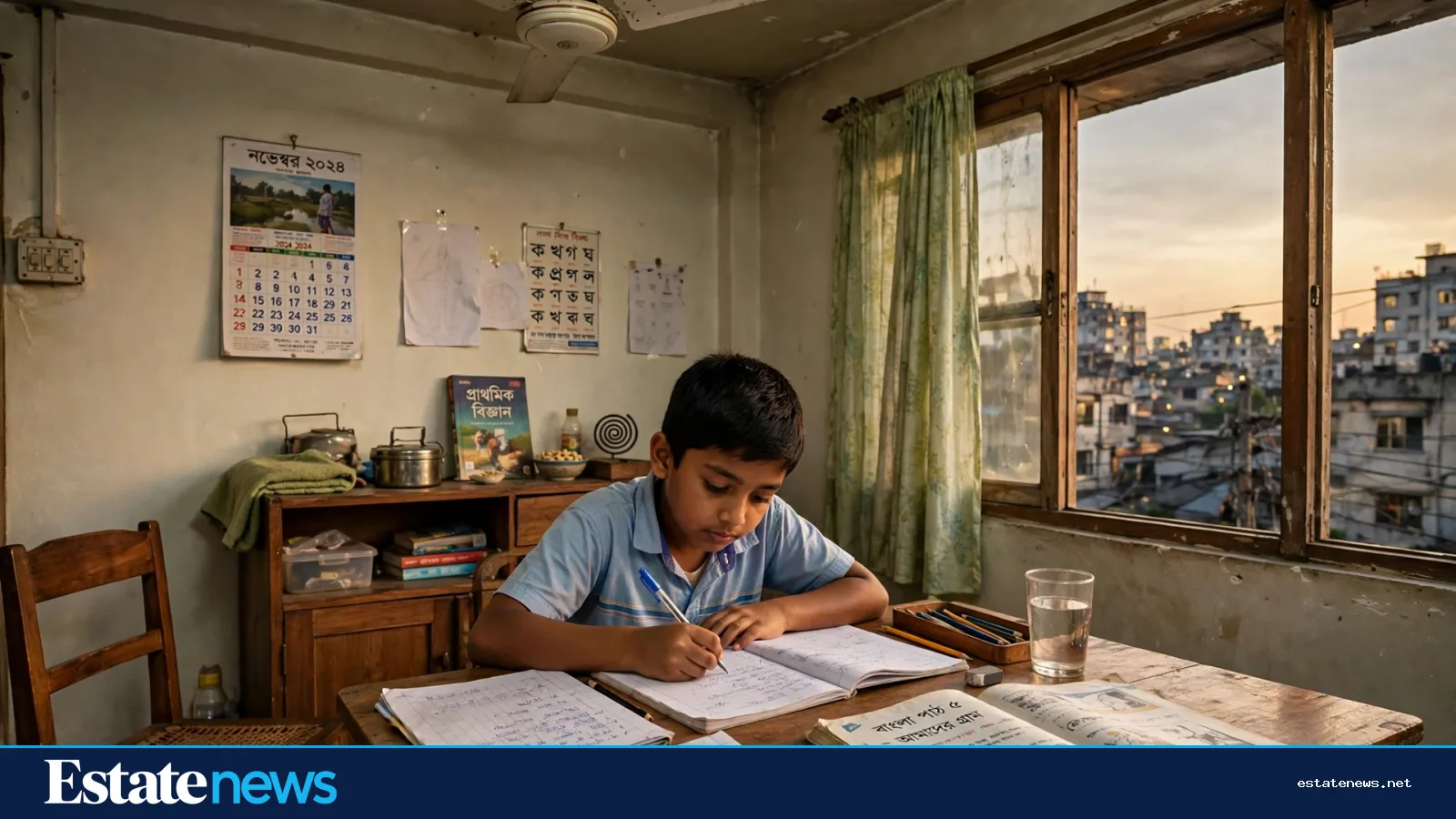
Inside a Mirpur flat, the money goes further than the price suggests. A ceiling fan turns above a wooden sofa, a child does homework at a table by the window, and the family eats together in the drawing room. The rooftop, shared with the other flats in the building, is where the family sits when the heat breaks. None of this is luxury. All of it is a home, bought at a price a salaried family could actually reach.
What a buyer should check
Cheap is not the same as safe, and Mirpur has its share of buildings a buyer should walk away from. The checks are the same ones Estate News repeats for every flat purchase. Read the deed and the chain of title before paying anything, and check the mutation in the seller's name. Ask for the RAJUK approval and see whether the building as built matches the building as approved. Look at the lift, the generator, the water supply and the gas line, and ask who maintains them and what the monthly service charge covers. Visit in the monsoon if you can, or ask the neighbours about waterlogging on the street. The area-by-area picture for the whole city is in "Flat Price in Dhaka: What November's Asking Prices Say, Area by Area", and the registration cost that follows any purchase is set out in "Flat Registration Cost in Bangladesh: A Buyer's Guide for 2026".
The age of a building matters more in Mirpur than in a new tower. Many of the area's blocks went up before the current building rules, and some were built in stages by owners rather than by companies. A buyer should ask when the building was built, who built it, and what work has been done since. A flat on the top floor under a flat roof will be hot in summer. A flat on the ground floor near a drain will be damp in the rains. Mirpur will not stay the cheapest part of Dhaka forever. The metro already runs through it, and every station changes the streets around it a little. But the thing that made Mirpur cheap, its distance from the centre and its plainness, will not vanish in a year. The flats will keep asking less than half of Gulshan's price, and the families who buy them will keep being the ones who need a home rather than an address. That is the market doing what it is supposed to do, putting a roof over the people who keep the city running.