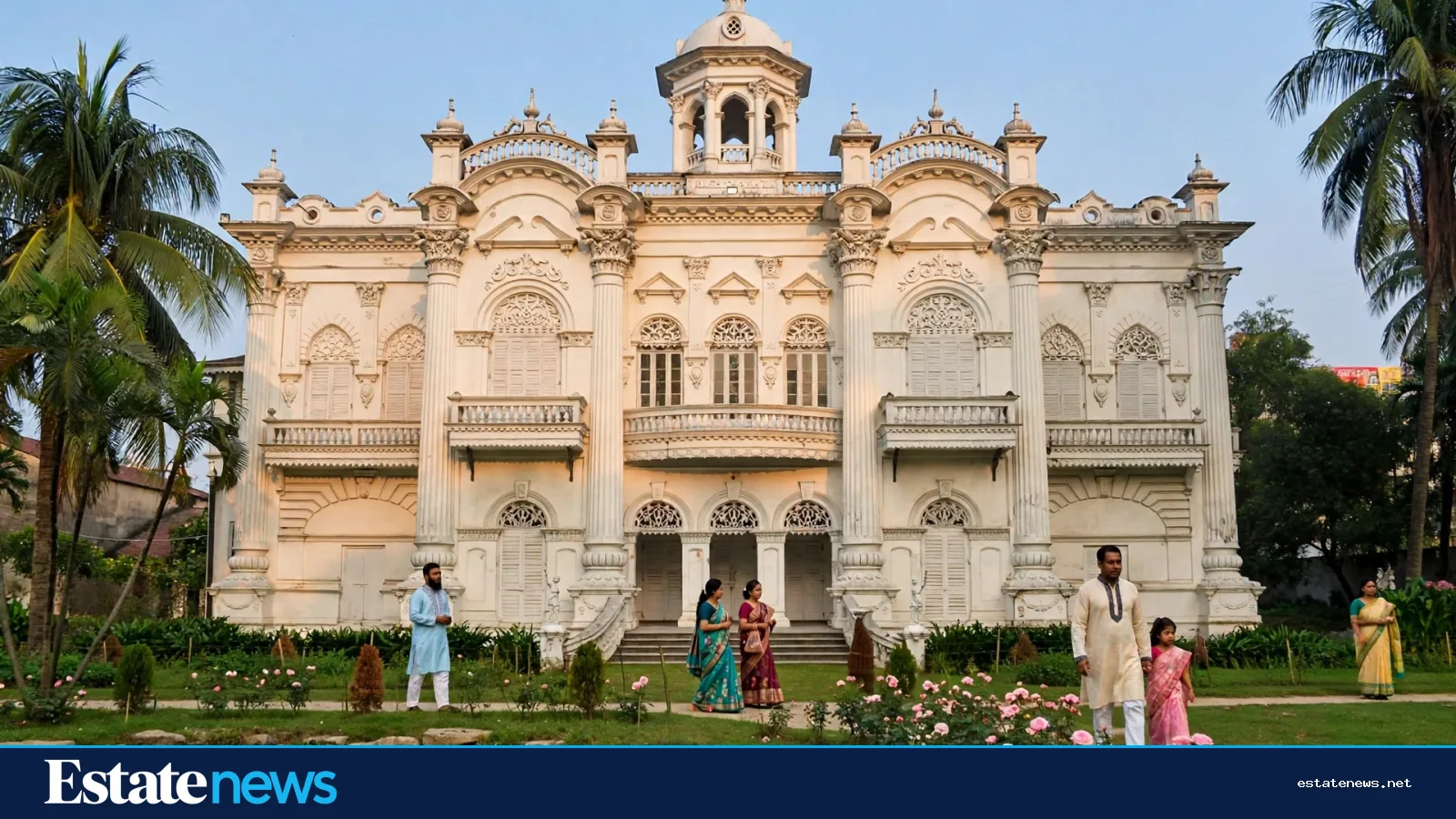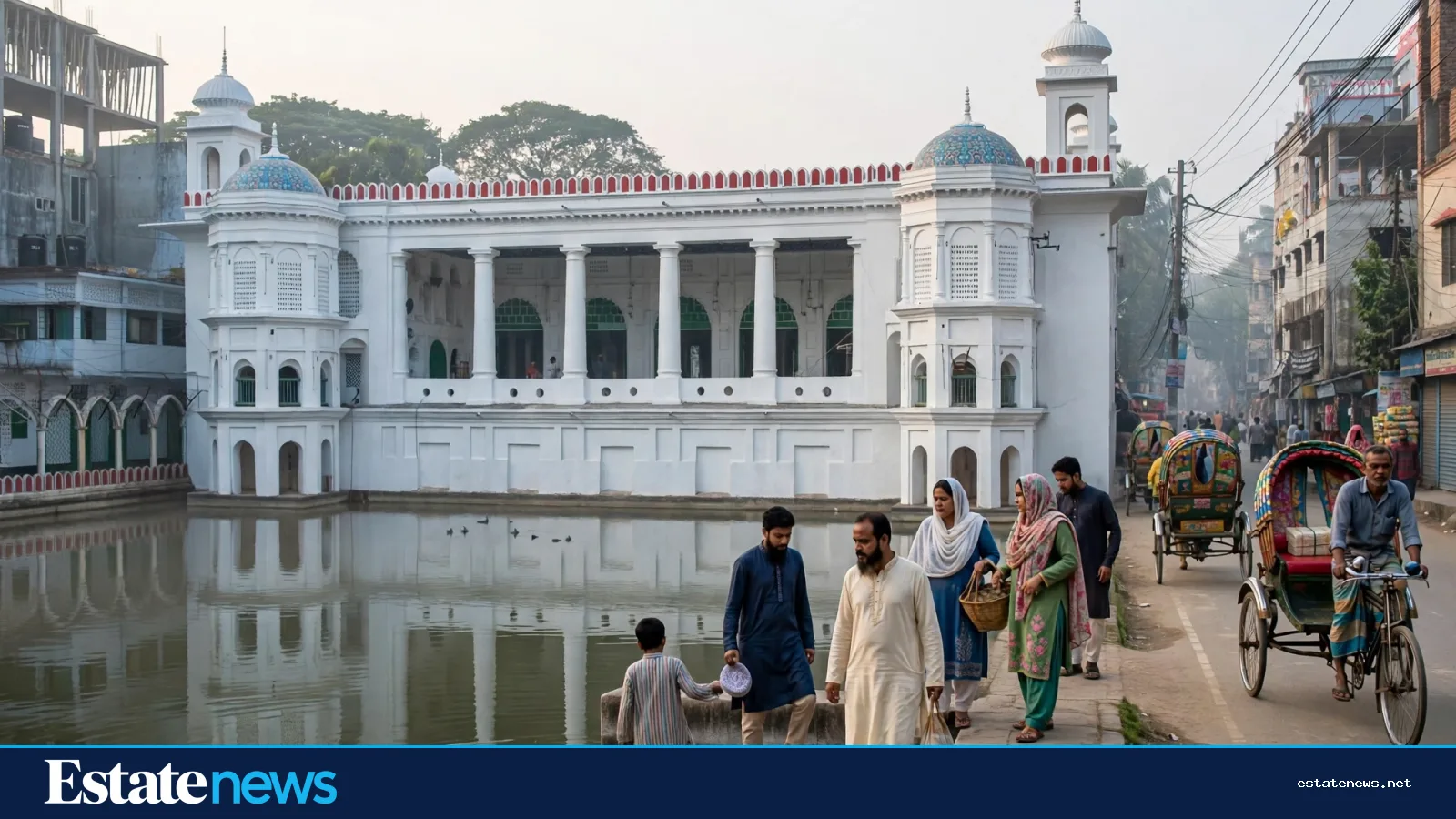
On Nazimuddin Road in Old Dhaka, between the shops of Bakhshibazar and the lanes that run down toward Lalbagh, a white building stands behind a wall with a pond in front of it. Rickshaws rattle past on the road. Vendors call out from their stalls. Inside the gate, the noise drops away. Hussaini Dalan has stood on this ground since 1642, and for 384 years it has been the place where Dhaka gathers to mourn.
The building is an imambara, a house of mourning, and it is the main Hussainiya of Dhaka. It was built to remember the martyrdom of Imam Hussain, the grandson of the Prophet Muhammad, killed at Karbala in 680. For the Shia community of the city, and for many others who come to its gates, it is the centre of Muharram. For Old Dhaka, it is something more: one of the oldest buildings still in daily use, and a piece of the Mughal city that never left.
A dream, a prince and a house of mourning

The story of how the building began is told as tradition, not as a settled fact. Mir Murad, a Shia dervish who supervised the navy under the Mughal prince Shah Shuja, is said to have dreamt that Imam Hussain asked him to build a house of mourning. According to the tradition, he set about the work the next morning. The building went up in 1642, during Shah Shuja's time as subedar of Bengal. Shah Shuja was a Sunni prince, the son of the emperor Shah Jahan, but he gave his backing to Shia institutions too, and the imambara rose with his support.
The date is not the whole story. The building that stands today is not the one Mir Murad raised. The East India Company repaired it in 1807 and again in 1810. Naib Nazim Nusrat Jung rebuilt it to its present form in 1823. After the great earthquake of 1897, Nawab Sir Khwaja Ahsanullah rebuilt the flat roof and added a verandah on the southern side. A restoration in 2011, carried out with support from Iran, refreshed the tilework and decoration inside. Each generation has put its hand to the same walls, and the building carries all of them: Mughal in its origin, colonial in its repairs, and modern in its care.
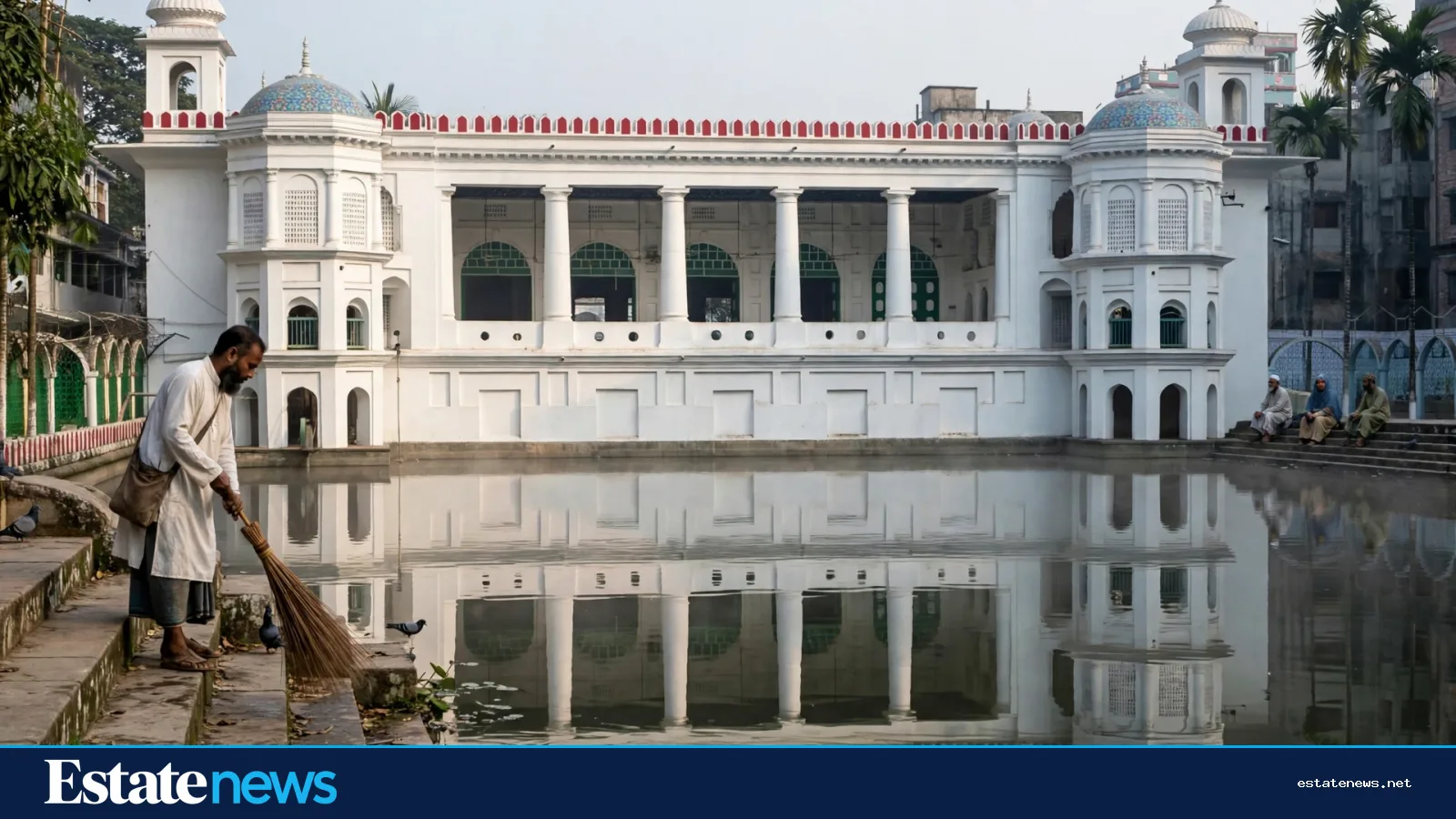
The pond is the first thing a visitor meets. It lies at the entrance, a wide sheet of water that mirrors the white facade on a still morning. The main building sits on about 0.65 bigha of land, roughly 9,380 square feet, and the pond gives it the space to breathe that the crowded lanes around it do not. Inside, the halls hold the Persian wall decorations in blue and white, and paintings of the events of Karbala. The graves of the last four Naib Nazims lie in the premises: Nasrat Jung, who died in 1822, Shamsuddaulah in 1831, Kamaruddaulah in 1834, and Gazi Uddin in 1843. The building is a place of mourning, and it is also a burial ground for the men who once governed Dhaka from it.


Ten days that belong to the whole city
During the first ten days of Muharram, Hussaini Dalan becomes the centre of mourning and religious gathering in Old Dhaka. Majlis gatherings fill the halls. Candles burn on the steps. Children carry them up to the entrance, and the graves inside are covered with flower garlands. On the tenth day, Ashura, the tazia procession starts from here and moves out into the streets of the old city. It is the largest Muharram gathering in Dhaka, and it has been held on these premises, in one form or another, since the building was raised.
The procession belongs to the Shia community, but the crowd that watches it does not. Sunni residents of Old Dhaka stand along the route. Shopkeepers close their shutters and come out to watch. The building is often mistaken for a mosque by visitors, and the people who care for it are quick to correct that: it is an imambara, a house of mourning, and the community prays here because there is no Shia mosque nearby, not because the building was made for prayer. That distinction matters to the people who keep it. It tells you what the building is for.
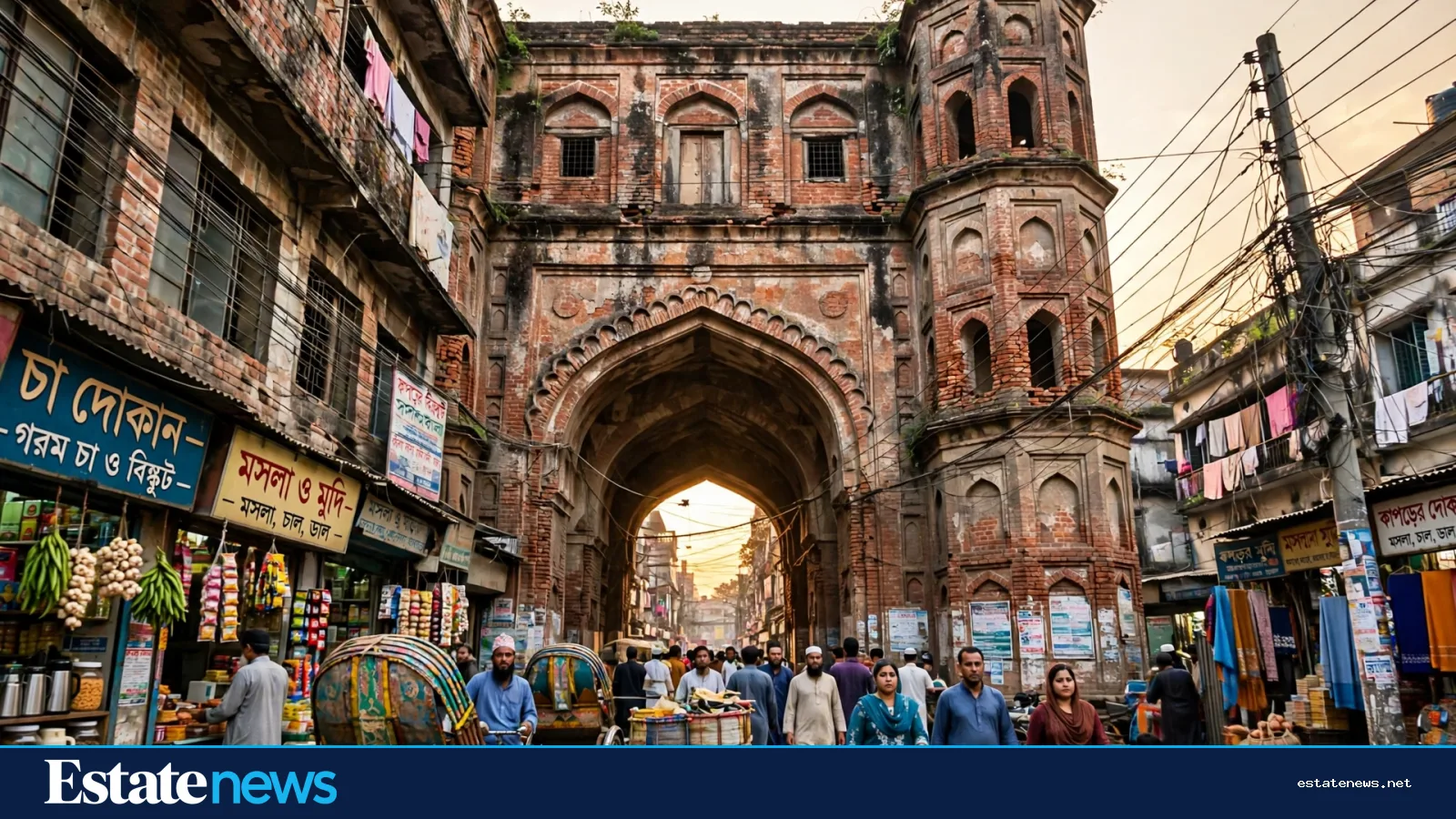
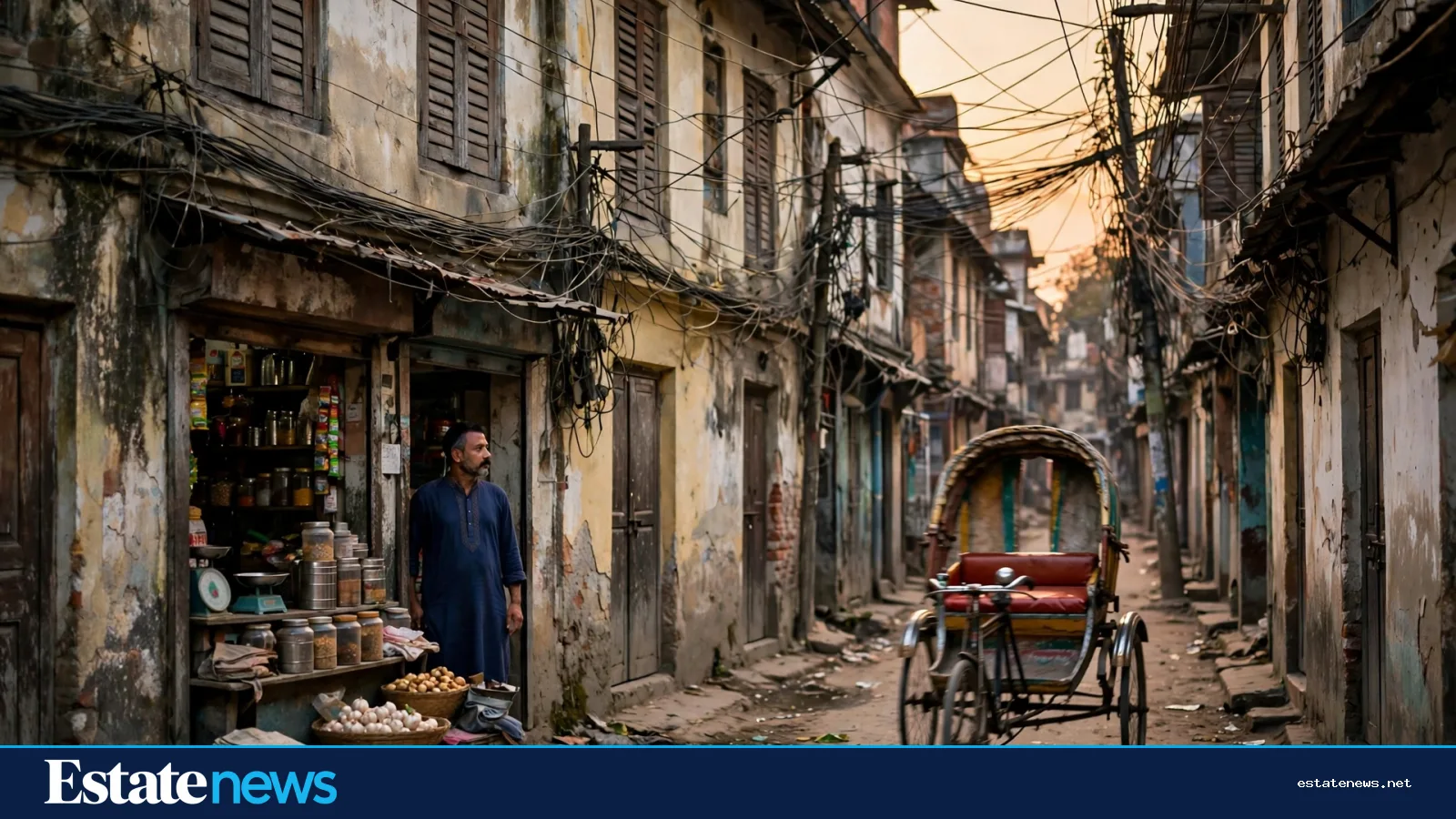
Step outside the gate and Bakhshibazar takes over again. The lanes are narrow and the buildings are old, with wooden shutters and faded plaster, and the rickshaws move slowly through the crowd. Hussaini Dalan sits in the middle of it all without trying to compete. It has no tower and no dome to catch the eye from a distance. Its power is quieter: it is the building that has been there the longest, and the one the city returns to when it needs to remember.
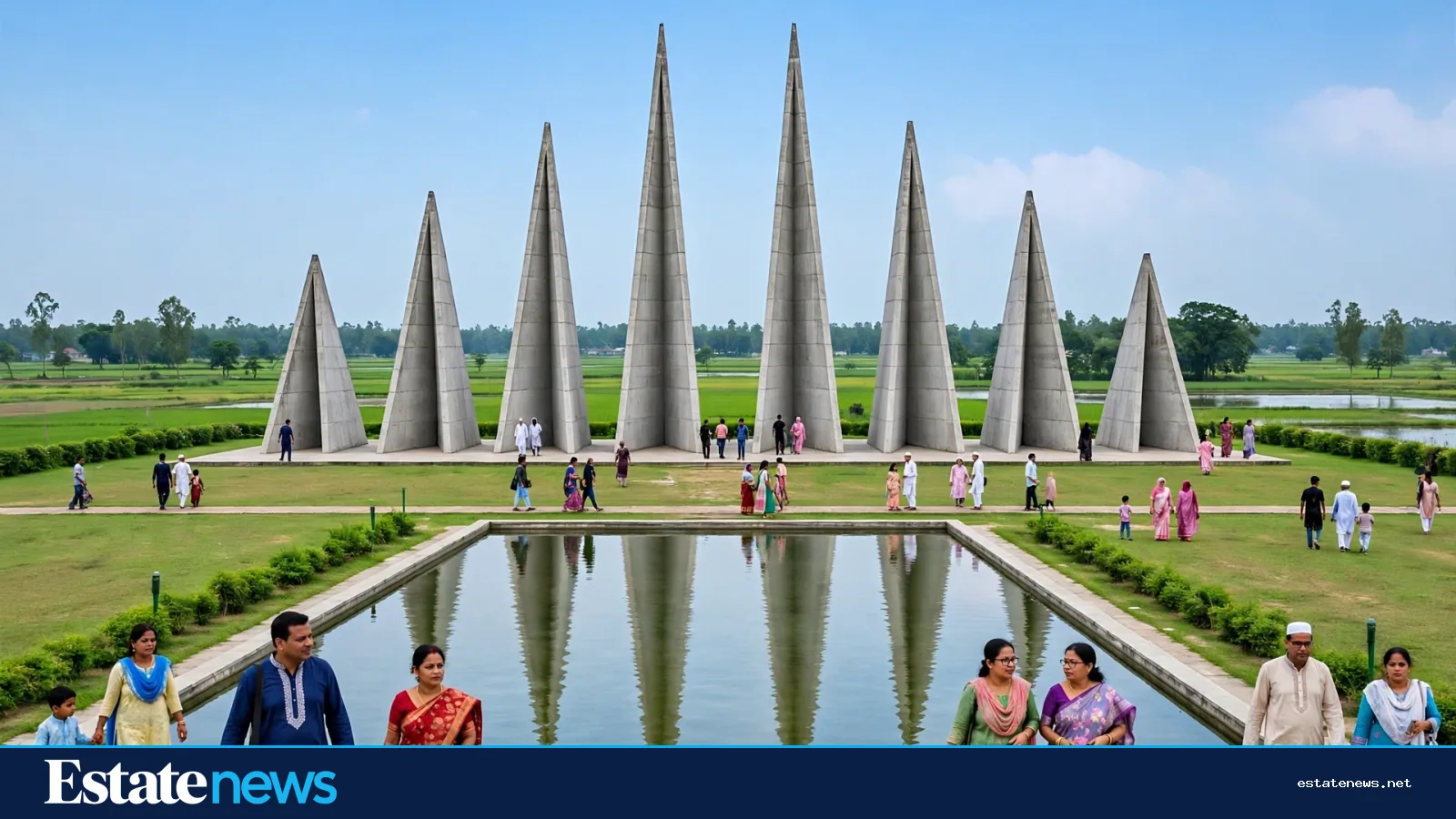
Old Dhaka keeps its history in buildings like this one, and the story of the city's old neighbourhoods continues in "Wari and Rankin Street: Old Dhaka's Quiet Neighbourhood, Still Standing". The Mughal inn that once gave travellers free rooms is told in "Bara Katra: The Mughal Inn That Gave Old Dhaka Free Rooms for Travellers", and the memorial at Savar in "Seven Walls for Seven Struggles: The National Martyrs' Memorial at Savar". Hussaini Dalan will still be standing when the next Muharram comes around, as it has been for 384 years. The pond will still mirror the white facade in the morning. The procession will still start at its gate. That is the building's whole argument: some places do not need to change to stay important. They only need to be kept.