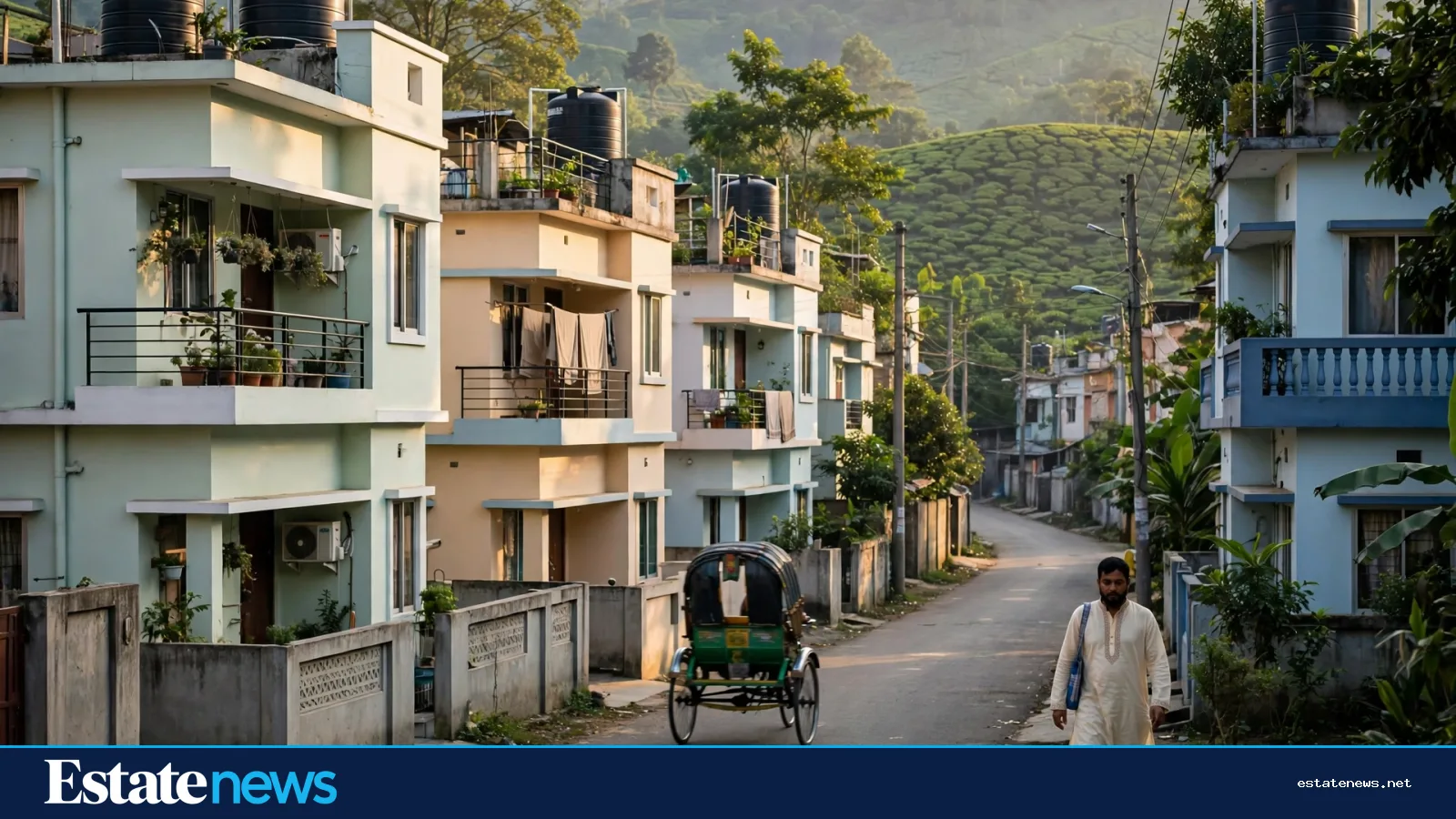
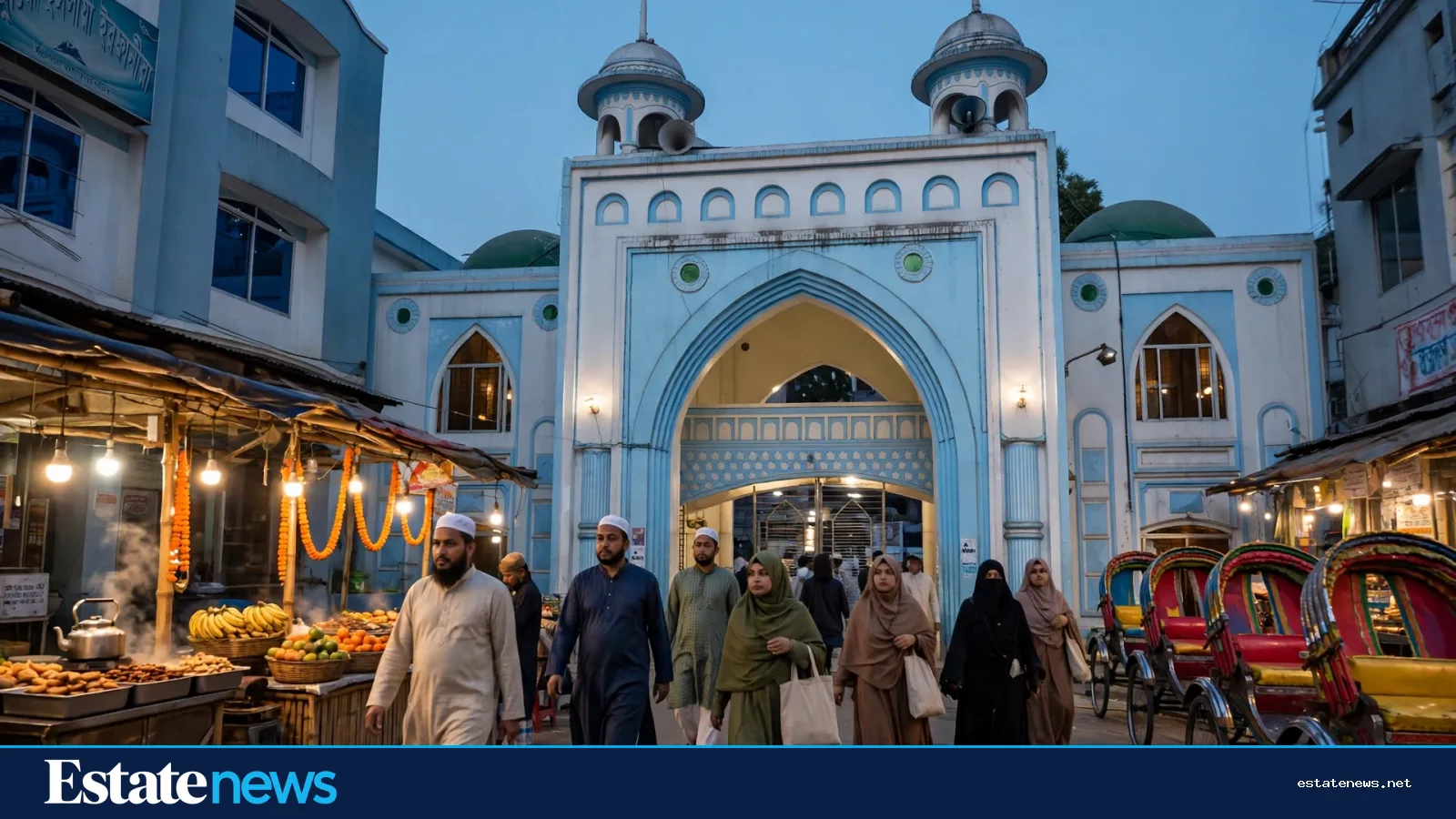
Dusk settles over Dargah Gate and the street fills with people who have come for the evening. Shopkeepers switch on their lights one by one. Rickshaws queue at the corner. Pilgrims walk up the steps toward the shrine on the hill, past stalls selling flowers and sweets, while the call to prayer drifts down from the mosques in the compound. A few streets away, in the quieter lanes, the houses stand behind high walls with their gates shut: three and four storeys of painted concrete, balconies with potted plants, rooftop tanks catching the last light. Many of them were built with money earned far from Sylhet, in London and Birmingham and Manchester, and sent home a little at a time over years.
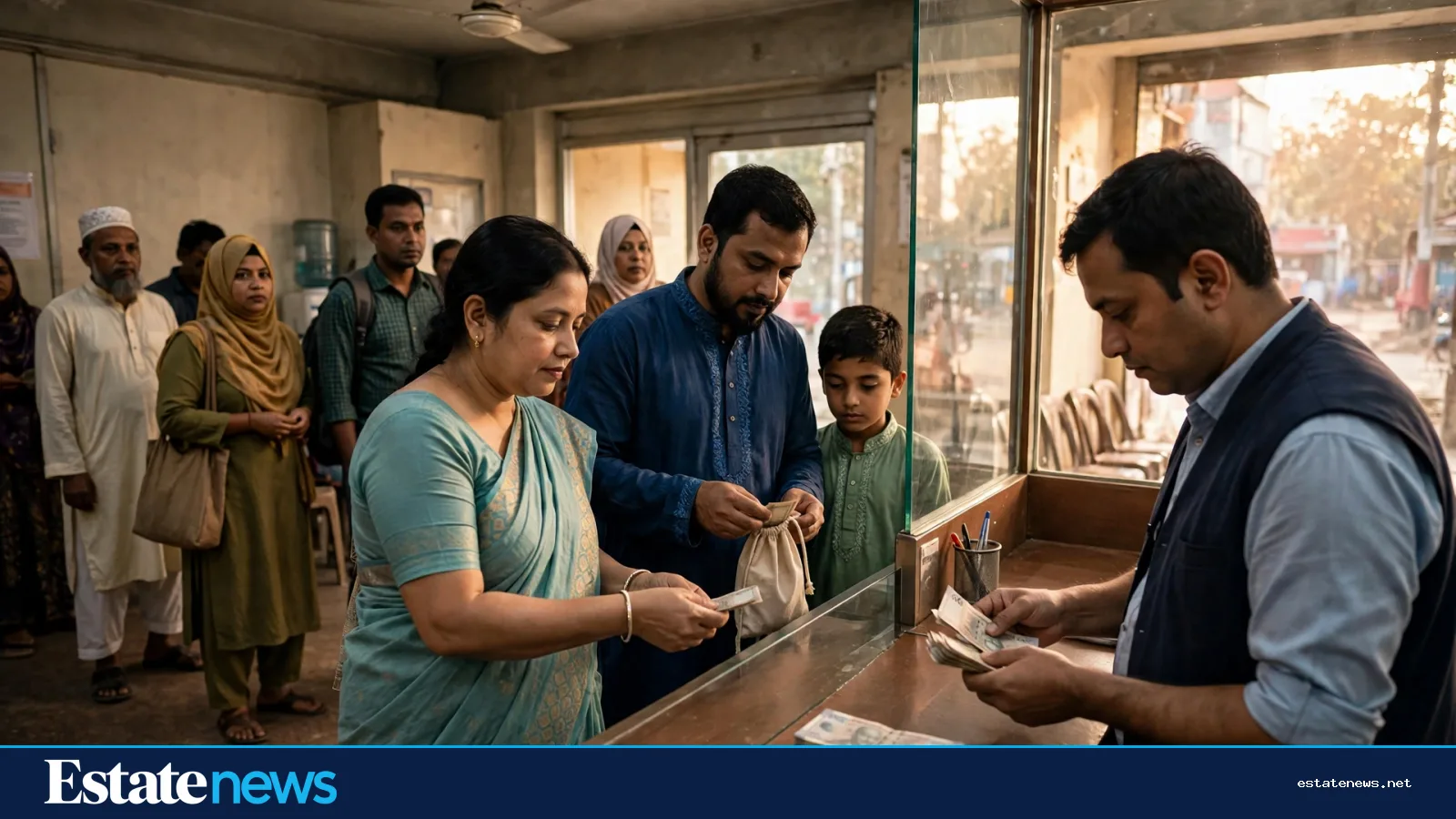
Sylhet is the city that remittance built. No plan drew it this way and no single developer made it. The money that arrived from abroad, month after month, became walls and roofs and staircases, and those buildings became the city. Bangladesh Bank data shows the flow is still rising: remittance reached $2.357 billion in the first 22 days of November, up 10.4 percent on the same period last year, and $13.822 billion has arrived so far this financial year, up 12.5 percent on $12.284 billion a year earlier. Sylhet takes a large part of that story personally. This is the heartland of the Bangladeshi community in Britain, and the houses its migrants build are the most visible thing the money buys.
A saint, a river and a road out

Sylhet's story starts long before the first remittance. The Sufi saint Shah Jalal reached the town in 1303 with 360 companions, settled on the hillock that still carries his shrine, and died in 1347. The traveller Ibn Battuta came to meet him in 1345 or 1346. The shrine on Dargah Tila, rebuilt and added to over the centuries, with its great dome mosque of 1677, is now the most visited shrine in Bangladesh. The city grew around it, and around the Surma river that runs past it, carrying tea and timber and traders.
Tea came later and changed the shape of the place. Gardens spread across the hills around the city, and Sylhet became a name people outside Bangladesh recognised. The gardens are still there, green and stepped, at the edge of the newer neighbourhoods. Then came the road out. From the middle of the last century, Sylhetis left in large numbers for Britain, first as seamen and mill workers, then as restaurant and shop owners, then as families settled for good. They kept their ties to the town. They sent money home. They came back for weddings and for the winter. And they built.
The houses the money builds
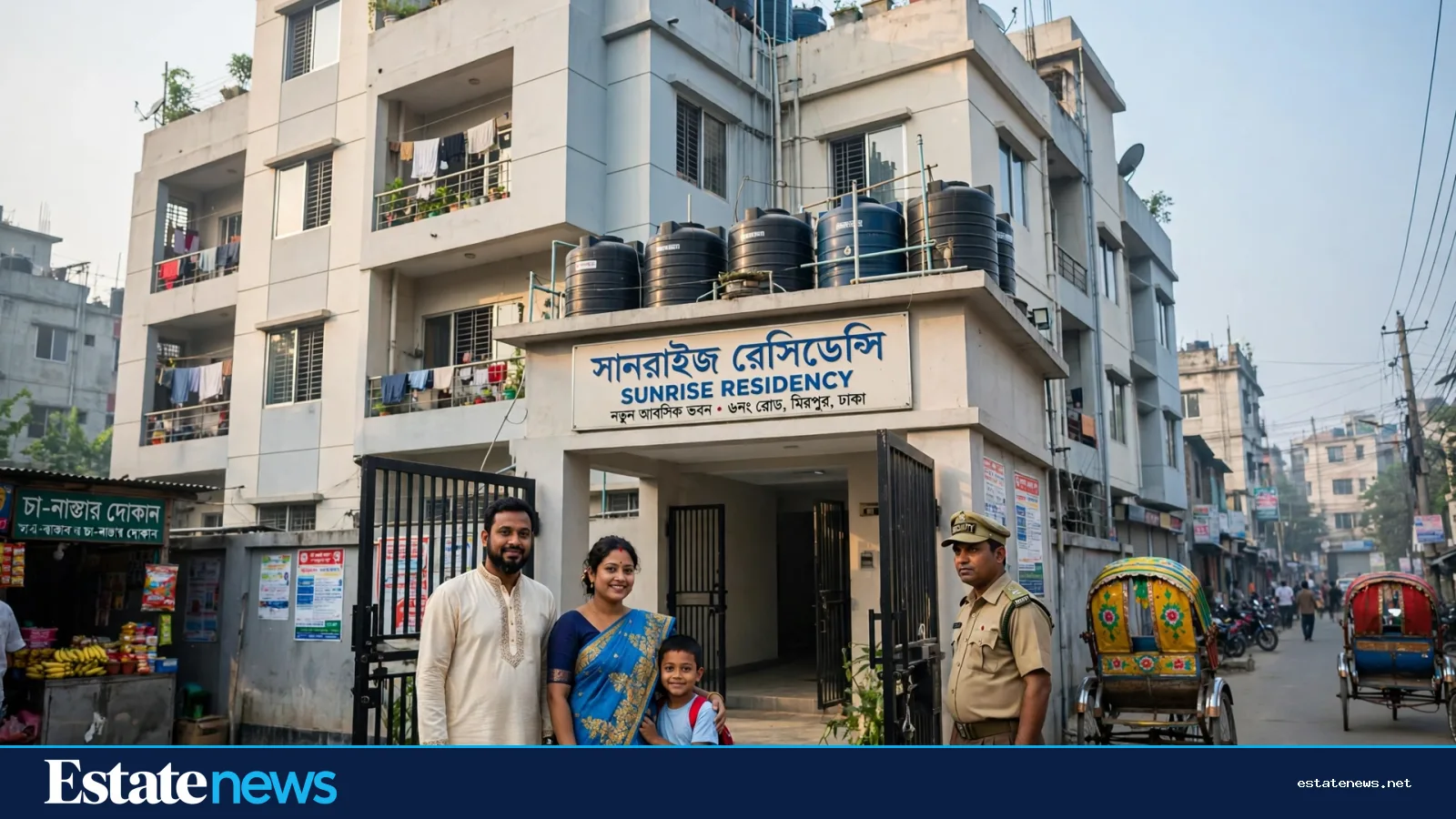
Walk through a Sylhet neighbourhood built in the last twenty years and the pattern is easy to read. The houses are bigger than the old ones, taller, and built to last. Three or four storeys where one stood before. A boundary wall and a steel gate. Tiles on the floor instead of cement. A separate kitchen, a bathroom on each floor, a rooftop where the family can sit in the evening. The ground floor often stays half empty, waiting for the next phase of the family's plan: a shop, a relative's flat, a room for a married son.
The money arrives in stages and the building follows the same rhythm. A plot is bought first, sometimes years before anything is built on it. Then a boundary wall goes up. Then the ground floor. Then, when the next round of savings allows it, another floor. This is how a city gets built without mortgages and without developers: one family's savings, one floor at a time, over a decade. It is slow, and it is why so many Sylhet houses look finished and unfinished at once. The top floor waits for the next remittance the way a field waits for rain.
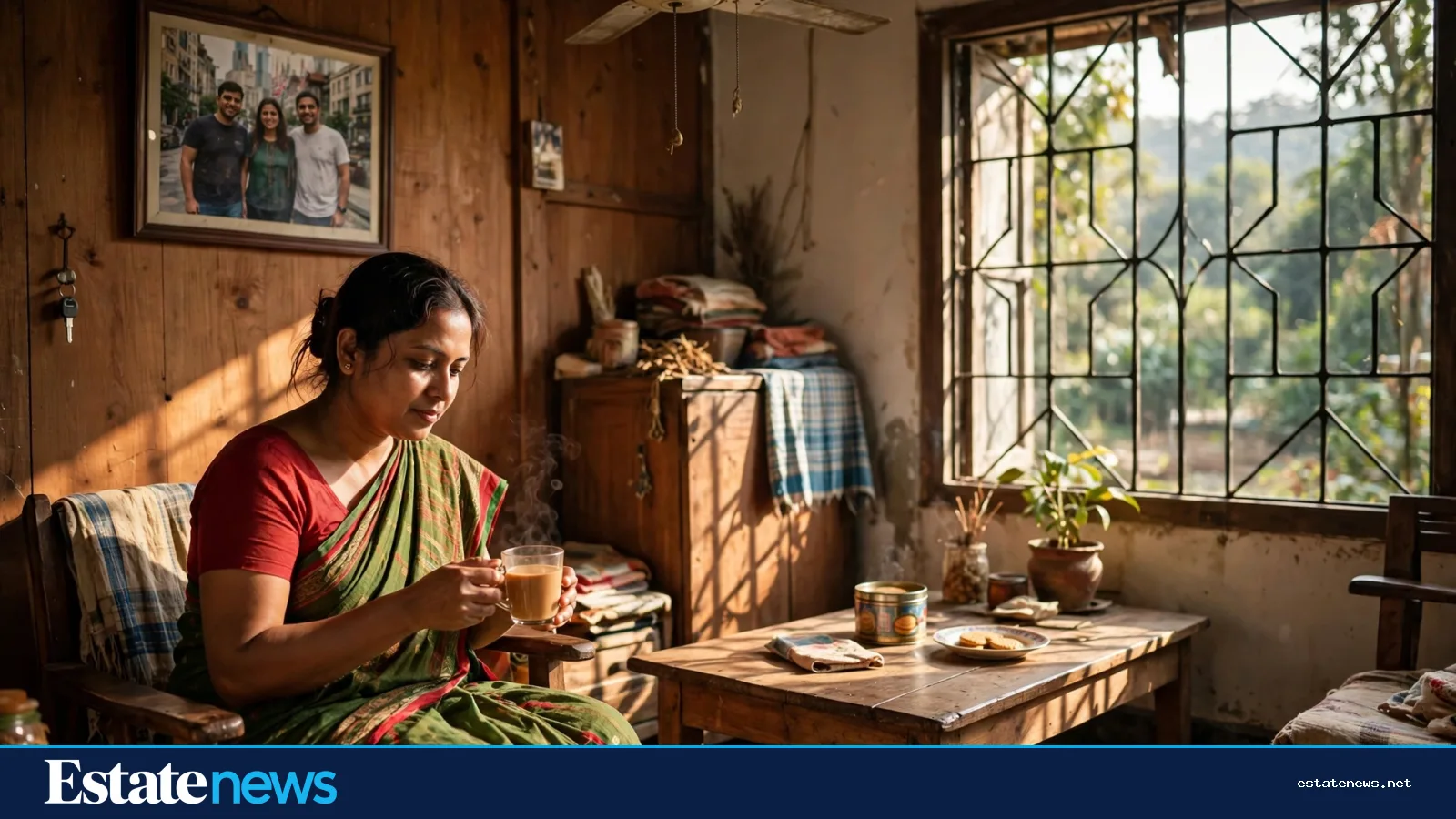
Inside one of those houses, the money shows up in the details. A ceiling fan turns above a wooden sofa. A framed photograph hangs on the wall: relatives in London, standing outside a house in a street the family in Sylhet has never seen. The television is large. The kitchen has a gas stove and a fridge. The rooms are cool in the afternoon because the walls are thick and the windows are small. Nothing in the house is showy. It is built to be lived in by a family that might be split between two countries, with some members abroad and some at home, and the house has to hold them all when they come back together.


What the market looks like now
The houses have changed what Sylhet's property market is. A flat in the city is no longer only a home for a local family. It is also a purchase made from abroad, for a parent who lives in Sylhet, or for a return that may come years from now. That changes the questions a buyer asks. A family buying from London cannot walk the plot every week, so the papers matter more than the brochure. The deed, the chain of title, the mutation in the seller's name, the khajna receipts: these are the things that decide whether a purchase made from five thousand miles away is safe. Estate News explained the documents that matter in "How to Verify a Land Title in Bangladesh: The Documents That Matter", and the registration cost that follows a purchase in "Flat Registration Cost in Bangladesh: A Buyer's Guide for 2026".
The same money that builds houses also sets the city's prices, though no public figure states what a Sylhet house costs, and this piece states none. What can be said is that the demand is steady because the source of it is steady: the monthly flow of remittance, $2.86 billion in July, $2.97 billion in August, $2.77 billion in September and $2.87 billion in October, according to Bangladesh Bank data, keeps arriving. A market fed by wages earned abroad does not rise and fall with one season in Sylhet. It rises and falls with jobs and pay in London, and with the exchange rate that turns a pound into taka.
Walk down to Dargah Gate as the light goes, and the other Sylhet comes into view. The shrine draws crowds on Thursday evenings and at the annual Urs, and the streets around it fill with visitors from across the country. The hotels and shops near the gate live off that flow. Osmani International Airport, a short drive from the city, carries the other flow: the families arriving for the winter, the students leaving for the autumn term, the suitcases full of gifts. The two streams meet in the city every year, and the houses absorb them both.
A city still building itself
Sylhet's next chapter is being written in the same way as the last one: with money sent home and decisions made by families. The city needs what every growing Bangladeshi city needs, and the list is familiar: wider roads, reliable water, drains that work in the monsoon, and paperwork that a buyer from abroad can trust without flying home to check it. The houses will keep going up whether or not those things arrive, because the remittance keeps arriving. The question is whether the city around them keeps up.
The evening crowd at the shrine thins out as the shops close. The streets of new houses go quiet behind their gates, and the tea gardens sit dark beyond the last streetlight. Somewhere in London, a Sylheti family is working a shift that will pay for the next floor of a house in a lane they have not walked in years. That is how Sylhet was built, one transfer at a time, and it is how it will keep being built. Estate News told the story of the money that flows into Dhaka flats in "প্রবাসের টাকায় ঢাকার ফ্ল্যাট: চাহিদার হিসাব", and the state of the country's markets in "Bangladesh Market Wrap, 24 November: Wages, the Terminal and a Market That Paused". For the flat market in the capital itself, the area-by-area picture is in "Flat Price in Dhaka: What a Flat Costs Area by Area in 2026". Sylhet's version of that story is written in concrete, on hills that once grew only tea.