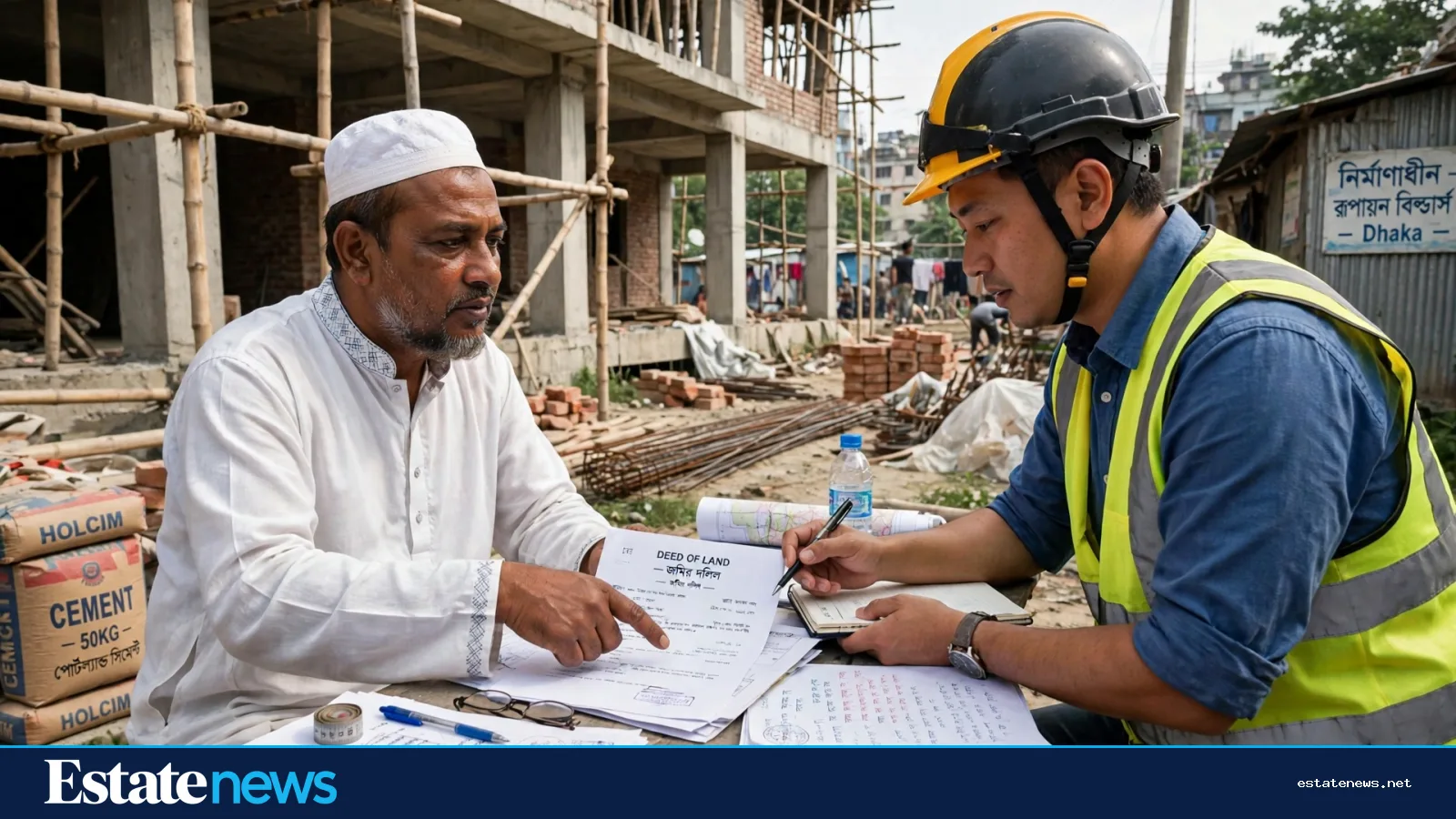
The booking money is paid, the allotment letter is in hand, and the sales office slides a thick agreement across the desk. Most buyers sign it the same day. That is the moment when a flat purchase is won or lost, because the agreement is the paper that decides what happens when the flat is late, when it is smaller than the brochure said, or when the price quietly grows. A lawyer who has seen flat disputes in Dhaka will tell you the same thing: read the agreement line by line, and have your own lawyer read it too. Here are five clauses to read twice.
A handover date that is not a date
The first thing to look for is the handover date, and whether it is written as a real date or as a hope. A sound agreement names a month and a year, and says what happens if the developer misses it. A weak one says the flat will be handed over "as soon as possible", or ties the date to a construction stage that the buyer cannot check. Ask for a fixed date in writing, and ask what the agreement says about delay. Under the Real Estate (Development and Management) Act 2010, a developer must hand over and register the flat within three months of full payment, but the agreement is where that duty becomes a date you can point to. If the paper has no date at all, do not sign it.

No price for being late
A handover date without a consequence is only a wish. Look for the clause that says what the developer pays, or what the buyer can claim, if the flat is late. Many agreements written by developers say nothing at all about delay, or say the buyer must keep paying instalments while the building waits. Ask for the delay term in writing before you sign, and ask what it covers: the months of rent you pay while you wait, the interest on the loan you are already servicing, or a fixed sum per month. No standard penalty rate is fixed by law, so whatever the agreement says is what you get. If it says nothing, you get nothing.
A payment schedule that floats free of the building


The payment schedule should follow the building, not the calendar alone. A sound schedule ties each instalment to a construction stage: foundation, each floor, roof, finishing. A weak one asks for large payments early, before the work is visible, or asks for the next instalment on a date regardless of what has been built. Before you sign, walk the site and compare what stands there with what the schedule says you have already paid for. Keep every receipt, and pay through a bank so there is a record. A schedule that runs ahead of the building is the oldest warning sign in Dhaka flat buying.
No mention of the RAJUK approval
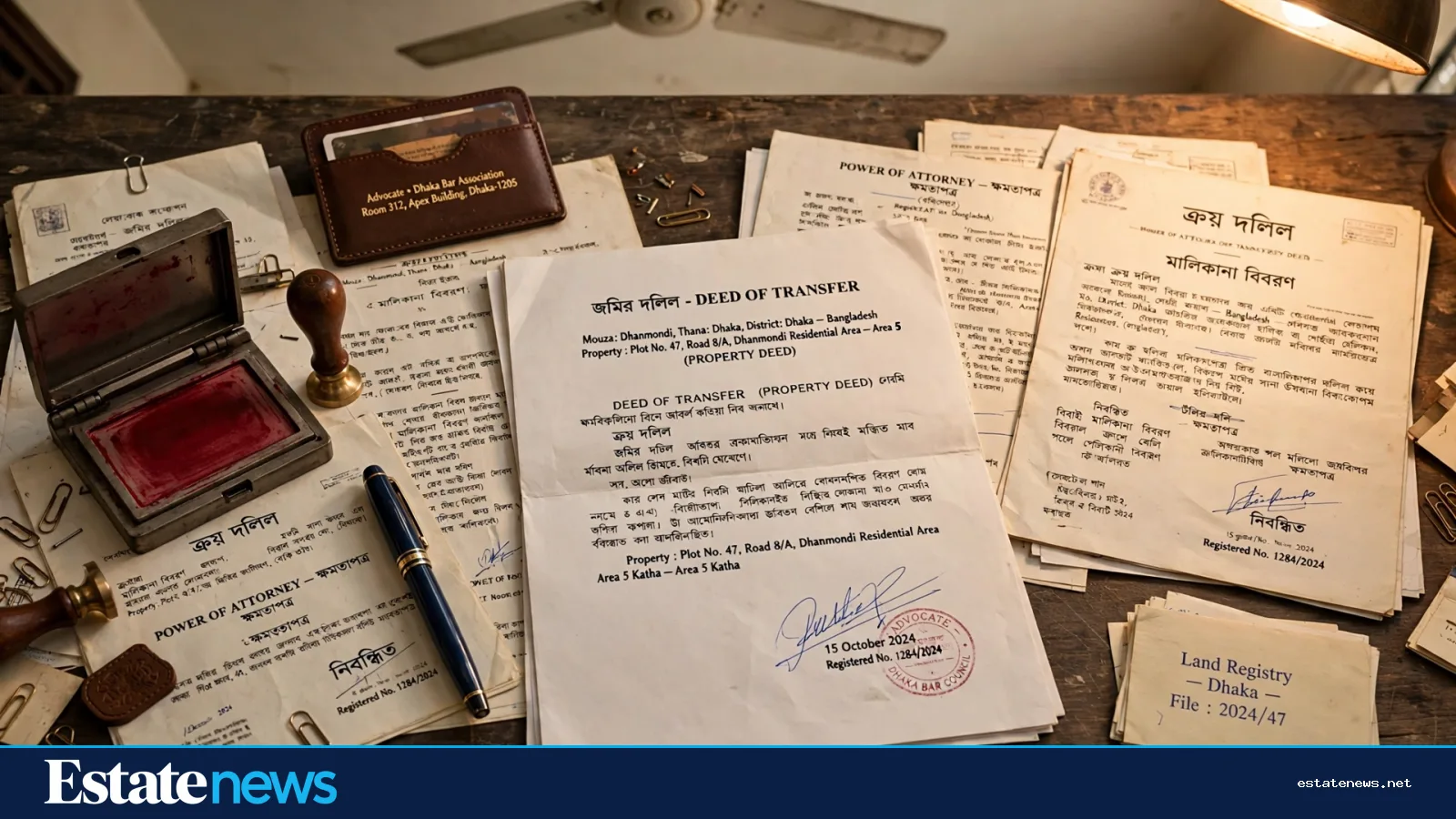
The agreement should refer to the approved building plan, and the flat you are buying should sit inside it. Ask to see the RAJUK approval and the approved plan, and check that the number of floors and the number of flats match what is being sold. Then check that the agreement mentions that approval. If the paper is silent about approvals, or if the developer will not show the approved plan, stop. The land behind the flat matters just as much: ask for the landowner's title deed, the khatians, the mutation, and the registered power of attorney that lets the developer sell the flat. Estate News explained the documents that matter in "How to Verify a Land Title in Bangladesh: The Documents That Matter", and the checks on the developer itself in "Before You Book a Flat, Check the Developer: Five Verifications That Matter".
A cancellation clause that only works one way
Read the cancellation clause as if you were the person cancelling, because one day you might be. Many agreements let the developer cancel easily and keep a large part of what you paid, while giving the buyer almost no way out if the project stalls. Look for three things: how much of your money comes back if you cancel, how much comes back if the developer cancels, and how long the refund takes. A fair agreement treats both sides the same way. A one-sided one does not, and the time to find that out is before the booking money is paid, not after.
None of this is a reason to fear buying a flat. Thousands of families in Dhaka buy from developers every year and move into homes they are happy with. The agreement is simply where a good purchase is protected, and a bad one is made. Take the paper home. Read it slowly. Show it to a lawyer who works for you, not for the developer. And check the registration cost that follows a purchase in "Flat Registration Cost in Bangladesh: A Buyer's Guide for 2026", and what a power of attorney can and cannot do in "Power of Attorney in Property Deals: What It Can and Cannot Do". A flat is the biggest purchase most families ever make. The agreement deserves an evening of your time.