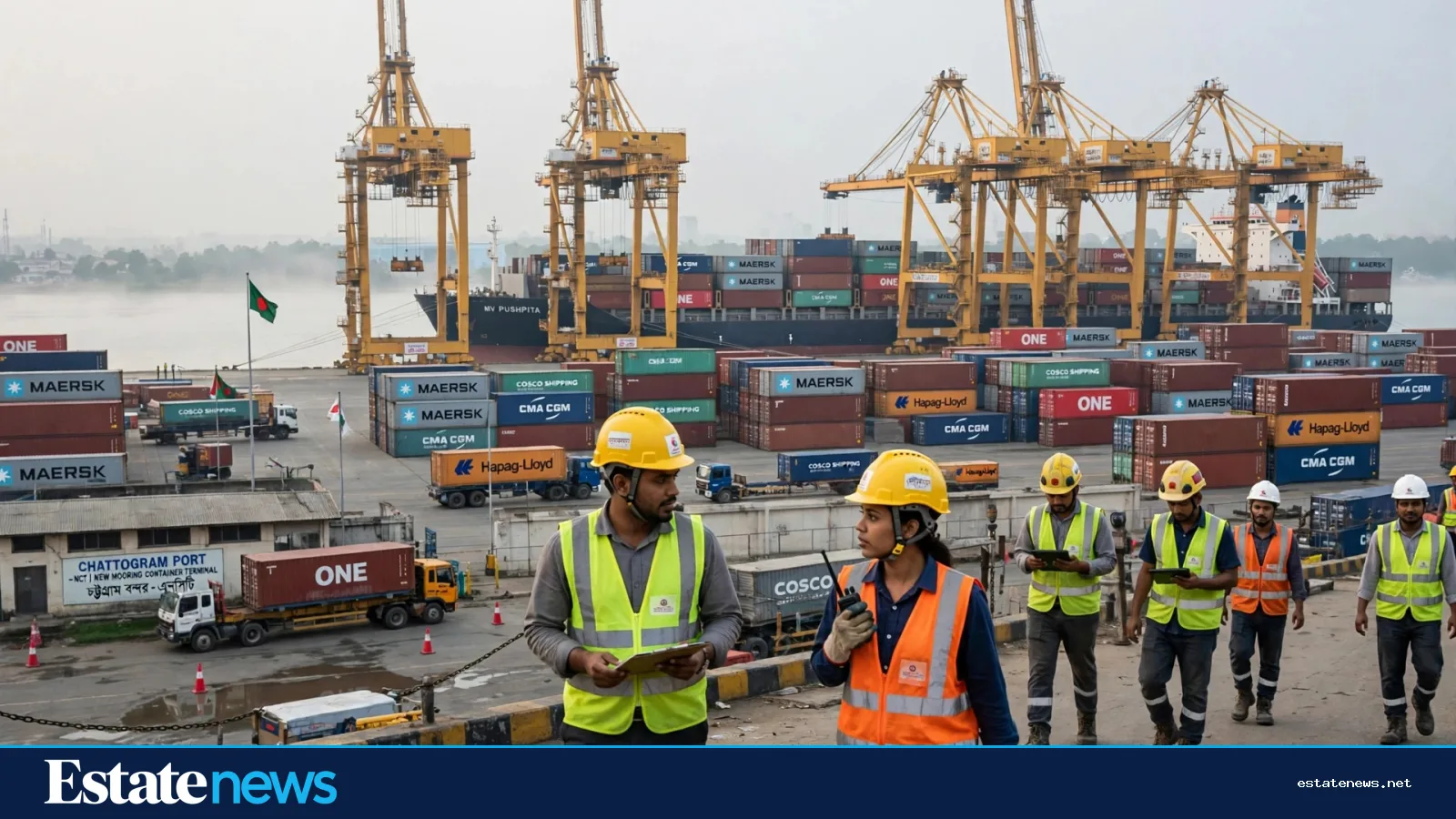
Chattogram port finally has a written rulebook for who runs its terminals. The shipping ministry issued the Chittagong Port Authority (Appointment of Berth, Terminal and Ship Handling Operators) Rules, 2026, through a gazette notification on 5 November. It is the first time gazetted rules have governed the licensing and appointment of private operators at the country's main seaport. The rules set out how licences are issued and renewed, how operators are selected, what they are responsible for, and how the port authority supervises them.
The welcome for the rules came with a question that has been hanging over the port for a year. A Daily Star opinion piece on 16 November, by Ahamedul Karim Chowdhury, a former head of the Kamalapur Inland Container Depot and the Pangaon Inland Container Terminal, called the rules a welcome step, then asked where the safeguards against monopoly and excessive concentration are. The rules provide for open tendering under the public procurement framework. What they do not do, the piece argues, is stop one operator from collecting control of competing terminals in the same port.
That matters because of what is already in motion at Chattogram. Estate News reported on DP World's takeover of the New Mooring Terminal in March 2027, with an upfront payment of about Tk 600 crore to the Chittagong Port Authority, 25 percent on signing and 75 percent before operations begin, and more than Tk 1,000 crore of investment planned over ten years, according to the port authority via BSS. The same operator has also been discussed for a major terminal at the new Bay Terminal. Chowdhury's argument is that the nationality of an operator matters less than the shape of the market. A country can have several international operators and still end up with no real competition if one of them controls the terminals that compete with each other.

Bangladesh has tried to answer this question before. In 2010, the country issued the Policy for Preventing Private Sector Monopoly in Major Ports, which restricted the sole private operator handling a particular cargo category at a port, along with its associates, from bidding for the next terminal handling the same cargo at that port. The 16 November piece points to that policy as a starting point and says Bangladesh could adopt a similar safeguard, adapted to local conditions. An operator already controlling a major container terminal should not automatically be allowed to control another competing terminal in the same relevant market.
What the law already allows
The Competition Act, 2012, already gives the country a legal foundation. Section 15 addresses anti-competitive agreements, Section 16 prohibits abuse of authority, and Section 21 addresses combinations harmful to competition. The piece argues that the new port rules should be read alongside that law, not apart from it, and that the government should now adopt explicit anti-concentration tests for future terminal awards, scrutiny of common ownership, independent competition reviews, and safeguards to ensure fair access for shipping lines and cargo owners.
India offers the comparison the piece leans on. Indian port policy includes explicit competition safeguards, and in several cases operators are barred from bidding for adjacent facilities, so no single company, domestic or foreign, can dominate a port's cargo flow or pricing power. The point is not that foreign operators are a problem. Foreign operators run terminals across advanced and emerging economies. The point is that other countries regulate them with rules that keep capacity spread across more than one pair of hands.


What the rules do cover
The rules themselves are not thin. Under them, the Chittagong Port Authority can issue licences to the required number of berth, terminal and ship-handling operators for cargo and container handling at its berths, jetties, terminals and outer anchorage. Selection must follow an open tendering procedure under the Public Procurement Act, 2006, and the Public Procurement Rules, 2025. Operators must comply with the port authority's regulations and standard operating procedures, protect port property, ensure workplace safety and comply with labour laws, including provisions on workers' wages, benefits and safety. Licences can be suspended or cancelled for violations, including failure to meet operating standards, irregularities in cargo handling, employing unauthorised workers, fraud and other misconduct. Operators get a chance to respond to allegations before a licence is cancelled, and there are avenues for review and appeal. The rules also provide for the appointment of international terminal operators, under the Invest Bangladesh Act, 2026, or the Public Procurement Act, 2006.
Estate News covered the gazette itself in "Chattogram Port Turns Landlord: Tenders, Terminals and the Bay Terminal Bill", which set out the shift to a landlord model, with the port authority tendering terminals out while keeping ownership of the land and the quay. The new rules are the paperwork that makes that model work. The question the editorial raises is whether the paperwork is complete.
Why importers are watching
For the businesses that move goods through Chattogram, the stakes are practical. A port where one operator controls the competing terminals can set the terms on handling charges, berthing priority and service quality, and there is nowhere else for a shipper to go. Bangladesh's main seaport handles the bulk of the country's trade, and the cost and speed of moving a container through it feeds straight into the price of everything from garment exports to the cement and steel that go into a Dhaka building. A monopoly at the port would not show up as a headline. It would show up as a few extra days on a shipment and a few extra taka on a bill, repeated thousands of times.
Port workers halted container loading at the New Mooring and Chittagong Container terminals on Tuesday 17 November, demanding gratuity and benefits, with talks under way. That dispute is separate from the rules debate, and it is worth keeping separate. The rules question will be settled in gazettes and boardrooms, not on the quay.
The rules are a starting point, as the editorial puts it, not the final architecture of landlord-port governance. The government now has to decide whether to add the missing piece: a clear test, applied before each award, that stops any single operator from holding competing terminals in the same port. Until that test exists, the DP World deal and the Bay Terminal awards will be read together, and the monopoly question will keep coming back. Estate News's look at the Dhaka-Chattogram expressway traced what faster freight means for the towns between the two cities, and the same logic applies at the port. Speed on the road means little if the gate at the end of it is controlled by one hand.