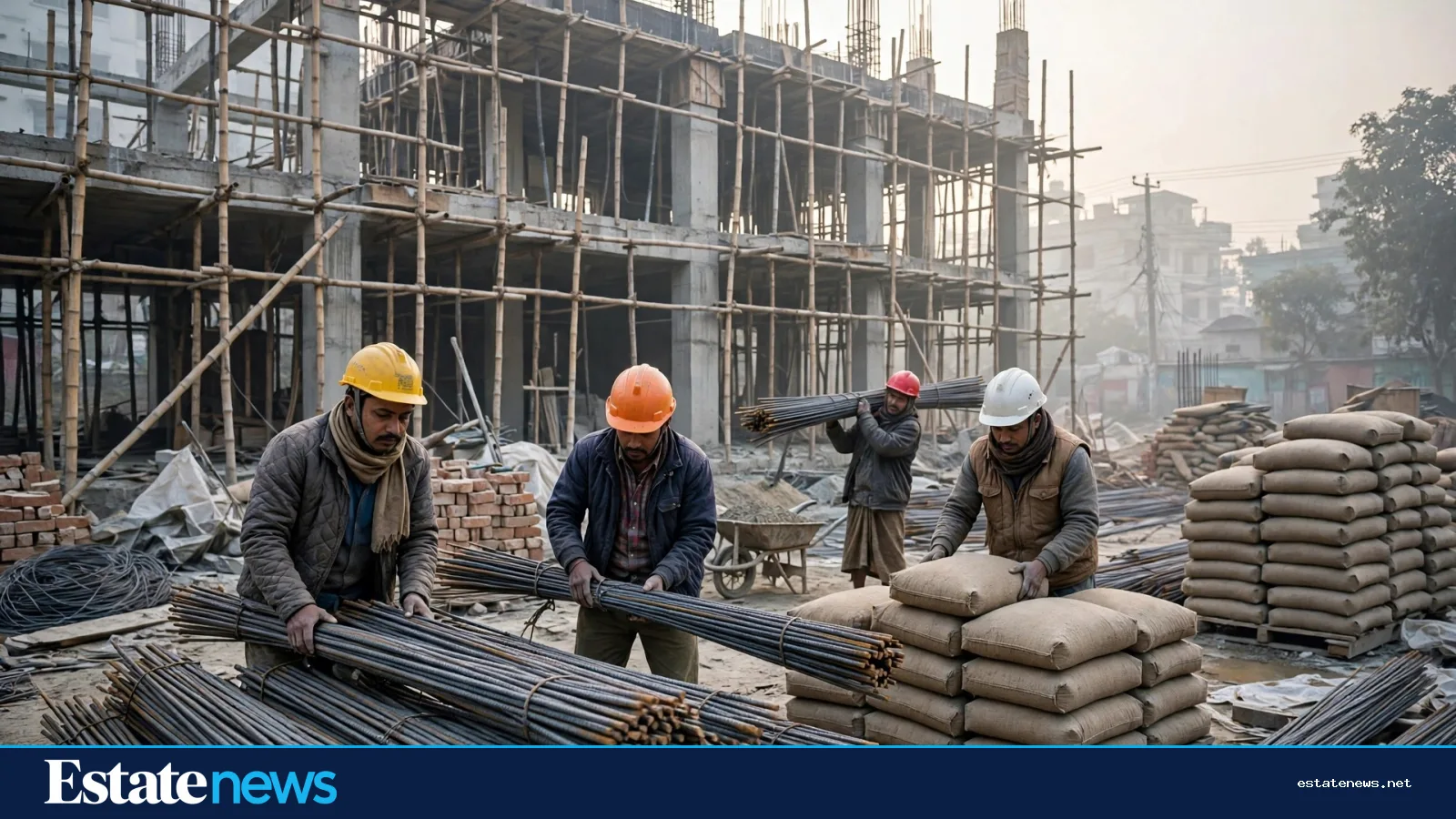
Winter is when Bangladesh builds. The rain has gone, the ground is dry, and the sites that slowed down in the monsoon pick up again. For anyone putting up a house this season, two numbers matter before all the rest: the price of rod and the price of cement. Both come from published ranges, and both need to be read the way they were published, with their dates attached.
The latest verified rod figure is a midpoint of Tk 93,500 a tonne for higher-quality steel, from a published range of Tk 92,500–94,500. The figures come from Trading Corporation of Bangladesh data carried by The Financial Express on 10 October 2026, and they are indicative only, not an official fixed rate. Cement sits at a midpoint of Tk 560 a 50 kg bag in Dhaka retail, from a range of Tk 540–580 published the same day by the same paper, also indicative only. No fresh November rod or cement price was verified in today's scan, and this tracker says so plainly rather than filling the gap with a guess.
What the two numbers mean on site

A tonne of rod at the midpoint costs Tk 93,500, which works out to Tk 93.50 a kilogram. The Tk 2,000 spread between the bottom and the top of the published range is the difference between a good buying day and a bad one, and on a house that takes several tonnes, it adds up. A hundred bags of cement at the Tk 560 midpoint come to Tk 56,000. Those are the kinds of sums a builder runs through before ordering, and they are the reason the range matters more than any single figure: nobody buys a whole house at the midpoint.
The brands behind the ranges are the ones builders ask for by name. In steel, BSRM, KSRM, GPH Ispat and RSRM set the market's tone. In cement, Shah, Bashundhara, Crown, Premier and LafargeHolcim Bangladesh do the same. A builder who specifies a brand is buying consistency as much as steel or cement, and the price gap between brands is part of the negotiation on every site.
The per-square-foot maths, with the label kept on


Estate News ran a Bangla per-square-foot worked example on 17 November, "জমিতে বাড়ি বানানোর খরচ: প্রতি বর্গফুটের হিসাব ২০২৬", using Tk 4,500 a square foot as a worked example, not a market rate. The label matters, and this tracker keeps it. At that worked-example rate, a 1,000 sq ft flat comes to Tk 45 lakh. Change the rate and the answer changes with it, which is exactly the point: the per-square-foot figure is a tool for comparing options, not a price anyone will actually pay.
Rod and cement are only two lines in that total. Sand, bricks, labour, fittings, the land itself and the approvals all sit on top of them, and the finished cost per square foot moves with every one of those. A tracker that only watches rod and cement can tell a builder whether the two biggest material costs are steady or moving. It cannot tell a buyer what a flat will cost. Anyone who reads it that way is reading it wrong.
What to watch this winter
The season itself is the thing to watch. Winter demand pushes orders up, and a busy site orders rod and cement in larger lots. Estate News covered the same market from the company side in "Steel, Cement and the Cost of Building: What November's Prices Mean for Developers", which followed the 15 November figures through the developers' books, and in "Steel's Winter: What BSRM, KSRM and GPH Ispat Tell Builders", which read the steelmakers' winter position on 18 November. The picture across the three pieces is consistent: the materials market is steady, the season is busy, and the figures buyers should use are the published ranges with their dates, not a single number passed along by word of mouth.
If a fresh published range appears before the next tracker, this page will carry it with its date. Until then, the numbers to build with are Tk 92,500–94,500 a tonne for rod and Tk 540–580 a bag for cement, both from 10 October, both indicative. Winter will do the rest: the sites are open, the rods are stacked, and the maths, done honestly, is what keeps a building project from running out of money halfway up.