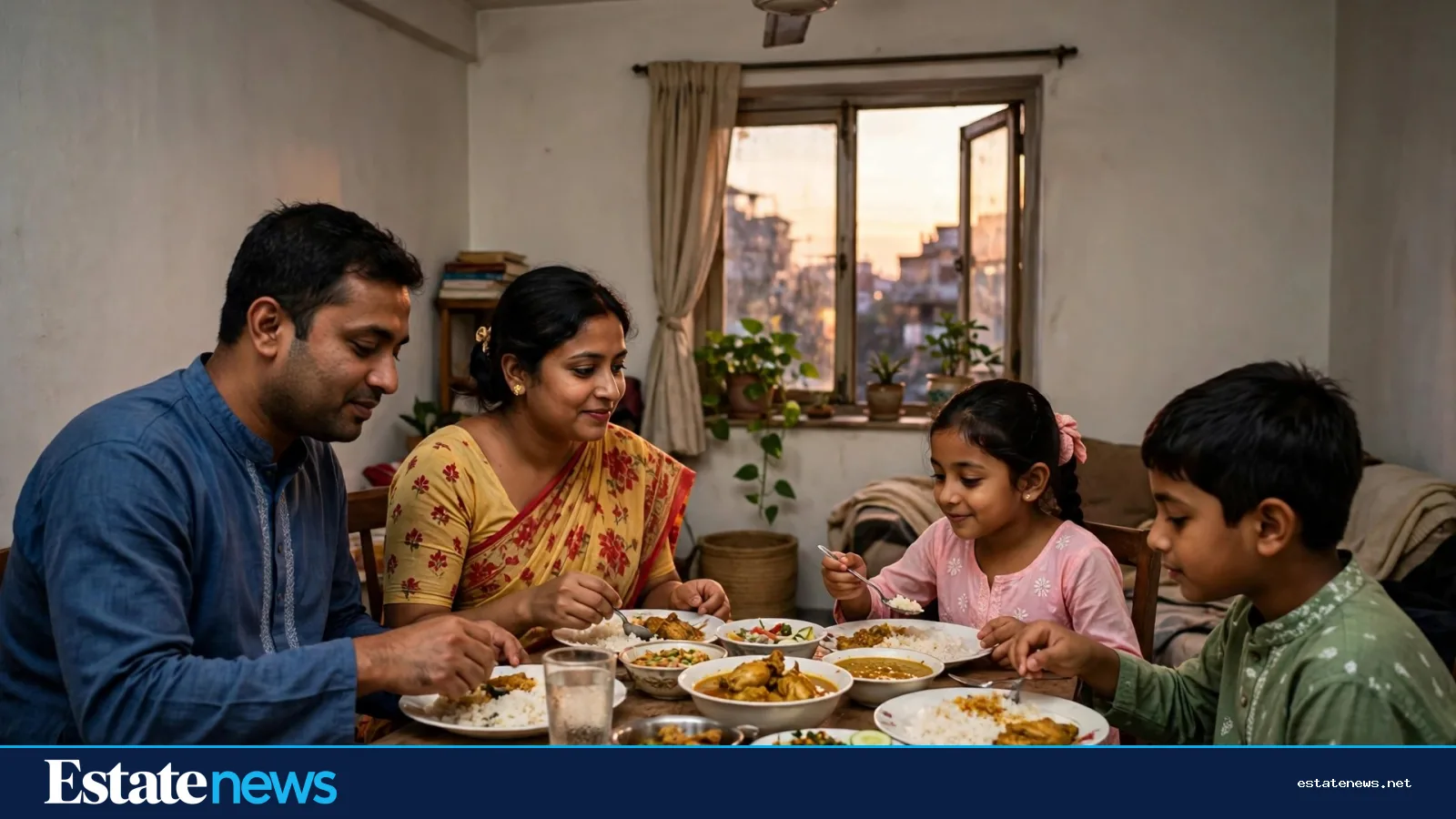
Ask a Dhaka family where the dining room is and the answer is usually a gesture, not a room. A wave toward the end of the living room, or the space beside the kitchen door, or a table pushed against the wall under the window. Most flats in the city were never given a separate dining room. The flat has a living room, two or three bedrooms, a kitchen and a couple of balconies. Meals happen in whatever space is left over, and families have become good at making that space work.
The dining corner is the compromise, and it is more considered than it looks. It is not a table that happened to land somewhere. It is a corner chosen for light, for air, and for the walk from the kitchen. The families that get it right think about three things: the table, the seats, and the light above them. Get those three right and a corner of a living room starts to feel like a place where the family actually eats together, instead of a place where plates are balanced on laps.
The table that folds away

The first decision is the table. A fixed six-seater dining table eats a flat alive. It takes the middle of the living room and never gives it back. The families that manage small flats well tend to use a table that changes size. A folding table, or an extendable one with a leaf that slides out, seats four on a normal day and six when guests come. When it is folded down, the corner goes back to being part of the living room, and the children have space to spread their books out.
Wood is the usual choice, and for a practical reason. A wooden top survives hot plates, spilt dal and the daily wipe-down better than glass, and it does not show every fingerprint. A round table works better than a rectangular one in a tight corner, because there are no corners to walk into in the dark, and one more chair can always squeeze in. The table should sit close enough to the kitchen that carrying a hot pot is a short walk, not a journey across the flat.
Seats that do double duty
The second decision is where people sit. Dining chairs take up space even when nobody is eating. A bench along the wall solves that. It slides under the table when dinner is over, and it doubles as a place to sit and read, or to fold laundry on. Some families use a bench with storage underneath, which holds the extra crockery, the tablecloths and the serving dishes that have nowhere else to live. A storage bench is the kind of furniture that pays for itself in a small flat, because it replaces a cupboard.
Stools are the other answer. They stack, they tuck under the table, and they can be pulled out to the balcony when guests spill over. The mistake is buying chairs that match a dining set from a showroom and then discovering that the set was designed for a room twice the size. In a Dhaka flat, the seats should be chosen for the corner, not for a photograph.


Light over the table
The third decision is the light, and it is the one most families skip. A dining corner lit by the living room's ceiling fan light feels like a waiting room. A single pendant lamp hung low over the table changes the corner completely. It pulls the eye down to the food, it warms the faces around the table, and it marks the corner as a place with a purpose. The lamp does not need to be expensive. It needs to hang at the right height, low enough to light the plates and high enough not to be in anyone's way.
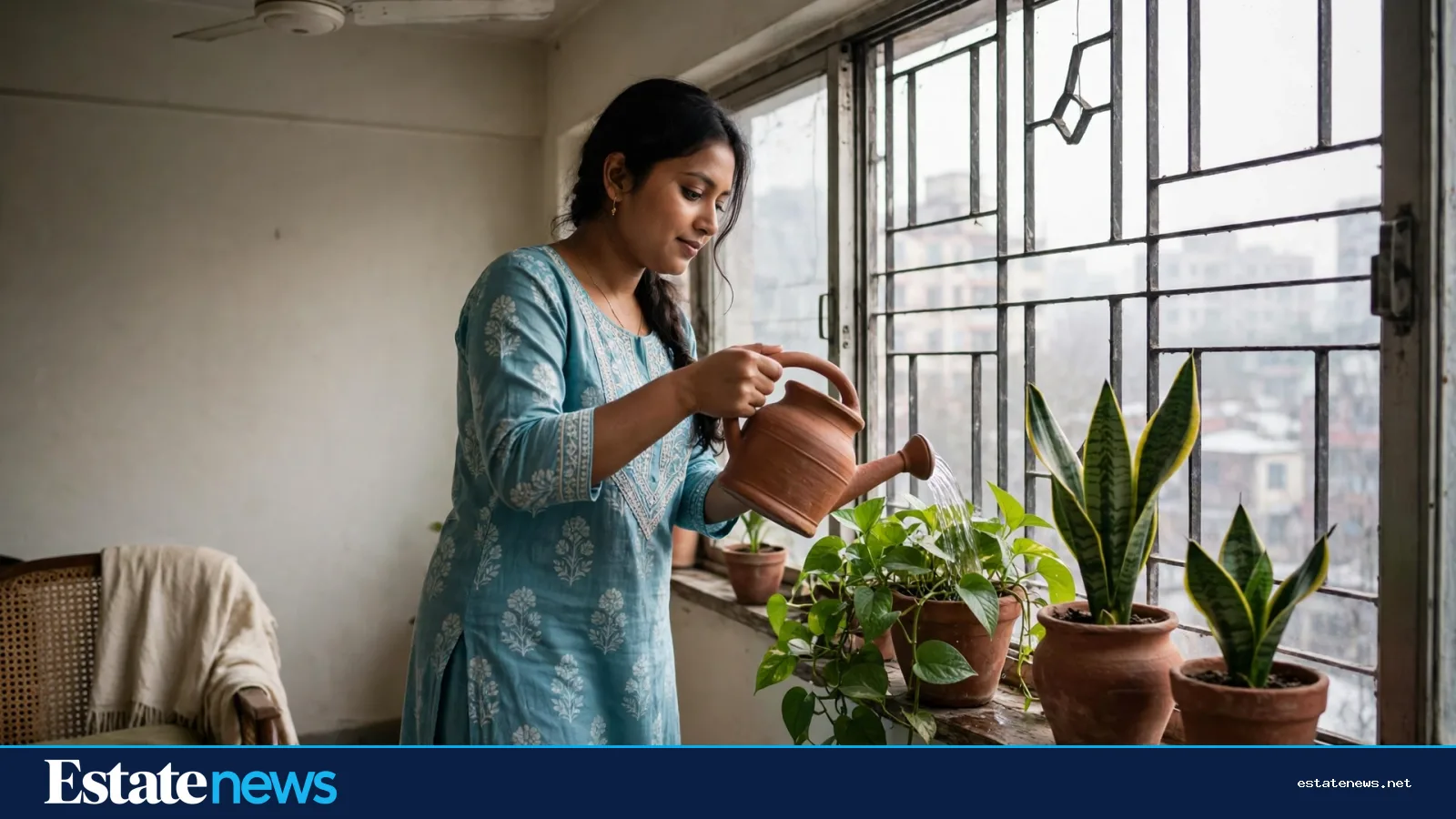
The window matters too. A dining corner beside a window gets the evening light, and in a Dhaka flat that light is worth having. Plants on the windowsill, a curtain that can be drawn when the sun is hard, and a view of the rooftops outside all make the corner feel less like a leftover space. The balcony edge can help as well. A narrow table or a shelf along the balcony railing gives the family somewhere to put a tea tray, and on a cool evening the meal can move outside altogether.
The crockery problem
Every Dhaka family has the same storage problem. The plates, the bowls, the serving dishes and the glasses have to live somewhere, and the kitchen cabinets are already full. The dining corner needs its own storage, and it needs to be close. A low sideboard against the wall, or a set of open shelves above the table, holds the everyday plates and the glasses. Estate News's piece on the art of styling open shelves without looking cluttered makes the same point for the living room. Open shelves only work if they are edited. Keep the plates you use every day within reach, and keep the wedding crockery somewhere else entirely.
A sideboard with a flat top does one more job. It becomes the serving surface. The rice pot, the dal and the curry sit on it, and people serve themselves instead of passing dishes across a crowded table. In a small flat, that small change makes dinner calmer. Nobody is reaching over anyone else.
The dining corner is not a design project. It is a habit. The families that eat together at a table, in a corner they have made their own, are the ones who treat the meal as a pause in the day rather than a task to get through. Estate News's Bangla guide to making room in a small flat's kitchen covers the cooking side of the same problem, and the rooftop piece on how Dhaka families are reclaiming the top floor looks at the other end of the flat, where the same thinking applies. A flat gives you the rooms it gives you. The dining corner is what you make of the space in between.