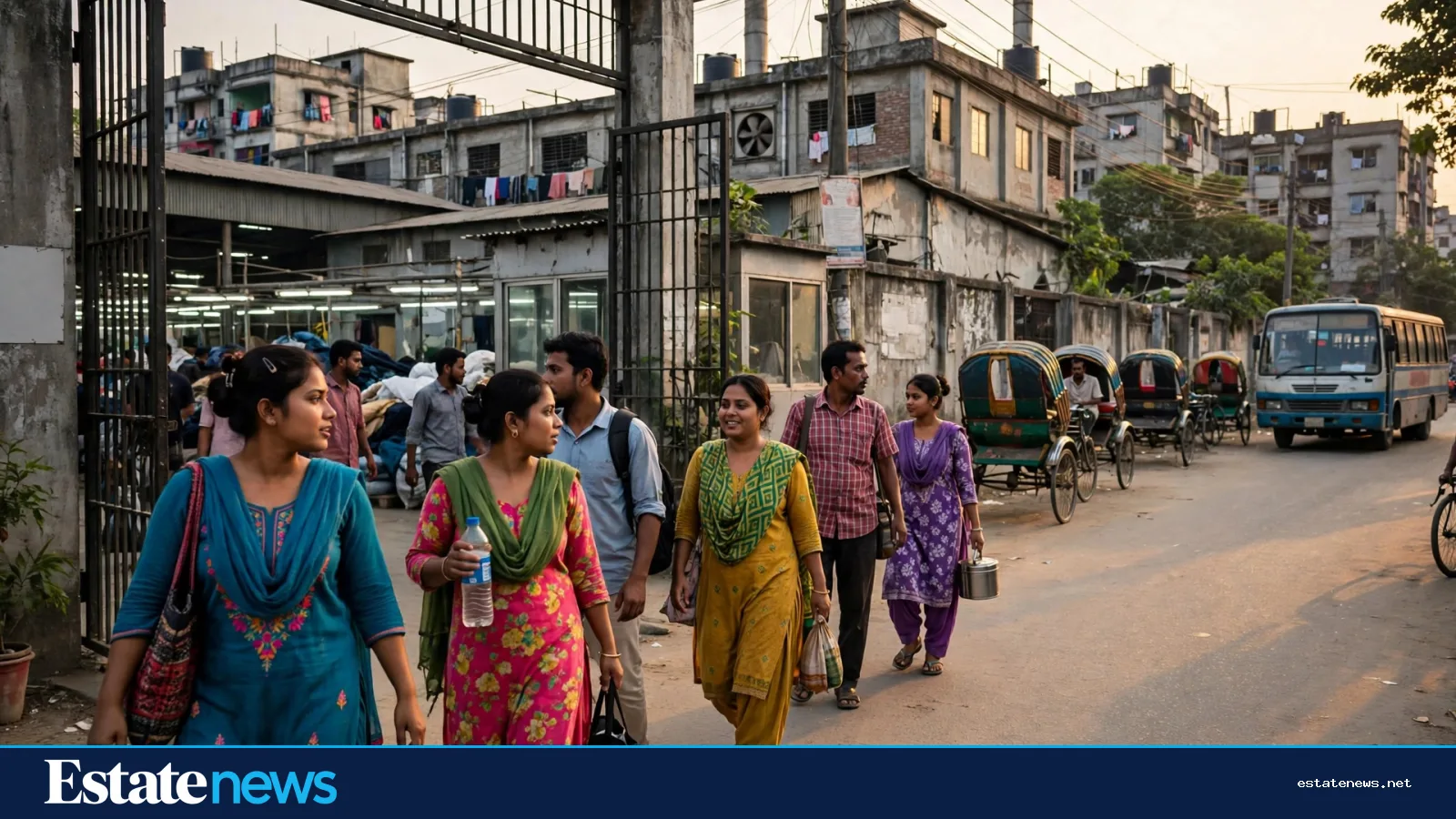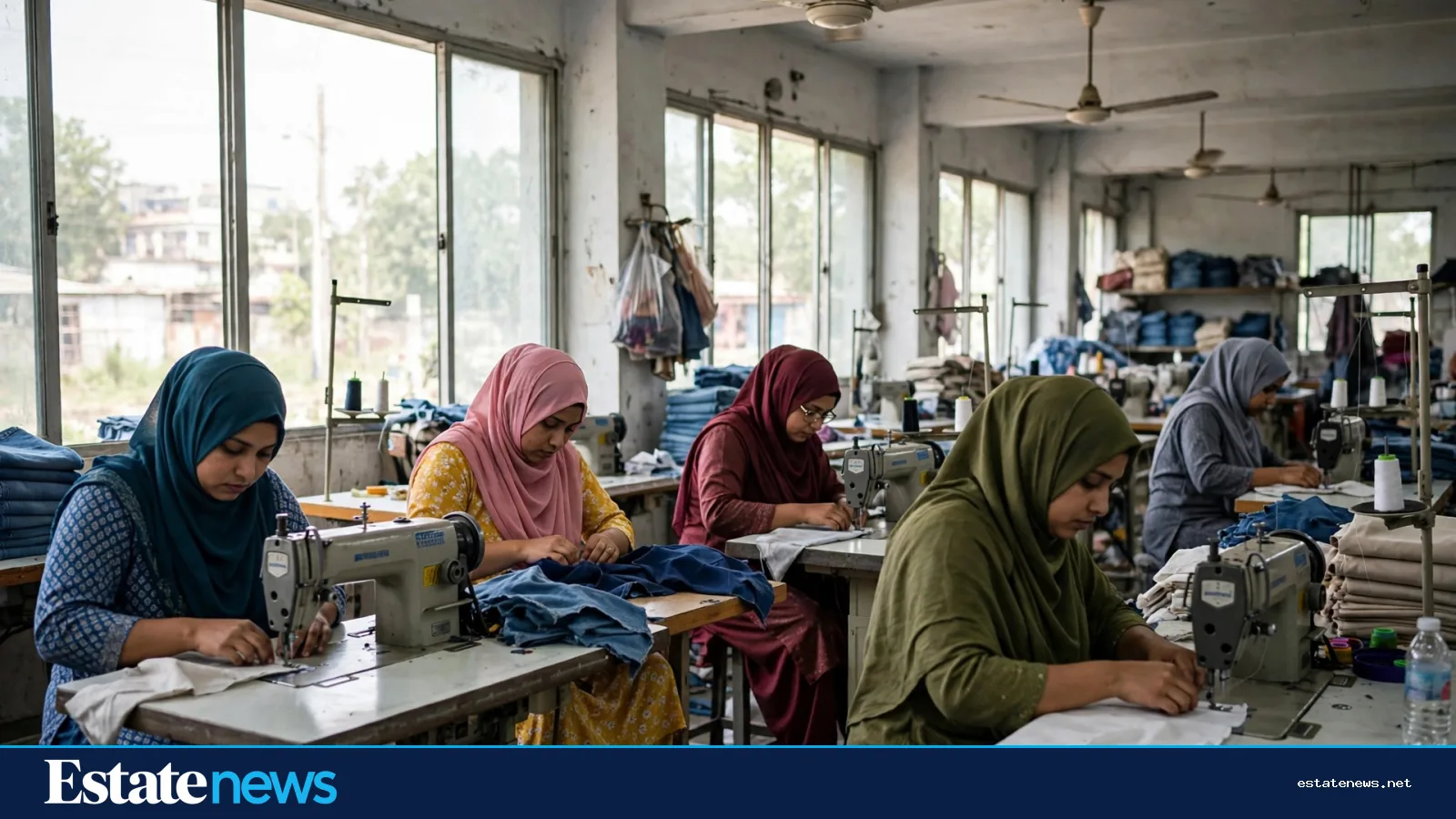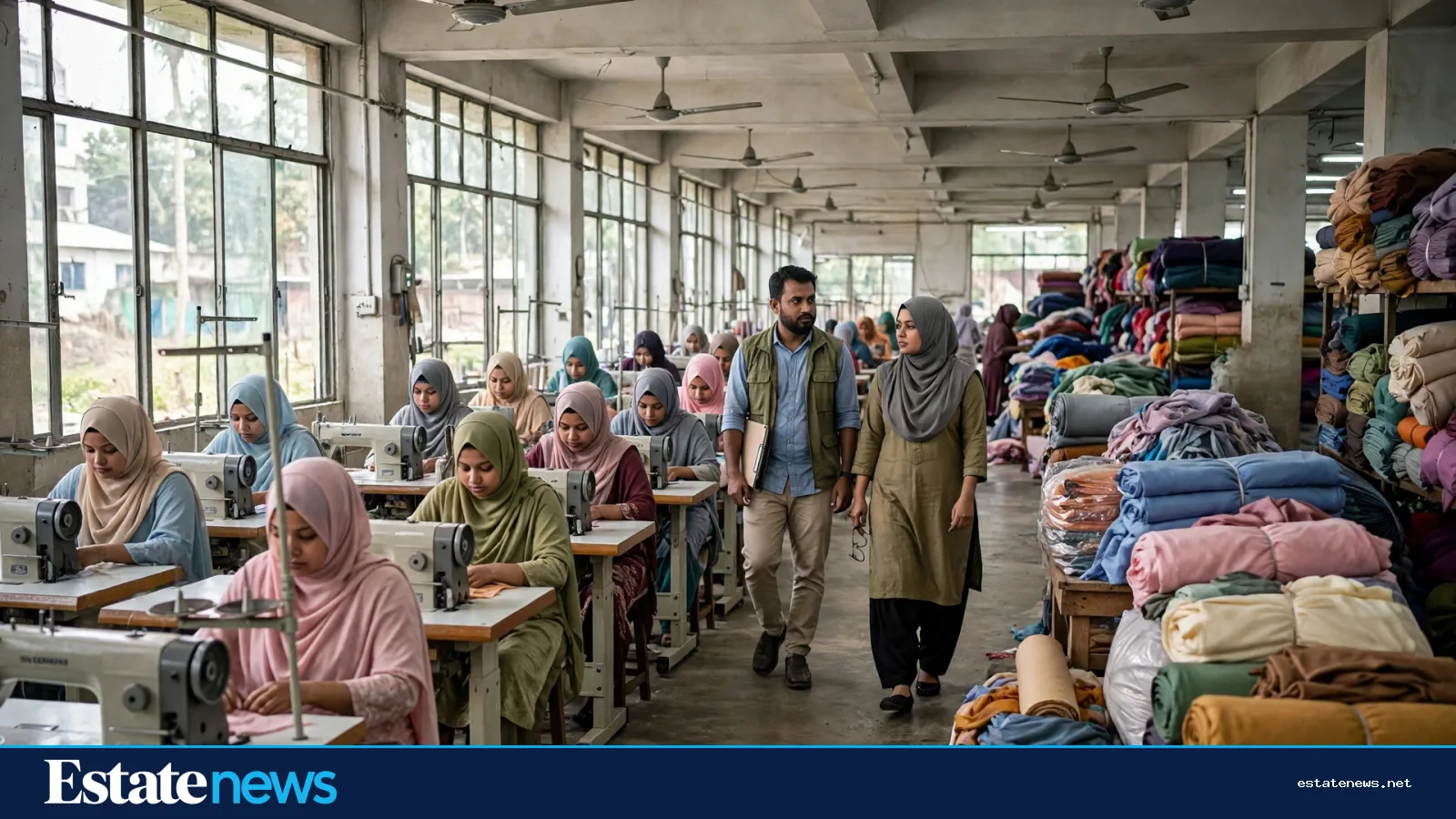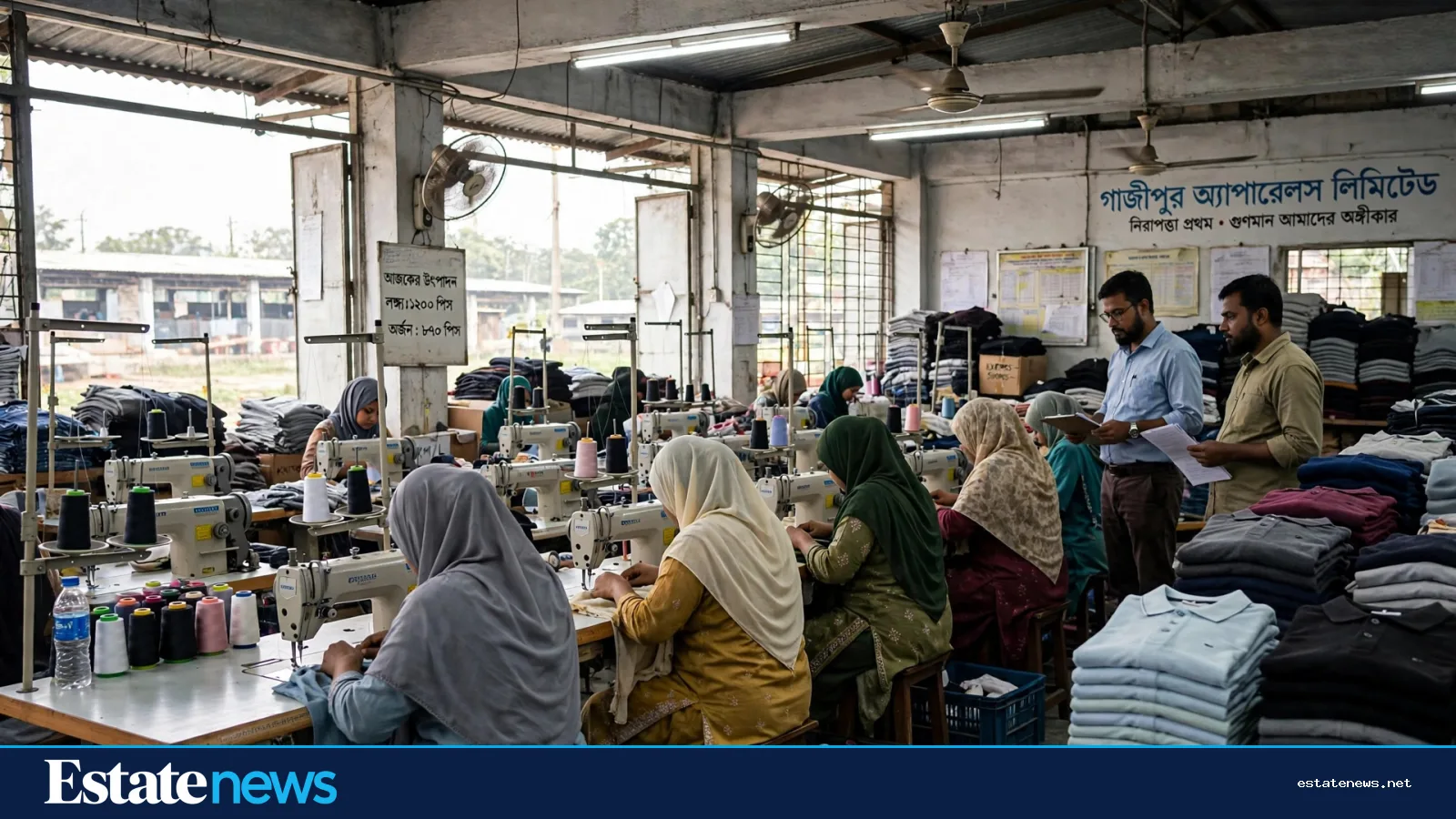
The sewing lines in Gazipur start early. By seven in the morning the machines are running, the cutting tables are full, and the trucks at the gate are waiting for cartons. Four months of export figures, released this month, explain why those lines matter beyond the factory wall. They are the reason thousands of workers rent rooms, share flats and, in time, look for a home of their own near the factory gate.
Bangladesh exported $17.04 billion worth of merchandise in July to October of the 2026-27 fiscal year, up 6 per cent from $16.08 billion in the same period a year earlier. The figures were released by Bangladesh Bank. Knitwear, the largest export item, earned $7.71 billion, up 7 per cent. Woven garments brought in $6 billion, up 4.8 per cent. Two smaller items grew faster. Jute and jute goods rose 23.8 per cent to $383 million. Leather and leather goods climbed 12.7 per cent to $464 million. Chemicals gained 27.3 per cent to $157 million.
The new markets matter as much as the old ones

One line in the data deserves a closer look. Garment exports to non-traditional markets, the countries outside the usual buyers in Europe and North America, rose 9.3 per cent to $2.37 billion in the same four months. Turkey led the surge, up 107 per cent to $206.5 million. Japan remained the largest non-traditional destination at $437.3 million, up 2.4 per cent. Australia took $264 million, up 3.01 per cent.
Why does this matter for housing? A factory that sells to one market lives or dies on that market's mood. A factory that sells to many markets can keep its lines running when one buyer slows down. Steady lines mean steady jobs. Steady jobs mean workers who stay in Gazipur or Narayanganj for years rather than months, and workers who stay start to rent better rooms, bring their families, and think about a flat.
What the numbers mean on the ground in Gazipur
Gazipur is the clearest example. Its factories sit along the Dhaka-Mymensingh road, and its housing grew up around them: mess rooms for single workers, shared flats for couples, small plots where a family builds a floor at a time. When orders are strong, the demand for all of it rises. Landlords fill rooms faster. Builders in the area find buyers for small flats. None of this shows up in the export figures directly. It shows up in the lanes behind the factories, in the new buildings going up floor by floor.


Narayanganj tells a similar story from a different angle. Its knitwear cluster and its river trade give it a second income stream beyond garments. Chattogram adds the port. A port city lives on the movement of goods, and export growth means more containers, more trucks, more warehouse work, and more people who need a place to live within reach of the port and the export processing zone.
A note of caution before the optimism
Export growth of 6 per cent is solid, not spectacular. It is the kind of number that keeps a market steady rather than setting it alight. The wage board meeting today, 16 November, adds a second variable. Owners are expected to propose around Tk 14,000 to Tk 15,000 as the new minimum wage, against a workers' demand of Tk 32,000 at Grade 4 and a current floor of Tk 12,500 set in December 2023. Whatever the board decides, factory costs will change, and factory costs feed into hiring, overtime and the pace of new lines.
For a buyer or a renter in a factory town, the practical reading is simple. Export earnings are holding up, and the buyer base is widening beyond the old markets. That supports housing demand in Gazipur, Narayanganj, Savar, Ashulia and Chattogram. It does not guarantee a price rise in any particular area, and it does not remove the need to check a building, a deed and a developer before paying.
The export figures also say something about the wider economy that reaches into Dhaka's own housing market. Remittance inflows, which fund a large share of flat purchases, have stayed strong, and the combination of export earnings and remittance gives households a firmer footing than either one alone would. A flat buyer in Dhaka whose family income depends on a garment job and a relative abroad is, in a real sense, living off both numbers at once.
What to watch next is the November export release and the wage board's decision. If orders hold and wages settle at a level factories can pay without cutting lines, the factory towns will keep their momentum. The housing that follows will be built one floor, one lane and one small flat at a time, the way it always has been in Gazipur.
Read more: Gazipur's housing corridor — https://estatenews.net/development/gazipurs-housing-corridor-factories-commutes-and-the-families-moving-beyond-dhakas-edge | Exports rebound, remittances cool: September in two numbers — https://estatenews.net/markets/exports-rebound-remittances-cool-bangladeshs-september-in-two-numbers | নারায়ণগঞ্জের আবাসন করিডর — https://estatenews.net/markets/narazngnjer-abasn-kridr-silp-ndee-ar-dhakamukhee-zatazater-shr