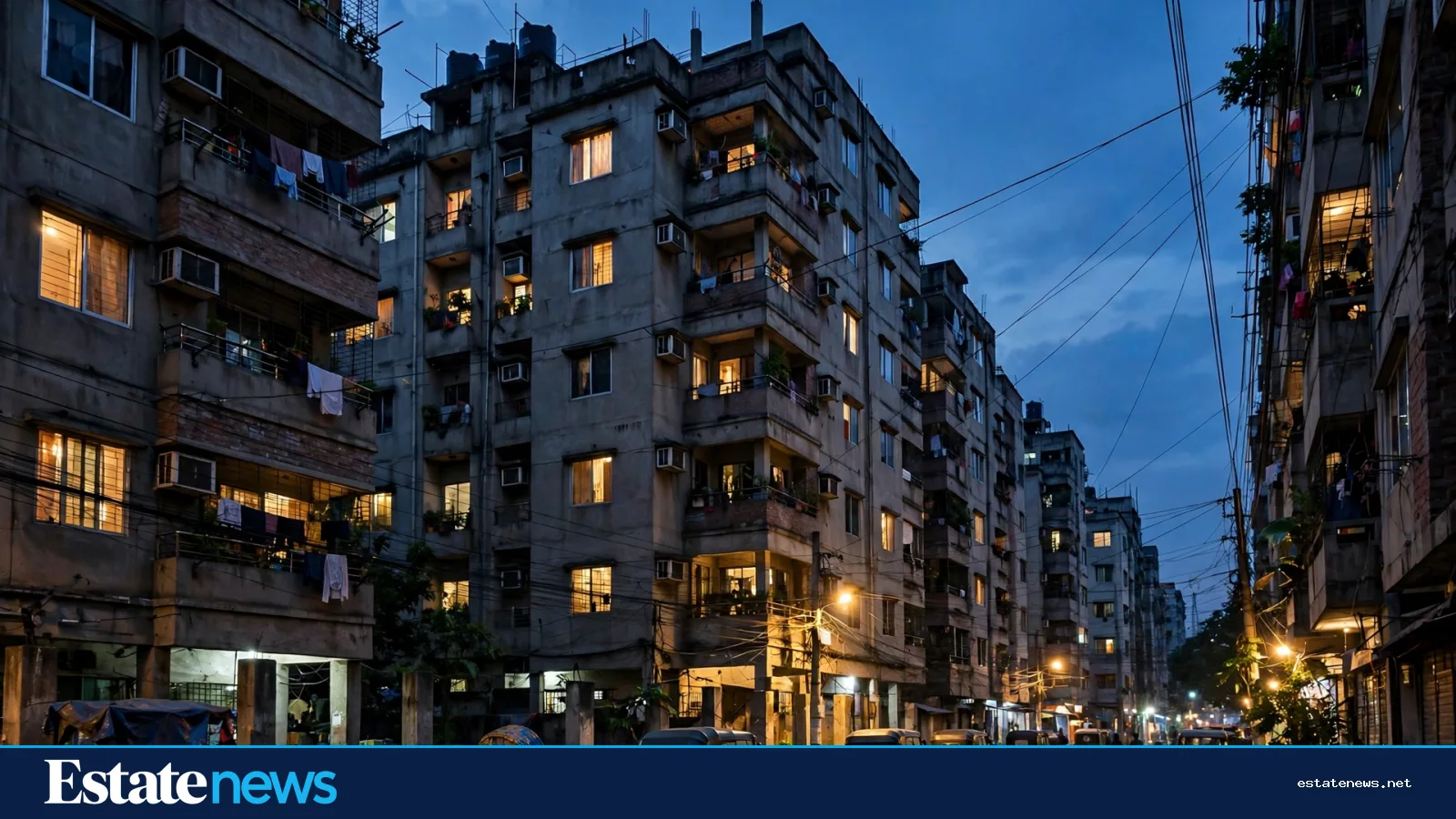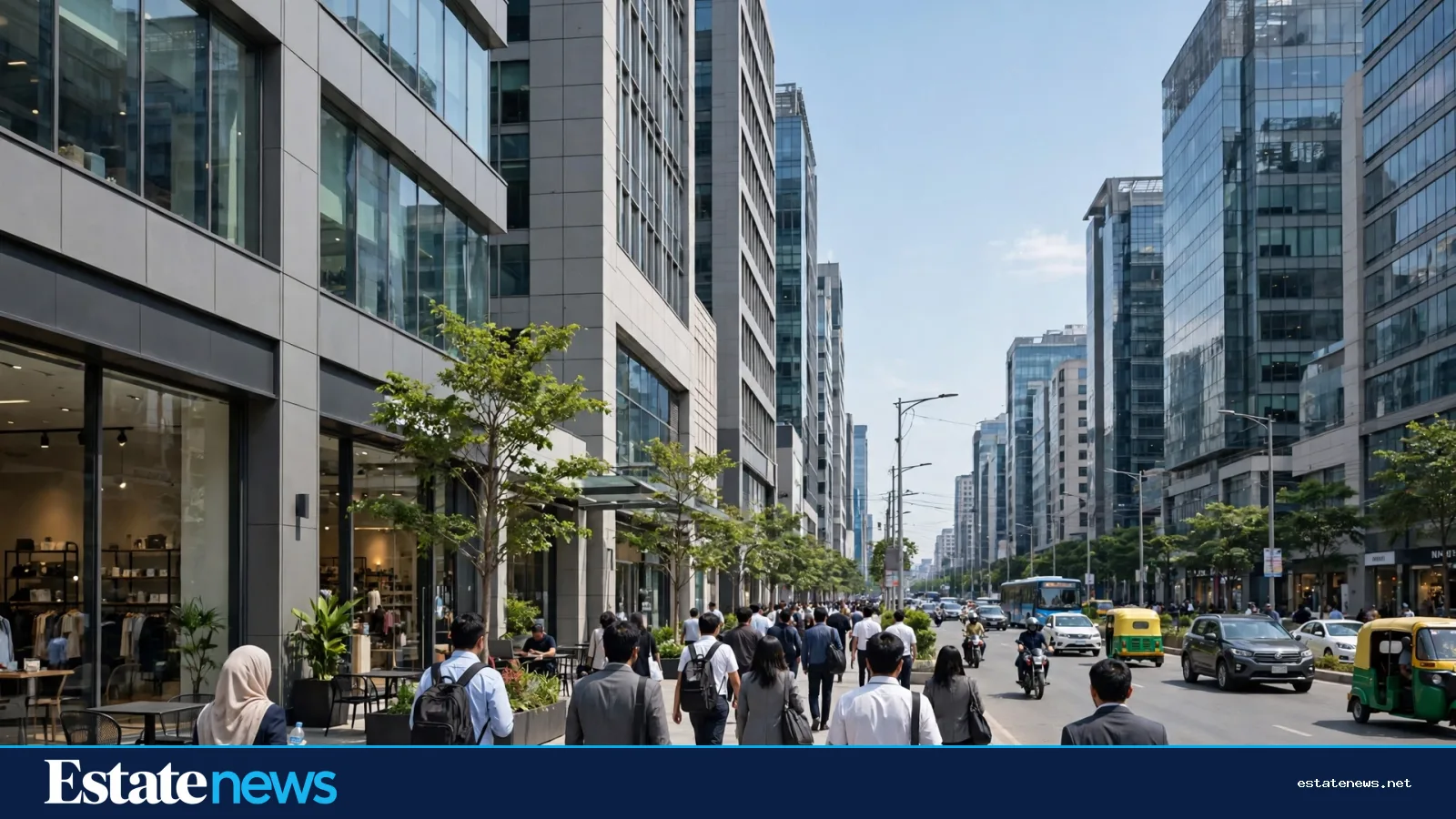
Ask a broker for the rent of an office in Dhaka and the honest answer is another question: which Dhaka? A floor on Gulshan Avenue and a floor in Motijheel differ in rent, in tenant, in building services and in the kind of business that wants to be there. The city's commercial property market has split into several markets that happen to share a map, and any tenant who treats them as one market will misprice their search from the start.
The asking figures circulating in listings give the shape of that split. Commercial listings coverage puts Gulshan office space at roughly Tk 100 to Tk 250 per square foot, Banani at roughly Tk 100 to Tk 150, Motijheel at roughly Tk 60 to Tk 100, and Karwan Bazar at roughly Tk 50 to Tk 80. The Daily Star, reporting on Motijheel in December 2024, put that area's average at Tk 60 to Tk 90 per square foot, depending on location and amenities. Listings for the Tejgaon to Karwan Bazar corridor show roughly Tk 100 to Tk 180 per square foot for offices near media and production firms. These are asking ranges from listings coverage, not agreed transaction rents, and they move with building, floor and lease terms. They are useful as a map. They are not a price list.
Gulshan and Banani: paying for the address and the building

Gulshan remains Dhaka's premium office address, and its rents show it. Multinationals, banks, development agencies and large local firms cluster on Gulshan Avenue and around Gulshan 1 and 2 circles, where Grade A towers offer large floor plates, central air conditioning, backup power, multiple lifts and parking that actually works. A tenant there pays for the building as much as for the address: a client who walks into a well-run tower reads the firm differently from one who climbs a dim stairwell in an older block.
Motijheel: the old centre's difficult adjustment
Motijheel tells a different story, and it is the most instructive in the city. Once Dhaka's undisputed commercial heart, it has watched banks and financial institutions move toward Gulshan, Banani and Baridhara over recent years. The Daily Star reported in December 2024 that stretches such as the Ittefaq Mor to Dilkusha to Naya Paltan road held some 40 commercial buildings, with many floors empty, and that building owners were struggling to find tenants despite offering lower rents. One Dilkusha building owner told the paper he had searched four years for a tenant for one floor. Sadharan Bima Corporation, which holds several Motijheel buildings, reported thousands of square feet vacant, and noted that while rents had not fallen sharply, their rise was slower than elsewhere.
Retail: footfall is the rent
Shop rents follow a different logic from office rents, and tenants who confuse the two overpay. A shop's rent is a bet on footfall: how many people pass, stop, and buy. That is why a small shop on a busy Gulshan or Banani frontage can command a high total rent despite its size, while a larger shop on a quiet side lane struggles at a lower rate. Ground-floor frontage, visibility from the road, parking nearby, and the mix of neighbouring shops matter more than floor area alone.


What every commercial tenant should put in writing
Commercial leases in Dhaka vary far more than residential ones, and the variation is where disputes live. Before signing, a tenant should settle the rent escalation: how much it rises, when, and whether it is fixed or linked to anything. A lease that looks affordable in year one and jumps sharply in year two is a different deal from one with steady, agreed rises.
Fit-out and restoration terms need the same clarity. Who pays for partitions, air conditioning, signage and cabling? What must be restored at exit, and who judges it? How long is the rent-free fit-out period, if any? A firm that spends heavily on fitting out a floor and then faces a short lease with an unclear renewal has bought risk, not space.
Exit and renewal terms complete the picture. Notice periods, renewal options, and the landlord's right to reclaim the space for redevelopment should be written plainly. So should the responsibility for structural repairs, lift maintenance and generator fuel during outages. A commercial tenant signs for years, not months. The lease should read like it.
Reading the split
Dhaka's commercial market is not rising or falling as one thing. Premium towers in Gulshan and Banani hold firm because their tenants value the address and the services. Motijheel adjusts, slowly, to a city whose commercial centre of gravity has moved north. Karwan Bazar and Tejgaon serve media, production and trading firms at their own rates. Retail follows footfall street by street.
A tenant who starts from their own needs, staff commute, client access, floor size, power and parking, and then compares total monthly cost across two or three buildings in the right area, will find a fair deal in any of these markets. A tenant who starts from a single quoted rate, and stops there, will not. In commercial property, as in housing, the headline figure is the beginning of the negotiation, never the end of it.