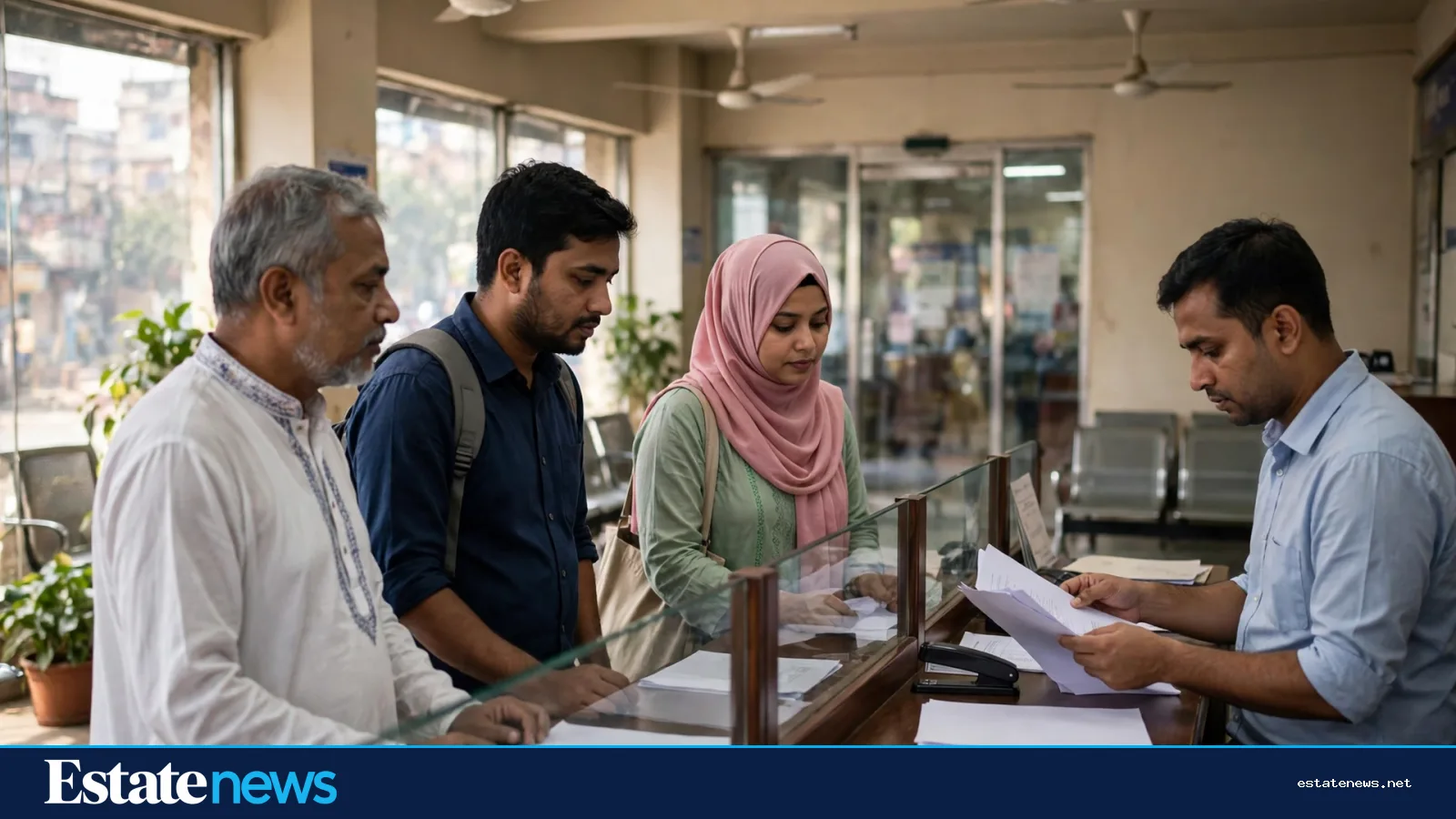
Bangladesh Bank plans to let the taka float freely within a month. Governor Md Mostakur Rahman said so on 20 November at a consultation meeting with business leaders in Chattogram, called to shape the monetary policy for January to March 2027. Buyers and sellers of foreign currency would negotiate prices directly, he said, in a market that works "like a stock exchange".
The announcement is the clearest timetable the central bank has given yet. Bangladesh has moved toward a market-set rate in steps, and the governor's words put a one-month clock on the last of them. He gave no exact date, and he gave no forecast for where the rate would settle. What he gave was a direction: the taka's price will be set by the market, not by the central bank's desk.
The comparison the governor made

To explain the move, the governor reached for a comparison with India. The Indian rupee weakened from 67.20 against the US dollar in 2016 to 94.03 in 2026, a depreciation of about 40 percent. Bangladesh's exchange rate rose from Tk 78.47 to Tk 124.86 over the same period, a depreciation of nearly 60 percent. India's cumulative GDP growth over the period was 72.4 percent, he said, against 72.1 percent in Bangladesh.
The point was plain. Two economies grew at almost the same pace, yet one currency lost far more ground than the other. The governor asked why the taka kept falling even as foreign currency liquidity rose from $300 million to $1 billion at one point, with 51 banks holding long positions in dollars. Bangladesh Bank is now reviewing foreign-exchange trading practices to make the market more competitive and transparent, he said.
What changes for builders
For builders, the exchange rate is not an abstract number. It is the price of steel, cement inputs, lifts, tiles and finishing materials that come from abroad. A builder who signs a contract today and imports materials in three months is betting on the rate in three months. Under a floating system, that bet is made in the open market, and the cost of getting it wrong sits with the builder.
Business leaders at the Chattogram meeting asked the central bank to soften the rules around that bet. Amir Humayun Chowdhury, former president of the Chittagong Chamber of Commerce and Industry and president of the Port Users Forum, proposed withdrawing the mandatory 100 percent cash margin on letters of credit for essential food items, industrial raw materials, spare parts, fuel and agricultural inputs. He also asked for deferred payment of 180 to 270 days under usance or supplier credit for verified manufacturers, and a grace period of 30 to 45 days for LC settlements when port, customs or shipping delays push clearance past the banks' 30 to 60 day deadlines.
Chowdhury said restrictive import financing was tying up working capital and forcing businesses to borrow at 13 to 15 percent, which feeds straight into prices. He also asked Bangladesh Bank to set regional credit-to-deposit targets so deposits collected in Chattogram are reinvested in local small businesses, logistics, cold storage and agro-processing, and to expand its Credit Guarantee Scheme so smaller firms can borrow without heavy property collateral. He raised a loan settlement facility too, where banks and borrowers dispute how outstanding principal is calculated, and proposed regional committees to settle the figures so closed industrial units can restart.


What changes for NRB buyers and borrowers
For Bangladeshis abroad buying a flat back home, a floating rate changes the arithmetic of every transfer. When the taka weakens, a dollar sent home buys more square feet. When it strengthens, it buys less. The float does not decide which way the rate moves. It decides that the market will decide, and that an NRB buyer should watch the rate in the weeks before a payment falls due rather than assume it will sit still.
Estate News explained the paperwork side of moving money in "The Dollar Rule at the Airport: What Travellers and NRBs Must Declare Now", and the borrowing side in "NRB Home Loans: How Bangladeshis Abroad Can Buy a Flat From Afar". Both still apply. What changes is the rate itself, which will now move with demand and supply rather than with the central bank's guidance.
Home-loan borrowers face the same logic from the other side. The governor said controlling inflation needs more than interest rate adjustments, and stressed production, supply and distribution. He also said the central bank is prioritising agriculture and small and medium enterprises through financing schemes and incentives. A floating rate can steady a currency by letting it find its level, and a steadier currency helps keep the cost of imported building materials in check. That is the hope. The risk is a sharp move in the first weeks, and the central bank has said it will keep watching the market.
The warning from the factory floor
The sharpest words at the meeting came from the garment sector. BGMEA Vice President Selim Rahman urged investment-friendly policies and said manufacturing industries had imported virtually no capital machinery over the past three months. He called it a serious warning sign for investment, and asked for incentives for technology upgrades, worker training and higher-value production, along with fewer advance taxes, faster refunds and a predictable roadmap for taxation, energy pricing and regulation.
That warning matters for property too. Factories that stop investing stop hiring, and workers who stop earning stop renting and stop buying. The housing market in Gazipur, Narayanganj and Chattogram runs on factory wages. A float that steadies the currency and eases import costs helps the factories. A float that swings wildly does the opposite.
The governor's timetable is short, and the next monetary policy will carry the detail. Until then, the practical advice for builders and buyers is the same: price the risk into the contract, watch the rate before each payment, and do not assume the taka will sit where it sat yesterday. Estate News covered the wider economic picture in "The World Bank's Warning and the 5.7% Path Out of It", and the float is the next chapter of that story.