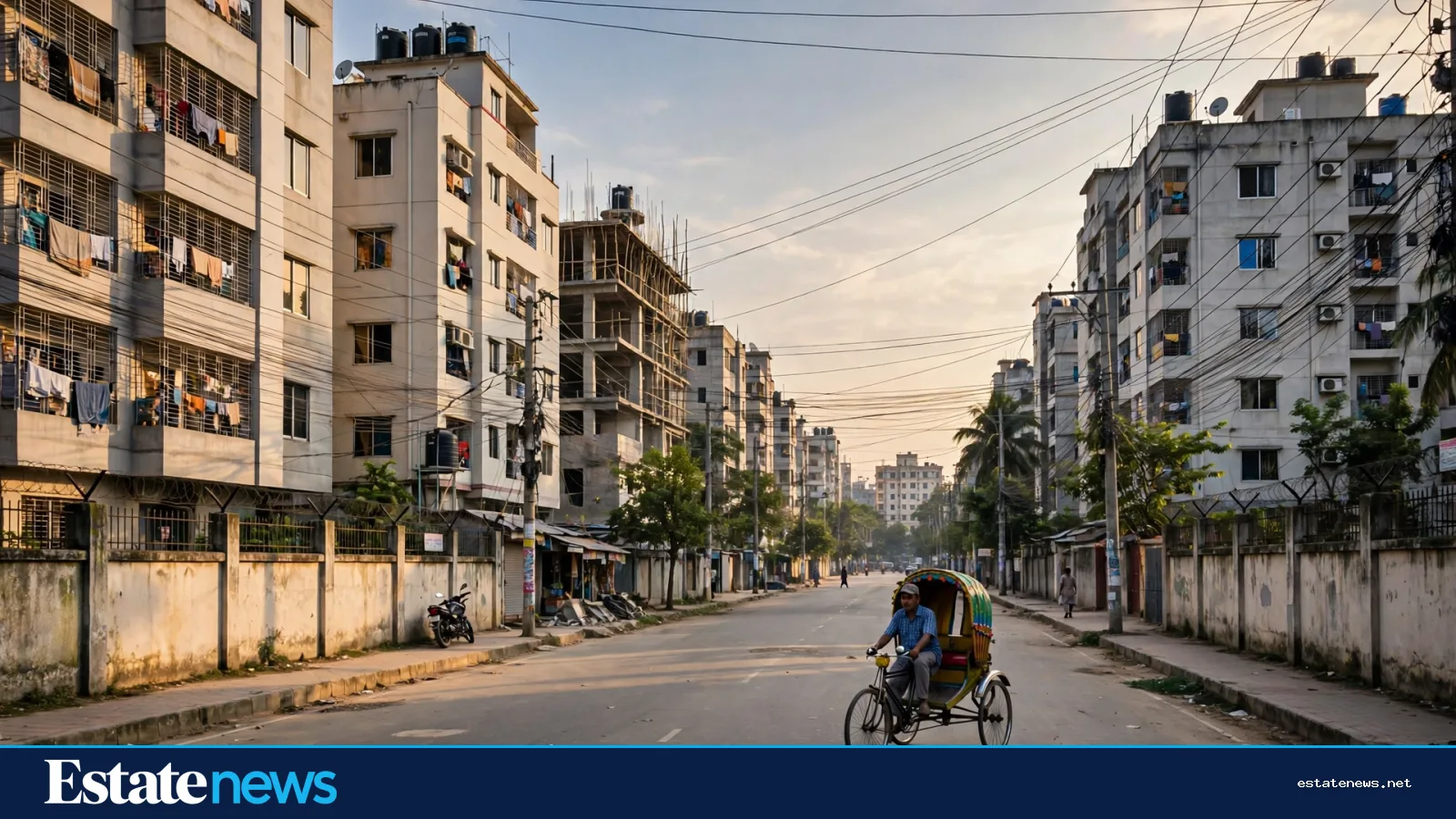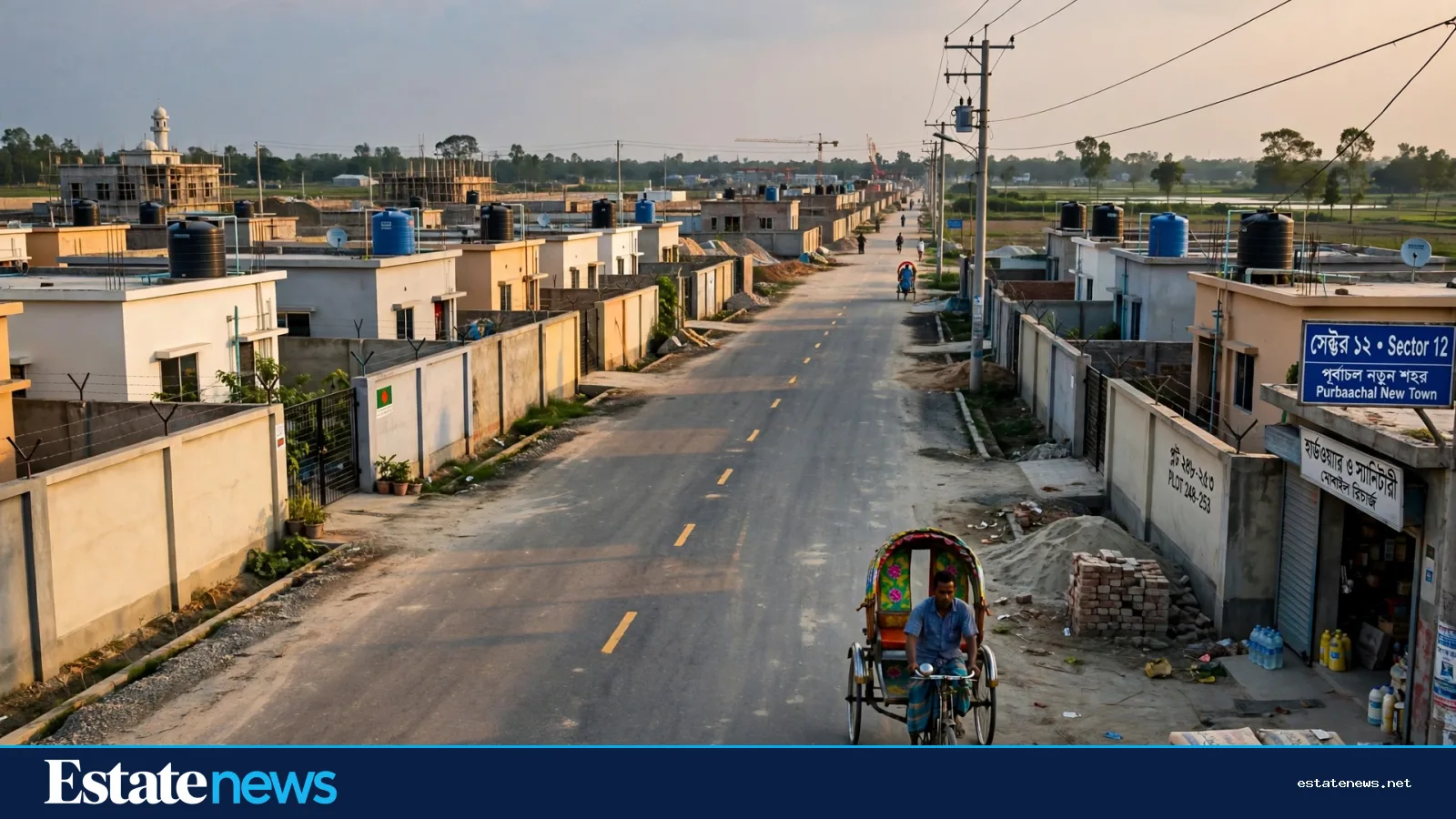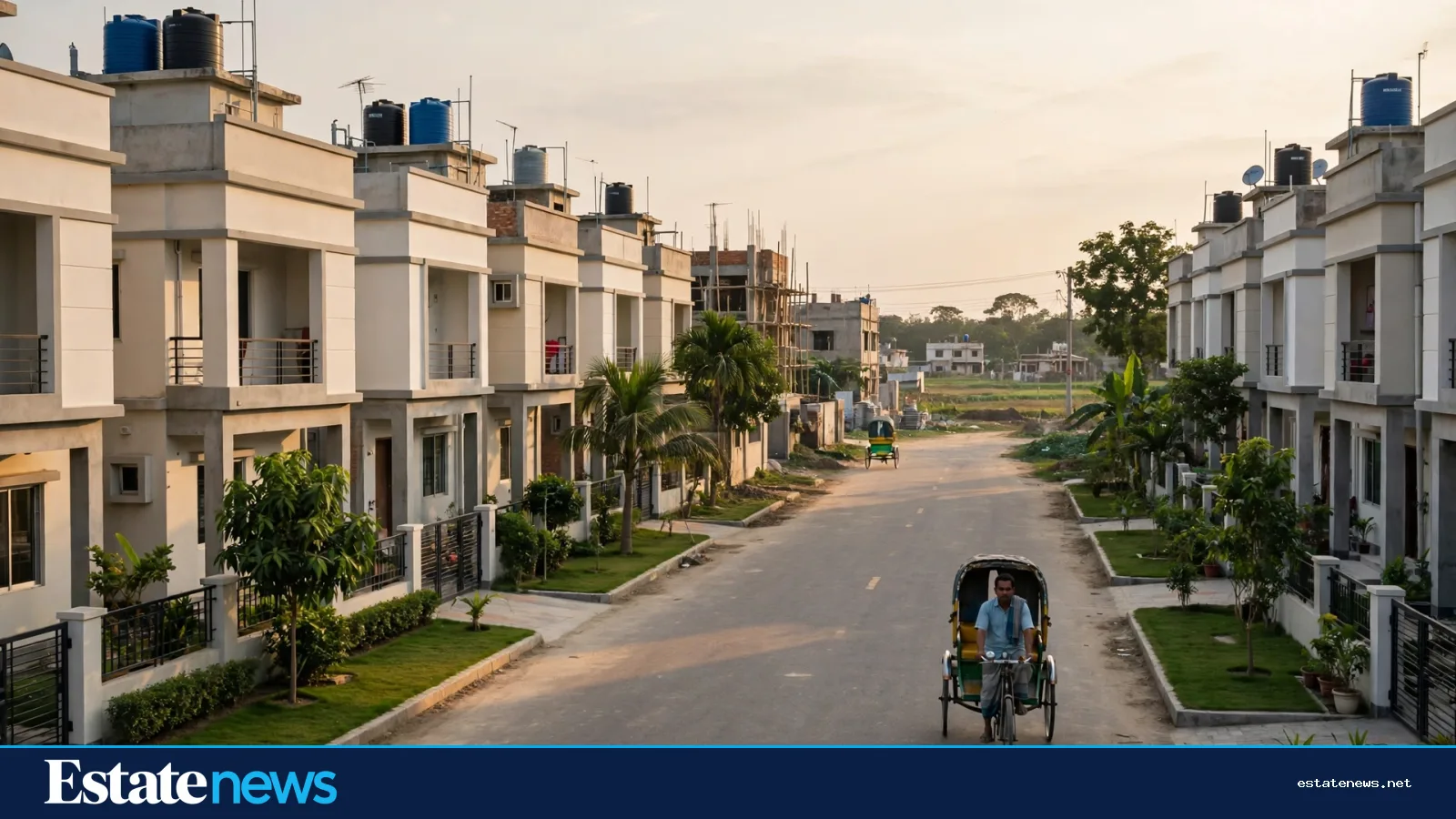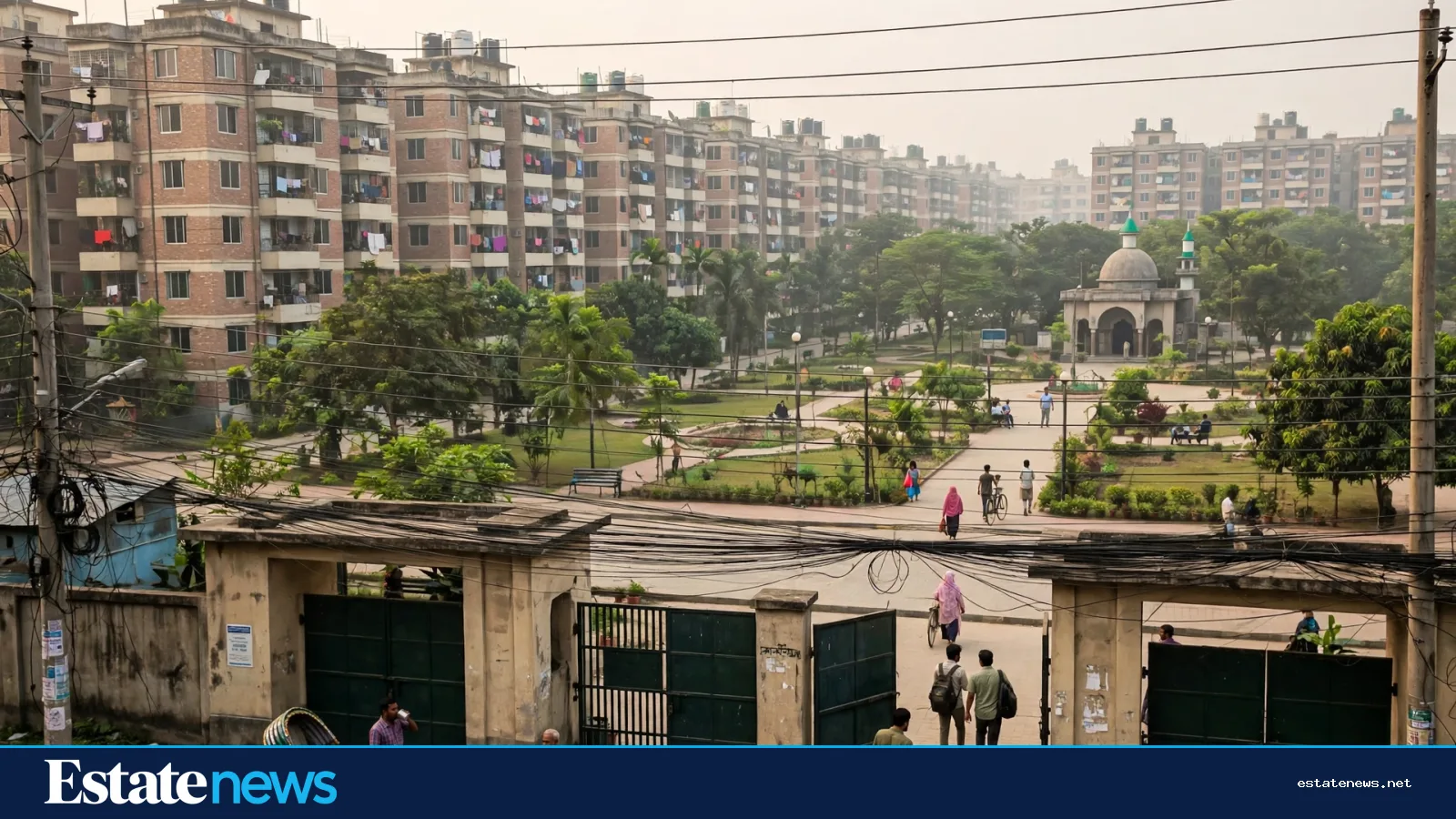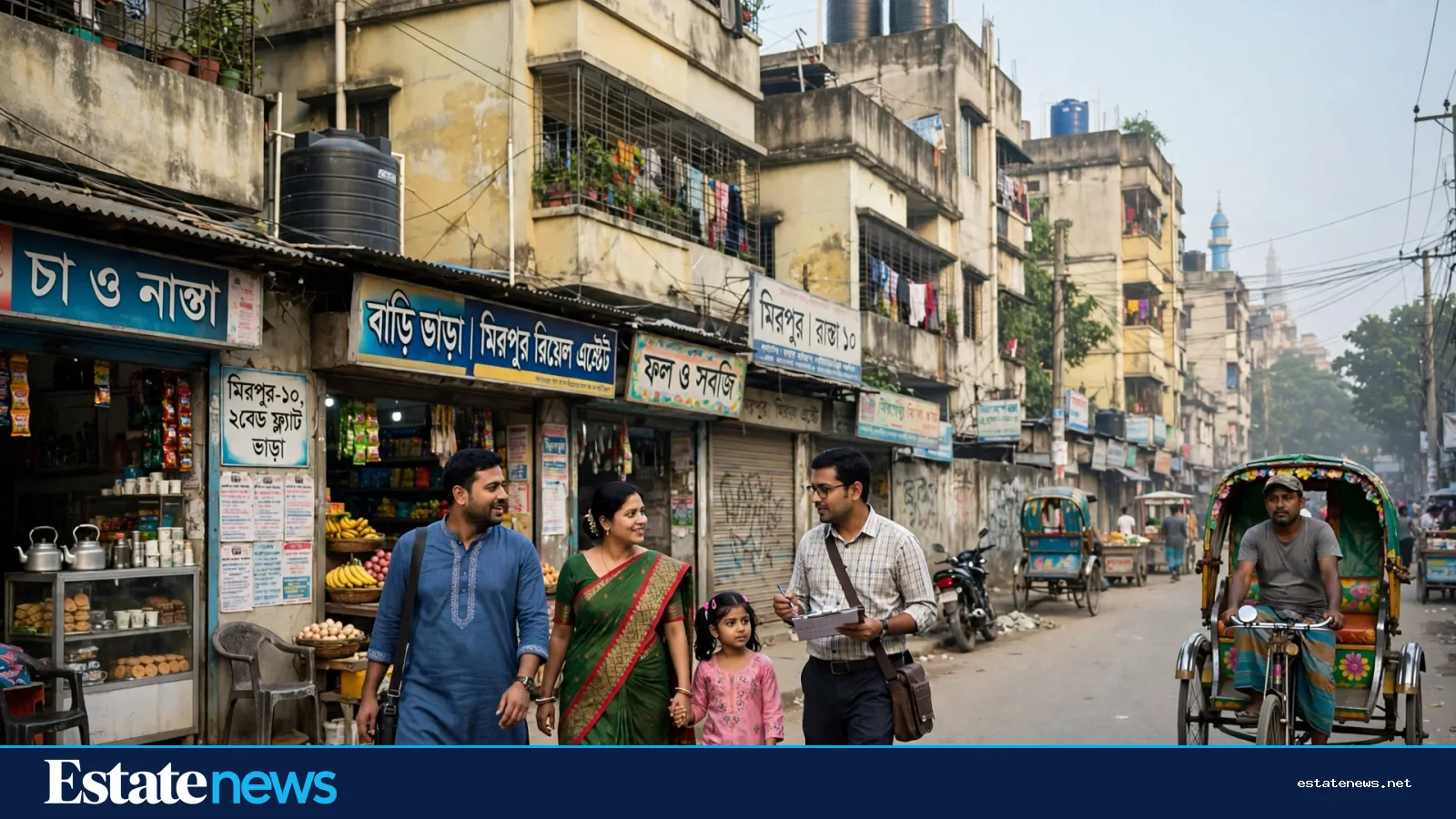
The lane is narrow enough that two rickshaws cannot pass each other without one pulling to the side. Above it, six-storey blocks press close, balconies hung with washing, rooftop water tanks black against a pale sky. A family walks slowly, the father counting windows, the mother looking at the stairwell, a child trailing behind with a school bag. They are not here to admire the buildings. They are doing the maths in their heads, the same maths every middle-income family in Dhaka does when it starts looking for a flat of its own.
The number they carry with them is Tk 45 lakh. That is the price the Real Estate and Housing Association of Bangladesh, REHAB, has put on the small flats its new leadership says it wants to build in and around Dhaka. The promise is simple to state and hard to deliver: a home of your own, at a price a salaried family can reach. This feature tests the promise against the prices flats are actually being offered at today, area by area, and sets out what a buyer should check before believing any number on a brochure.
The promise, and who made it

REHAB's current leadership took charge after an election by direct member votes on 18 April, with Ali Afzal as president and Abdur Razzaque as senior vice president, leading a committee of seven office-bearers and 22 directors for a two-year term. Afzal won the presidency with 232 votes, ahead of outgoing president Md Wahiduzzaman's 193. Razzaque took the senior vice presidency with 216 votes, narrowly ahead of Liakat Ali Bhuiyan's 214.
The affordable-housing promise has been the leadership's headline commitment since then. According to the Daily Asian Age, the leadership has said it plans to construct small-sized apartments in and around Dhaka priced at around Tk 4.5 million. The fuller version of the plan, reported by New Age, puts the price range at Tk 40 lakh to Tk 60 lakh, on the outskirts of the capital, in places like Savar, Gazipur and Keraniganj, where land is cheaper. Razzaque has been candid about the limit. It is not feasible to provide low-cost flats inside Dhaka under current conditions, he has said, because the land costs too much and the maths does not work.
That honesty matters. It draws a line between the promise and the city centre, and it tells a buyer where to look. The flats, if they come, will be built where land is cheaper and new roads are opening up. The test is whether the projects appear, with names, locations and prices a buyer can actually visit. The next public test comes at the REHAB Fair 2026, running 24 to 28 December at the Bangladesh-China Friendship Conference Centre in Agargaon, where visitors will be looking for the small flats at the promised price.
What Tk 45 lakh buys in Mirpur
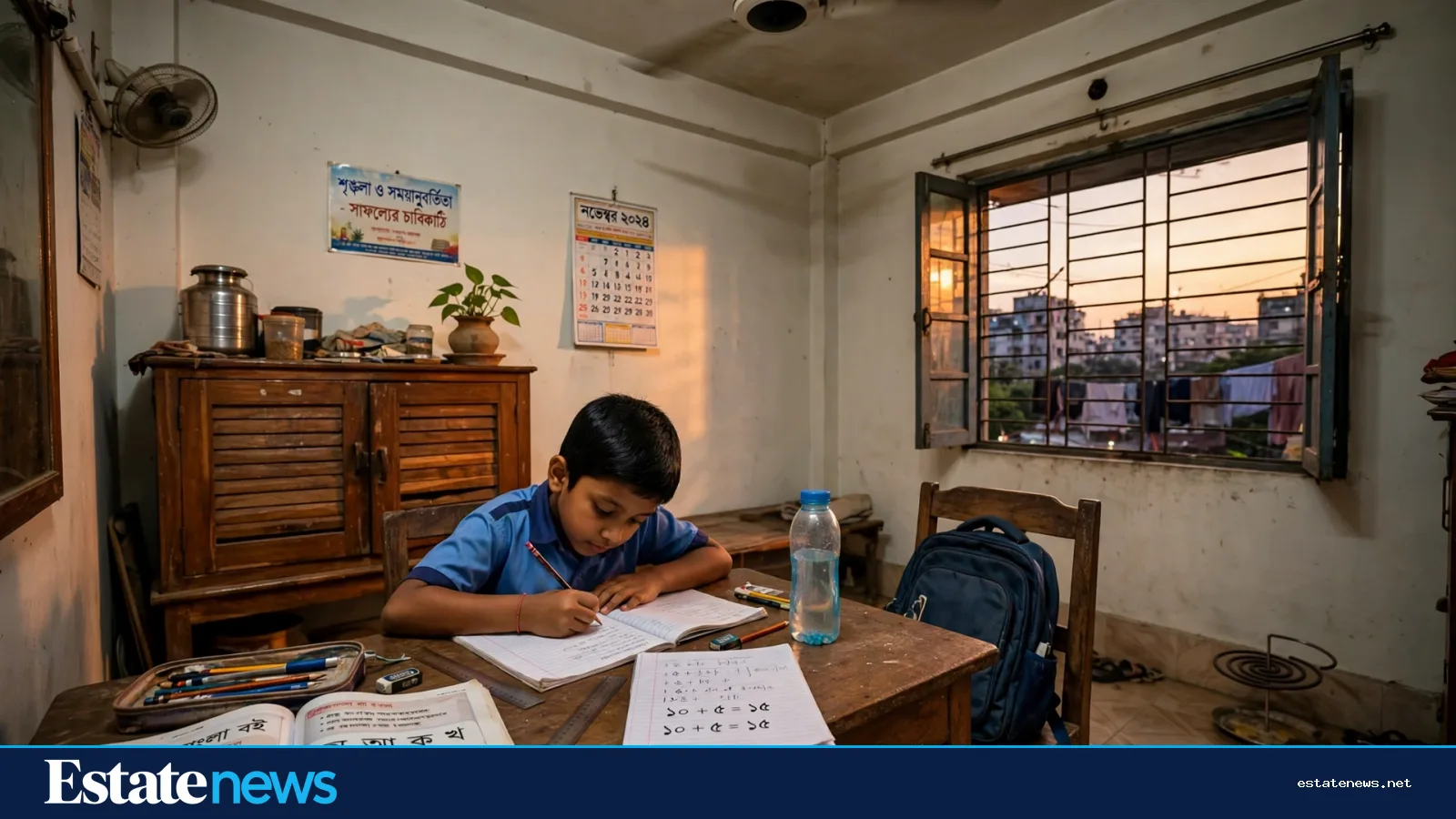
Start with the cheapest ground in the city. Estate News tracks asking prices from current public sale listings, and the latest run, as of 26 November, puts the median asking price in Mirpur at Tk 8,700 a square foot, from a sample of ten listings. At that rate, a 500 square foot flat costs Tk 43,50,000. That is inside the promise, with Tk 1,50,000 to spare.
A 500 square foot flat is small. It is a living room, two bedrooms if the plan is tight, a kitchen and a bathroom, and little room left over. For a young couple, or a family of three, it is a start. For a family of five, it is a squeeze. The point is not that the flat is generous. The point is that the arithmetic works, in Mirpur, at today's asking prices, for a flat of that size.
The same money stretches differently a few kilometres east. In Bashundhara Residential Area, the median asking price is Tk 9,865 a square foot, from ten listings. A 450 square foot flat there costs Tk 44,39,250. Again, inside the promise. The flat is smaller, the neighbourhood is newer, the roads are wider, and the trade is plain to see: space for surroundings.
Where the promise runs out


Move north, and the maths turns. In Uttara, the median asking price is Tk 12,500 a square foot, from eight listings. Tk 45 lakh buys 360 square feet there. That is a studio, or a one-bedroom flat, not a family home. In Banani, at Tk 13,888 a square foot from nine listings, the same money buys about 324 square feet.
In Gulshan and Dhanmondi, the promise stops altogether. Both areas carry a median asking price of Tk 20,000 a square foot, from nine and ten listings. Tk 45 lakh buys 225 square feet in either place. That is a room, not a flat. Nobody in the REHAB leadership has suggested otherwise. The promise was never about Gulshan. It was about the edges of the city, and the figures show why.
These are asking prices, not transaction prices. A listing price is what a seller hopes for. The price a buyer actually pays can be lower, after negotiation, and it can be higher, if the flat is ready and the location is in demand. The medians come from a small sample of public listings, eight to ten per area, and they move month to month. They are a guide to the market, not a quotation for any single flat.
The costs on top of the price
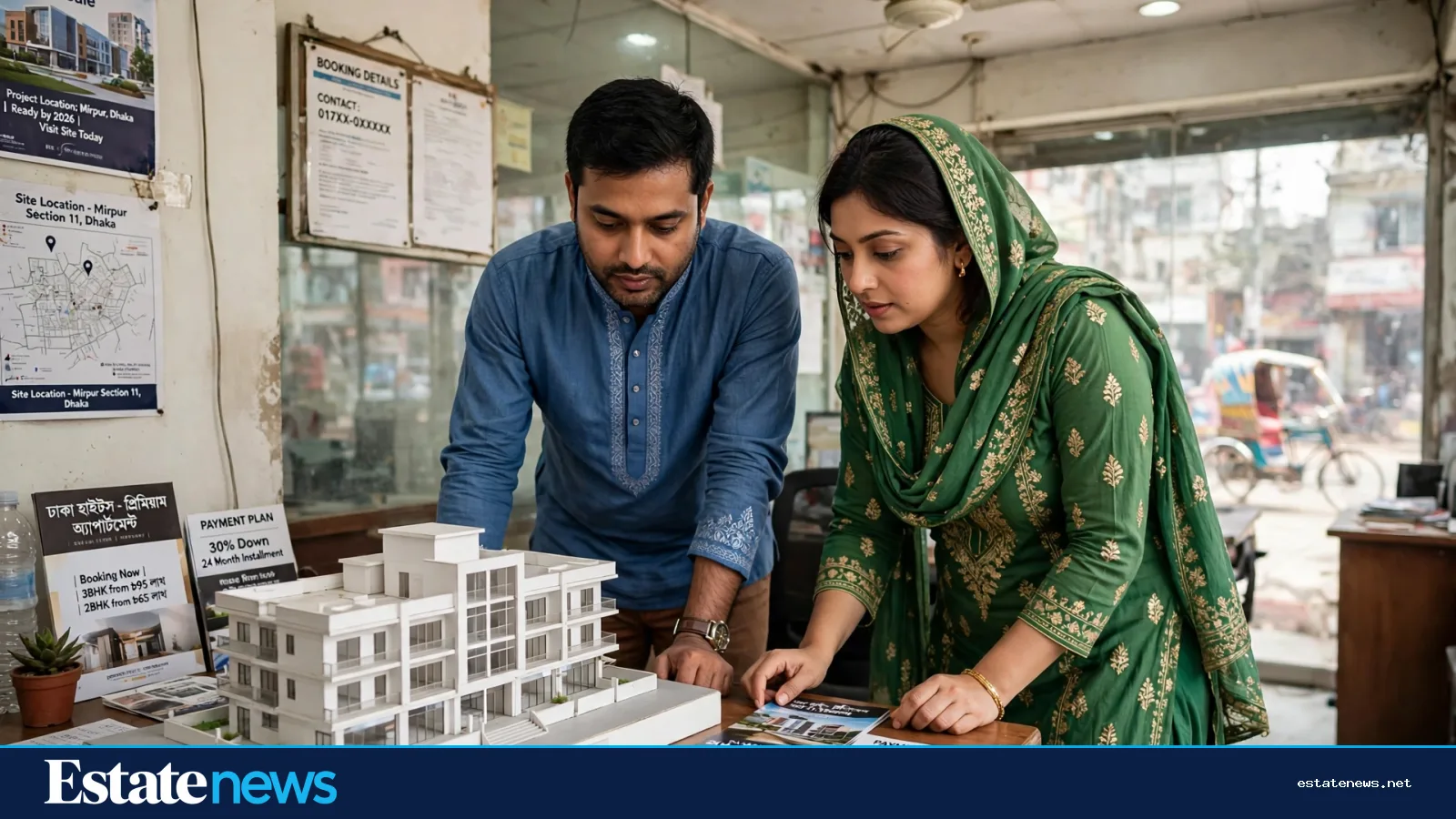
The price on the brochure is never the price a buyer pays. Registration costs sit on top of it, and on a Tk 45 lakh flat they add up to nearly Tk 3 lakh. Stamp duty runs at 1.5 percent, or Tk 67,500. The registration fee is 1 percent, or Tk 45,000. Local government tax is 2 percent inside a city corporation, or Tk 90,000. VAT on a new flat up to 1,600 square feet is 2 percent, another Tk 90,000. Mutation costs Tk 1,170. Together, that is Tk 2,93,670, before a buyer has bought a single piece of furniture.
Then comes the loan. A flat at Tk 45 lakh still needs a deposit, and a monthly instalment a salary must carry for years. REHAB's leadership has said it will press the government on high registration costs, limited access to bank financing and slow project approvals, and a delegation led by Afzal has already taken the case to RAJUK, asking for amendments to the Detailed Area Plan, more high-rise and planned construction, and credit facilities outside Dhaka. Until those costs fall, the real price of a Tk 45 lakh flat is closer to Tk 48 lakh.
What a buyer should check first
A promise is not a project. Before booking anything at the promised price, a buyer should ask for the things that turn a speech into a home. The deed and the chain of title, checked against the records. The RAJUK approval for the building, and whether the flat on offer matches the approved plan. The mutation record, and whether the land is free of dispute. The handover date in writing, with what happens if it slips.
Estate News covered the promise itself in "REHAB's Tk 45 Lakh Flat Promise: What It Will Take to Deliver", the cheapest ground in the city in "Mirpur: Dhaka's Cheapest Flats and the People Who Buy Them", and the full area-by-area picture in "Flat Price in Dhaka: What November's Asking Prices Say, Area by Area". The guides on registration costs and flat agreements carry the rest of the checklist.
The family in the Mirpur lane will keep walking, counting windows, doing the maths. Tk 45 lakh buys a small flat in Mirpur or Bashundhara today, a studio in Uttara, and nothing like a home in Gulshan or Dhanmondi. The promise is real as a direction. Whether it becomes real as a set of keys depends on the projects REHAB's leadership puts on the ground, at the price it named, in the places it named. December's fair is the first place to look.