We got a number wrong yesterday, and this piece exists to put it right. In our report on the United States' proposed tariff on Bangladeshi goods, we said the total bill would reach 43 percent. That reading treated the proposed 18 percent duty as an extra charge on top of the 10 percent forced-labour duty already in force. It is not. The 18 percent would replace the 10 percent. The correct total, on the average figures published since, is 33.62 percent, not 43 percent. The difference is nearly ten percentage points, and in a business where margins are counted in cents per shirt, it matters.
Here is how the arithmetic actually works. Bangladeshi goods already face an average most favoured nation duty of 15.62 percent, plus a 10 percent Section 301 forced-labour duty imposed in July. That puts the current total at 25.62 percent. The Office of the United States Trade Representative proposed on 25 November a tariff of up to 18 percent on Bangladeshi goods, under Section 301, accusing Bangladesh and 13 other economies of building excess industrial capacity that limits opportunities for American producers. The proposal says the 18 percent is "net of existing Section 301 tariffs". In customs terms, that means the existing duty is subtracted from the proposed ceiling, not added to it. The 18 percent includes the 10 percent already in force, so the real increase is eight percentage points. Add the 18 percent to the 15.62 percent average most favoured nation rate, and the total comes to 33.62 percent.
The Daily Star's explainer on 26 November set it out plainly, and The Business Standard's explainer the same day reached the same figure by the same route: 15.6 percent plus the 8 percent increase, for a total of 33.6 percent on garments. USTR Jamieson Greer told CNBC the two sets of tariffs "are not really additive". The 43 percent figure came from adding 18 to 10 to 15.62, a reading the proposal's own wording rules out. Nothing here is yet in effect. Written comments are due by 5 January 2027, public hearings begin on 25 January 2027, and duties will not change until the USTR issues a final determination.

What the exporters actually say
The exporters, speaking to The Daily Star on 27 November, are calmer than the headline number suggests. AK Azad, chairman and managing director of Ha-Meem Group, said there is a possibility of losing share in the American market if the 18 percent tariff is imposed, as it will also push up commodity prices. Ha-Meem exports more than $1 billion of textiles and garments a year, 80 percent of it to the US. Azad added that there is room for relief, since the tariff is yet to be imposed and a hearing on it is due in January.
Ramjul Seraj, managing director of Elite Group of Companies, took the opposite view of the same facts. The duty will create equal conditions, he said, because it targets major garment-producing nations. "Bangladesh may therefore not be badly affected in the American market," he added. Mahmud Hasan Khan, president of the Bangladesh Garment Manufacturers and Exporters Association, said local exporters may not suffer much because nearly all shipments to the US are made on a freight on board basis. The risk, he said, is second-hand: Bangladesh may ultimately feel some effect if American buyers import less.
Md Fazlul Hoque, administrator of the Federation of Bangladesh Chambers of Commerce and Industry, was blunter. "Despite having a relatively favourable tariff position compared with competing countries, Bangladesh will not be spared the impact, as higher duties could disrupt demand in the US market." Shams Mahmud, managing director of Shasha Denims, said the tariff gap may give Bangladesh an edge over rival exporters, but "orders will not shift automatically". The advantage will mean little, he said, without improvements in energy supply, logistics and delivery reliability. He blamed unreliable energy for opportunities already missed in higher-value products such as synthetic garments, outerwear and activewear.
The numbers behind the worry are large. Bangladesh exported goods worth $9.47 billion to the US in 2025, with garments accounting for about $8.2 billion of it, according to The Daily Star. The US is Bangladesh's largest single-country market, and Bangladesh held a 12.3 percent share of the imported American apparel market in 2025, according to data from the United States Fashion Industry Association. American apparel imports as a whole fell to $77.88 billion in 2025, from $79.25 billion in 2024, according to the US Office of Textiles and Apparel. The market is shrinking, and the fight for what remains is getting harder.


The cotton promise that never arrived
The tariff proposal lands on top of a promise Washington has not kept. Under the Agreement on Reciprocal Trade signed on 9 February, garments made with US cotton were supposed to receive duty-free access to the American market from late September. Bangladeshi mills bought more American cotton in anticipation. The access has not materialised. Mahmud Hasan Khan Babu of the BGMEA told The Business Standard: "We met with the US embassy last month... The embassy told us US Customs is still working on it."
Washington is now pressing Dhaka to buy American yarn instead of Chinese yarn. Babu's answer was direct: "US yarn is much more expensive... importing US yarn under these circumstances would bring it to the brink of collapse." Bangladesh imported $3.31 billion worth of yarn and $3 billion worth of cotton in the last fiscal year, much of it sourced from China, according to central bank data carried by The Business Standard.
The same report sets out what Dhaka has already given. Bangladesh more than doubled its imports from the US in the April to June quarter, to $1.29 billion from $605.6 million in January to March, after the February deal. Imports from the US reached $3.6 billion in FY26, up from $2.72 billion the year before. The commitments include nearly $15 billion of US liquefied natural gas over 15 years, 700,000 tonnes of wheat, 2.6 million tonnes of soybeans, $3.5 billion of cotton, and a 12-year deal with Gunvor for 117 LNG cargoes between 2026 and 2038. Biman Bangladesh Airlines has committed to buying 25 Boeing aircraft, including a $3.7 billion agreement for 14 jets signed on 30 April. The Centre for Policy Dialogue estimates the February deal's concessions cost Tk 1,327 crore in lost import duty this fiscal year.
What it means for the factory towns
State Minister for Foreign Affairs Humaiun Kobir told reporters on 26 November that there is scope for discussion, and that Dhaka views several elements of the US position as unjustified and will raise them in upcoming talks. That is the near-term path: comments by 5 January, hearings from 25 January, and a negotiation in between.
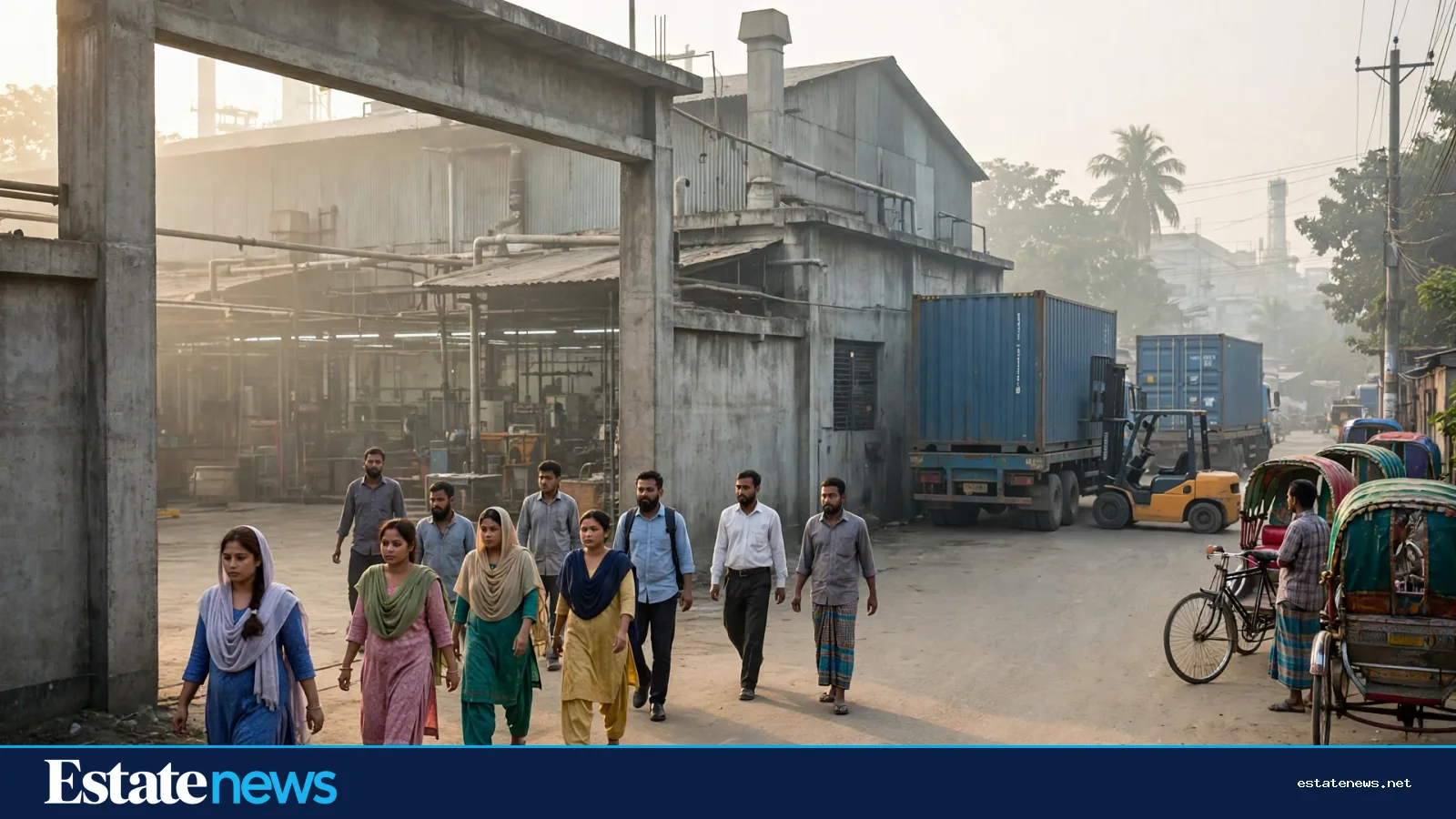
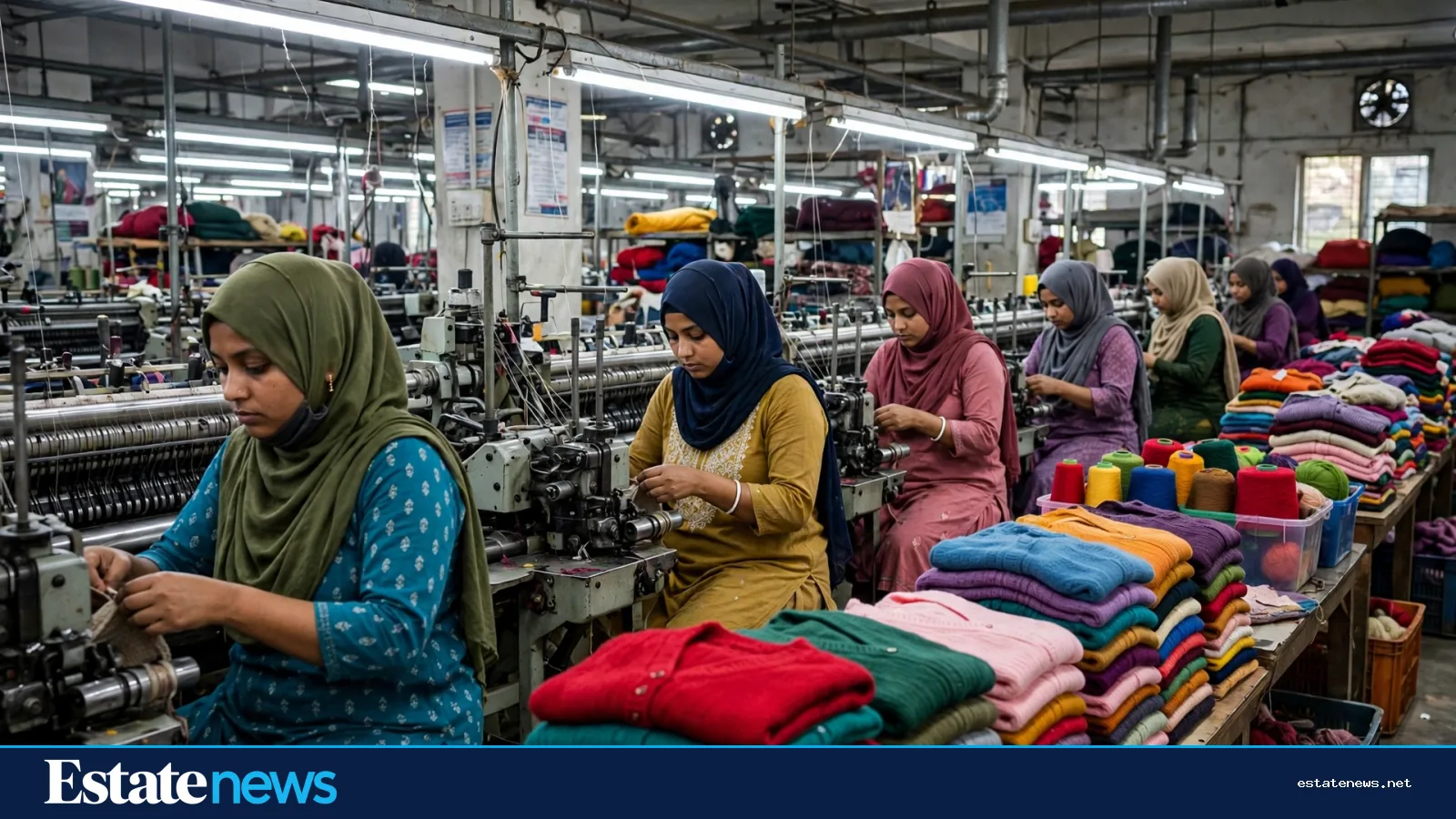
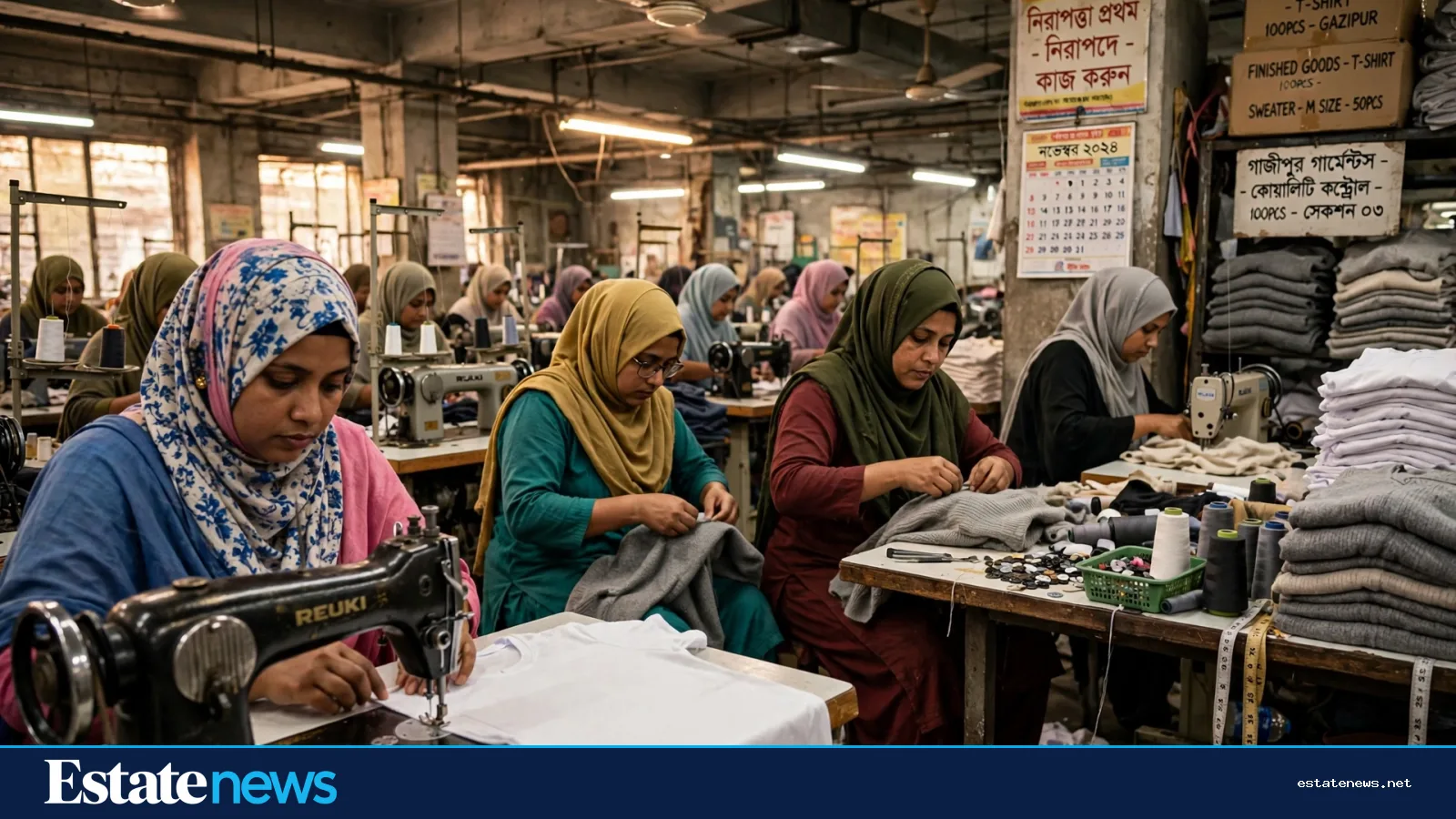
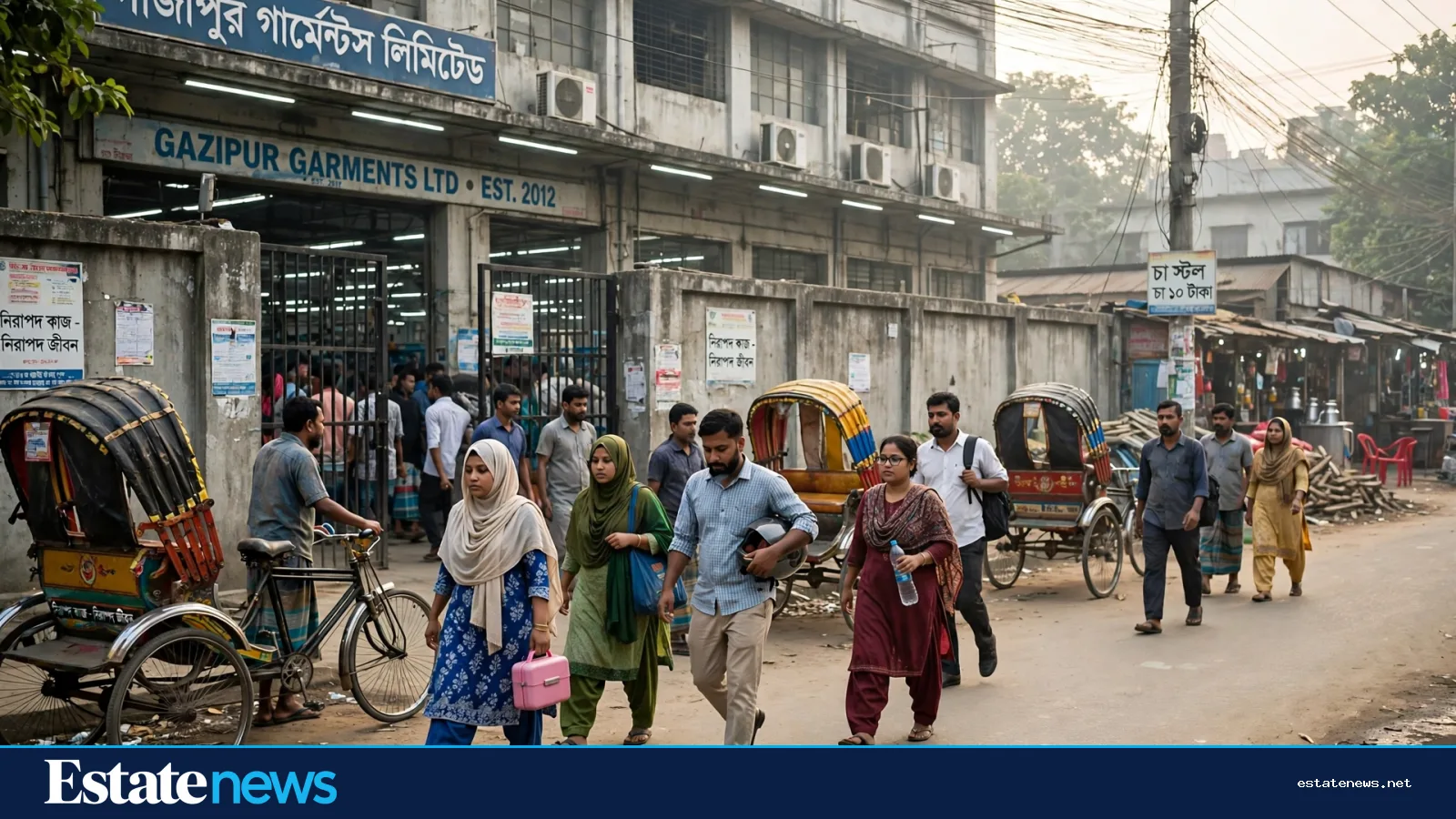
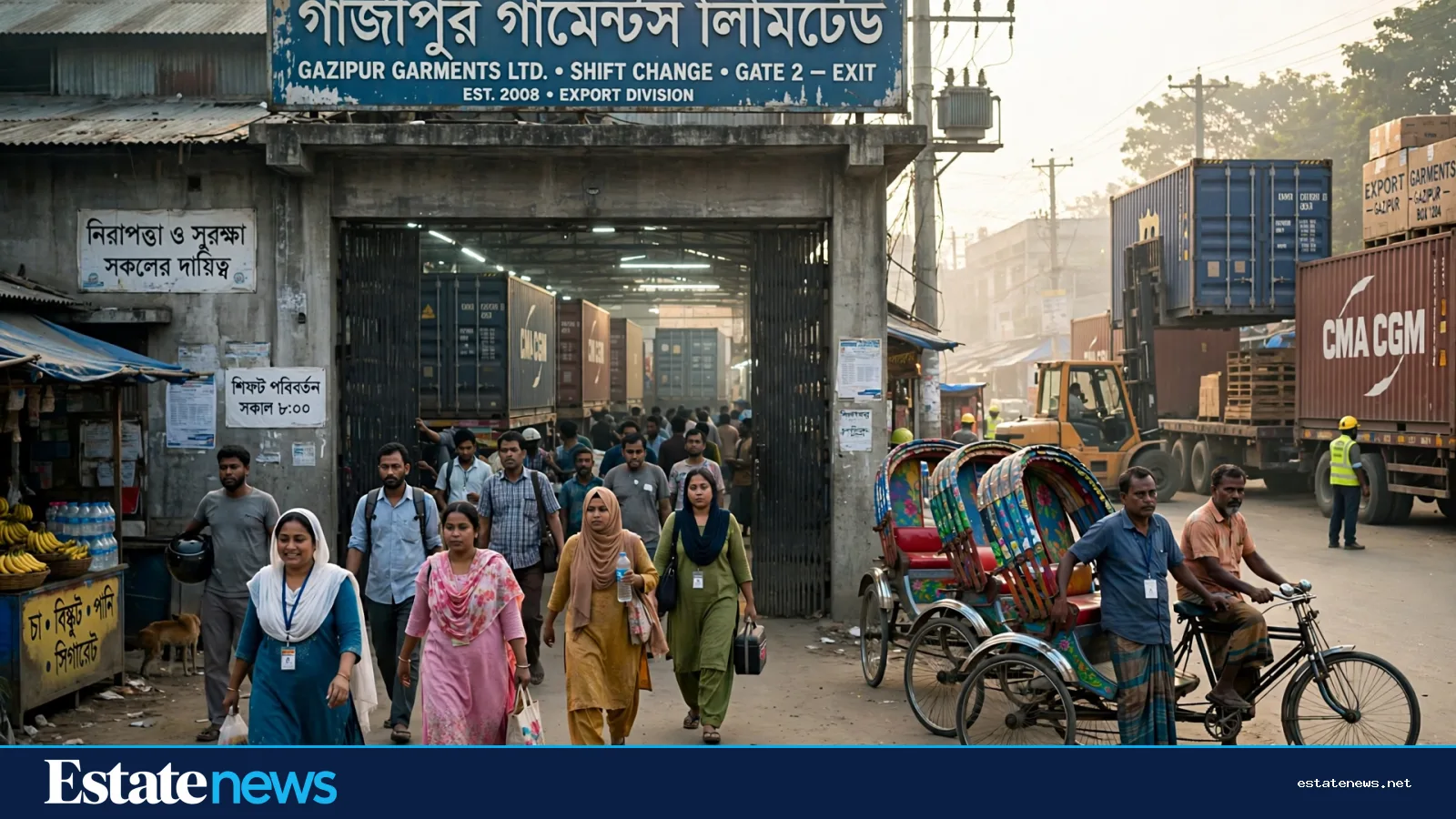
The stakes reach beyond the export figures. Every percentage point of duty is a cent on a shirt, and every cent is a margin a factory either absorbs or passes on. If American buyers import less, the orders shrink, and the factories in Gazipur and Narayanganj feel it first, in overtime, then in shifts, then in jobs. The houses those jobs pay for, the rents in the factory towns, the small shops along the factory roads, all of it runs on the same money.
Estate News reported the proposal first in "The US Proposes 18% Tariffs on Bangladesh. The Total Bill Would Reach 43%", the piece this article corrects. The wider picture of the quarter's export earnings is in "The Garment Sector Kept $6.77 Billion This Quarter. That Is the Real Number", and the week's market reaction in "Bangladesh Market Wrap, 26 November: Tariffs, Wages, the Fall". The corrected figure is 33.62 percent. It is still a heavy number. It is not 43 percent, and our readers deserved the right one.