For years, managing a flat in Dhaka from abroad worked like this: a caretaker collected the rent, a relative checked in now and then, and the owner learned about a leaking pipe or a broken lift weeks after it happened, if at all. The system ran on trust and phone calls, and it worked well enough when everyone involved knew each other. It worked badly when they did not, or when the owner lived eight time zones away and the caretaker's phone went unanswered.
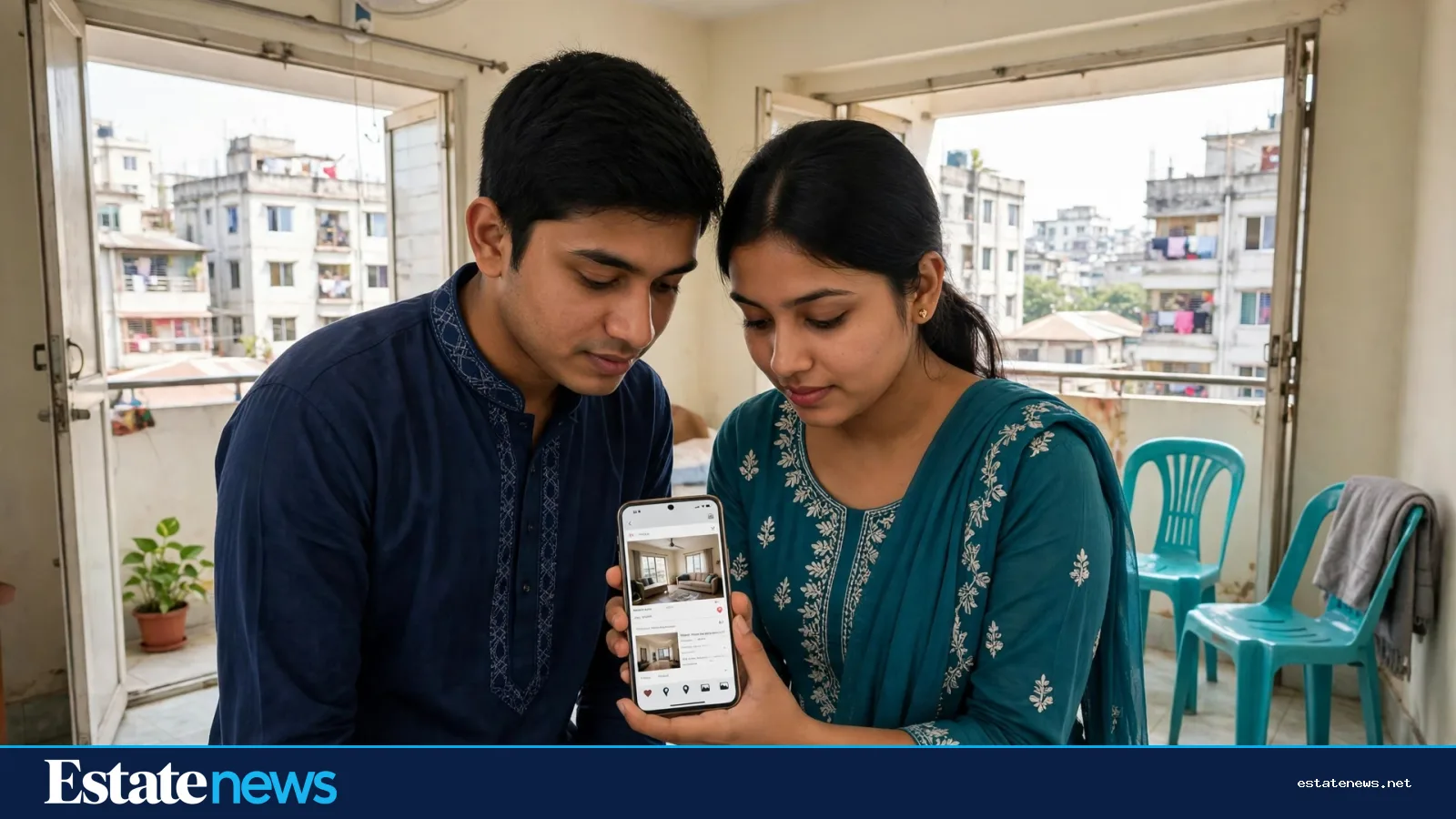
October brought two launches that try to replace that system with something more visible. On 3 October, Digi Bangla reported the launch of Nibash Plus in Bangladesh, a platform from Finland-based Red N Green International Oy and US-based Nibash PropTech LLC, designed to bring payments, maintenance requests and documentation into one place for non-resident Bangladeshi owners, local landlords, property managers and commercial owners. On 25 October, bdnews24 reported the launch of Property64, a marketplace where sellers list properties for sale or rent across Bangladesh and buyers contact them by phone, WhatsApp or in-platform chat. The two platforms do different jobs, listings on one side and management on the other, but they point in the same direction: property work in Bangladesh is moving onto screens, and the screen is becoming the first place a flat is found, rented or run.
Why the timing fits

The audience for property management technology in Bangladesh is unusually large. UN DESA data puts the country's international migrant population at about 8.7 million, according to the Digi Bangla report. Bangladesh Bank figures cited in the same coverage show remittance inflows rising from 30.33 billion dollars in FY2024-25 to 35.59 billion dollars in FY2025-26, growth of about 17.3 per cent. Not every remittance dollar goes into property, and there is no reliable public data on how many non-resident Bangladeshis own property in the country, a gap the coverage itself notes. But the direction is clear: a large population abroad sends money home, some of it buys flats and land, and those owners need a way to watch what they own.
Global figures give the trend a frame without proving anything about Bangladesh. Grand View Research valued the global property management market at 660.2 billion dollars in 2025 and projected it to reach 1.125 trillion dollars by 2033. That projection is a research firm's estimate, not a fact about Dhaka. What matters for a Dhaka owner is narrower: whether a platform can show, in one place, that rent was paid, that a repair was requested and done, and that the papers for a flat are where they should be.
What Nibash Plus is trying to fix
Property management in Bangladesh has traditionally run through separate people: the landlord, the tenant, the caretaker and the broker, each with their own version of events. Nibash Plus, according to its launch coverage, tries to put owners, tenants and service providers onto one connected platform, with rent and maintenance tracking that an owner abroad can see. The company's chief executive is quoted in the coverage as saying that the market has grown but management still depends on fragmented processes and personal networks, and that a connected platform could make oversight more efficient and visible from anywhere.
That is a plausible pitch, and it is also a pitch that needs testing against the realities of a Dhaka building. A platform can record a maintenance request. It cannot fix a pump. It can show a rent payment. It cannot evict a tenant who stops paying, or negotiate with a residents' committee about a service charge rise. The value of the tool depends on the people behind it: who responds to a request, how fast, and what happens when the answer is disputed. An owner abroad should ask those questions before handing a flat to any platform, and should keep a local contact who can visit the building in person.


What Property64 adds on the listings side
Property64 enters a market that has long run on word of mouth, Facebook groups and scattered classified pages, as the company itself put it at launch. The platform covers land, flats, houses, commercial properties, businesses, hostels, mess accommodation and sublets across Bangladesh, not only in Dhaka. Sellers identify their role on each listing, as owner, representative, agent, agency, developer or company. A Smart Request system lets buyers submit their requirements and receive a response when a seller's listing matches.
Those features address real frustrations. A buyer searching Facebook groups sees the same flat posted by three different people at three different prices, with no way to tell who actually controls it. A platform that labels the seller's role at least gives the buyer a starting point for verification. It does not remove the need for verification. A listing, however clean its presentation, is still a claim. The flat must be visited, the papers must be checked, and the seller's right to sell must be confirmed through a lawyer, just as with any other channel.
A checklist for using property tech well
An owner or buyer using either kind of platform can get more from it by treating it as a record, not as a replacement for judgement.
- Keep the paper trail: rent receipts, maintenance bills and agreements should be stored where both owner and tenant can see them, not only in a chat thread.
- Name a local person: a relative, a manager or a trusted neighbour who can visit the flat when a dashboard says something needs attention.
- Verify before paying: a listing's seller label is a starting point. Visit the flat, check the deed chain and mutation record, and confirm the seller's identity before money moves.
- Read the repair record: a platform that shows repeated repairs to the same lift or pump is telling you something about the building, not only about the flat.
- Check what happens in a dispute: who mediates when a tenant and owner disagree, and what record exists if the matter goes further.
Property technology in Bangladesh is still young. Two October launches do not make a mature market, and the platforms that survive will be the ones that handle the unglamorous parts well: a rent receipt that arrives on time, a repair that is actually done, a document that can be found when it is needed. For owners abroad, that is a genuine improvement on a phone call that goes unanswered. It is not a substitute for a person who can walk into the flat, look at the walls, and tell the owner what they see. The best use of the new tools is to make that person's work visible, not to pretend the person is no longer needed.