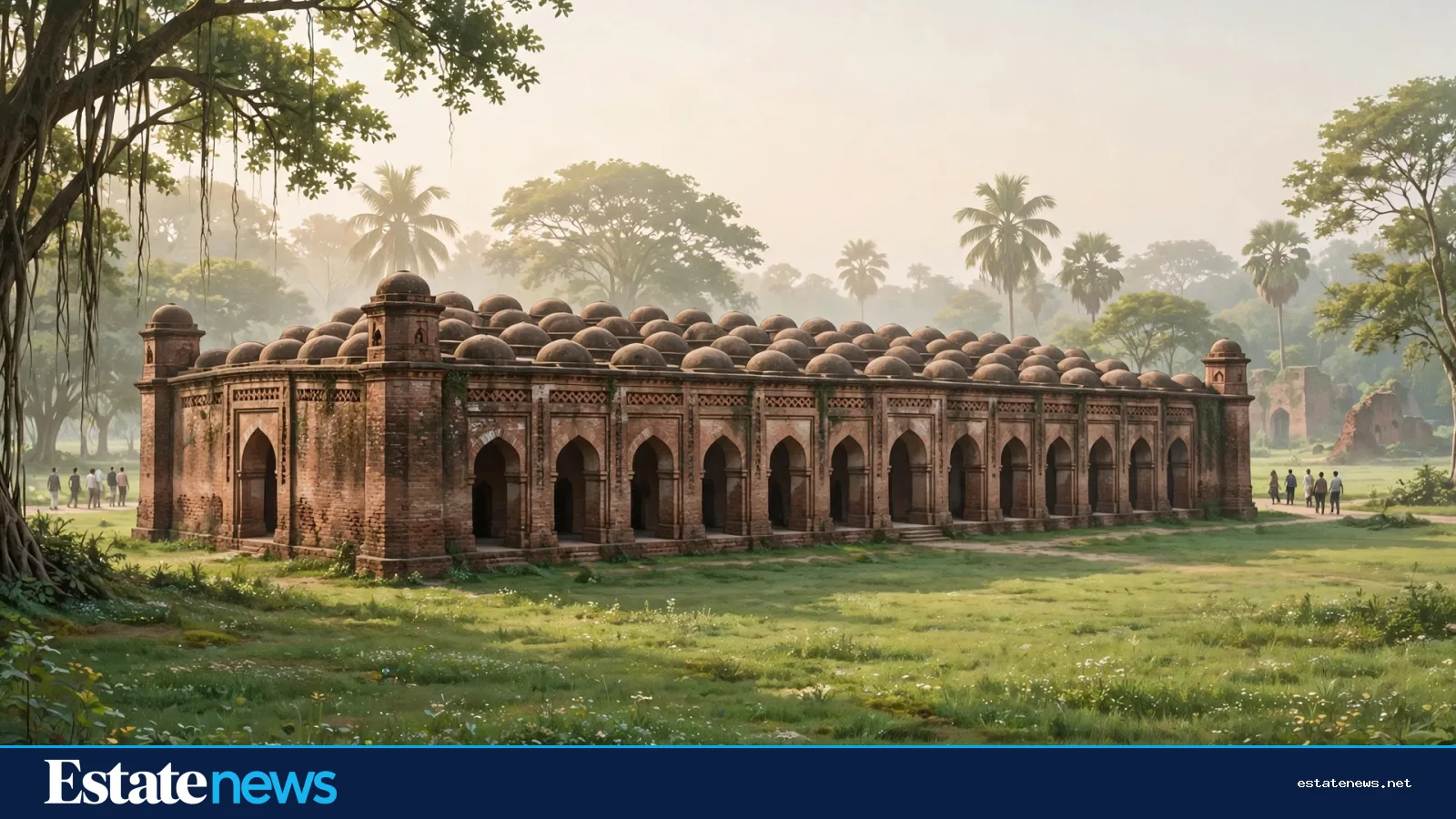
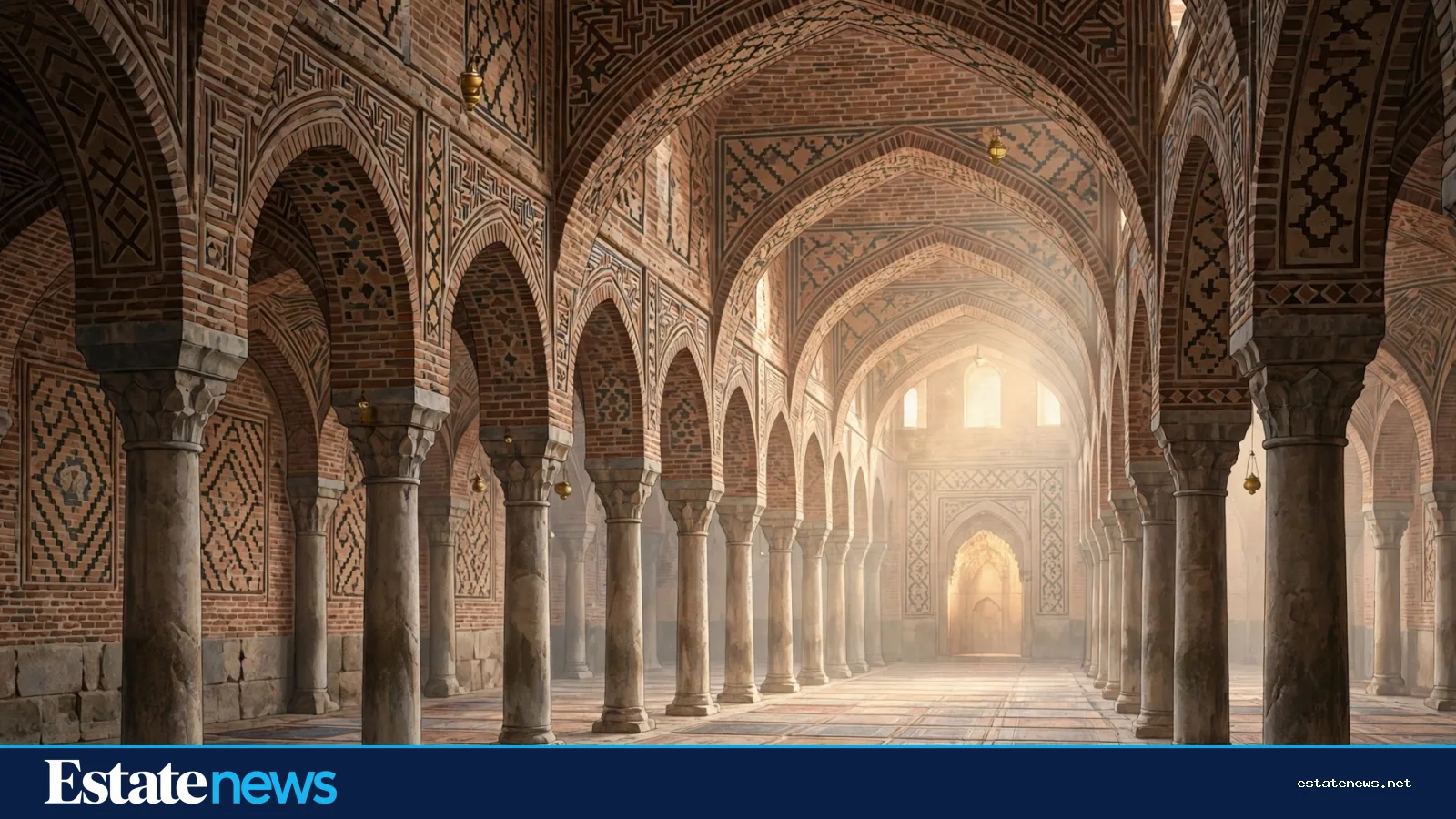
The first thing to know about the Sixty Dome Mosque is that its name is a riddle. Count the domes on its roof and you will reach seventy-seven, not sixty. Count the pillars inside and the name starts to make sense: sixty stone pillars hold the roof up, arranged in rows that turn the prayer hall into something like a forest of columns. The building has carried its misleading name for centuries, and it has never seemed to mind.
The mosque stands in Bagerhat, in Khulna Division, about seven kilometres from Bagerhat town on the Khulna to Bagerhat highway. It is the largest mosque in Bangladesh from the Bengal Sultanate period, and the centrepiece of the Historic Mosque City of Bagerhat, which UNESCO placed on its World Heritage List in 1985. That listing covers not just this one building but the whole surviving ensemble of mosques, tanks and tombs from a city that was built, lost to the forest, and found again.
A city raised from the forest edge

The builder was Khan Jahan Ali, a Sufi saint, administrator and military figure under the Bengal Sultanate. In the middle of the 15th century he founded a settlement in the mangrove fringe of the Sundarbans, in what is now Bagerhat district, and set about building it as a proper city, then known as Khalifatabad. Roads, reservoirs, bridges and mosques followed, in the practical spirit of a founder who understood that a city needs water and worship in equal measure.
Construction of the great mosque is commonly dated from 1442 to 1459, during the reign of Sultan Nasiruddin Mahmud Shah. Local legend credits Khan Jahan Ali with building some 360 mosques. That figure is folklore, not a counted record: only a handful of his buildings survive today, and the Sixty Dome Mosque is the finest of them. The legend survives because it captures something true about the man, which is the scale of his ambition. He did not build a single mosque. He tried to build a city.
Brick, pillars and a roof of domes
The building measures roughly 160 feet by 108 feet, a long rectangle of thick baked-brick walls that taper slightly toward the roof, in the style associated with the Tughlaq period. Inside, the sixty pillars divide the hall into aisles and bays, and the roof above them carries rows of low domes, with curved chauchala domes along the central aisle and smaller domes on the four corner towers. Light enters through openings in the walls, and the interior stays cool even in the southern heat, a piece of practical design that still works today.
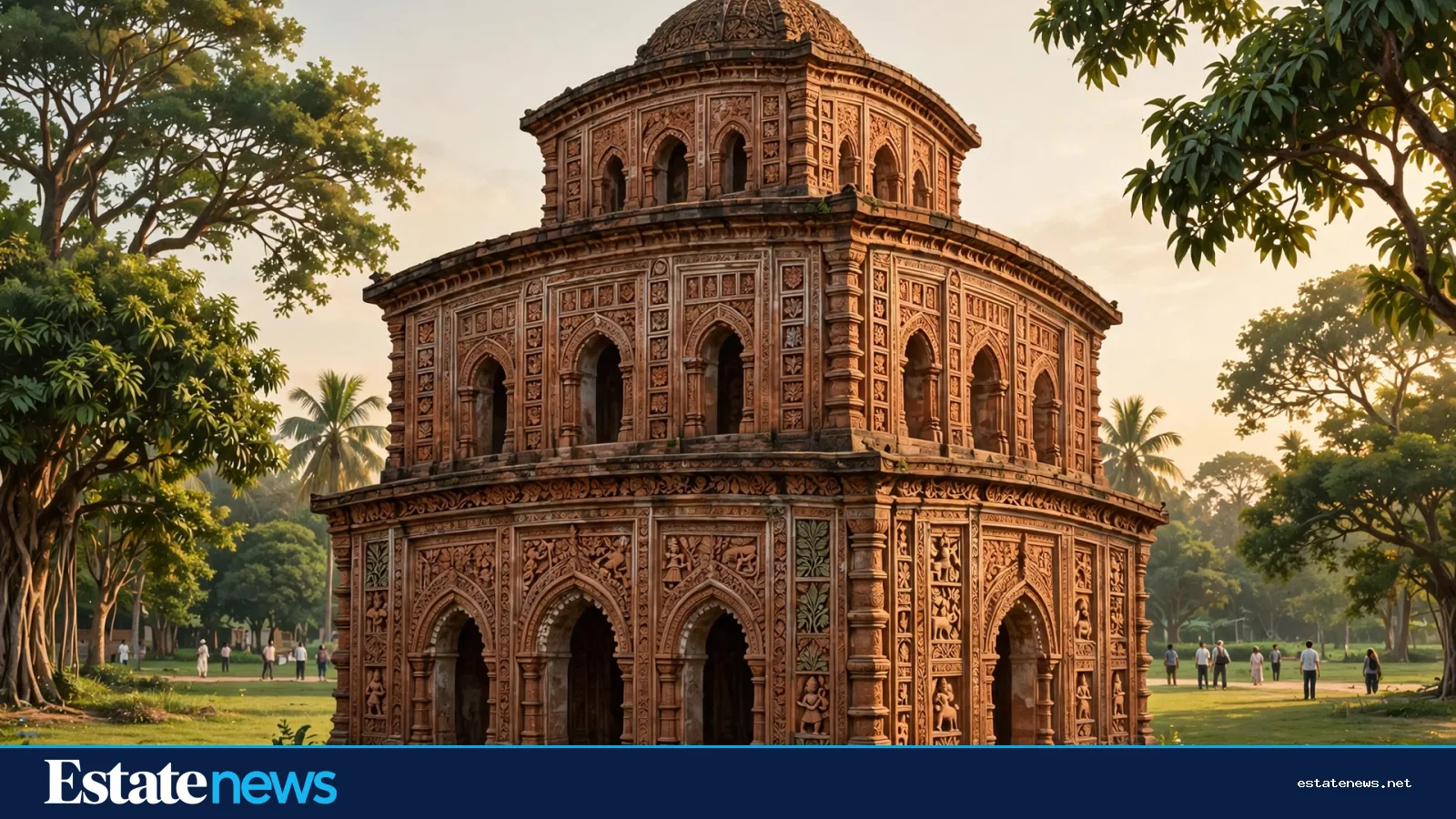
There is no stone in the delta to build with, so the builders used what the land offered: fired brick, made locally, laid with skill. Terracotta decoration appears on the walls, modest beside the terracotta extravagance of later temples, but enough to show that the builders cared about pattern as well as mass. The result is a building that impresses by repetition rather than height. No single dome dominates. The eye moves across the whole roof, and the whole roof is the point.


What stands there today
The mosque is still a working mosque, and it is also a protected monument under the Department of Archaeology, which acts as custodian of the site. A museum nearby tells the story of the mosque city, and visitors combine the mosque with the other surviving monuments of Bagerhat: the Nine Dome Mosque near Khan Jahan Ali's shrine, the shrine itself, and the great tanks, or dighis, that the city's builders dug for water storage.
For Bagerhat, the heritage listing is more than a plaque. It brings visitors, and visitors bring business to hotels, restaurants, transport operators and guides in a district town that otherwise sits far from the tourist map. The challenge is the familiar one for heritage sites everywhere: how to welcome visitors without wearing the building down, and how to keep conservation funded year after year, not just when a restoration project makes news.
Why it still matters
Six centuries after its completion, the mosque still teaches a lesson that Dhaka's builders could use. Khan Jahan Ali built for a city, not for a single structure. He dug tanks before he needed them, laid out streets, and built places of worship that also served as public landmarks. The mosque survived because it was part of a system, and because later generations, from 19th-century surveyors who recorded the ruins to the archaeologists who care for them now, kept choosing to preserve it.
A visitor standing in the pillared hall today hears the same thing a visitor heard in the 15th century: the echo of footsteps, the cool air, the sense of a roof held up by many columns rather than one great span. Buildings that last are rarely the loudest. They are the ones built well, used daily, and cared for by people who understand what they have. Bagerhat has one of those. Bangladesh should be proud to keep it standing.