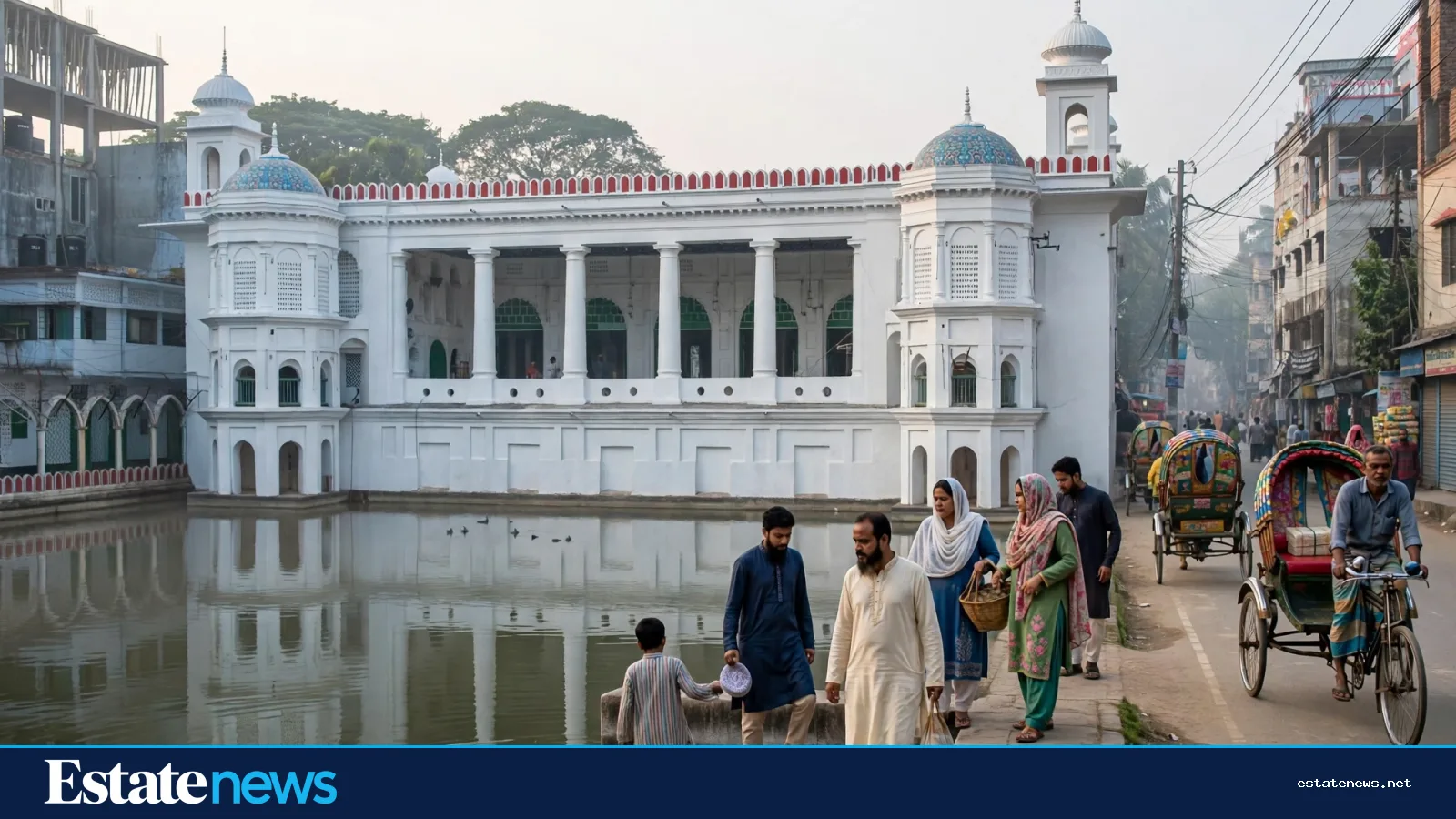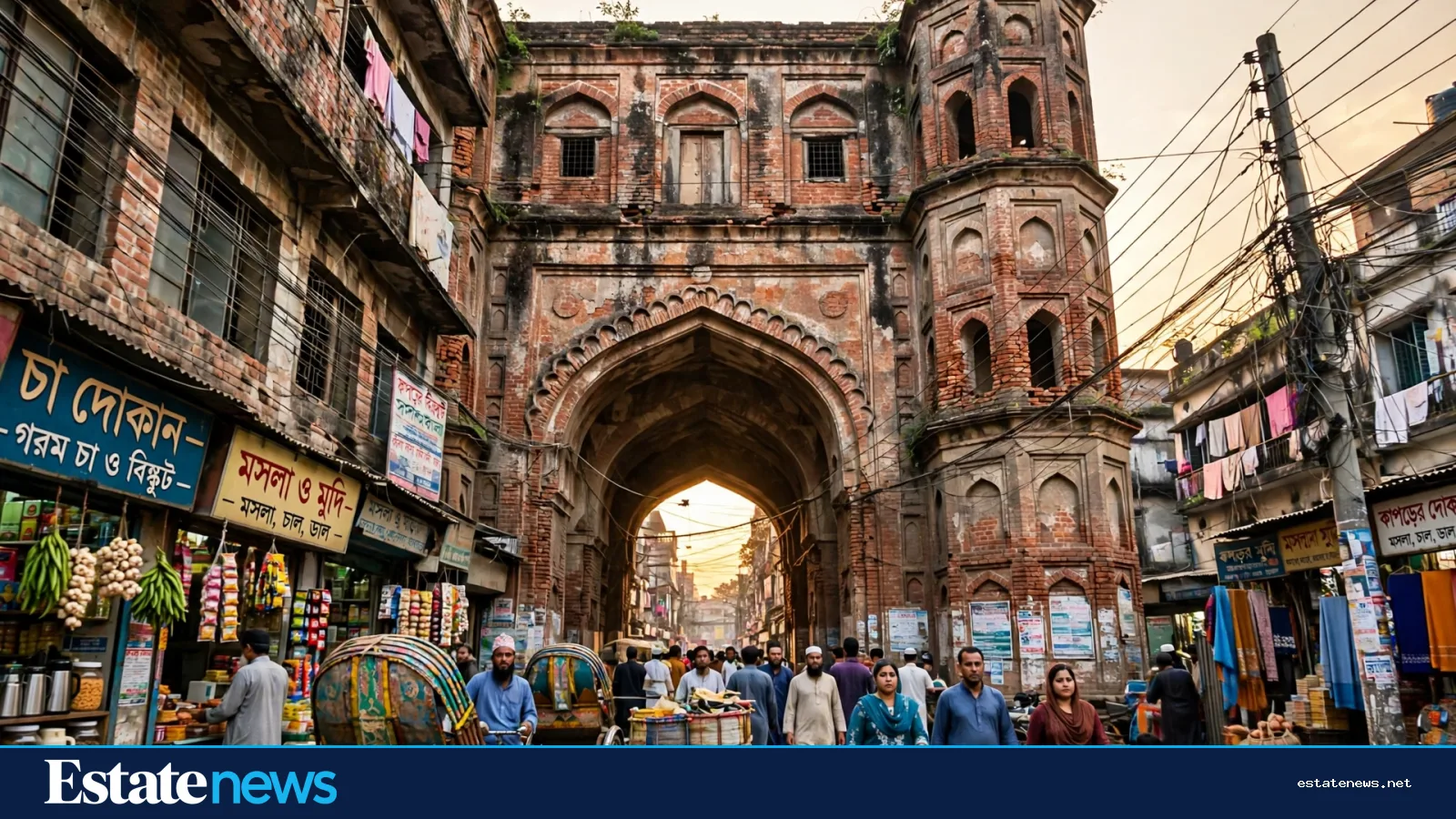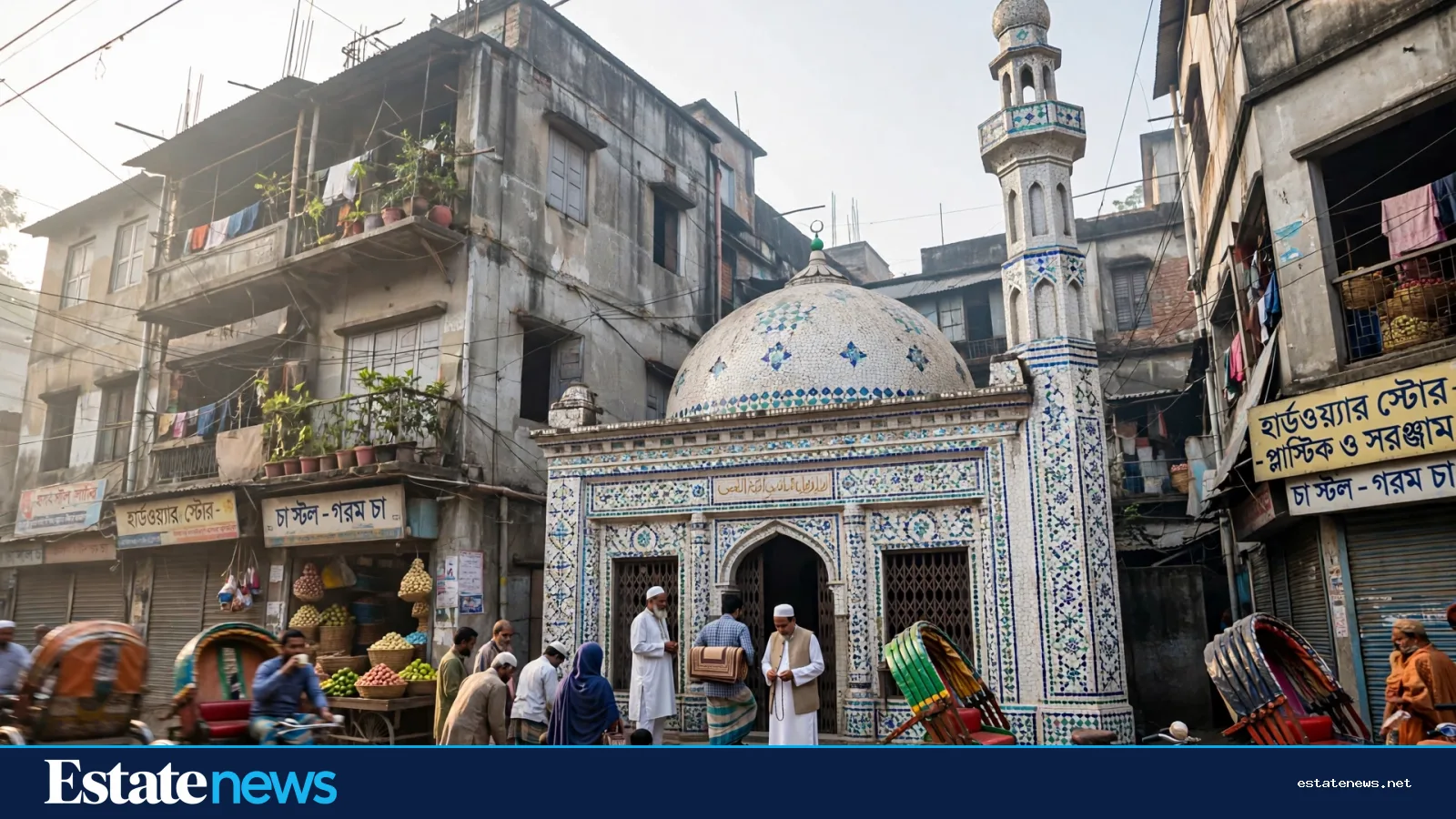
Walk north from Narinda Pool, past the Hayat Bepari Bridge, and the street narrows into the old city. Rickshaws thread between shops selling hardware and hot tea. Then, on a small plot hemmed in by four- and five-storey buildings, a white-tiled dome rises above the wires. This is Binat Bibi Mosque, and it has stood on this spot for 572 years.
It was built in 1454 by Bakht Binat, the daughter of Marhamat, during the reign of Sultan Nasiruddin Mahmud Shah, who ruled Bengal from 1435 to 1459. That makes it the earliest surviving mosque in Dhaka, and the oldest brick structure that still exists in the city. It predates the Mughal capital by more than 150 years. When the mosque was new, Dhaka was a river town on the Dholai Khal, not yet the city of palaces and courts it would become.
A woman's name on the city's oldest wall

The mosque carries the name of the woman who built it, and that is rare enough to stop on. In the Bengal Sultanate, mosques and madrasas were usually raised by sultans, governors and wealthy merchants, and their names went on the inscription. Bakht Binat's name survives on this one. She was the daughter of Marhamat, and the record keeps little else about her, no title, no family line beyond her father's name. The building is her biography.
What she built was small and single-domed, a prayer hall for a neighbourhood that lived beside the Dholai Khal, the canal that once ran through this part of the city. The original structure was modest, brick and lime, built to serve the people who lived and traded along the water. Over the centuries the mosque grew around that first hall, storey by storey, until the building that stands today rises three storeys high, with a minaret and mosaic tilework that a visitor from 1454 would not recognise.
The Sultanate city around it
In 1454, Bengal was ruled from Gaur by the restored Ilyas Shahi dynasty, and Nasiruddin Mahmud Shah sat on the throne. Dhaka was not a capital. It was a town of weavers, boatmen and traders on the Buriganga and the Dholai Khal, important enough for a mosque, not yet important enough for a palace.
That is what makes the building matter beyond its age. Most of Dhaka's history is told from the Mughal period onward, from the founding of Jahangirnagar in 1608. Binat Bibi Mosque is the one building that reaches back past that story, into the Sultanate town that came before. It is the only piece of that city still standing in brick.
The mosque has watched the canal beside it fill in, the neighbourhood change from riverside settlement to dense old-city mohalla, and the city around it grow from a town into a capital of more than twenty million people. The prayer hall never stopped being used.


A renovation that needs a careful hand
The mosque is not only old. It is also in the middle of a change. A renovation plan includes building a 70-foot, or 21-metre, high minaret and extending the current building from three storeys to seven, with a portion of the existing structure demolished as part of the plan.
That plan divides the people who care about the building. A growing congregation in a crowded neighbourhood needs space, and a taller minaret would make the mosque visible again above the buildings that now press in on it. At the same time, the oldest brick in Dhaka cannot be replaced once it is taken down. The question is not whether the mosque should grow. It is how a building of this age grows without losing the part of itself that makes it irreplaceable.
The constructive way to read the plan is as a restoration problem, not a demolition problem. The single-domed hall from 1454, the brickwork, the inscription that names Bakht Binat: these are the parts that carry the history, and they are the parts a careful renovation would protect first. The rest of the building has already changed many times over five and a half centuries, and it can change again.
What stands there today
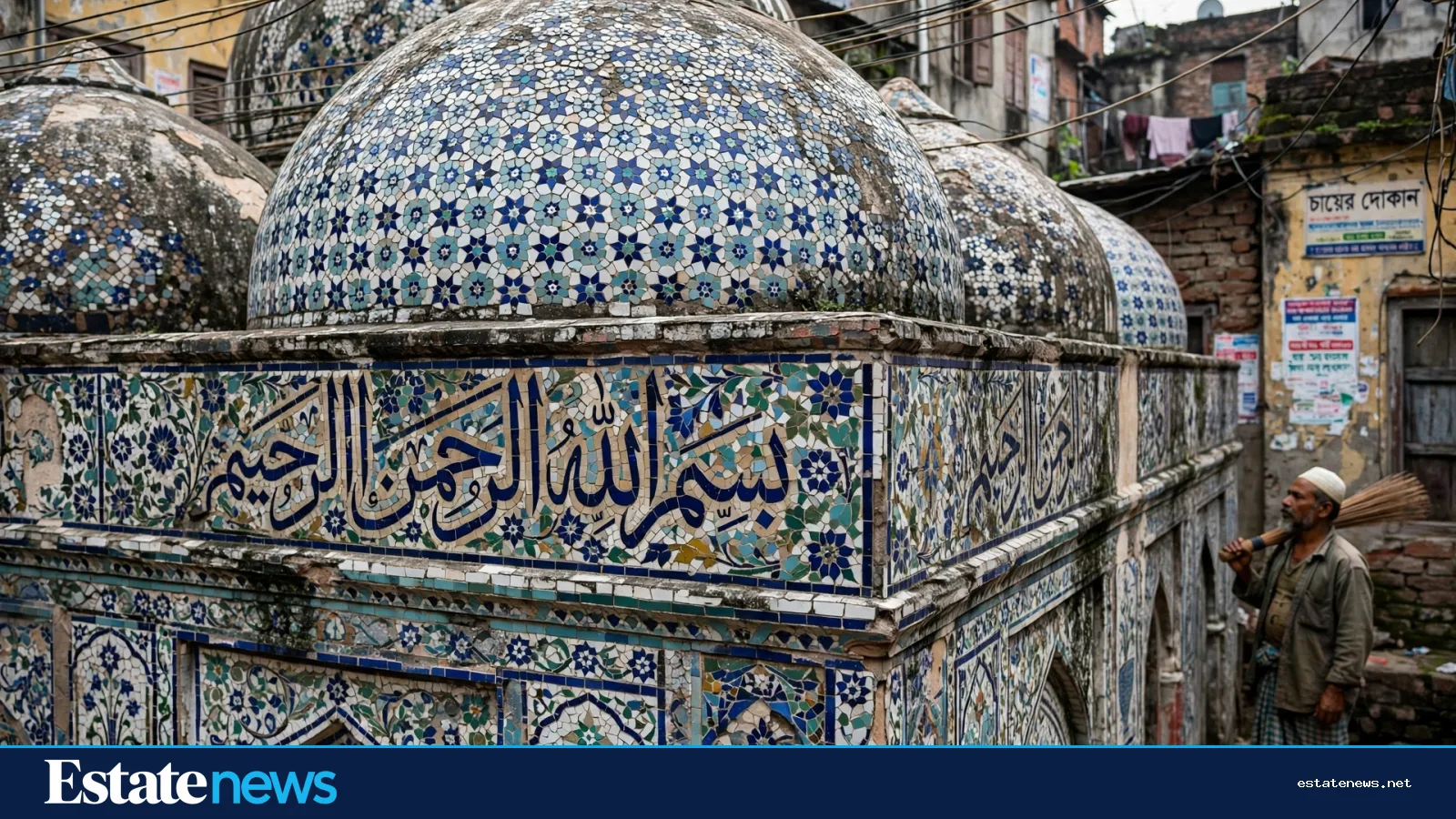
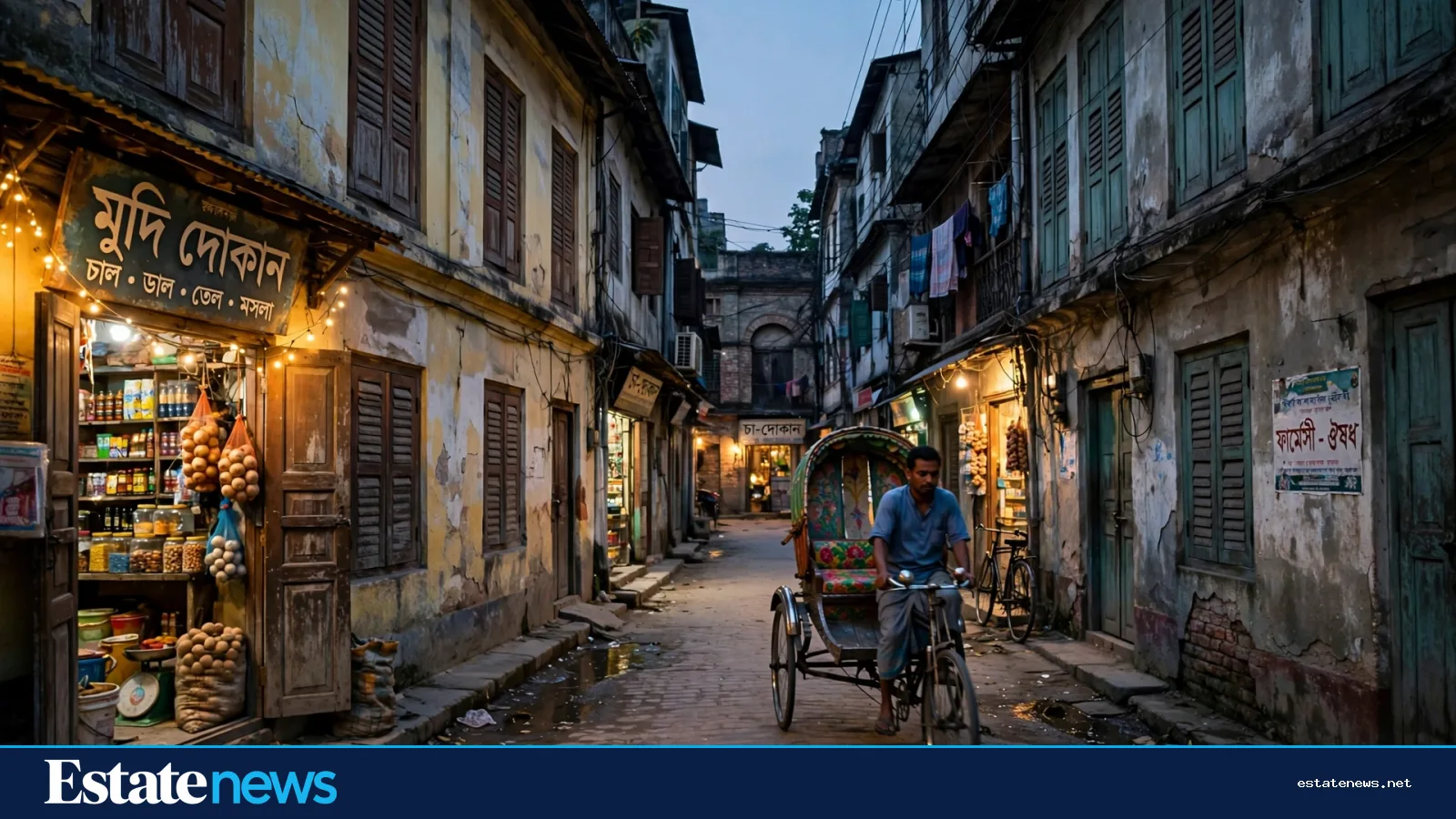
Today the mosque is a working neighbourhood mosque, and that is the best protection it has. Worshippers come for the five daily prayers, and the lane outside fills with rickshaws at prayer time. The mosaic tilework on the facade, the star-patterned domes, the Arabic calligraphy over the entrance, all of it is maintained because the building is used, not because it is a museum.
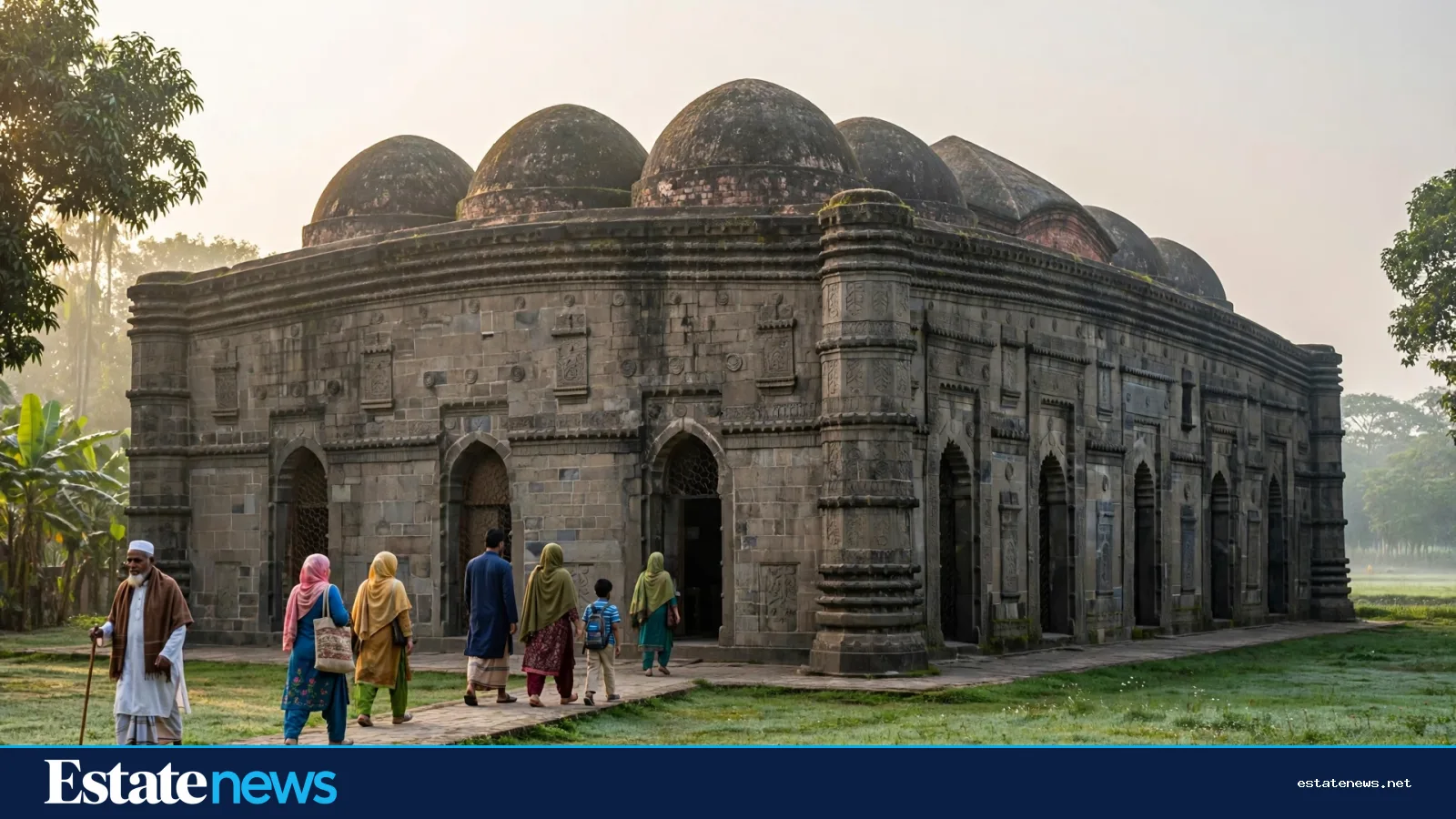
Estate News has told the stories of other old-city buildings that survived by staying useful, in "Hussaini Dalan: The Imambara That Has Watched Old Dhaka for 384 Years", in "Bara Katra: The Mughal Inn That Gave Old Dhaka Free Rooms for Travellers", and in "Choto Sona Mosque: The Little Golden Mosque of Gaur". The lesson in each is the same. A building that people still need is a building that still stands.
Binat Bibi Mosque has stood for 572 years because people kept praying in it. The next chapter, whatever the renovation brings, will be decided by the same thing: whether the people of Narinda can give their oldest building room to grow while keeping the brick that a woman named Bakht Binat laid down in 1454.