Bangladesh's net foreign direct investment fell 13 percent in FY26 to $1.5 billion, down from $1.7 billion the year before, according to Bangladesh Bank data carried by The Business Standard. The headline is a fall. The story inside it is a change of guard. Singapore has emerged as the largest source of foreign investment in Bangladesh, accounting for 16.75 percent of total inflows, and has overtaken the Netherlands, the United Kingdom, China and South Korea, which were the top four sources in FY25.
The fall needs its context. The April to June quarter of 2026 told a better story than the year as a whole. Net FDI rose 12.78 percent year on year to $346.94 million in that quarter, driven mainly by reinvested earnings, according to Bangladesh Bank. Gross inflows in the quarter totalled $1.11 billion, made up of about $115 million in equity investment, $664 million in reinvested earnings and $334 million in intra-company loans. After about $766 million in outflows, net investment stood at $346.94 million.
Reinvested, not fresh

The composition is the point. Most of the money coming in is money already here, being put back to work. Reinvested earnings, the profits foreign companies already operating in Bangladesh choose to keep in the country rather than send home, are the largest part of the inflow. Fresh equity, the new money that builds new factories, is the smaller part, and it is the part that has been hard to attract.
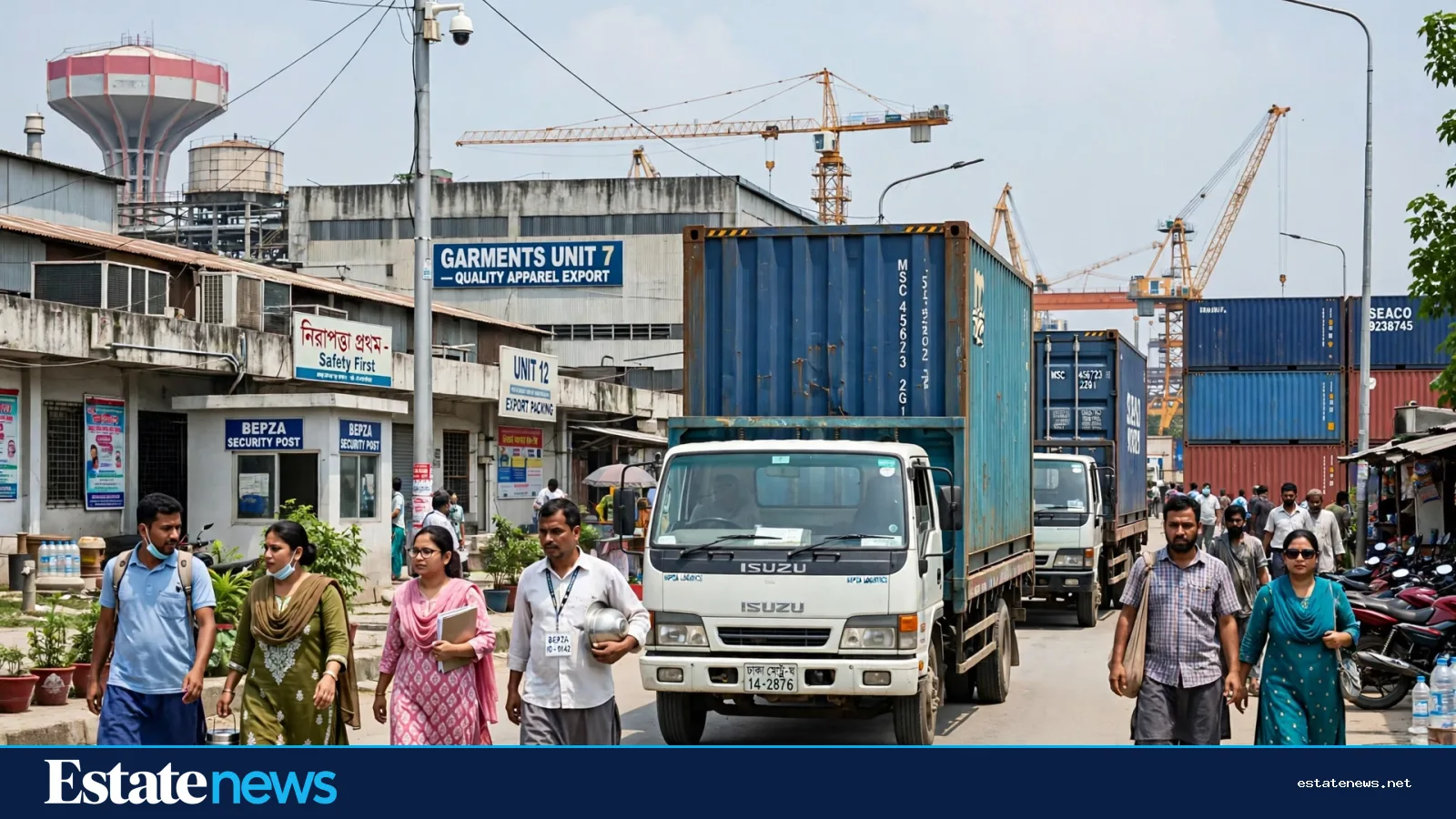
The April to June quarter shows the pattern clearly. Singapore was the largest source of net FDI in the quarter, at $63 million, followed by South Korea at $59.49 million, the Netherlands at $50 million, Hong Kong at $46 million and the United Kingdom at $44 million. Textiles and wearing attracted the most net FDI in the quarter, followed by power, trading, chemicals and pharmaceuticals, and leather. The money follows the factories that already exist, and the sectors that already export.
The calendar year says something different


Readers should not mix two different measures. The FY26 figure, $1.5 billion, is the fiscal year to June 2026, on a net basis. The calendar-year figure is different. UNCTAD's World Investment Report 2026, released in July, put FDI inflows at $1.78 billion in calendar 2025, up 44.6 percent from $1.23 billion in 2024. FDI stock stood at $19.63 billion at the end of 2025. Different periods, different measures, and the two should never be quoted as if they were the same year.
The Financial Express, reporting the same Bangladesh Bank data, put the FY26 figure at $1.47 billion against $1.69 billion in FY25, and noted that only $365.14 million came as fresh equity capital in FY26, against $554.77 million the year before. Reinvested earnings rose to $1,026 million from $758.11 million. The direction is consistent across both reports: less new money, more money kept back by companies already here.
What it means for factories and offices
Foreign investment is the money that builds factory floors and office towers, and its shape decides what gets built. When the inflow is mostly reinvested earnings, the growth goes to existing plants, existing exporters, existing industrial areas. New industrial parks, new office districts and new commercial buildings wait for the fresh equity that has been slow to arrive.
Singapore's rise to the top of the list is a fact worth watching. The city state is a hub for the region's capital, and its investors move where the returns and the rules are clear. Bangladesh Bank's executive director and spokesperson, Arief Hossain Khan, told The Financial Express that the subdued trend partly reflects a wait-and-see approach from foreign investors while the government undertakes reforms in banking and fiscal policy, with the energy crisis and broader economic uncertainty weighing on decisions. Invest Bangladesh, the country's investment promotion agency, says it is working to advance a $1.3 billion investment pipeline towards decisions.
Estate News covered the cost of raising money abroad in "Bangladesh's First Dollar Bond May Cost 8.5 Percent. Here Is Why That Matters", and the quarter's export earnings in "The Garment Sector Kept $6.77 Billion This Quarter. That Is the Real Number". The wider picture is in "Bangladesh Market Wrap, 26 November: Tariffs, Wages, the Fall". The money is still coming. The question for the year ahead is whether more of it arrives as new factories, rather than as profits kept back.