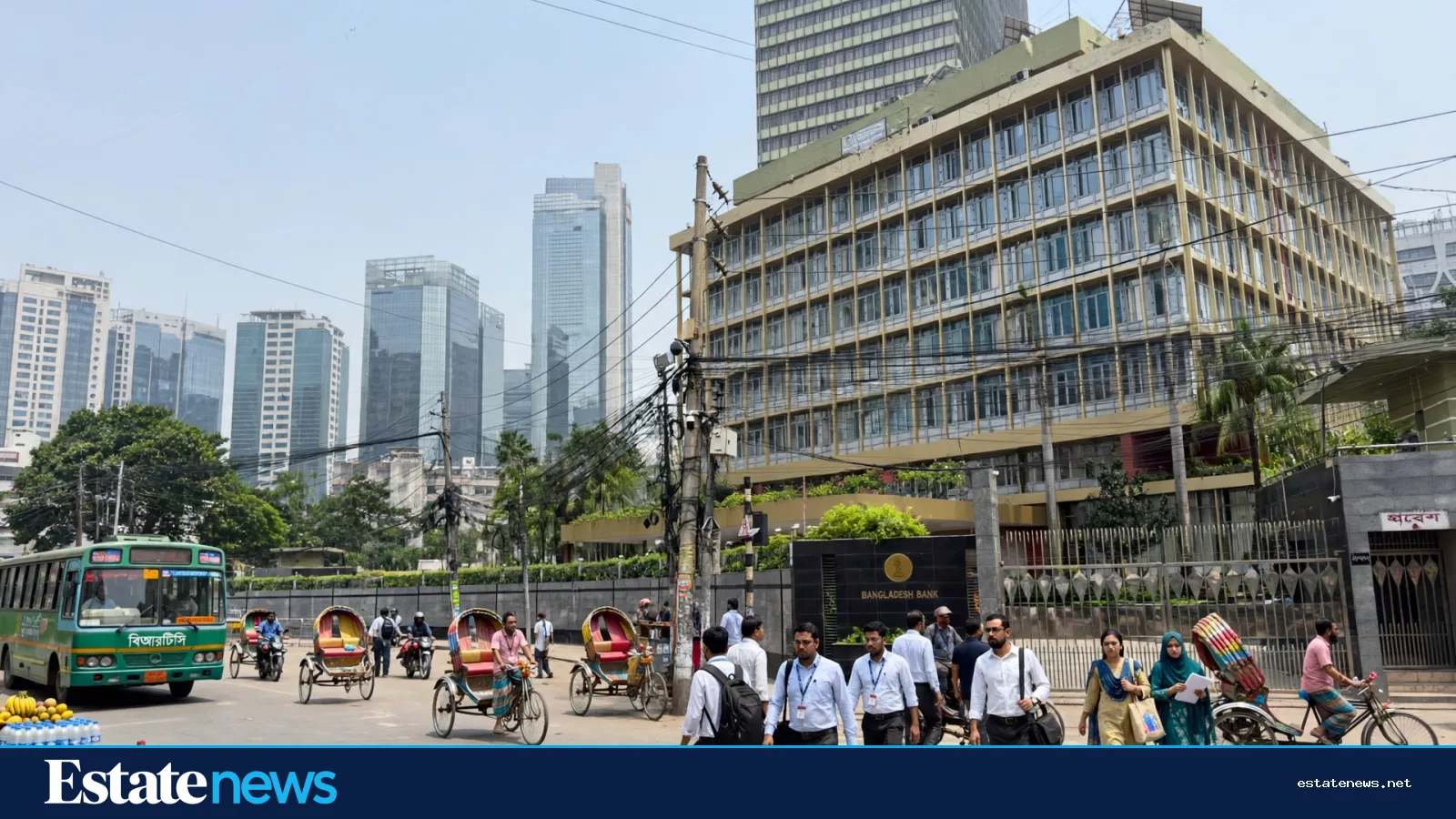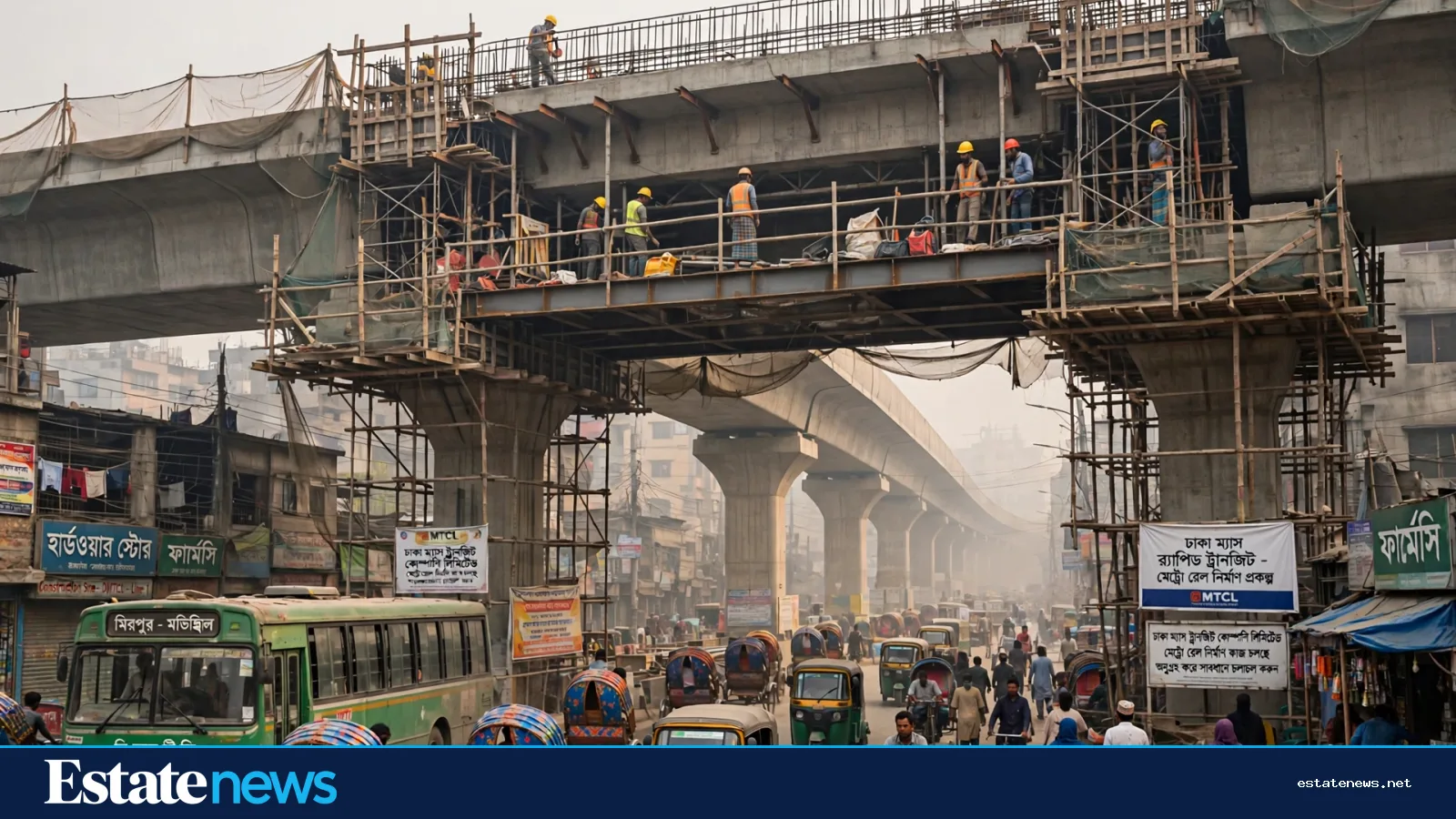
Five projects now sit on the drawing board at once. A barrage across the Padma. New metro lines in Dhaka. An elevated railway to Cumilla. An expressway to Chattogram. And two more bridges, one across the Padma and one across the Jamuna, decided in principle. Together they would reshape how people and goods move across the country, and how the towns along the way grow.
The list comes from a Daily Star opinion piece published on 26 November, which put a price tag on each project. The figures are the government's own estimates as reported there, and they are large enough to deserve a slow read.
The barrage comes first

The Padma Barrage carries a price tag of Tk 34,497.25 crore. The project was approved by ECNEC in May, and the debate around it has run all month in the national press. It would sit at Pangsha in Rajbari, storing monsoon water for dry-season release, and its backers say it would revive the Gorai and Madhumati rivers and push back salinity in the south-west.
For Rajbari and the districts downstream, the barrage is the project that matters most. A structure of this size changes riverbank land, fishing, farming and the water table for a whole region. The feasibility work behind it dates back years, and the questions raised this month, about sediment, downstream flow and the Ganges water-sharing treaty that expires in December, are still being argued in public.
The metro bill, and the railway to Cumilla
Dhaka's metro programme accounts for the largest figure on the list. One new metro rail project and revisions to two others in the capital are put at Tk 2,50,000 crore, according to the same Daily Star piece. The city already has one line running and more under construction, and the revised programme would extend the network further into the north and east of the capital.
The Dhaka-Cumilla elevated railway is put at about Tk 84,000 crore. The road transport minister described the same chord line this month as a Tk 83,000 crore project, planned as a fully elevated route to cut land acquisition and speed up construction. Either way, it is a railway built above the ground for its whole length, and it would put Cumilla within a much shorter journey of the capital. For a city that already sends thousands of commuters and traders to Dhaka every day, that changes the maths of where to live and where to set up a business.
The road to Chattogram


The Dhaka-Chattogram Expressway is the most detailed of the five. Prothom Alo reported this month that the government plans to turn the existing highway into a 233-kilometre access-controlled expressway, running from Jatrabari in Dhaka to the Sagarika intersection in Chattogram. The selected design puts 64 kilometres on elevated structures and 169 kilometres at ground level, with six lanes for fast traffic and separate roads alongside for local vehicles.
The total cost, including 20 years of operation, is put at Tk 1,25,378 crore, according to the Dhaka Tribune. Construction alone is estimated at Tk 71,213 crore. The Roads and Highways Department is preparing to implement the project, with work targeted to begin in January 2027 and finish by December 2032. The stretch between Sonargaon and Suagazi Bazar in Cumilla already carries 45,000 to 55,000 vehicles a day, according to the Roads and Highways Department, which is why the corridor comes first.
Two more bridges, decided in principle
The fifth item on the list is really two: a second Padma Bridge and a second Jamuna Bridge, both decided in principle by the government. The road transport minister said this month that the feasibility study for the second Padma Bridge is now at the detail design stage, while the other projects sit at various stages of preparation, from feasibility studies to development project proposals.
A second bridge at either crossing would matter most to the districts on the far bank. The first Padma Bridge changed land prices, commuting patterns and business in the south-west within a few years of opening. A second crossing would spread that effect further, and it would also take pressure off a single bridge carrying the whole south-west's traffic.
The money behind the list
The projects are being taken up at a tight moment for public money. In the first three months of this fiscal year, the National Board of Revenue fell Tk 41,879 crore short of its target, collecting Tk 92,517 crore against a target of Tk 1,34,396 crore, about 31 percent below the target, according to the Daily Star piece.
Government domestic debt reached Tk 11,53,635 crore at the end of the last fiscal year, up about Tk 1,32,000 crore in a single year, according to Bangladesh Bank figures cited in the piece. External debt stood at $113.43 billion at the end of 2025, according to the World Bank's International Debt Report 2026, nearly three times the $38.77 billion it stood at in 2015. Bangladesh repaid $4.5 billion in external debt in the last fiscal year and another $1.35 billion in July to September. Three LNG terminals are also planned, which will add to foreign currency spending on imports.
None of that settles whether any single project should go ahead. It does set the frame in which the decisions will be made. Each of these five projects will be judged, in the end, on whether the towns it touches end up better connected, better housed and better served than they are today. Estate News covered the airport's new terminal in "Terminal 3: Signing Likely 30 November, First Flights 16 December", the underground metro in "MRT Line-1: The Underground Metro Redrawing Dhaka's Map", and the latest public spending decisions in "ECNEC Clears Tk 24,110 Crore: Power Lines, Hospitals and Rural Roads".