Bangladesh Bank's 1 November release gives the country's export story in two layers, and the second layer is the more interesting one. The headline is steady: merchandise exports reached 17.04 billion dollars in July to October of the 2026-27 fiscal year, up 6 percent, or about 960 million dollars, from 16.08 billion dollars a year earlier, according to Bangladesh Bank data reported by The Business Standard. October alone brought in 3.99 billion dollars, up 4.39 percent from a year earlier. The layer beneath it moves faster, and in smaller places.
Readymade garments still do most of the work. Knitwear exports reached 7.71 billion dollars in the four months, up 7 percent, and woven garments reached 6 billion dollars, up 4.8 percent. Together, knitwear and woven garments still account for nearly 80 percent of exports. But the growth rates that stand out belong elsewhere. Jute and jute goods reached 383 million dollars, up 23.8 percent. Chemicals were up 27.3 percent. Leather was up 12.7 percent. Pharmaceutical exports, the strongest performer among the major sectors in October itself, rose 25.67 percent from a year earlier, while ready-made garment exports in October reached 3.17 billion dollars, up 4.90 percent. Small bases make for large percentages, and these lines are still small in dollars. Their direction, over four months rather than one, is what makes them worth watching.
Where the buyers are

The United States remained Bangladesh's largest single market, with exports of 3.35 billion dollars in July to October, up 11.51 percent from 3 billion dollars a year earlier, according to Export Promotion Bureau data. The United Kingdom followed at 1.74 billion dollars, and Germany at 1.57 billion dollars. October exports to the United States reached 756.64 million dollars, up 12.10 percent from a year earlier. For factory owners, that spread matters: an order book spread across America, Britain, Germany and newer markets is steadier than one tied to a single buyer, and steadier orders make for steadier shifts.
Remittances ran alongside trade in the same release, and they give households the other half of the picture. Expatriate Bangladeshis sent 2.87 billion dollars in October, up 12.18 percent from 2.56 billion dollars in October 2025. July to October remittances reached 11.465 billion dollars, up 13 percent from 10.149 billion dollars a year earlier. October was also the fifth month in a row below 3 billion dollars, and Bangladesh Bank put gross reserves at about 36.41 billion dollars, with 31.6 billion dollars under the IMF calculation on 10 October. The weighted average interbank dollar rate edged to Tk 124.30 in October from Tk 123.99. None of that is a crisis figure. All of it is a reminder that foreign currency still arrives in good months and tight months alike, and that the taka's path follows trade and remittances together, not either one alone.
What faster small sectors mean for places


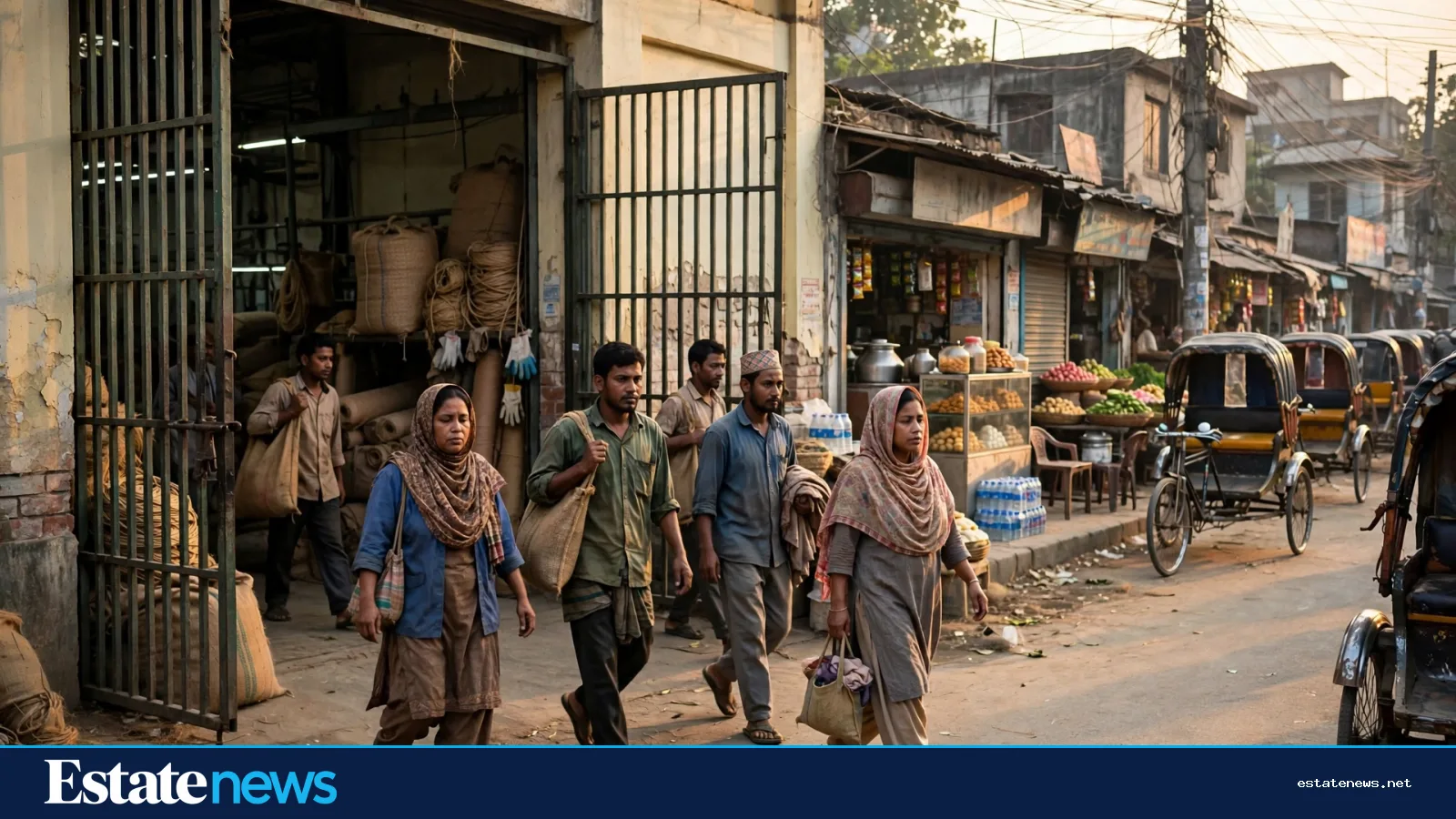
For property readers, the link is not a price claim. Estate News does not claim that a rise in jute or leather exports lifts home prices in any particular town. The link is quieter, and it runs through work. When a jute mill, a leather unit, a chemical plant or a drug maker adds shifts, the town around it feels it first in rented rooms, in mess accommodation, in small shops near the gate, and in family homes a short ride from the factory. When orders thin, the same town feels it in empty rooms and closed shutters. Industrial housing demand is, at heart, employment demand with a roof on it.
That is why the geography of these smaller sectors deserves more attention than their dollar totals suggest. Garment work clusters in and around Dhaka, Gazipur, Narayanganj and Chattogram, where housing debates are already loud. Jute, leather and chemical work reaches other districts and smaller towns, where a new shift pattern can change a rental market that has few listings and long memories. A landlord near such a plant who watches export orders the way a Dhaka landlord watches metro openings is not being abstract. They are watching their next tenant.
The caution inside the good numbers
Two cautions belong in the same story. Bankers and industry voices quoted in the coverage noted that reported export growth does not always match conditions on factory floors, and the Bangladesh Knitwear Manufacturers and Exporters Association's vice-president told The Business Standard that the growth being reported does not reflect the actual situation for knitwear makers. Some lines shrank in the four months, including fish, cotton and cotton goods, against the overall rise. A diversified export basket is a strength, but it is not a guarantee that every factory, or every town, shares in it.
The constructive reading, then, is a patient one. Bangladesh's exports grew, remittances grew, and the growth spread a little wider than garments alone. If jute, leather, chemicals and pharmaceuticals keep their pace, the country's factory map gets broader, its order book gets less fragile, and the towns that host those plants get a steadier base for homes, shops and warehouses. If they fade, the headline will still look respectable, carried by garments, while the smaller towns feel the difference first. Watching the small lines, month by month, is how readers will know which of those two stories is actually happening.