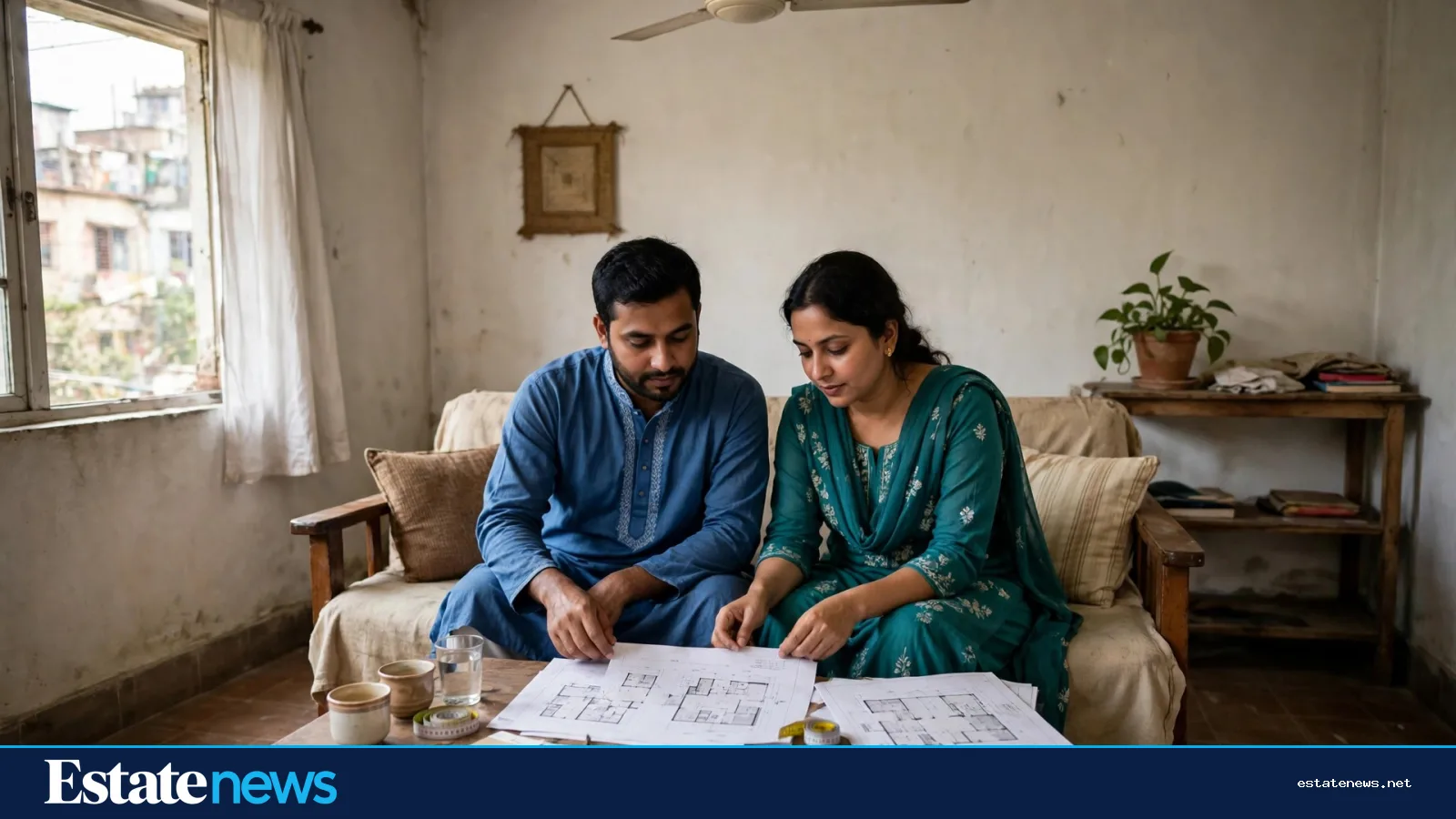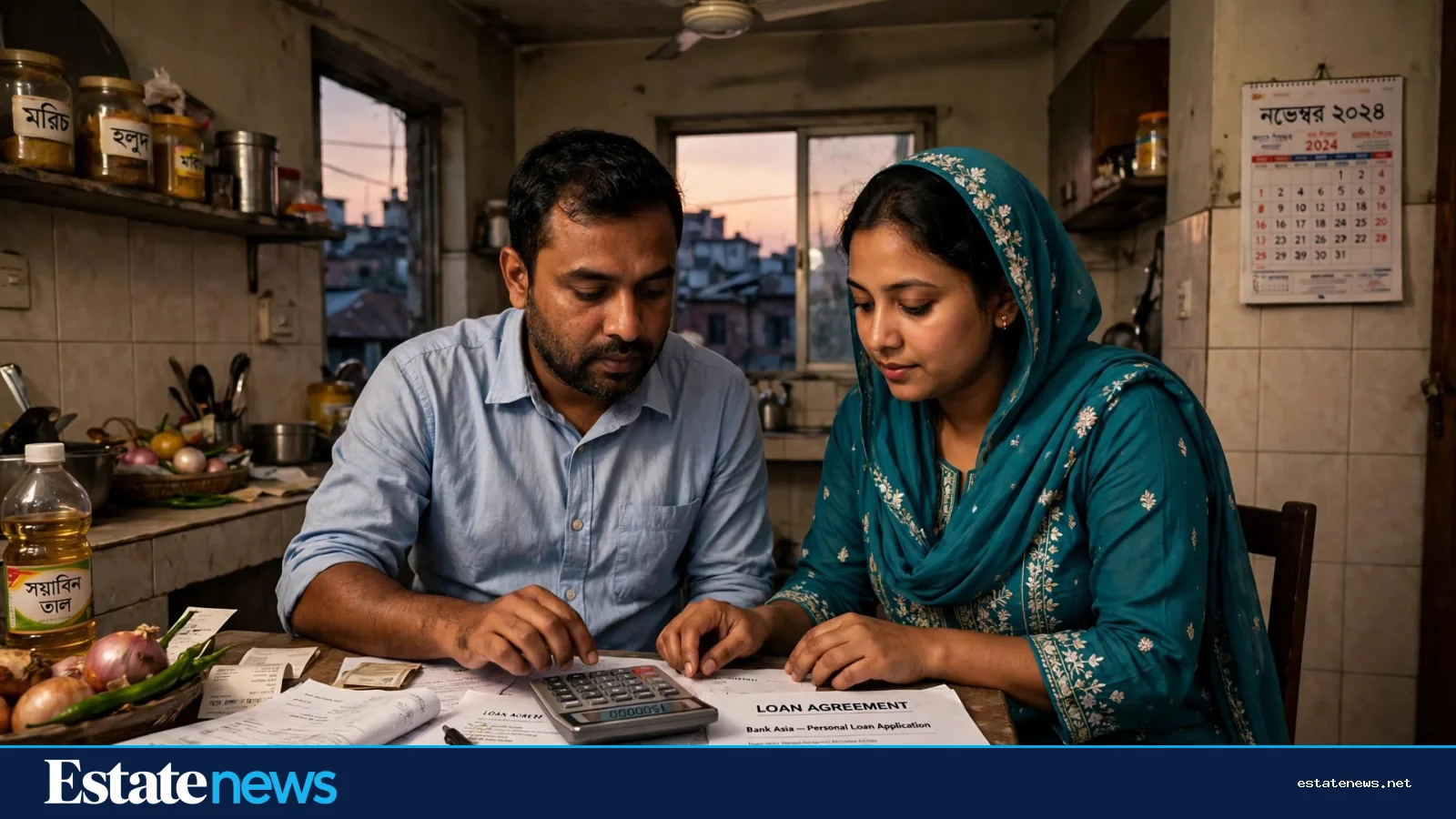
Two families can borrow the same amount, for the same flat, over the same twenty years, and pay very different amounts every month. That is the plain fact of home loans in Bangladesh this November. The cheapest declared rate and the dearest are more than five percentage points apart, and on a loan of Tk 50 lakh that gap is worth more than Tk 18,000 a month.
Start with the numbers as the banks declare them. BRAC Bank quotes 9.72 to 11.72 percent on home loans, with a base rate of 8.49 percent for October 2026 and a declared rate of 10.72 percent as on 8 October 2026. Its loans run from Tk 5 lakh to Tk 4 crore over 25 years, and its Affordable Home Loan covers Tk 3 lakh to Tk 85 lakh under the Boshoti, Neer and Nibash variants. NCC Bank offers an NRB home loan at 10 to 12 percent, declared at 11.00 percent effective 1 October 2026, from Tk 10 lakh to Tk 4 crore over 3 to 25 years. Dhaka Bank quotes 10.5 to 12.5 percent, declared at 11.50 percent effective 13 July 2026.
The middle of the market sits higher. ONE Bank quotes 11 to 13 percent, declared at 12.00 percent as on 31 October 2026, with renovation loans at 14.50 percent. Premier Bank quotes 12.50 to 15.00 percent, declared at 14.00 percent as on 1 November 2026. Agrani Bank's schedule shows 13.40 percent for September 2026. A guide published by Rangs Properties in October 2026 put it simply: most banks quote roughly 9 to 13 percent, variable rates are common, and banks usually lend up to 70 percent of the flat's price, the familiar 70:30 rule.
What the spread costs every month
The monthly instalment, the EMI, turns those percentages into something a household can feel. The figures below are illustrations, worked out on a loan of Tk 50 lakh over 20 years, and the arithmetic has been checked. At 9.72 percent, the EMI is Tk 47,327 a month. At 11 percent, it is Tk 51,609. At 12 percent, Tk 55,054. At 13 percent, Tk 58,579. At 14 percent, Tk 62,176. At 15 percent, Tk 65,839.
Read that list slowly. The same loan costs Tk 47,327 a month at the cheapest rate and Tk 65,839 at the dearest. The gap is Tk 18,512 a month, every month, for twenty years. Over the full term, that gap runs into lakhs. A borrower who takes the first offer without comparing is not paying a little more. On a twenty-year loan, the borrower is paying a second small flat's worth of extra interest.

The policy rate sits behind all of this. Bangladesh Bank's policy rate is 9.50 percent, in place since 2 August 2026, when it was cut from 10 percent. It was the first cut in six years, and it came through the quarterly monetary policy statement of 30 September 2026. Older reports still carry the 10 percent figure, and it still circulates in conversation. It is stale. Any loan discussion that starts from 10 percent as the policy rate is starting from the wrong number.
The questions to ask before signing
A quoted rate is only the first line of the loan. Variable rates move, so a borrower should ask how often the rate is reset and what it is linked to. Processing fees, early settlement charges and the cost of the mandatory insurance, where it applies, all sit outside the headline rate. A loan that looks cheap at 9.72 percent can turn expensive if the rate resets upward in a year and the fees were high to begin with.
Tenure is the other lever. A longer loan cuts the monthly instalment but raises the total interest paid. A shorter loan does the opposite. The right choice depends on the household's income, not on the bank's suggestion. A family that can manage a higher instalment for fewer years will pay far less in total, and a family that stretches the loan to the maximum is buying a lower monthly bill with a much larger lifetime cost.
Estate News looked at why Bangladesh pays more than its neighbours in "Home Loans at 14-15%: Why Bangladesh Pays More Than Its Neighbours", published on 14 November. The Bangla guide "ইএমআই হিসাব: মাসে কত আয় থাকলে ফ্ল্যাটের ঋণ নিরাপদ" works through the income a household needs before a flat loan is safe. And "Bangladesh Bank's Tk 1,500 Crore Fund: Who Can Borrow and at What Rate" explains the central bank's housing fund and who qualifies for it. Read together, they give a borrower the three things that matter: the rate, the monthly burden, and the cheaper money that may be available.
None of this is financial advice. Rates change, and a bank's declared rate is the start of a negotiation rather than a fixed price. But the habit is simple and it costs nothing: collect three written offers, work out the EMI on each, and compare the monthly figure rather than the percentage. On a Tk 50 lakh loan, the difference between the cheapest and the dearest bank in the market today is Tk 18,512 a month. That is a number worth an afternoon of phone calls.