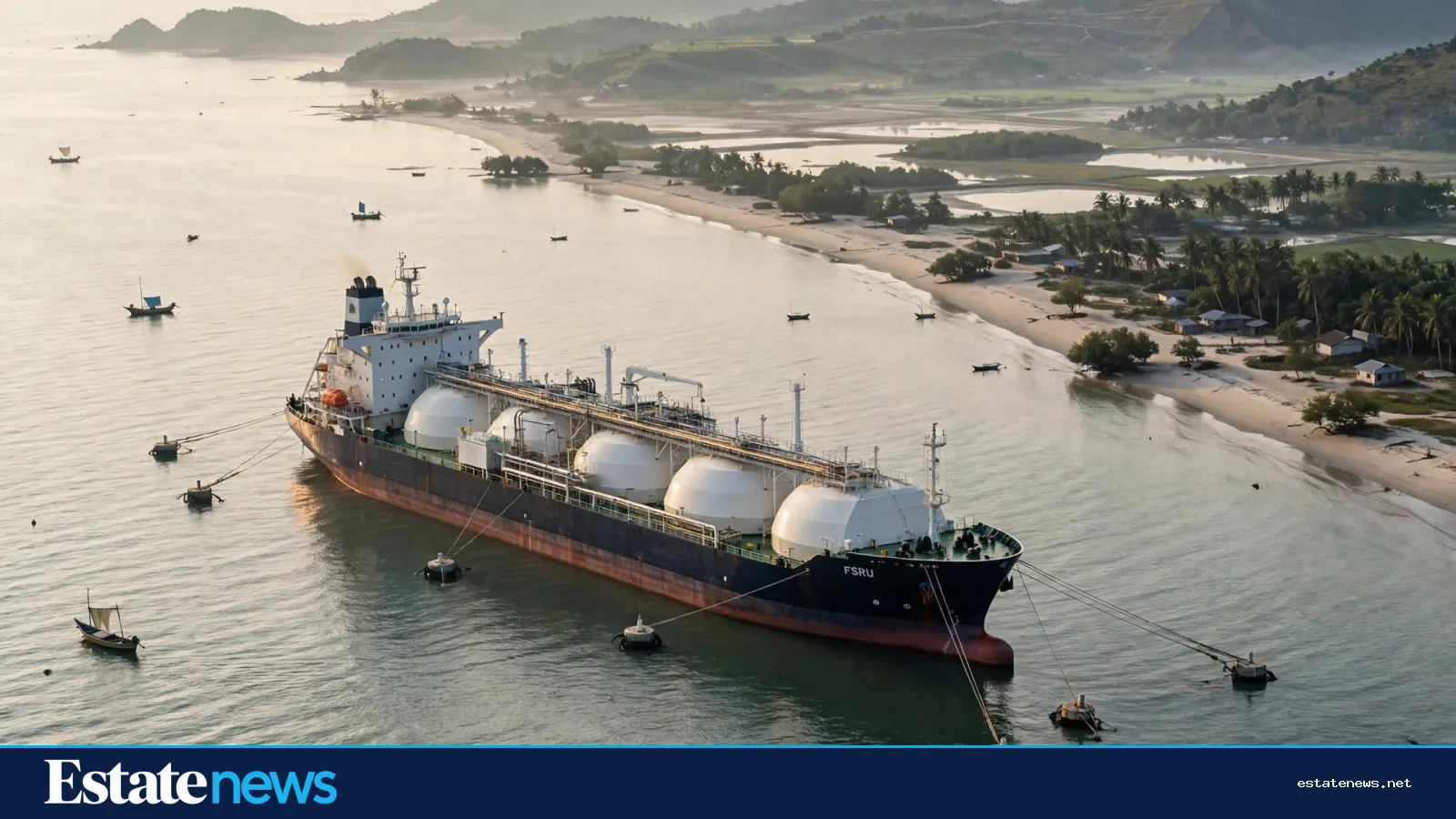
The decision came on 12 November, and it was the kind of approval that rarely makes the front page in Dhaka but matters a great deal in Chattogram. The Cabinet Committee on Government Purchase cleared a proposal from China National Energy Engineering and Construction, known as CNEE, to build Bangladesh's third floating liquefied natural gas terminal off Kutubjum in Maheshkhali, Cox's Bazar. The project will run under a government-to-government arrangement, and the company's proposal puts operations starting in 2028.
The numbers in the approval are substantial. The floating storage and regasification unit, or FSRU, will have a base capacity of 600 million cubic feet per day, rising to 750 million at peak. Bangladesh already runs two such terminals at Maheshkhali, with a combined capacity of about 1,100 million cubic feet a day. The third would take the total to roughly 1,700 million. The government will pay about Tk 12,324 crore over 15 years, or Tk 13,161 crore over 20 years, according to the finance ministry statement reported by The Daily Star and the Financial Express.
Gas has been the quiet constraint on Chattogram for years. The port city holds the country's busiest container terminal, its steel re-rolling mills, ship-breaking yards and a thick belt of export factories. When gas runs short, power generation is rationed first and industry feels it next. Factory owners in the Chattogram Export Processing Zone and in Kalurghat have complained for years that low pressure forces them to run expensive diesel generators or cut shifts. A terminal that adds more than half as much again to national regasification capacity does not fix that overnight, but it changes the arithmetic of what the gas network can carry.

What the terminal is, and what it is not
An FSRU is a ship, moored offshore, that takes liquefied gas from carriers, warms it back into gas and sends it ashore through a pipeline. It is faster to build than a land terminal and cheaper to walk away from, which is why Bangladesh chose the floating route for its first two terminals as well. The two existing units, run by Excelerate Energy and Summit, sit at the same Maheshkhali coast.
What the approval does not do is guarantee gas in a Chattogram factory tomorrow. The terminal is a piece of import infrastructure. Gas still has to be bought on world markets, shipped, regasified and moved through the national grid. The proposal was pulled from a purchase committee meeting in October for a review of its financial terms, and it was approved in November at the proposed cost, without a cut, according to the Financial Express. The Daily Star noted that the charges are significantly high. That cost will sit inside the price of every unit of gas the terminal handles.
Why Chattogram's housing market is watching


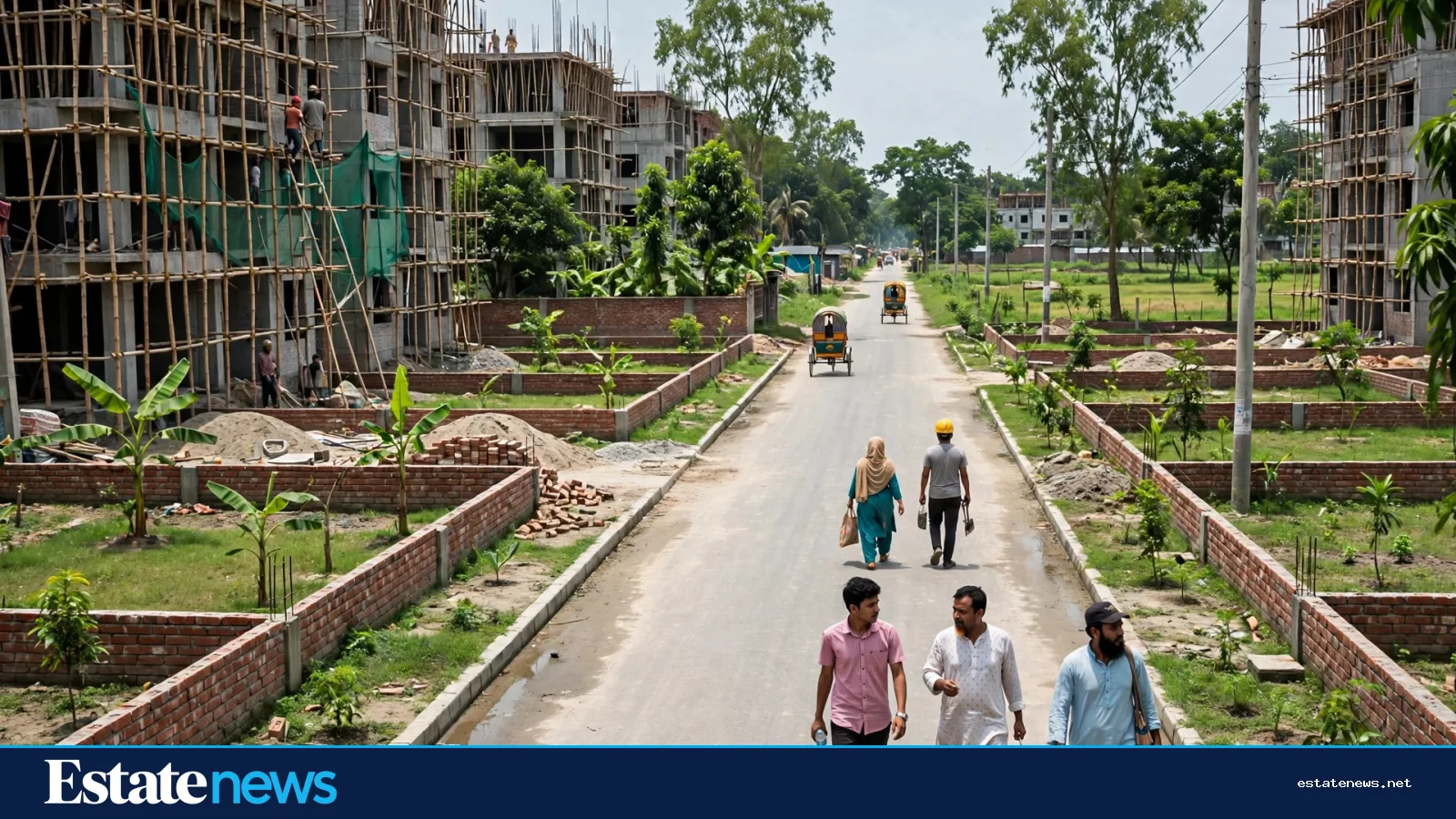
Energy and housing rarely appear in the same sentence, but in a port city they are joined at the hip. Chattogram's housing demand follows its jobs. When factories run steadily, workers stay, supervisors rent flats near the industrial belts, and mid-level managers look to buy in Khulshi, Panchlaish and the newer blocks around the Karnaphuli tunnel corridor. When gas pressure falls and shifts are cut, the same demand softens. [Chattogram's second housing wave](https://estatenews.net/development/chattograms-second-housing-wave-beyond-gec-circle-khulshi-panchlaish-and-arefin-nagar-draw-port-linked-demand) has been building around exactly those port-linked jobs, and [the tunnel corridor across the Karnaphuli](https://estatenews.net/development/across-the-karnaphuli-how-the-tunnel-corridor-is-reshaping-chattograms-south-bank) has opened the south bank to new residential growth.
None of this means flat prices in Chattogram will rise because a terminal was approved. There is no evidence for that claim, and the terminal will not be operating before 2028 in any case. What it means is that the ceiling on the city's industrial growth has been raised a notch. Developers who build for factory workers and port employees read energy decisions the way farmers read the monsoon forecast. A steadier supply makes long-term bets on the south bank and on the industrial belts easier to justify.
The other thing worth watching is the pipeline. Maheshkhali's gas reaches the mainland grid, and the grid decides where it goes. Chattogram's factories compete for the same molecules as Dhaka's power plants and the fertiliser units. The terminal adds supply to the whole system. How much of it reaches the port city will depend on transmission capacity and on the priority the grid gives industry over power generation in the years after 2028.
A decision in a longer queue
The government has said it plans three to four more floating terminals, and the Maheshkhali approval is the first of that queue to clear the purchase committee. A separate Summit agreement for another 600 million cubic feet a day terminal was cancelled in October 2024, a reminder that approvals in this sector have been reversed before. The CNEE proposal, submitted in June, survived one deferral. The next test is financing, construction and the first gas cargo, none of which the approval itself guarantees.
For now, Chattogram's builders and buyers have one more reason to look at the city's industrial horizon with a little more confidence than they had a month ago. The terminal is two years away at best. But in a city where every housing decision is really a bet on whether the jobs will still be there in five years, a bigger gas pipe is the kind of news that gets remembered. [Bangladesh's market wrap](https://estatenews.net/markets/bangladesh-market-wrap-14-november-a-quiet-weekend-for-stocks-as-remittance-passes-1287-billion) tracks the wider economy each week, and energy supply will be part of that story for some time.