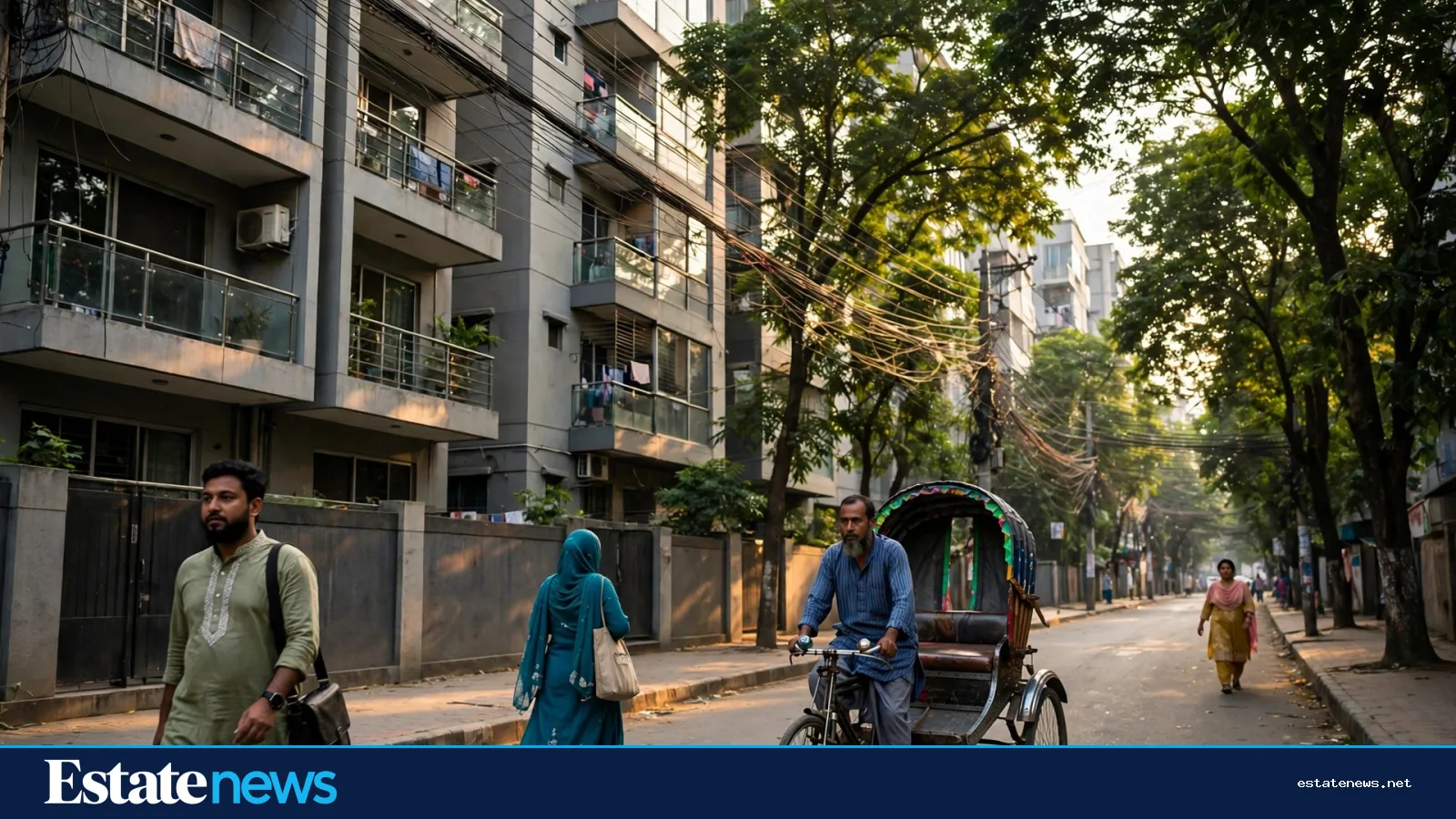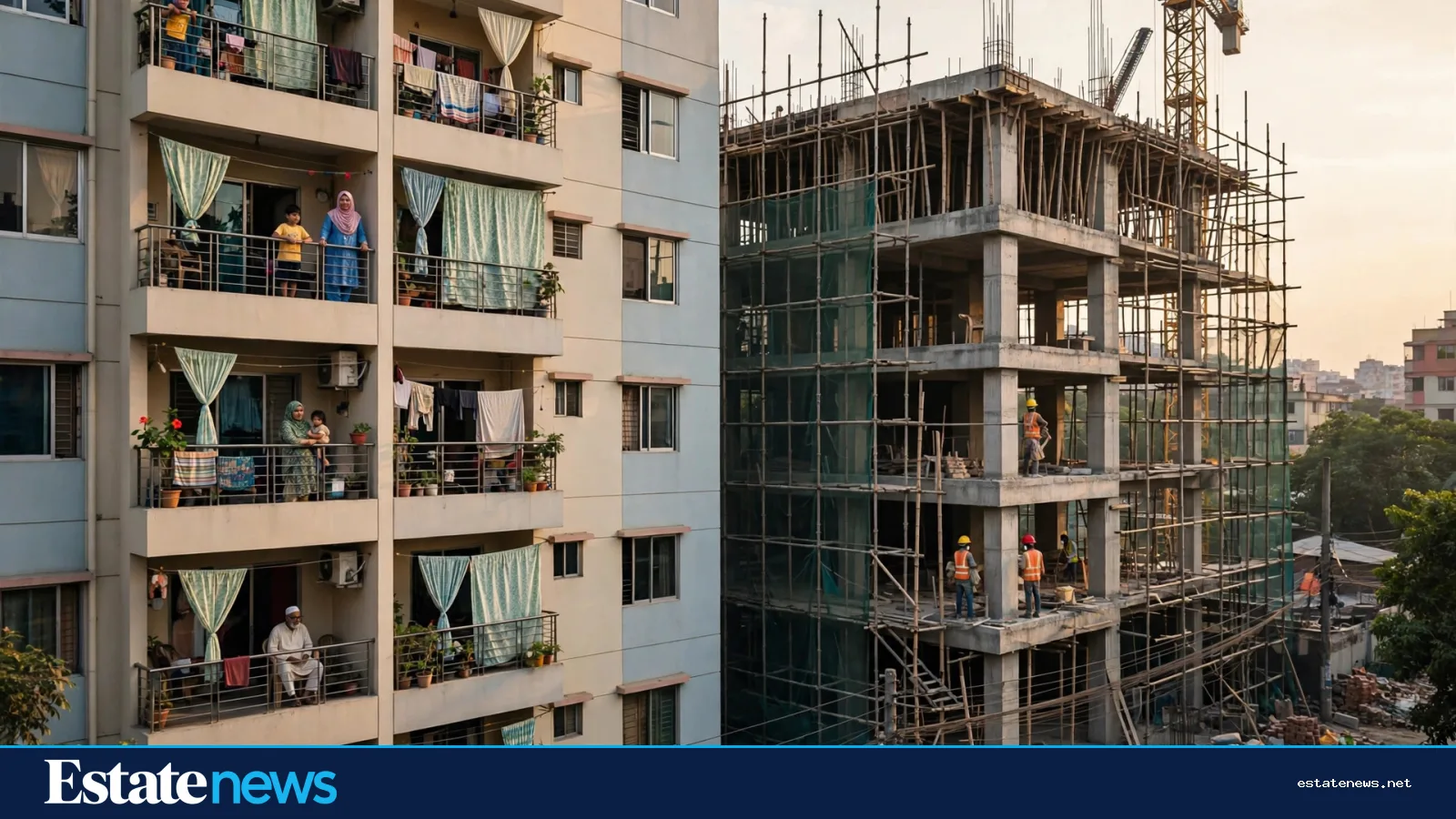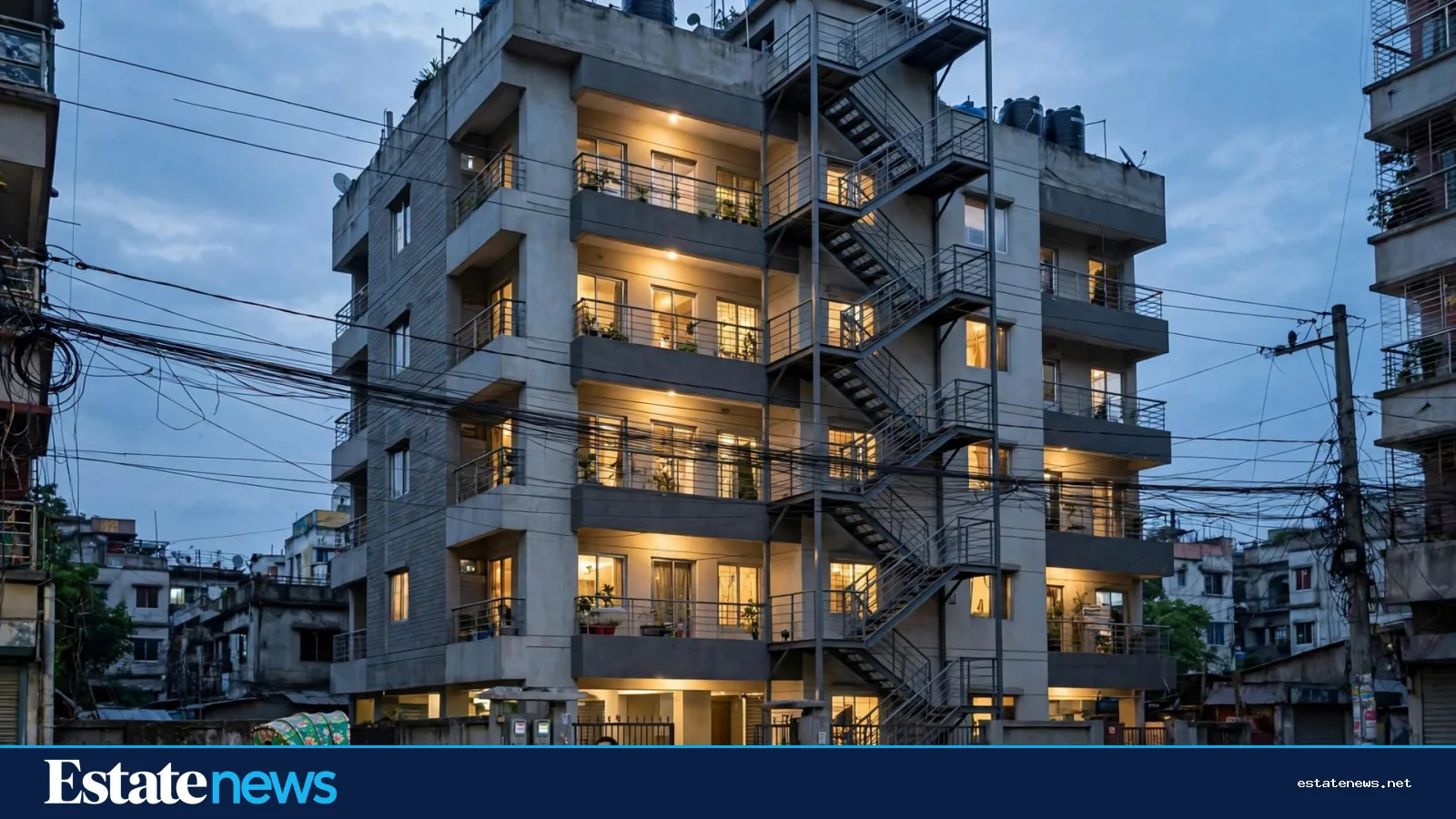
A fire in a Dhaka apartment block does not start with a flame. It starts years earlier, in a stairwell that was drawn too narrow, a second staircase that was never built, or a fire certificate that was never asked for. The building stands, the flats sell, and the gap between the paper and the building waits for a bad evening.
The numbers say the wait is not theoretical. Fire Service figures reported by The Daily Star show 27,059 fire incidents across the country in 2025, and 8,705 of them, nearly a third, were in residential buildings. Dhaka's towers hold the most people per square foot of any housing in the country. When a residential fire starts on a high floor, the escape routes and the equipment in the building decide the outcome, not the fire engine outside.
Two definitions, one gap

The first thing a buyer should know is that Bangladesh does not have one definition of a high-rise building. It has two, and the gap between them is where the risk lives.
The Fire Prevention and Extinguishing Act of 2003 treats any building over six storeys as a high-rise, and requires a No Objection Certificate, an NOC, from the Fire Service and Civil Defence before construction is completed. The Bangladesh National Building Code and the Building Construction Rules of 2008, which RAJUK follows, define a high-rise as a building of more than ten storeys or above 33 metres in height. A building of seven, eight or nine storeys sits in the middle: a high-rise under one law, an ordinary building under the other.
The consequence is practical. Owners of buildings in that middle band often do not seek a Fire Service NOC, because RAJUK does not treat the building as a high-rise. The Daily Star has reported the case of a seven-storey building on Bailey Road that obtained no NOC during construction and was later identified as a fire hazard. It is not an isolated pattern. Many residential buildings between seven and ten storeys lack a second staircase and proper fire extinguishing equipment, according to the Bangladesh Institute of Planners.
The enforcement that stopped
Even where the law is clear, enforcement has stalled. The Fire Prevention Act empowers the Fire Service to file cases against non-compliant buildings, but that power is currently halted by a High Court stay order. The Fire Service identified 2,118 risky structures in 2023. Since the stay, it can issue warning letters only. Copies go to the city corporations and to RAJUK, but the power to fine or seal a building is suspended while the stay stands.
That is the context a buyer is buying into. The state can warn. It cannot, for now, compel. The checks that matter most are therefore the ones the buyer makes, not the ones the buyer assumes someone else has made.
What the code actually requires


For a building that is treated as a high-rise, the Bangladesh National Building Code sets out a clear list. Hydrant and sprinkler systems, with water sprayed automatically when room temperature passes 62 degrees Celsius. Smoke detectors in every room, along with heat detectors and flame detectors. Fire exits no more than 33 metres apart, with doors that block fire and smoke. Buildings with more than 500 occupants must have at least two staircases. And 18 per cent of a building's occupants should be trained by fire service officials so they can manage an emergency before the fire service arrives.
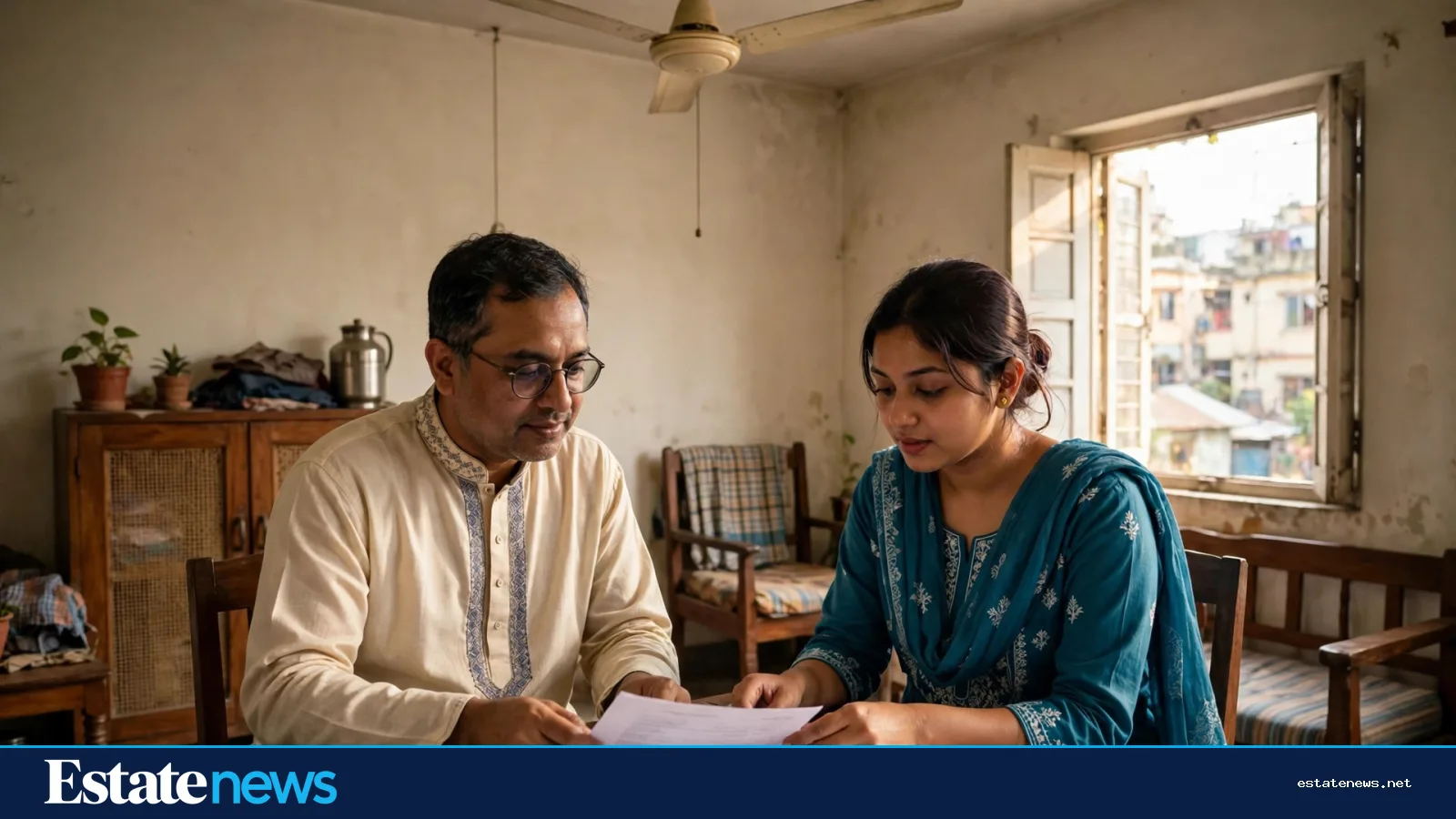
Before buying, ask the developer for four documents. The BNBC compliance certificate. The RAJUK-approved layout plan, and a check that the building as it stands, especially the emergency exits, matches the plan. The Fire Safety Clearance Certificate or NOC from the Fire Service and Civil Defence. And the occupancy certificate, which certifies the building as fit for residential use. A developer that has all four will show them. A developer that stalls on any of them has told you something.
The checks you make with your own eyes
Paper is the start. The building itself is the test. Walk the staircase. Is it wide enough for people to come down while firefighters go up, and is it clear of stored goods, cycles and locked gates? Look for the second staircase in a building above six storeys, and ask what happens if the first one fills with smoke. Check the lift lobby: lifts must not be used in a fire, so the staircase is the only way down.
Look at the details that cost little and save lives. Fire extinguishers on each floor, with a service tag that shows they were checked recently. A hose reel cabinet that is not empty. Emergency lighting in the stairwell, so a power cut does not turn the escape dark. A roof water tank reserved for firefighting, and a clear access road for a fire engine at the gate. None of these is expensive. All of them are absent in buildings where nobody asked.
Ask the residents one question: has there ever been a fire drill in this building? The building code requires an evacuation protocol and training for occupants. A building that has drilled knows its exits work. A building that has never drilled will find out on the worst possible day.
The question to carry into every viewing
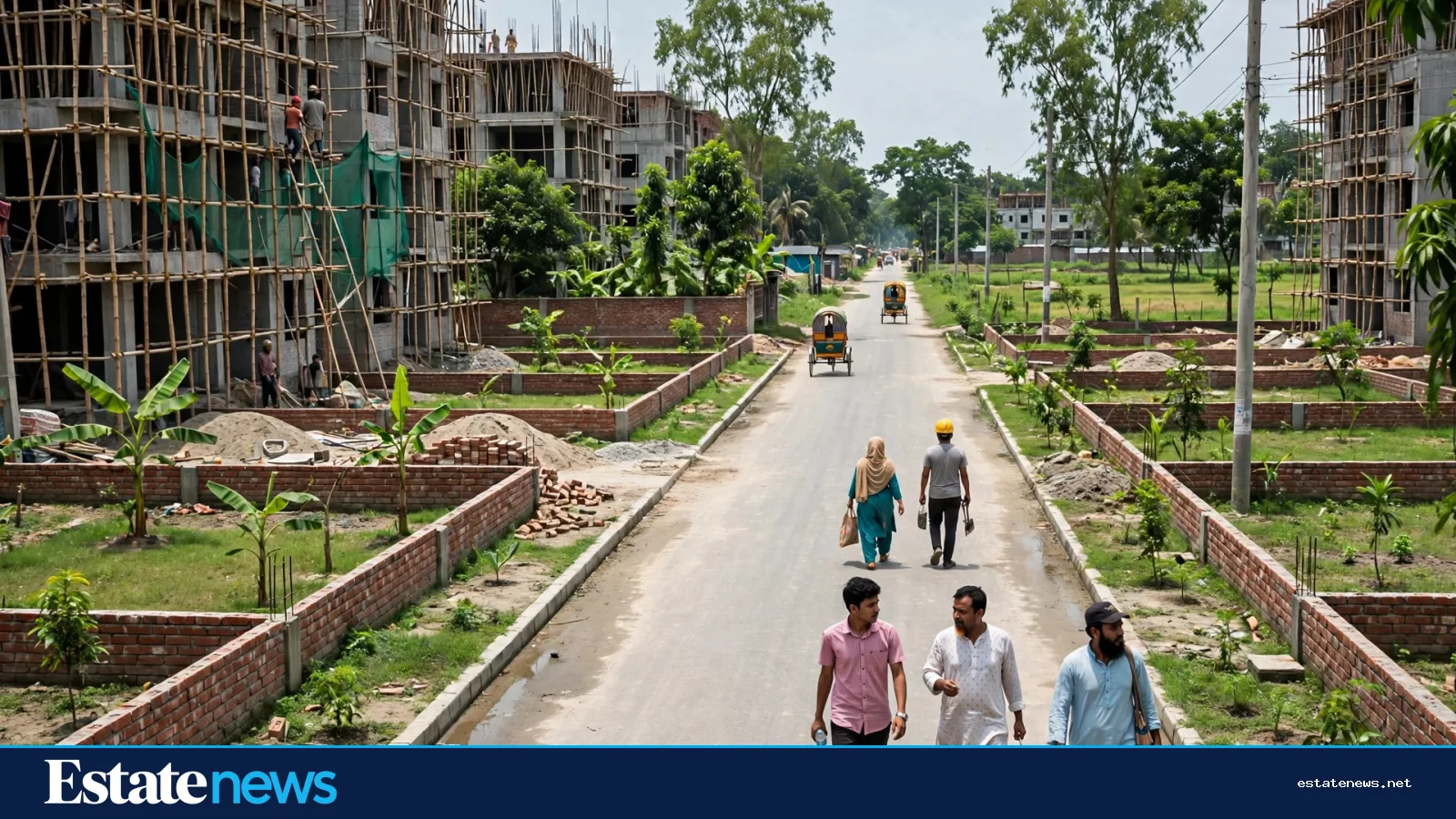
Dhaka will keep building upward, because it has no land to build outward. The towers are not going away, and neither is the risk. What can change is what buyers demand. A market in which buyers ask for the Fire Service NOC, walk both staircases and check the extinguisher tags is a market in which developers start to treat those things as selling points rather than paperwork.
The law will, in time, settle its own argument about what counts as a high-rise. Until it does, the definition that protects your family is the stricter one. Buy as if your building were a high-rise, whatever the plan calls it, and choose the building that passes that test.
Read more: How a building plan gets RAJUK approval (https://estatenews.net/policy/rajuk-approval-step-by-step-how-a-building-plan-gets-its-stamp) | Our guide to buying a flat from an owner, not a developer (https://estatenews.net/policy/buying-a-flat-from-an-owner-not-a-developer-the-extra-checks) | What a bank asks before it lends for a flat (https://estatenews.net/finance/what-a-bank-asks-before-it-lends-for-a-flat-the-five-checks-that-decide)