Most Dhaka developers began with a building. Eastern Housing Ltd began with a neighbourhood. Founded by entrepreneur Jahurul Islam, the company started work in 1964 with a residential area project at Pallabi in Mirpur, building 700 houses and acquiring 910 acres of land. The company's own history describes it as the country's first private-sector real estate project, and as the first to provide low-cost housing in what was then East Pakistan. Whether or not a reader knows the company, the shape of that beginning matters, because it set a pattern Eastern Housing has never fully left: land development first, apartments alongside it, rather than apartments alone.
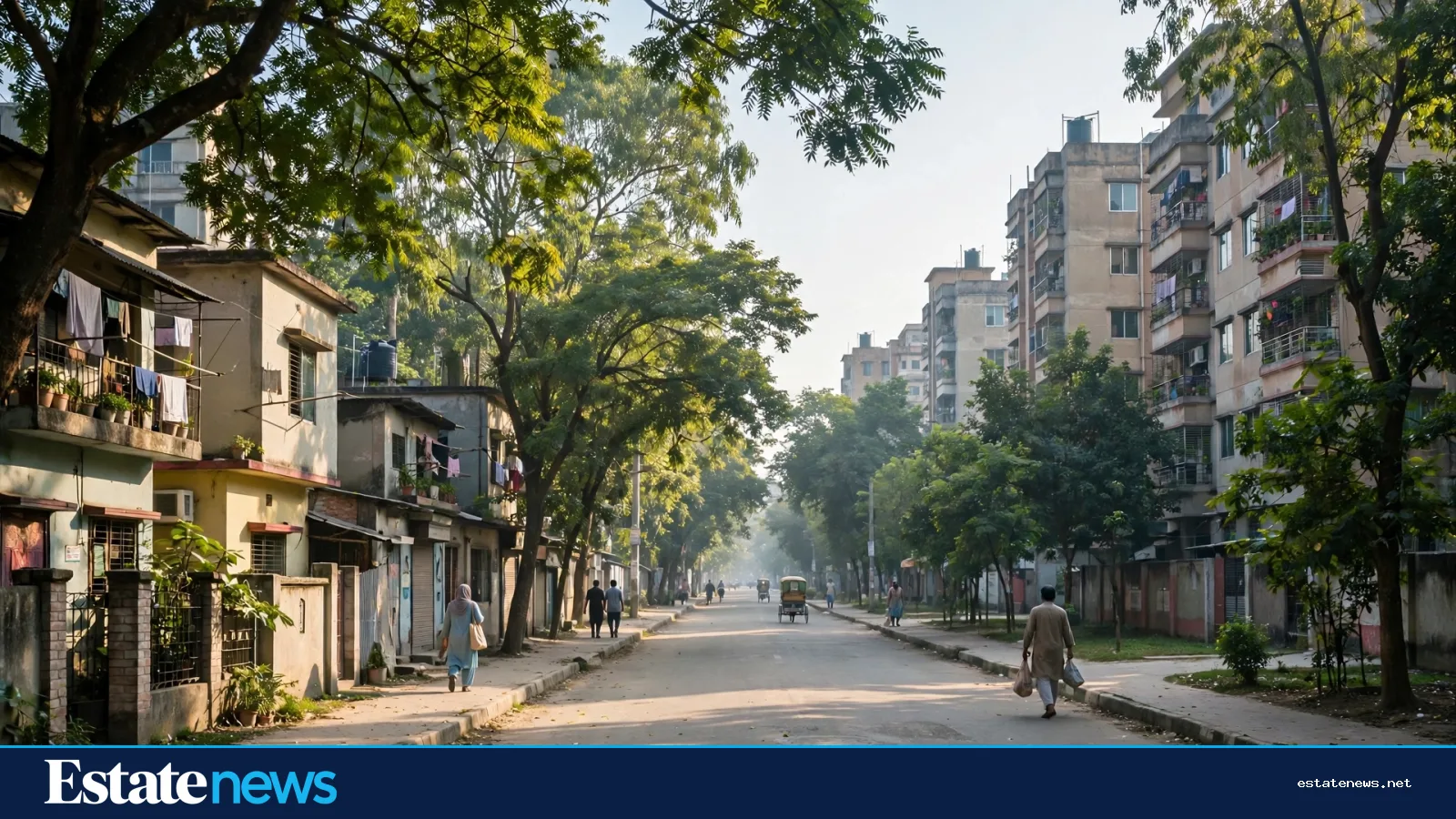
Pallabi in the 1960s was not the dense, built-up Mirpur of today. It was the city's edge, and a project of 700 houses there was a bet that Dhaka would grow outward and that ordinary families, not only the wealthy, would want planned homes of their own. That bet is the thread running through the company's later work: large land projects, housing areas laid out at scale, and apartments added where the city had already arrived.
From Pallabi to the stock market

Eastern Housing's own account of its history marks two further firsts. Eastern Siddheswari, in 1981, is described as the country's first apartment project. In 1994 the company listed on the Dhaka Stock Exchange, followed by the Chattogram Stock Exchange in 1996, and it remains the country's only publicly listed real estate company in the private sector. That listing is what makes Eastern Housing different from almost every other developer a Dhaka buyer will meet. Its accounts are public. Its profits, dividends and share price are reported in the business pages. A buyer or investor does not have to take the company's health on trust; the filings can be read.
By the company's own figures, up to 2022 it had built more than 6,200 residential and 4,800 commercial units, and developed more than 2,100 acres of land for housing. The scale is the point: a land developer that also builds apartments and commercial buildings, with projects beyond Dhaka as well as within it, and housing areas whose residents now form whole neighbourhoods.
Jahurul Islam City in Aftabnagar is the current expression of that land-first approach. The company has continued buying land there for the second and third phases of the project, with a reported target of acquiring 300 bighas for the two extensions, according to Financial Express reporting on the company's direction. Land buying at that scale, in a city where land prices and material prices both run high, is a deliberate choice about where the company's future revenue will come from.
What the latest results show


Eastern Housing's published results give a clear picture of a company in a particular kind of transition. For the financial year ended June 2025, the company reported sales of Tk 303.08 crore and net profit of Tk 77.22 crore, up 37 per cent year on year, according to The Business Standard's reporting of the audited results. The Financial Express, reporting the same results, noted earnings per share of Tk 8.27, up from Tk 6.04 a year earlier, and pointed to a striking detail: the company had no interest-bearing bank loans, leaving its performance less exposed to high interest rates than a developer dependent on bank borrowing would be. Land sales drove much of the year, rising 14 per cent to Tk 1.75 billion over nine months, while apartment sales surged 130 per cent to Tk 238 million in the same period, from a smaller base.
The following year's disclosure moved in the other direction. On 6 October 2026, Eastern Housing recommended a 20 per cent cash dividend for the year ended 30 June 2026, down from 25 per cent a year earlier, as earnings per share fell nearly 20 per cent, The Business Standard reported. The share price dropped 5.44 per cent that day to Tk 78.20 on the Dhaka Stock Exchange. The company attributed the weaker result mainly to increased investment in inventory, particularly land, and higher working capital requirements, which led to significantly higher cash outflows. In plain terms, the company spent more on land and on running the business, and that spending weighed on the year's profit even as the land bank grew.
That combination, strong land sales one year and heavier land investment the next, fits what the Financial Express reported earlier about the company's caution on apartments. When material prices rose sharply, the company became selective about new apartment projects, preferring land development while apartment prices rose 30 to 35 per cent in a year of higher material costs. A developer that can choose between land and apartments, and carries no interest-bearing bank loans, has room to make that choice.
Why a listed developer matters to ordinary buyers
For a buyer, a listed developer offers something unusual in Dhaka's property market: a public record. The company's dividend, shareholding pattern, land purchases and profits are all disclosed through the stock exchange. As of August 2026, sponsor-directors held 50.44 per cent of Eastern Housing's shares, institutions 25.16 per cent, foreign investors 0.03 per cent and general investors 24.37 per cent, according to The Business Standard. A buyer considering an Eastern Housing plot or flat can look at those disclosures and form a view about the company's financial steadiness that no brochure can provide.
That transparency cuts both ways. A listed company's weak year is public too, as the October 2026 dividend cut showed. Buyers should read it that way: not as a reason to panic about a single year's result, and not as a reason to ignore it either, but as one piece of evidence among others, alongside the project's own documents, the approved layout, the site visit and the agreement. A company's history is not a guarantee about any individual project, and this profile makes no claim about the price, quality or delivery of any specific Eastern Housing flat or plot. Those questions need project documents and independent advice.
What can be said, on the public record, is that Eastern Housing's story runs from Pallabi's 700 houses to a listed company still buying land in Aftabnagar six decades later. It is a story about Dhaka growing outward, about planned housing areas becoming city neighbourhoods, and about a developer that has survived high material prices, slow sales periods and changing markets by leaning on land when apartments looked expensive to build. For readers following Dhaka's housing market, that longevity is itself the news: the company that laid out one of the city's first private housing areas is still, in 2026, laying out the next one.