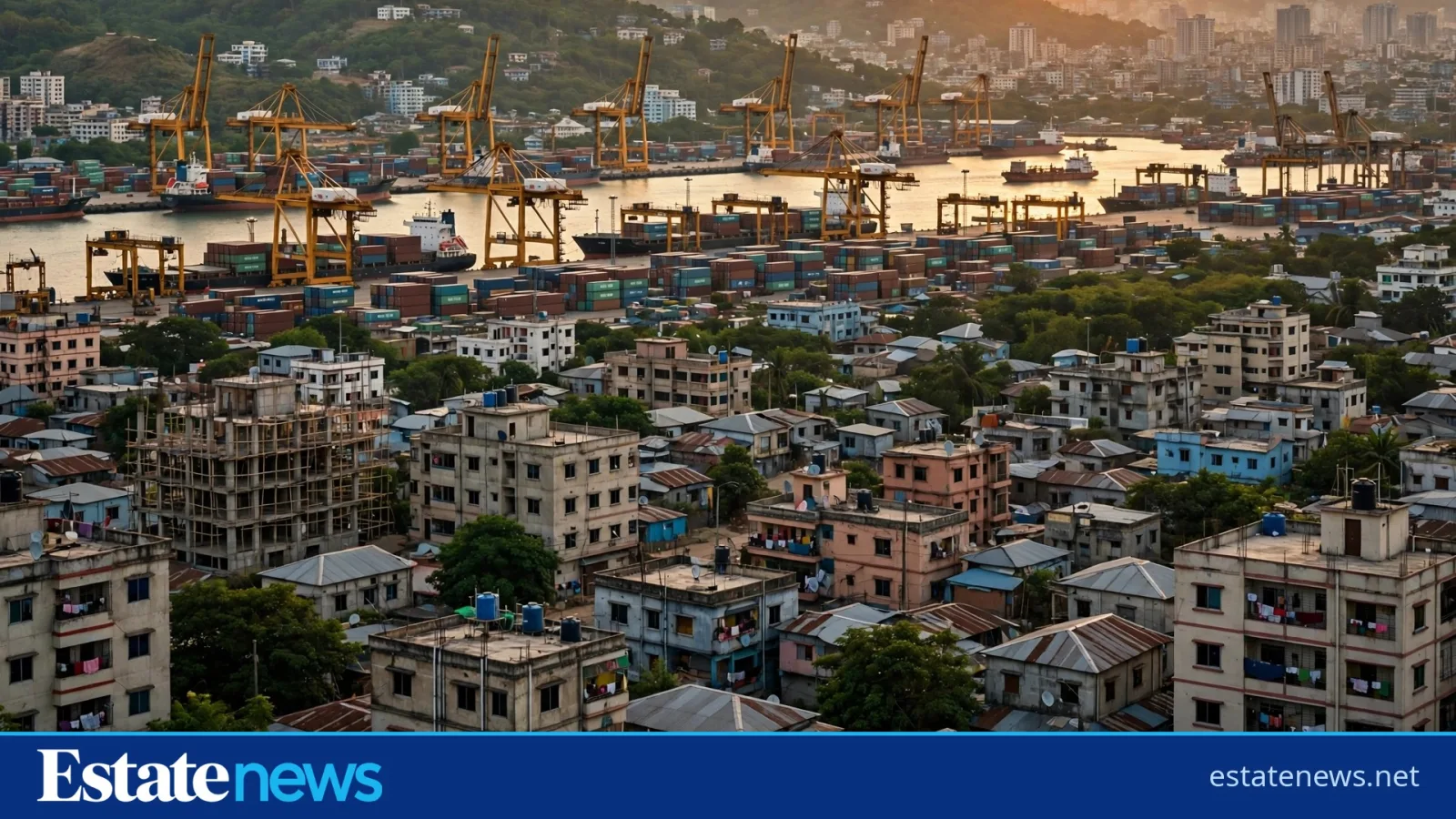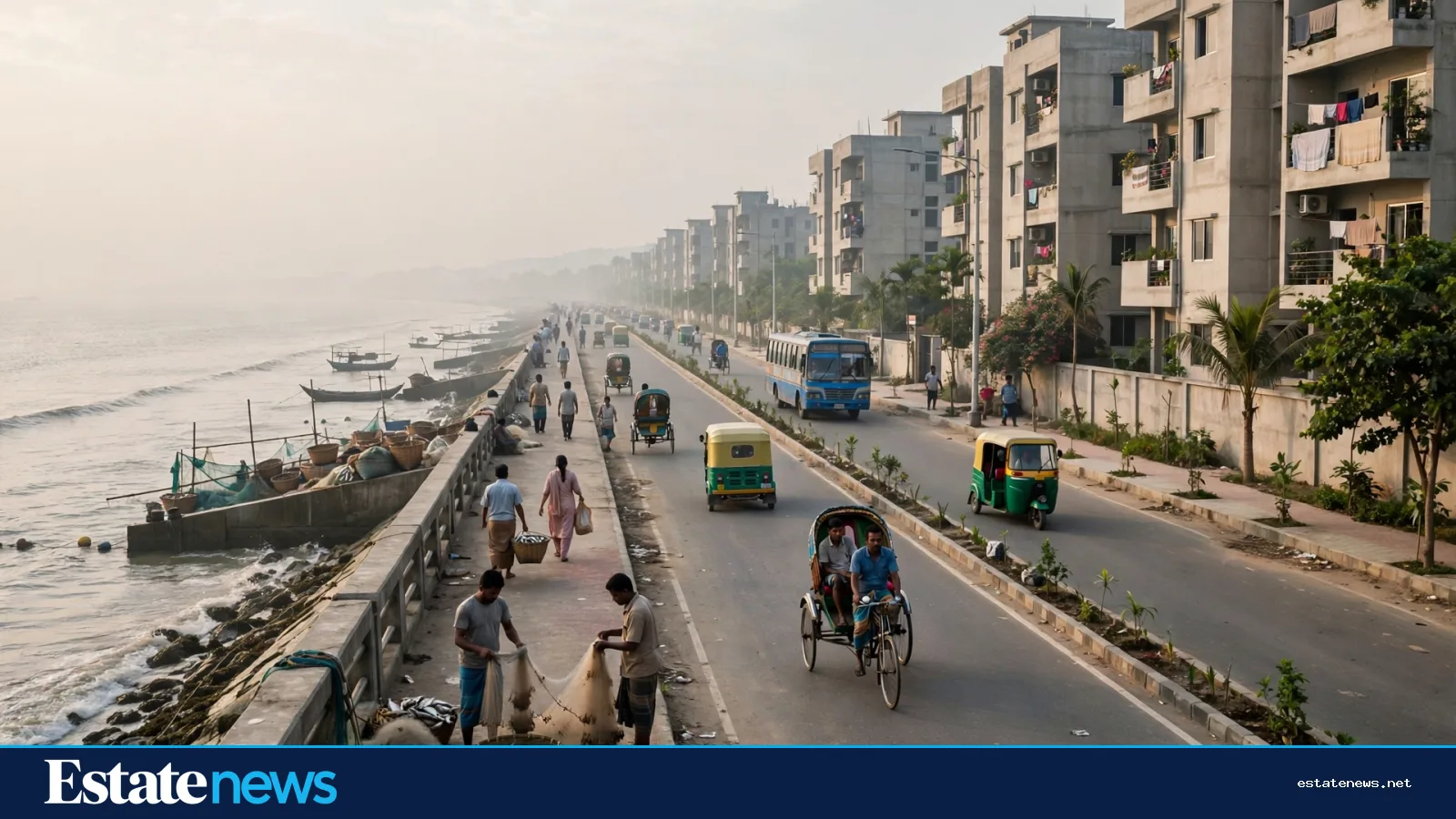
Stand on the coastal road in Chattogram at dawn and the city explains itself in a single view. To one side, the sea and the fishing boats. To the other, apartment blocks and housing plots stretching toward Halishahar and Patenga. Between them, a wide embankment road carrying buses, rickshaws and trucks toward the port. This is not a road that happens to run beside the city. It is a road that is remaking the city's edge, and it is doing two jobs at once: carrying traffic, and holding back the water.
Chattogram's ring-road story comes in layers, and buyers should know which layer they are looking at. The coastal road from Patenga to the Sagorika industrial area, about 15.2 kilometres of mostly two-lane road built as an embankment, was designed to ease congestion and protect residents, the port, the export processing zones and the airport from tidal surge and cyclones, according to the Chattogram Development Authority. The embankment stands about 23 to 24 feet high, with plans to raise it to 33 to 34 feet and widen the road to four lanes from Patenga beach to Sagorika Junction, along with feeder roads and approach roads. That is the first ring: a protective wall that became a road, and then a housing address.
The second ring, nearly done

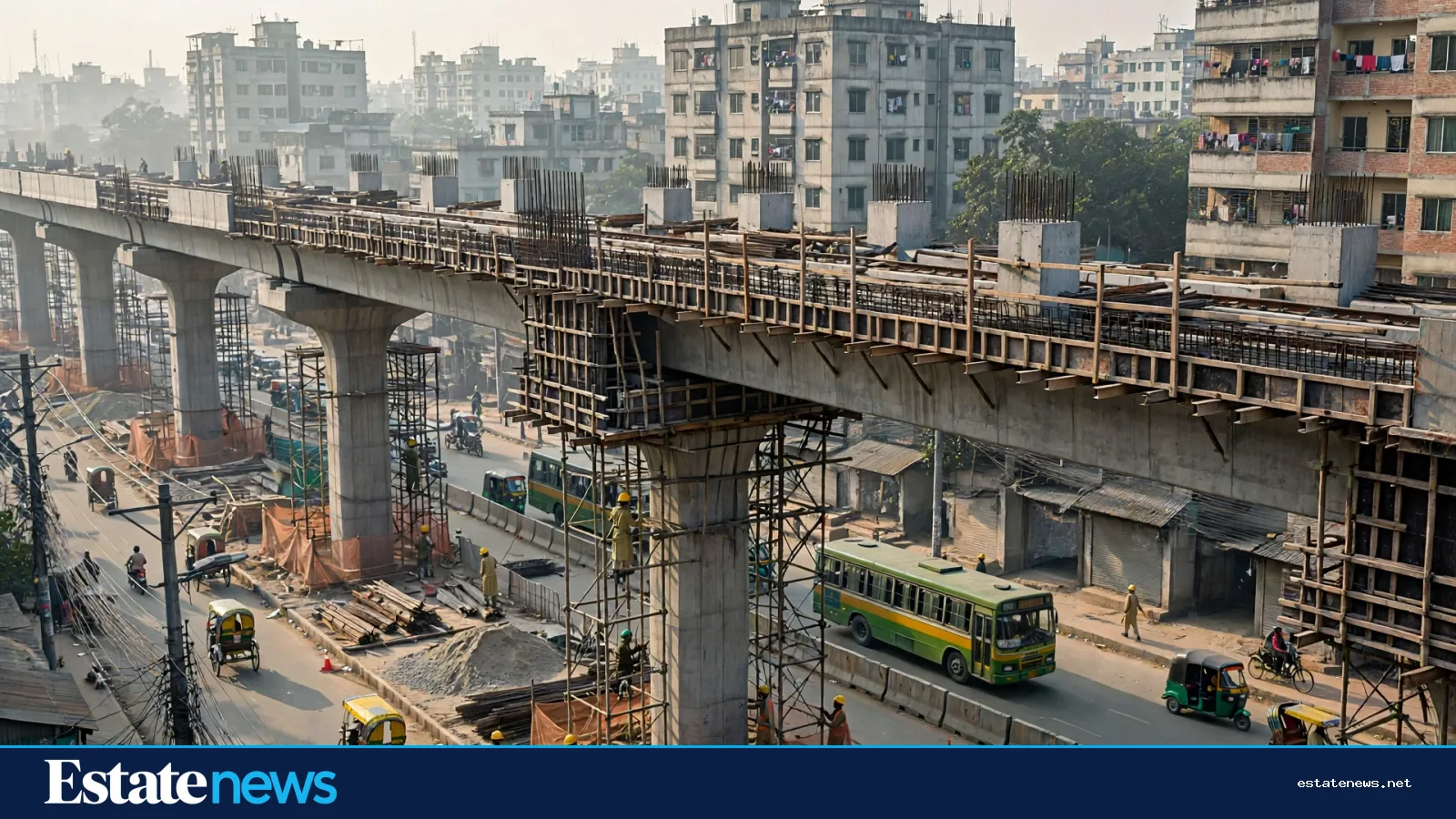
The second layer runs along the Karnaphuli. The Chattogram Outer Ring Road Phase II, a 9-kilometre four-lane embankment road from Kalurghat Bridge to Shah Amanat Bridge at the mouth of the Chaktai Canal, was reported by The Financial Express in July 2026 to be nearly complete, with only about 600 metres of road work remaining, and expected to open fully by December 2026. The project's director told the paper that a 7-kilometre riverside walkway would give residents what he called breathing space, and that the road would cut the Kalurghat to Shah Amanat Bridge journey to about 10 minutes. The road is also built to reduce waterlogging and protect the riverbank neighbourhoods, with regulators at canal mouths, slope protection and retaining walls.
A related project tells the slower side of the same story. The road along the Karnaphuli bank from Kalurghat Bridge to Chaktai Canal, a Tk 2,779.39 crore CDA project, had reached about 82 percent physical completion by March 2025, with Tk 2,203.59 crore spent, but land acquisition stalled a 2-kilometre stretch and two regulators, and the deadline was extended to June 2026. The same corridor, two speeds: one stretch nearly open, another still negotiating its last parcels. Buyers who hear a road described as "coming soon" should ask which stretch, and how much of it is actually built.
What is planned next, and what it is not yet
Beyond the roads under construction, CDA has lined up a larger programme. The Business Standard reported that the authority has taken up ten projects worth Tk 14,874.39 crore, including a second phase of the outer ring road from Middle Halishahar to Fouzdarhat, a 10.69-kilometre embankment road with link roads, service roads and a flyover, costed at Tk 2,717.47 crore and awaiting ministry-level review. The same programme includes the Bay Pearl Housing Project Phase 1 in Patenga, residential plots on 19.55 acres for middle-income buyers, costed at Tk 346.59 crore, with a feasibility study done and a development project proposal sent to the ministry for a July 2026 to June 2029 period. These are proposals moving through approval, not finished neighbourhoods, and a buyer should weigh them that way.


Life beside an embankment road
A road that is also a flood wall shapes daily life in specific ways, and a buyer should judge it by those specifics rather than by the idea of a ring road. Visit the spot at rush hour, when the trucks that serve the port and the industrial areas use the road heavily. The Financial Express reported in September 2026 that trucks, lorries and covered vans parked along almost the entire coastal road were narrowing it and making travel difficult, with long dividers preventing U-turns. Parking enforcement, not the road's width on paper, decides how the road actually moves.
Water is the second test. An embankment road protects the land behind it, but drainage on the landward side, and the regulators at canal mouths, decide whether a particular lane stays dry in the monsoon. Ask residents how the last heavy monsoon behaved, and look at plinth heights and damp marks on older houses nearby. A plot behind a new embankment still needs its own drainage story.
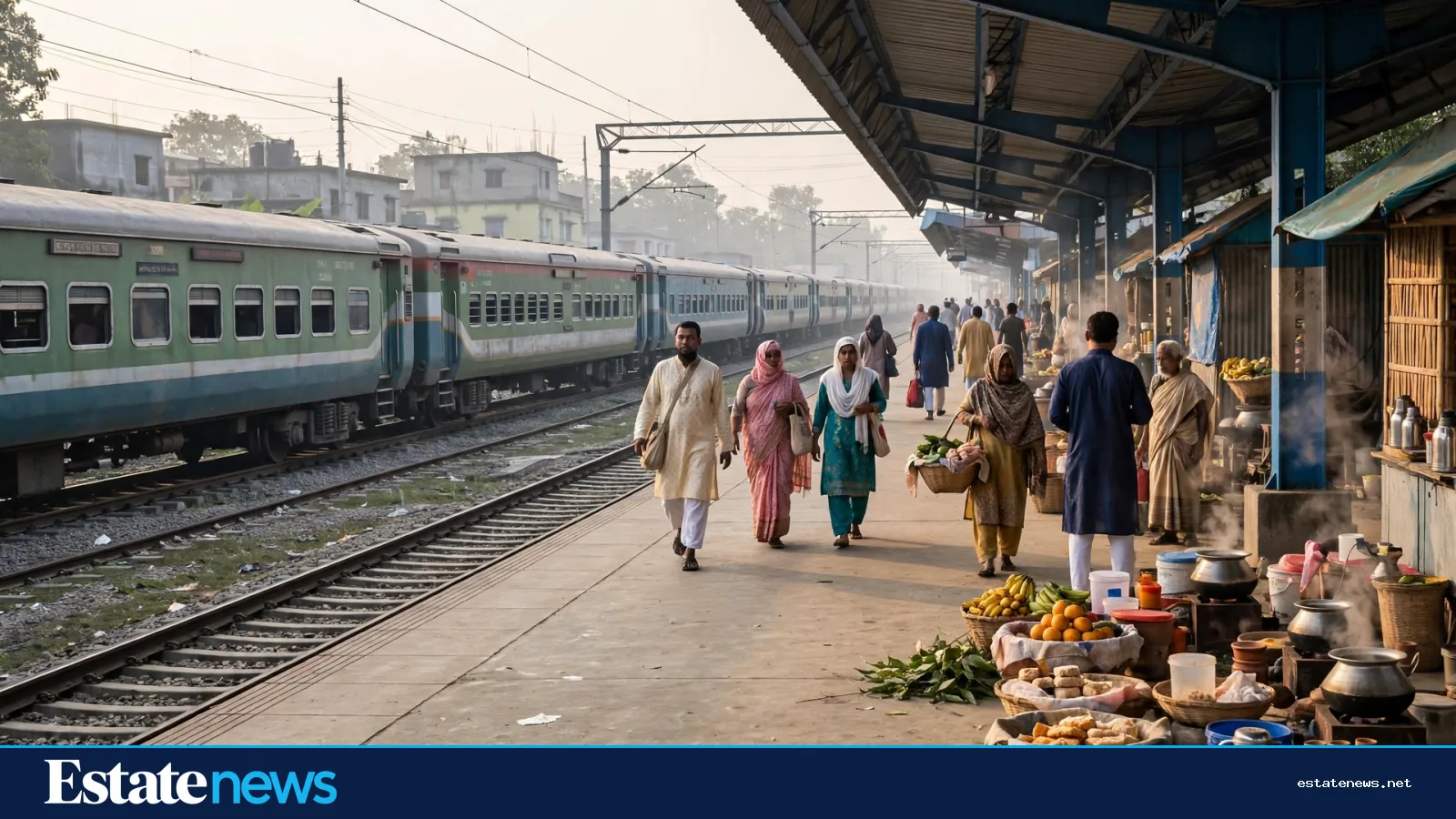
Access is the third. A ring road helps most when it connects to the places residents actually go: the port and industrial jobs, the city centre, schools and hospitals. The Kalurghat to Shah Amanat Bridge link matters because it joins the Dhaka-Chattogram highway side to the Cox's Bazar side, and the Halishahar to Fouzdarhat phase matters because it extends the coastal connection northward. A plot that sits beside a fast road but far from a working junction can still mean a long daily journey.
A city growing outward, carefully
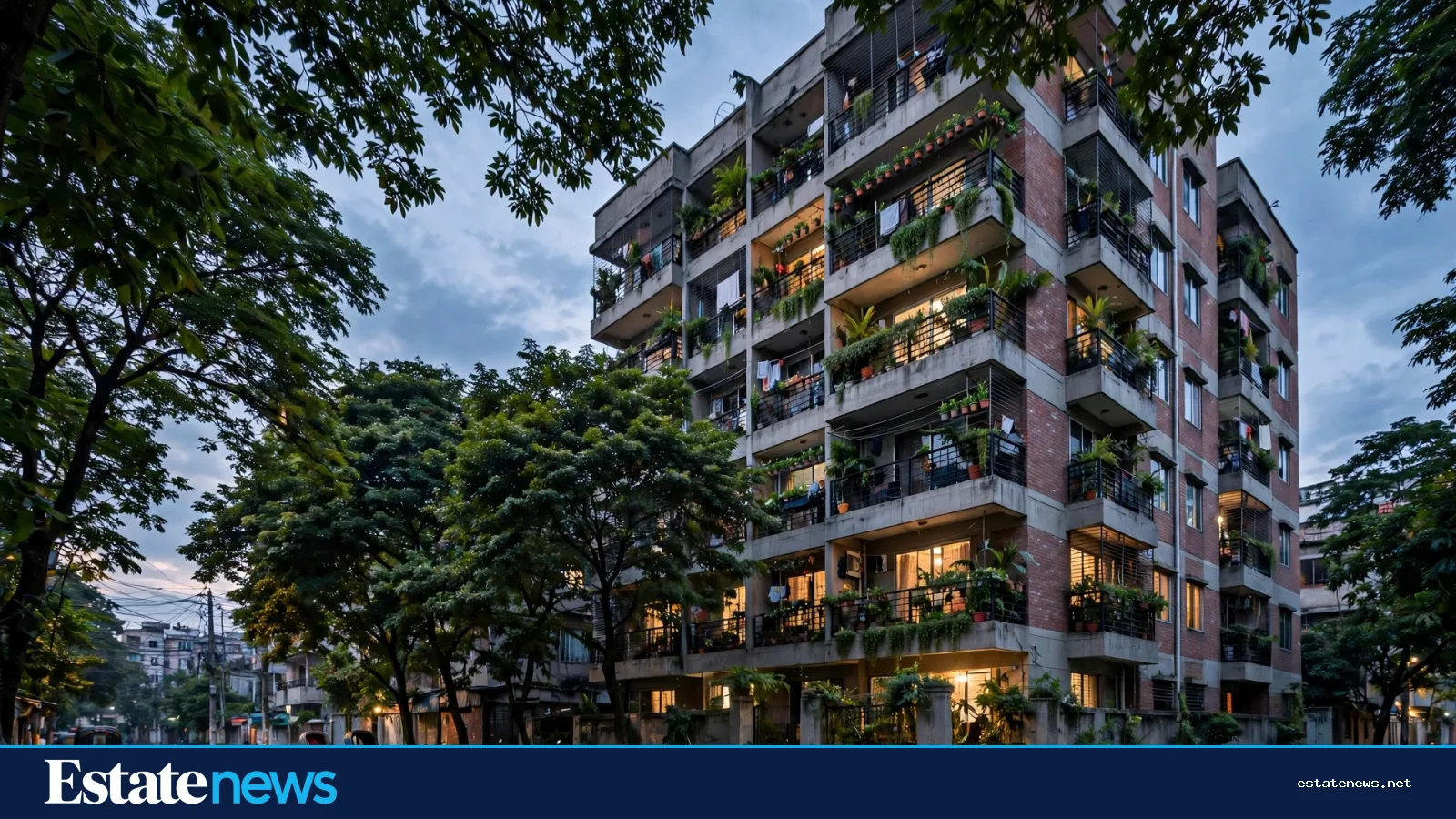
Chattogram's edge is genuinely changing. Roads that protect against surge and tide are also opening land for housing, and the Bay Pearl plots show the authority planning homes for middle-income buyers near Patenga rather than leaving the fringe to chance. None of this, on its own, says anything about what any particular plot is worth, and this piece makes no claim about prices. Roads improve access and protection. They do not set a price for a home, and a buyer who pays as if they did is paying for a promise rather than a place.
Judge a ring-road address the way you would judge any address in Chattogram: walk the lane, ride the commute, ask about water in July, check the papers, and look at what is built rather than what is drawn. The embankment roads are an impressive piece of city-building, and the neighbourhoods beside them may become fine places to live. They will earn that reputation the same way every neighbourhood does: one dry monsoon, one working commute, one settled family at a time.