The signing took place at Metro Rail Bhaban in Diabari, Uttara, on 27 October, and it was the kind of event that looks dull in a photograph and matters a great deal in a city. Four contracts, awarded to three joint ventures, put stations, tracks and depots for two new metro lines into formal construction. Dhaka Mass Transit Company Limited is building both lines with joint financing from the Bangladesh government and the Japan International Cooperation Agency. Prothom Alo reported the combined cost at about Tk 2 trillion: roughly Tk 1.14 trillion for MRT Line 1 and Tk 890 billion for MRT Line 5's northern route. Construction of both lines is expected to finish by 2033. No date for passenger services was announced.
That last sentence deserves emphasis, because housing talk around a metro line tends to run ahead of the timetable. A contract for a viaduct is not a station opening. Families who buy near a planned station in 2026 are buying into years of construction first: piling, dust, diverted traffic, and a skyline of cranes. The gain, if it arrives, arrives later, and it arrives as a commute, not as a guaranteed price movement. Estate News does not claim that a metro line raises prices in any particular place without evidence, and nothing in the October announcement supports such a claim.
What the four packages actually build

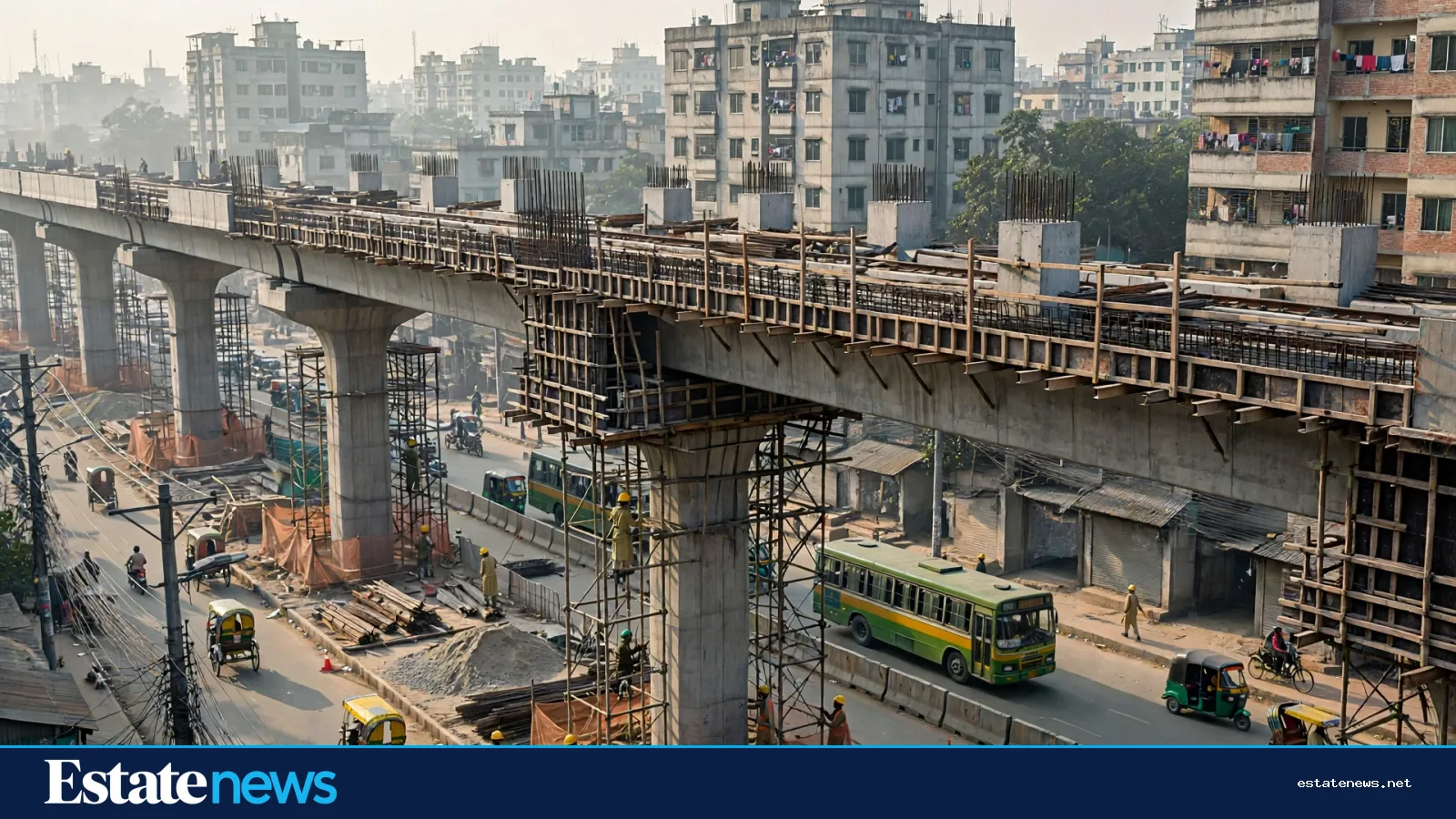
Line 1's CP-07 package covers a 5.007 kilometre viaduct from the point where the railway rises from underground to the start of the Balu River section, with three elevated stations: Joar Sahara, Boalia and Mastul. Line 1 as a whole is planned at 31 kilometres with 21 stations, on two routes: an airport route linking Hazrat Shahjalal International Airport with Kamalapur, and a Purbachal route running from Natun Bazar toward the Purbachal terminal. The line's earlier design projected capacity for 800,000 passenger journeys a day, according to coverage of the expansion.
Line 5's northern route, from Hemayetpur to Bhatara, is planned at 20 kilometres with 14 stations. One package covers 6.50 kilometres of elevated railway from Hemayetpur to Aminbazar and from Natun Bazar to Bhatara, with five stations: Hemayetpur, Baliyapur, Bilamalia, Aminbazar and Bhatara. Depot buildings at Hemayetpur and Purbachal form part of the same programme, the unglamorous sheds and sidings where trains are stored and maintained. A metro line without a depot does not run, and the inclusion of depots in the October packages is a sign that the work has moved past the drawing stage into the logistics of running a railway.
The places on the map, and what each one is waiting for
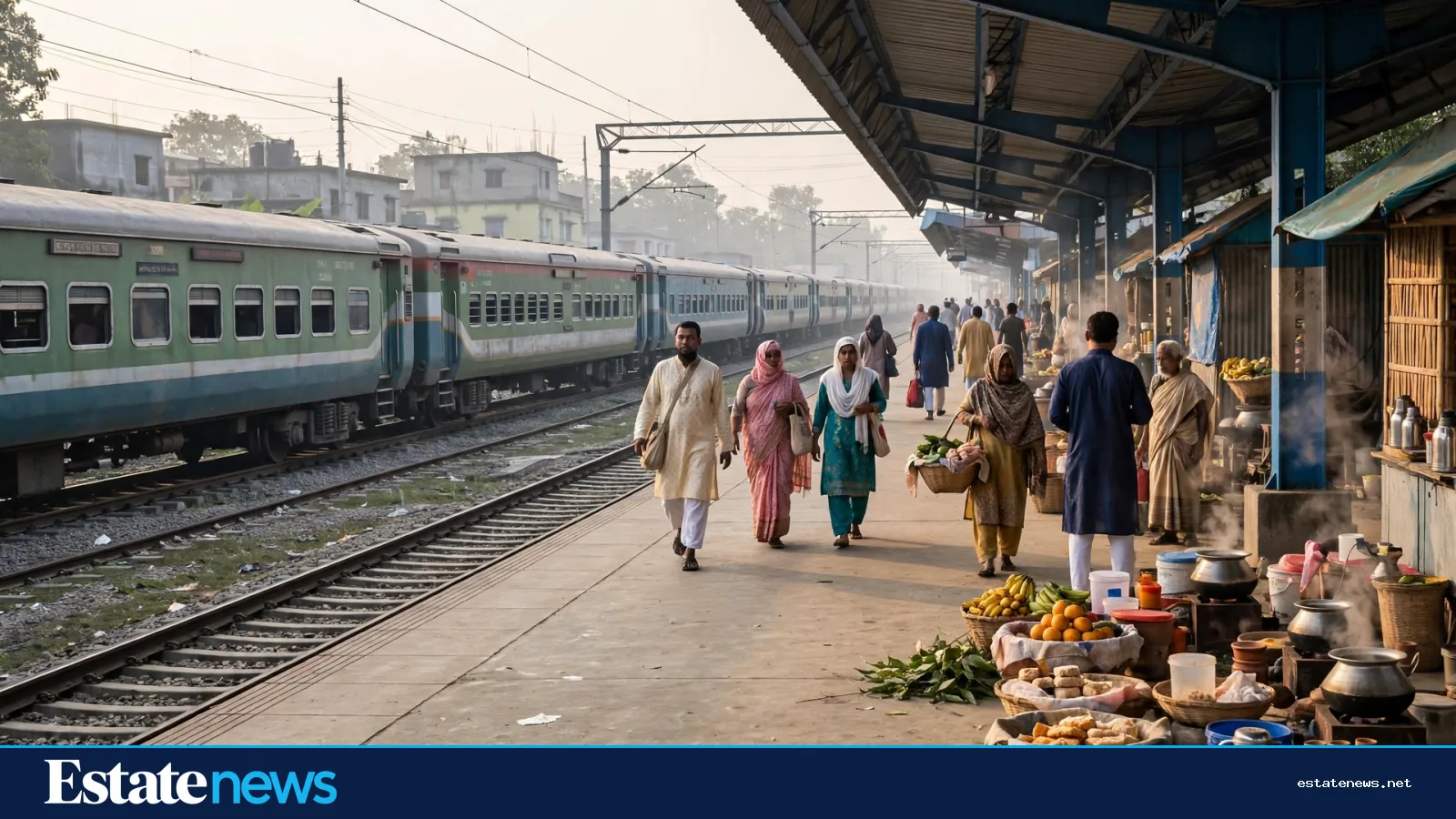
Airport and Kamalapur anchor Line 1 at its two ends, and they are different kinds of places. The airport end serves travellers, airport workers and the hotels and offices that cluster around Uttara. Kamalapur is the national railway terminus, a place where intercity trains, buses and city traffic already meet in a daily tangle. A metro link between them would join two transport worlds that currently connect badly. For housing, the near-term effect is construction around both ends, and the longer question is how the streets around the stations handle the crowds that a metro station brings: rickshaws, vendors, buses and pedestrians competing for the same pavement.
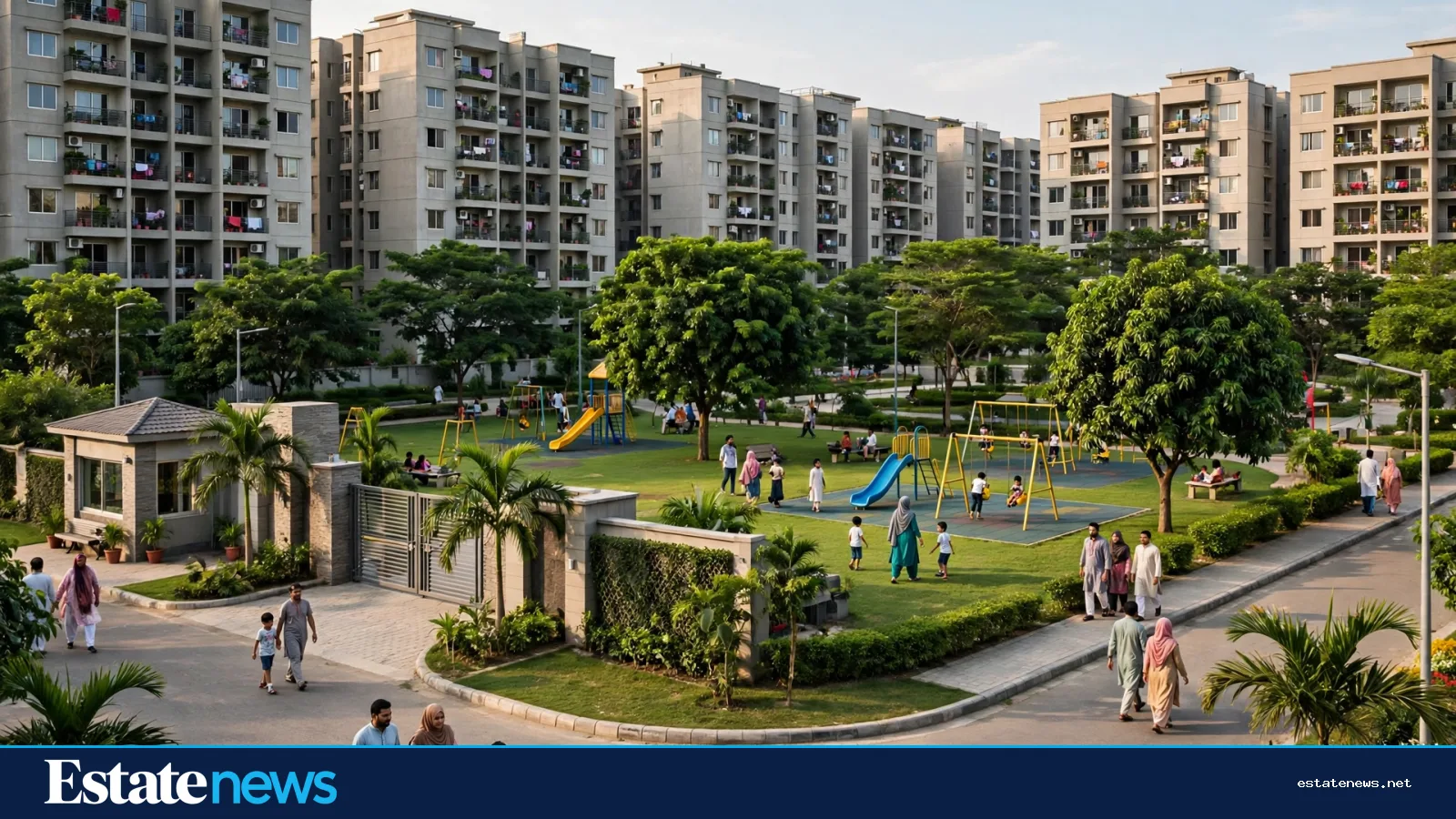
Purbachal is a different test. It is a planned township area where plots have been sold for years on the promise of a city that is still filling in. A metro terminal there would change the daily maths for a family weighing a Purbachal plot against a flat in Uttara or Bashundhara: the plot stops being a weekend visit and becomes a place a worker can reach every morning. That change only counts when trains run. Until then, a Purbachal buyer should weigh the plot on what exists today, roads, water, electricity and neighbours, rather than on a station that is scheduled for the next decade.


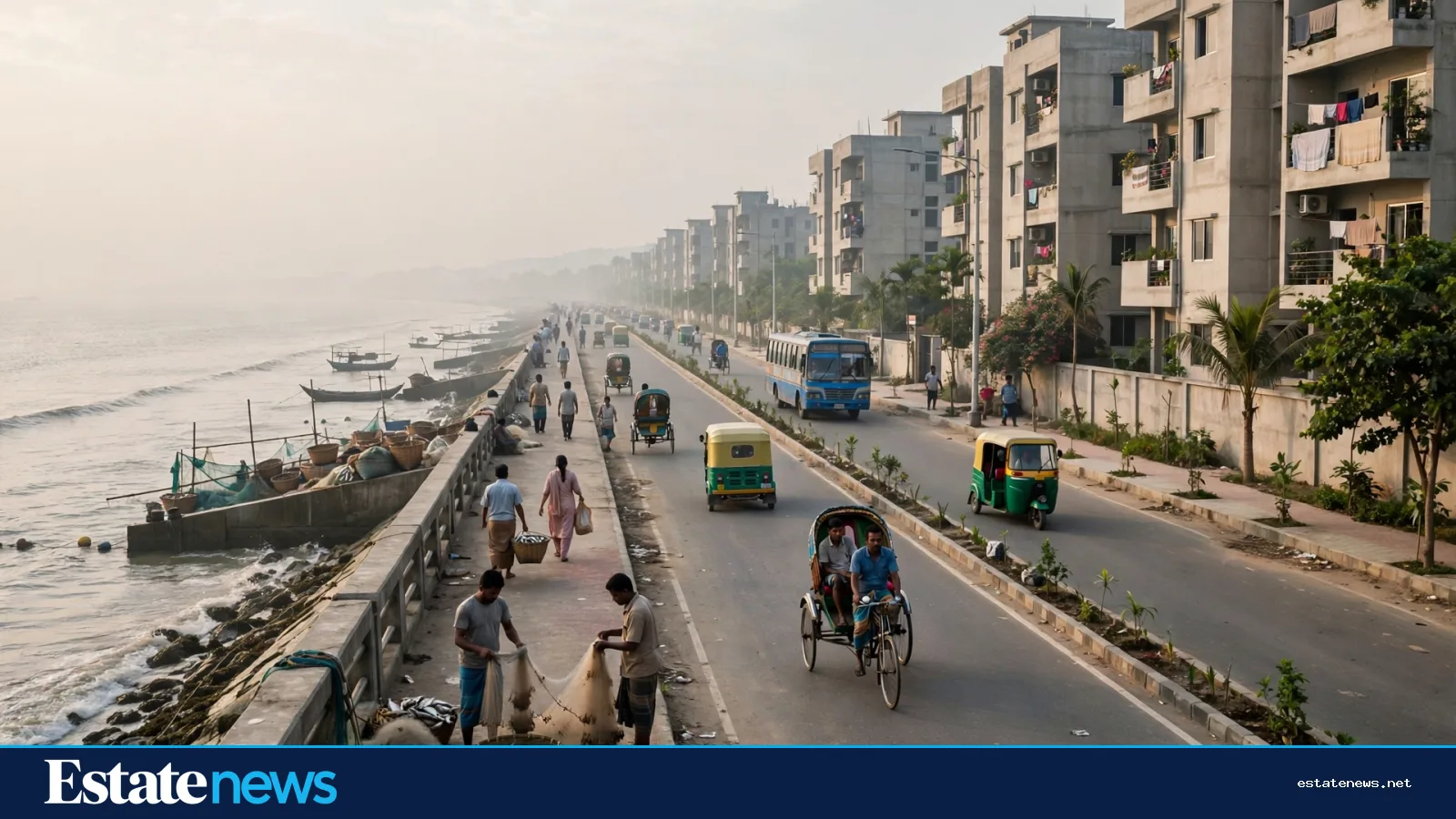
Hemayetpur and Bhatara, on Line 5, are the quieter half of the announcement, and perhaps the more interesting half for housing. Hemayetpur sits on Dhaka's western edge, beyond the city's dense core, where land is cheaper and factories and warehouses sit beside housing. Bhatara, in the east, is already a busy residential pocket near Natun Bazar, where families live close to jobs in Gulshan and Baridhara. A line joining them would cross the city rather than run along its edge, which is the kind of line that changes commutes for ordinary workers rather than only for airport travellers.
How to read a metro announcement as a homebuyer
A buyer near any of these lines can ask a short set of questions that separate a useful station from a sales slogan. How far is the flat from the planned station on foot, measured on a real road rather than on a straight line drawn across a map? Is the station elevated or underground at that point, and what does construction mean for the street outside the gate for the next few years? Does the area have water, drainage and schools today, or is the pitch entirely about what the metro will bring later? Is the seller's price already charging for a station that will not open until the 2030s?
There is also a question about who benefits first. Landowners near a station site often benefit early, as attention turns to the area. Tenants and buyers benefit later, when trains run and the commute shortens. Renters near a construction zone can face the worst of both: dust and disruption now, with the benefit still years away. A family renting near a Line 1 or Line 5 station site should negotiate the lease with that timeline in mind, and should not accept a rent pitched as if the metro were already running.
A city building its second metro decade
Dhaka's first metro line, MRT Line 6 from Uttara to Motijheel, began commercial operation in November 2023 and taught the city what a metro does to daily life: queues at stations, shops clustering near exits, and a new way of measuring distance, in stations rather than in kilometres. Lines 1 and 5 extend that lesson across the city, from the airport to Kamalapur and from Hemayetpur to Bhatara. The October contracts do not finish that story. They start its construction phase, with a completion target of 2033 and a long stretch of building work in between.
For housing, the honest summary is narrow and useful. Two lines now have builders, budgets and depot plans. The streets around their stations will change, first with construction and later, if the timetable holds, with trains. A buyer who visits those streets now, walks them, checks the water and the papers, and prices the flat for what the area offers today will be in a strong position whatever the metro brings. A buyer who pays tomorrow's price today, on the strength of a contract announcement, is paying for a train that has not yet been built.